

My brother called me while I was standing in the airport security line and said he had sold my farmhouse. Not asked. Not warned. Sold. “I got three million for it,” Brandon said, like he expected applause. “Honestly, you should thank me. That old place was just sitting there.”
My suitcase was already on the conveyor belt. My passport was in my hand. I was supposed to be flying to Zurich for the first vacation I had taken in four years. Instead, I stepped out of line. “You sold my farmhouse?” I asked.
He laughed. “Don’t sound so dramatic, Clara. You live in the city. You barely use it.”
The farmhouse was worth $6.3 million.
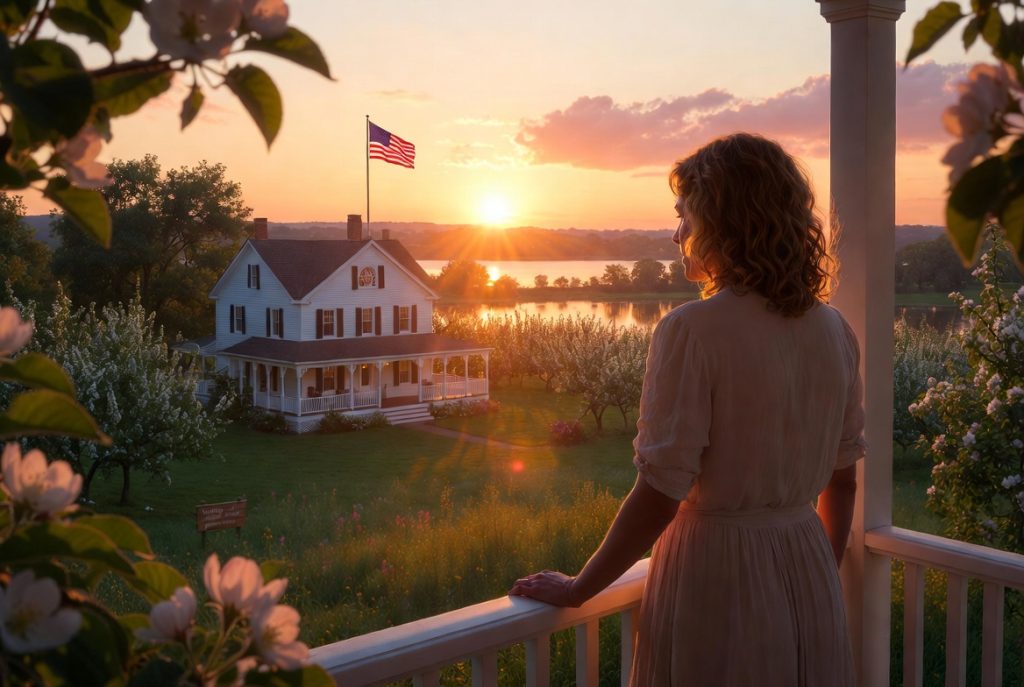
It sat on eighty acres of restored apple orchards, wildflower fields, and lakefront land my grandmother had left me before she passed away.
I rebuilt it beam by beam after a fire nearly took the east wing.
I paid the taxes.
I hired the caretakers.
I turned the old barn into a retreat space for foster kids aging out of the system.
Brandon called it “my country hobby.”
I called it the only place that ever felt like home.
“Where is the money?” I asked.
There was a pause.
Then he said, “I spent it.”
My chest went cold.
“On what?”
“My girlfriend’s business. She needed it more than you.”
For three seconds, airport noise vanished.
Then he added, “Don’t be selfish. You have other properties.”
I canceled my flight before he finished speaking.
By noon, I was in a rental car driving six hours home, calling my attorney, my property manager, and the county recorder’s office.
Brandon kept texting.
Don’t make this ugly.
It’s already done.
Family should support family.
By the time I reached the farmhouse gates, rage had burned into something calmer.
Sharper.
Then I saw the “Sold” sign leaning by the driveway.
Beside it stood Brandon, his girlfriend Tessa, and a man in a cheap navy suit holding a folder.
Tessa wore sunglasses and smiled like she had already chosen curtains.
Brandon spread his arms. “See? No disaster. The buyer’s happy. Tessa’s business is saved. Everyone wins.”
I looked at the man in the suit.
Then at the farmhouse.
Then at the locked gate.
And I started laughing.
I couldn’t help it.
Brandon’s smile faltered. “What’s funny?”
I wiped my eyes.
“What’s funny,” I said, “is that you sold a farmhouse you don’t own to a buyer who doesn’t exist, using a deed that became invalid six months ago.”
Tessa’s sunglasses lowered.
The man in the suit stopped breathing.
And Brandon finally looked scared.
“What are you talking about?” he snapped.
I reached into my bag and pulled out a copy of the trust paperwork.
“Six months ago, I transferred the farmhouse and all surrounding land into the Hale Family Restoration Trust.”
Brandon frowned. “That doesn’t mean anything.”
“It means everything.”
I stepped closer.
“You tried to sell a property that is no longer personally titled to me. The old deed you used became invalid the moment the transfer was recorded.”
The man in the suit opened his folder so fast the papers nearly slipped out.
His eyes moved across the pages.
Then his face changed.
Tessa looked at Brandon. “You told me Clara signed everything.”
“She did,” Brandon said quickly.
“No,” I said. “I didn’t.”
He pointed at the folder. “Your signature is right there.”
I smiled.
“That’s the problem.”
Brandon went silent.
“You forged my signature,” I said quietly. “And you did it badly.”
Tessa stepped away from him as if he had become contagious.
The man in the navy suit swallowed. “Mr. Hale, you assured my client this sale was legitimate.”
Brandon’s jaw clenched. “It is legitimate.”
“No,” I said. “It is fraud.”
His eyes flashed with panic. “Clara, don’t.”
“Don’t what? Tell the truth?”
“You’re my sister.”
“And you stole from me.”
He gave a bitter laugh. “You always had everything. Grandma gave you the farmhouse. Dad gave you the company shares. Everyone always chose you.”
That hurt more than I wanted it to.
Because it was not true.
Our grandmother had given me the farmhouse because I was the one who visited her every weekend.
I was the one who brought groceries.
I was the one who slept in a chair beside her hospital bed.
Brandon showed up after the funeral asking what he got.
But I did not say any of that.
I simply said, “You could have asked for help.”
He scoffed. “You would’ve judged me.”
“I would have asked why Tessa’s business needed three million dollars.”
Tessa’s mouth tightened.
Her business was a luxury wellness brand that sold scented candles for ninety dollars each.
It had failed twice.
Brandon had already borrowed money from our mother, then lied about paying it back.
I knew because I paid it back.
Tessa crossed her arms. “My business is not the issue here.”
“It became the issue when stolen money went into it,” I said.
Her face went pale.
Brandon snapped, “She didn’t know.”
I tilted my head. “Didn’t she?”
Tessa looked away.
That told me enough.
Then another vehicle came up the gravel road.
A black SUV stopped outside the gate.
My attorney, Daniel Reyes, stepped out first.
Behind him came two county officials and my property manager, Mrs. Whitaker, a seventy-year-old woman with silver hair and no patience for fools.
Brandon muttered a curse.
Daniel walked to my side and handed me a folder.
“Everything is confirmed,” he said. “The trust filing is valid. The attempted deed transfer was rejected. The sale never legally occurred.”
The man in the navy suit looked relieved and terrified at the same time.
“So my client doesn’t own the property?” he asked.
“No,” Daniel said. “And if your client wired money based on false documents, he has a claim against the person who presented them.”
All eyes turned to Brandon.
For the first time in my life, my brother had nothing clever to say.
Tessa whispered, “Brandon, where did the money come from?”
He didn’t answer.
Daniel looked at him. “That three million dollars was wired into an account connected to Ms. Vale’s company yesterday.”
Tessa’s expression cracked.
“You said it was an investor,” she whispered.
Brandon glared at me. “Are you happy now?”
“No,” I said. “I’m heartbroken.”
And I meant it.
Because under all my anger, there was grief.
This was my brother.
The same boy who once climbed apple trees with me.
The same boy who held my hand when our parents fought downstairs.
The same boy who promised Grandma he would protect the farm.
Somewhere along the way, resentment had eaten him alive.
But grief did not cancel consequences.
Daniel gave the county officials permission to inspect the posted sale notice and the forged papers.
Mrs. Whitaker marched straight to the “Sold” sign, pulled it from the ground, and tossed it into the back of her truck.
“Nobody sells my Clara’s farm,” she muttered.
That nearly broke me.
Brandon saw my face soften and tried to use it.
“Clara,” he said quietly, “please. I made a mistake.”
“A mistake is forgetting a birthday,” I said. “This was a plan.”
He looked down.
I continued.
“You called me when I was leaving the country because you thought I’d be too far away to stop it.”
His silence confirmed it.
“You spent the money immediately because you thought there would be nothing left to recover.”
Tessa started crying.
Not loud, dramatic crying.
Quiet, frightened crying.
“My vendors have already been paid,” she said. “The launch party is tomorrow.”
Daniel looked at her. “Then you should call your vendors.”
She turned to Brandon. “You ruined me.”
He laughed bitterly. “I ruined you? I did this for you.”
“No,” she said. “You did this because you wanted to feel important.”
That landed.
Brandon’s face twisted.
For one second, I saw the little boy he used to be.
Then the anger returned.
“You think you’re so smart,” he said to me. “But you’re alone, Clara. You have properties and lawyers and money, but no family.”
I looked past him at the farmhouse.
Golden afternoon light touched the porch.
The apple trees moved gently in the wind.
Inside that barn, twelve foster kids had painted murals last summer.
A young woman named Mia had learned to bake there.
A boy named Jonah had told me it was the first place he slept without fear.
I looked back at Brandon.
“You’re wrong,” I said. “This place is family.”
His eyes narrowed.
Daniel stepped forward. “Mr. Hale, we are filing civil action today. Depending on what the investigator finds, criminal charges may follow.”
Brandon’s knees seemed to weaken.
“Criminal charges?” he repeated.
“You forged documents, misrepresented ownership, accepted payment, and transferred funds,” Daniel said. “Yes.”
Tessa covered her mouth.
The man in the navy suit made another phone call, walking away quickly.
Brandon grabbed my arm.
“Please,” he whispered. “Don’t let them do this.”
Mrs. Whitaker shouted, “Take your hand off her.”
I pulled free.
“You didn’t call me before selling my home,” I said. “Don’t ask me to save you after stealing it.”
His eyes filled with tears then.
Real ones.
But I had learned something painful over the years.
Some people cry because they hurt you.
Others cry because they got caught.
Brandon was the second kind.
That evening, I unlocked the farmhouse myself.
The house smelled like cedar, lemon oil, and summer dust.
For a moment, I just stood in the entryway with my hand on the old banister.
Grandma’s portrait hung above the fireplace.
She was smiling in that stern way she always did, like she knew every secret before anyone confessed.
“I protected it,” I whispered.
My phone buzzed.
Mom.
I almost didn’t answer.
But I did.
“Clara,” she said, already crying. “Brandon told me everything.”
“I doubt that.”
“He said you’re trying to send him to prison.”
I closed my eyes.
“He forged my signature and stole three million dollars.”
“He’s your brother.”
“I know.”
“Can’t you settle this privately?”
I looked around the house.
At the repaired beams.
At the framed photos from the youth retreats.
At the quilt Grandma made with her own hands.
“Mom,” I said, “private forgiveness is not the same as public accountability.”
She went quiet.
“He could lose everything,” she whispered.
“He already chose that.”
Then she said the sentence I had heard all my life.
“You’ve always been stronger than him.”
I laughed once, sadly.
“That was never a reason to let him hurt me.”
She had no answer.
The next morning, the truth spread faster than I expected.
The buyer’s company filed a complaint.
Tessa’s investors froze her accounts.
The county opened an investigation.
And Brandon called me forty-three times.
I didn’t answer.
By afternoon, I went to the barn.
The retreat staff had gathered there, worried and confused.
Mia, now twenty-one and working as our program coordinator, hugged me the second I walked in.
“Are we losing the farm?” she asked.
“No,” I said. “You’re not losing anything.”
A few of the younger kids cheered.
One boy asked, “Who tried to take it?”
I looked at their faces.
Some of them already knew too much about betrayal.
They didn’t need every ugly detail.
“Someone forgot what this place means,” I said.
Mia nodded slowly.
Then she said, “But you remembered.”
That was the moment I almost cried.
Not at the airport.
Not at the gate.
Not when Brandon begged.
But there, inside the barn, surrounded by kids who had already lost too much, I finally had to turn away and breathe.
Three days later, Brandon came to the farmhouse alone.
No Tessa.
No sunglasses.
No fake confidence.
He looked smaller.
I met him on the porch with Daniel inside the house, close enough to hear.
Brandon stared at the floorboards.
“Tessa left me,” he said.
I said nothing.
“Her company is done.”
Still, I said nothing.
“The buyer wants his money back.”
“He should.”
Brandon looked up, eyes red. “I don’t have it.”
“I know.”
He swallowed. “I need your help.”
There it was.
Not an apology.
A need.
I waited.
Finally, he said, “I’m sorry.”
“For what?”
His mouth opened.
Closed.
Then he looked out toward the orchard.
“For selling the farm.”
“And?”
“For forging your name.”
“And?”
“For spending money that wasn’t mine.”
“And?”
His face hardened. “What more do you want?”
“The truth.”
He exhaled sharply.
Then, for the first time, he told it.
He had been drowning in debt.
He had borrowed from people he shouldn’t have.
Tessa’s business was failing, but she had made him feel powerful.
She told him he was wasted in my shadow.
She said if he could bring in a few million, they could build something bigger than anything I owned.
So he started looking through old family documents.
He found a copy of a deed from years ago.
He convinced himself I wouldn’t notice until it was too late.
Then he found a buyer willing to move fast for a suspiciously low price.
“I thought you’d sue,” he admitted. “But I thought by then the money would be gone.”
I stared at him.
“You planned for me to lose.”
He wiped his face.
“I planned for you to survive it.”
That sentence turned my stomach.
Because it was the language selfish people used when they wanted to make theft sound gentle.
I stood.
“I will not protect you from the consequences.”
His face collapsed.
“But I will not lie either. If you cooperate fully, return whatever can be returned, and confess to every document you forged, Daniel will make sure the court knows.”
Brandon stared at me. “That’s it?”
“That’s more than you gave me.”
He looked toward the land.
The apple trees were blooming early that year.
Grandma used to say apple blossoms looked delicate, but they survived storms better than people did.
Brandon whispered, “Do you hate me?”
I thought about lying.
Then I said, “No. But I don’t trust you.”
Somehow, that hurt him more.
Weeks passed.
Then months.
Brandon was charged, but his cooperation mattered.
Tessa avoided prosecution by proving she had not signed the forged paperwork, though her company collapsed under civil claims.
The buyer recovered part of his money through insurance and litigation.
The rest became Brandon’s burden.
He sold his condo.
His car.
His watches.
All the things he had once used to prove he was successful.
Mom cried often.
Sometimes she blamed me.
Sometimes she blamed him.
Eventually, she stopped blaming anyone and started asking harder questions about how long she had excused his behavior.
As for me, I stayed at the farmhouse longer than I planned.
Zurich could wait.
The land needed me.
The kids needed reassurance.
And maybe I did too.
That summer, we reopened the retreat with a bigger program than ever.
The barn filled with laughter again.
We planted a new row of apple trees along the lake.
At the dedication, Mrs. Whitaker handed me a small wooden sign.
It read:
Nothing stolen grows here.
I laughed so hard I cried.
A year later, I received a letter from Brandon.
It came from a rehabilitation and restitution program he had entered as part of his sentence.
The handwriting was shaky.
Clara,
I used to think Grandma loved you more because she left you the farm.
Now I understand she left it to the person who would protect it.
I hated you for being trusted.
But the truth is, I never became trustworthy.
I am sorry.
Not because I got caught.
Because I finally understand what I tried to destroy.
I don’t expect forgiveness.
I just wanted you to know I remember the apple tree behind the old shed.
I remember promising Grandma we would never let the farm go.
You kept your promise.
I broke mine.
Brandon.
I read it twice.
Then I folded it and placed it in Grandma’s old recipe box.
Not because everything was healed.
It wasn’t.
But because some apologies are seeds.
You don’t know if they’ll grow.
You only decide whether to bury them in bitterness or leave them in the light.
That evening, I walked through the orchard as the sun lowered over the lake.
The farmhouse glowed behind me.
The barn doors were open.
Inside, young voices sang off-key while someone played an old piano.
The American flag on the porch moved softly in the breeze.
For the first time in a long while, I felt quiet inside.
Brandon had tried to sell my home.
He had tried to cash in my memories.
He had tried to turn my grandmother’s gift into his girlfriend’s rescue plan.
But he failed.
Because love, when protected properly, has legal paperwork.
Because family does not mean surrender.
And because sometimes the funniest thing in the world is watching someone steal a locked door and realize they never had the key.
So yes, when I saw that “Sold” sign by the driveway, I laughed.
Not because it didn’t hurt.
It hurt more than I could explain.
I laughed because my brother thought he had taken everything.
But the farmhouse still stood.
The land was still mine to protect.
The children still had a place to come home to.
And Brandon finally learned the one lesson Grandma had tried to teach us both.
You can inherit property.
You can inherit money.
You can inherit a name.
But trust?
Trust has to be earned.
And once you forge it, you may spend the rest of your life trying to buy it back.
THE END! THANK YOU FOR READING!