

The first contraction struck so hard that I thought my body was breaking apart.
I was standing in my kitchen, one hand resting on the counter, the other holding a glass of water I had barely touched. The pain came without warning. It wrapped around my stomach and back like a tightening chain, forcing the air out of my lungs.
The glass slipped from my fingers.
It hit the marble floor and shattered.
For a few seconds, I could only stare at the pieces scattered around my feet.
Then the second contraction came.
This time, I knew something was wrong.
I gripped the counter and slowly looked down.
A thin line of blood was running down my leg.
My heart stopped.
I was thirty-two weeks pregnant.
Eight months of protecting my baby.
Eight months of imagining her tiny fingers, her first cry, her first smile.
And suddenly, I was standing alone in my apartment, terrified that I might lose everything.
“Please,” I whispered, placing both hands over my stomach. “Please stay with me, sweetheart.”
My daughter moved slightly.
That tiny movement gave me enough strength to reach for my phone.
The first person I called was my mother.
Not because she was the closest person.
Not because she was the easiest person to reach.
But because she was my mother.
And even after everything, some part of me still believed that when your child was scared, your parents came running.
The phone rang twice.
Then she answered.
“Claire?”
I could hear voices behind her.
People talking.
Luggage wheels rolling.
An airport announcement echoing through the background.
“Mom,” I said, trying to hold my voice steady. “Something is wrong.”
There was a pause.
“What happened?”
“I’m bleeding,” I whispered. “I’m having contractions. The doctor told me if I had any bleeding, I needed to go to the hospital immediately.”
Instead of panic, I heard something else.
A sigh.
A tired, irritated sigh.
The kind of sigh someone makes when they believe you are creating a problem.
“Claire…”
I closed my eyes.
“Mom, please. I need help.”
“We are literally walking to the gate right now.”
I froze.
For a moment, I thought I had misunderstood her.
“You’re at the airport?”
“Yes,” she replied. “Remember? Our Italy trip?”
I remembered.
Of course I remembered.
They had talked about it for almost a year.
My mother had spent months planning every detail.
My father had chosen expensive hotels.
They had bought new luggage.
New clothes.
New cameras.
And I had paid for most of it.
Because according to my mother, “Family takes care of each other.”
“Mom,” I said quietly, “I think I might be going into premature labor.”
Another sigh.
“Claire, you’re probably just scared.”
My hand tightened around the phone.
“Scared?”
“Yes. Pregnancy makes women emotional. You know that.”
I looked around my empty apartment.
The nursery was only a few steps away.
The crib was already assembled.
The tiny pink blankets were folded neatly.
Everything was ready for my daughter.
Except me.
I was not ready to face this alone.
“My doctor said I need medical attention.”
“Then call an ambulance.”
Her words felt colder than the hospital room I was imagining.
“Mom…”
“We have been planning this vacation for months. We are not canceling because you are overreacting.”
I could not speak.
Behind her, someone laughed.
My father.
Then he picked up the phone.
“Claire.”
His voice was calm.
Almost emotionless.
“Your mother explained the situation.”
“Dad, I’m scared.”
“Call emergency services.”
“That’s it?”
“What else do you expect us to do?”
I swallowed the pain building in my throat.
“I expected my parents to come.”
Silence.
Then my father answered.
“We cannot abandon our trip every time there is a problem.”
A problem.
That was the word he used.
Not emergency.
Not his pregnant daughter.
Not his unborn granddaughter.
A problem.
The next contraction hit.
I bent over, unable to control the cry that escaped my mouth.
“Dad, please…”
But he was already done.
“We will check on you when we land.”
Then the call ended.
I stood there staring at my phone.
The apartment was silent.
No footsteps.
No familiar voice.
No one rushing through the door.
Just me.
And my baby.
Six months earlier, my husband Daniel had died in a highway accident.
One phone call had destroyed my entire world.
I remembered standing in the hospital hallway, hearing a doctor say words that changed everything.
“We tried everything.”
I remembered falling to the floor.
I remembered believing I would never breathe normally again.
Daniel had been my partner.
My best friend.
The person who always told me, “Claire, no matter what happens, you’ll never face anything alone.”
After his death, my parents promised me the same thing.
My mother held my hands at the funeral and cried.
“You still have us.”
My father hugged me and said,
“Family protects family.”
I believed them.
I wanted to believe them.
So I supported them.
When their mortgage became difficult, I paid it off.
When my father had tax problems, I handled the payments.
When my mother needed surgery, I covered every bill.
After selling my software company, I purchased a beautiful lake house where they could live comfortably.
They called it their home.
They told everyone they had finally earned the peaceful retirement they deserved.
But they never mentioned the truth.
The deed was in my name.
The bills were paid by me.
The property existed because of my sacrifices.
Every month, I transferred six thousand dollars into their account.
My mother always said they were too old to worry about money.
My father always said children should support their parents.
And I did.
Until the day I needed them.
Another contraction came.
I grabbed the counter and reached for my phone again.
This time, I called 911.
The ambulance arrived within minutes.
The paramedics moved quickly.
They asked questions.
Checked my blood pressure.
Monitored my baby’s heartbeat.
One of them held my hand while I tried not to cry.
“Your baby is fighting,” she told me.
Those words almost broke me.
Because my daughter was already stronger than the people who promised to protect me.
The ambulance doors closed.
The city lights blurred through the windows as we rushed toward the hospital.
I placed my hand over my stomach.
“Mommy is here,” I whispered.
“I’m not leaving you.”
At the hospital, everything moved quickly.
Doctors.
Nurses.
Machines.
Questions.
Medication.
They told me they needed to slow the labor.
They told me every hour mattered.
Then the worst moment came.
The monitor changed.
The room became tense.
A nurse looked at another nurse.
The doctor moved closer.
“What happened?”
I heard someone say,
“The baby’s heart rate dropped.”
My entire body went cold.
“No.”
I reached for someone’s hand.
Anyone’s hand.
But there was no one beside me.
No Daniel.
No mother.
No father.
Only strangers fighting to save my baby.
After several terrifying minutes, her heartbeat stabilized.
The room finally relaxed.
But I did not.
I lay there beneath the hospital lights, staring at the empty chair beside my bed.
That chair was supposed to hold someone who loved me.
Someone who said they would never leave.
Instead, it remained empty.
Then my phone buzzed.
I looked down.
It was a notification.
A social media post.
From my mother.
A photo from the airport lounge.
She was smiling.
Perfect hair.
Perfect makeup.
A glass of champagne in her hand.
My father stood beside her, smiling proudly.
The caption read:
“Finally putting ourselves first.”
I stared at those words for a long time.
Then something inside me changed.
I did not scream.
I did not cry.
I did not beg.
I simply understood.
For years, I had confused being needed with being loved.
I had believed that because my parents depended on me, they valued me.
But that night showed me the truth.
They valued what I provided.
Not who I was.
At 4:13 a.m., while my daughter’s heartbeat filled the hospital room, I opened my banking application.
My fingers shook.
Not because I was unsure.
Because I knew exactly what I needed to do.
I stopped the monthly transfer.
I froze the premium credit card they used.
I removed them as authorized users.
Then I opened my contacts.
There was one name I needed.
Mara Levin.
My attorney.
She answered on the second ring.
“Claire?”
My voice was quiet.
But steady.
“I need your help.”
“What happened?”
I looked at the empty chair.
The chair that represented every promise my parents had broken.
“I want my parents’ right to live in the lake house terminated.”
There was silence.
“Are you certain?”
I looked at my daughter’s heartbeat monitor.
Then I answered.
“Yes.”
And for the first time in years…
I chose myself.
The first thing I noticed after making that decision was how strangely calm I felt.
For months, I had lived in fear.
Fear of losing my baby.
Fear of being alone.
Fear of disappointing the people I had spent my entire life trying to please.
But lying there in that hospital bed, listening to my daughter’s heartbeat, I finally understood something important.
I could not spend the rest of my life proving my worth to people who only noticed me when they needed something.
The next morning, the doctor came into my room with an encouraging smile.
“Good news,” she said. “The medication worked. The contractions have slowed significantly.”
I let out a breath I felt like I had been holding for days.
“Is my baby okay?”
“She’s stable,” the doctor replied. “But she still needs more time. Every day she stays inside gives her a better chance.”
I closed my eyes and whispered a silent thank you.
My daughter was still fighting.
And so was I.
Later that morning, Mara called.
My attorney had been handling my business affairs since I sold my company. She was one of the few people in my life who had never asked me for anything.
She had watched me build my career.
She had watched me lose Daniel.
She had watched my parents slowly become more dependent on me.
“Claire,” she said gently, “I reviewed the lake house documents.”
“Okay.”
“You are the sole owner. Your parents have a residency agreement, but it is not ownership.”
I stared at the hospital ceiling.
“They always told people it was their house.”
“I know.”
“They acted like they had earned it.”
Mara was quiet for a moment.
“Claire, may I ask something?”
“What?”
“Did they know about your condition before they left?”
I looked at the photo of my mother smiling in the airport lounge.
“Yes.”
“And they still went?”
“Yes.”
Another silence.
Then Mara said,
“Send me your confirmation. I’ll prepare everything.”
I thanked her and ended the call.
For the first time in years, I felt like someone was standing beside me.
Not because they needed something.
Because they cared.
Meanwhile, thousands of miles away, my parents were enjoying their vacation.
I knew because my mother posted constantly.
Pictures of beautiful streets.
Fancy restaurants.
Wine tastings.
Boat rides.
Every few hours, another update appeared.
“Living our best life.”
“Finally enjoying the retirement we deserve.”
“Never feel guilty for choosing yourself.”
Every post felt like a reminder of that night.
The night I needed them.
The night they chose a vacation.
But I refused to let their happiness destroy mine.
I focused on my daughter.
I talked to her every day.
I told her about Daniel.
I told her about the father she would never meet but who loved her before he even knew her.
“You’re going to know how loved you are,” I whispered.
“You’ll never wonder if you matter.”
Two days later, something unexpected happened.
My mother called.
I watched the phone ring.
Her name appeared on the screen.
For years, I would have answered immediately.
I would have worried.
I would have wondered if she was upset.
But this time, I simply looked at the phone.
And let it ring.
A minute later, a message appeared.
“Claire, why aren’t you answering? We need to talk.”
Need.
That word again.
Not “Are you okay?”
Not “How is the baby?”
Need.
I put the phone down.
A few minutes later, my father called.
Then my mother again.
Then again.
Eventually, I answered.
“Hello.”
“Claire.”
My mother sounded different.
Not concerned.
Annoyed.
“Why are you ignoring us?”
I looked out the hospital window.
“Because I was resting.”
“Resting? We’ve been trying to reach you.”
“I noticed.”
A pause.
Then she changed her tone.
“We heard you had some complications.”
Some complications.
Not “You almost delivered early.”
Not “You were alone in an ambulance.”
Not “We left you during an emergency.”
“Yes,” I said.
“And?”
I felt something inside me go completely still.
“And what?”
“Are you and the baby okay?”
I almost laughed.
Not because it was funny.
Because it was unbelievable.
After everything, she was asking like this was a normal conversation.
“We’re alive.”
“Well, good,” she said quickly. “That’s what matters.”
I closed my eyes.
“No, Mom.”
“What?”
“What mattered was that I needed you.”
Silence.
“You called us while we were at the airport, Claire.”
“Yes.”
“And we told you what to do.”
“You told me to call an ambulance.”
“Exactly.”
I swallowed.
“I needed my parents.”
My mother sighed.
“We cannot drop everything every time you panic.”
That sentence hurt more than I expected.
Because even after everything, she still believed I had overreacted.
She still believed my fear was an inconvenience.
“I wasn’t panicking,” I said quietly.
“I was in premature labor.”
“Well, you’re fine now.”
I looked down at my stomach.
At my daughter.
At the tiny life I had fought for alone.
“No, Mom.”
My voice became stronger.
“I’m not fine.”
“What does that mean?”
“It means I finally understand.”
“Understand what?”
“That I have spent my entire life taking care of people who would not do the same for me.”
My mother became defensive immediately.
“That is incredibly unfair.”
“Is it?”
“Yes. After everything we have done for you—”
I almost stopped her.
But I wanted to hear it.
“What have you done for me?”
Silence.
Then she said,
“We raised you.”
I nodded slowly, even though she could not see me.
“You raised me. And I spent my adult life repaying you.”
“That’s not how family works.”
“No,” I replied.
“It isn’t.”
The silence between us felt different now.
Not painful.
Freeing.
My mother finally asked,
“Why do I feel like you’re angry?”
I looked at the hospital bracelet around my wrist.
Because for the first time, I was not afraid to say the truth.
“Because when I was lying in an ambulance, wondering if my baby would survive, you were drinking champagne.”
Her breathing changed.
“Claire…”
“I saw the picture.”
Silence.
“I saw the caption.”
Another silence.
Then my mother lowered her voice.
“You’re upset because of a social media post?”
“No.”
I looked toward my daughter’s monitor.
“I’m upset because the picture showed me exactly where I stood in your life.”
My mother said nothing.
And neither did I.
After a few seconds, I ended the call.
My hands were shaking.
But I felt lighter.
That evening, Mara sent me the final documents.
The legal notice was ready.
My parents would receive it when they returned from Italy.
They would learn that the lake house was never theirs.
The credit card was already inactive.
The monthly allowance was gone.
The comfortable life they had built around my generosity was ending.
But there was one thing they still did not know.
They were coming home to a house that no longer belonged to them.
And they were about to discover that the daughter they thought would always forgive them had finally learned how to say no.
My parents returned from Italy five days later.
By then, I was still in the hospital.
The doctors had managed to keep my daughter safe, but they wanted me under close observation. Every day mattered. Every hour gave her a better chance to grow stronger.
During those long nights, I had plenty of time to think.
I thought about my childhood.
I thought about all the moments when I had been taught that love meant sacrifice.
When I was eight years old, I remembered my mother telling me, “Good daughters help their families.”
At the time, I thought she was teaching me kindness.
I did not realize she was teaching me to ignore my own needs.
As an adult, I became the person everyone called when life became difficult.
My father needed help with his business taxes.
I handled it.
My mother needed surgery.
I paid for the best doctors.
Their roof leaked during a storm.
I arranged repairs.
Their car broke down.
I bought them a new one.
When Daniel died, they promised they would be there for me.
But promises are easy when life is comfortable.
The truth appears when someone has to make a sacrifice.
And my parents had shown me exactly what they were willing to sacrifice.
Not their vacation.
Not their champagne.
Not their perfect retirement.
Me.
The day they came home, my attorney sent me a message.
“Claire, the notice has been delivered.”
I stared at the words for a long time.
A part of me expected guilt.
A part of me expected sadness.
But instead, I felt peace.
Because I was not punishing them.
I was protecting myself.
The lake house was never meant to be a weapon.
It was meant to be a gift.
A place where my parents could enjoy their later years.
But they had mistaken my generosity for an obligation.
They believed because I loved them, I would accept anything.
They were wrong.
That afternoon, my phone rang.
My mother.
I looked at the screen.
This time, I answered.
“Hello.”
Her voice was sharp.
“Claire, what did you do?”
I already knew.
The notice had arrived.
“My attorney sent you the documents.”
“You sent us legal papers?”
“Yes.”
“You’re throwing us out?”
I closed my eyes.
“No.”
“Then what is this?”
“You have been living in a house that belongs to me. The agreement has ended.”
My mother laughed.
Not a happy laugh.
A bitter one.
“You cannot be serious.”
“I am.”
“After everything?”
I almost smiled.
Because those were the exact words I expected.
After everything.
They always used that phrase when they wanted me to remember what they had given me.
Never what I had given them.
“Mom,” I said calmly, “after everything I have done, you still left me alone when I needed you most.”
“That is not fair.”
“Neither was what happened.”
She became quiet.
Then her voice softened.
“Claire, we were scared too.”
I looked at the hospital room around me.
The machines.
The medication.
The empty chair.
“Were you?”
“Yes.”
“Because from where I was standing, it looked like you were excited.”
“That’s not true.”
“I saw the picture.”
Silence.
Then she said,
“You are really going to hold onto one picture?”
“No.”
I whispered.
“I’m holding onto the moment I realized I was alone.”
That was the truth.
The picture was not what broke me.
The picture simply confirmed what my heart already knew.
My mother began crying.
“You are our daughter.”
“Yes.”
“And we love you.”
I looked down at my hands.
The same hands that had signed checks.
The same hands that had carried their burdens.
“Love without care is just a word.”
My mother stopped crying.
For a moment, neither of us spoke.
Then she said something I never expected.
“Your father thinks you’re being influenced by that attorney.”
I almost laughed.
Of course.
It was easier for them to blame someone else.
They could not accept that I had finally made my own decision.
“No one influenced me.”
“Claire—”
“I made this choice when I was alone in that ambulance.”
The line became silent.
Because she knew.
She knew that moment mattered.
Finally, she whispered,
“Are you really going to make us leave?”
I looked toward the small picture beside my bed.
It was a photo of Daniel.
He was smiling at the camera, his hand resting on my shoulder.
I remembered what he always told me.
“Claire, kindness does not mean letting people destroy you.”
“Yes,” I answered.
“I am.”
My mother hung up without saying goodbye.
For the first time in my life, I did not chase after her.
I did not apologize.
I did not explain.
I simply placed the phone down.
The next morning, something unexpected happened.
A nurse entered my room carrying a small package.
“This came for you.”
I looked at the label.
It was from the lake house.
From my parents.
My heart tightened.
Inside was a letter.
My mother’s handwriting covered the page.
Claire,
I know you are angry. I know you think we abandoned you. But we never believed you would actually turn against us.
I stopped reading for a moment.
Turn against us.
Even now, they saw boundaries as betrayal.
I continued.
You have always been the strongest person in this family. We thought you could handle things.
I closed my eyes.
There it was.
The excuse.
Because I was strong, they believed they could leave me alone.
Because I always survived, they assumed I never needed anyone.
I kept reading.
Your father says you will change your mind when you calm down.
I folded the letter.
That sentence told me everything.
They were still waiting for the old Claire.
The daughter who forgave.
The daughter who paid.
The daughter who stayed silent.
But she was gone.
A week later, my daughter arrived.
Not through a dramatic emergency.
Not through chaos.
But through a careful delivery surrounded by doctors who had protected her until she was ready.
When I heard her cry for the first time, every painful moment became worth it.
They placed her in my arms.
Tiny.
Perfect.
Alive.
I cried.
Not because I was sad.
Because I finally understood something.
I had spent years searching for people who would choose me.
But the person who needed me most had been beside me the entire time.
My daughter.
Her name was Emma.
And as I held her close, I made a promise.
She would never wonder if she mattered.
She would never beg someone to show up.
She would never confuse love with sacrifice.
Three days later, my parents came to the hospital.
And for the first time in my life…
I decided whether they deserved to come in.
I knew my parents were standing outside my hospital room before I even saw them.
The hallway became unusually quiet.
A nurse walked past the door, then glanced back at me with a sympathetic expression.
“Your visitors are here,” she said gently.
I looked down at Emma sleeping peacefully in my arms.
My daughter had only been in the world for three days, but already she had changed everything about me.
Before Emma, I spent my life trying to keep everyone happy.
After Emma, I finally understood that my first responsibility was protecting the little person who depended on me.
“Do you want them to come in?” the nurse asked.
That question stayed with me.
Because years ago, I would not have even considered saying no.
They were my parents.
I would have opened the door.
I would have forgiven.
I would have made excuses for them.
But that woman was gone.
The woman who had been crying alone in an ambulance.
The woman who stared at an empty chair while fighting for her baby.
The woman who realized that being related to someone did not automatically mean being safe with them.
“Yes,” I finally said.
“But only for a few minutes.”
The nurse nodded and opened the door.
My mother walked in first.
She looked different.
Not physically.
She was still wearing expensive clothes from her vacation.
Her hair was perfectly styled.
Her jewelry was the same.
But something about her confidence was gone.
My father followed behind her.
He looked uncomfortable.
For once, he was not walking into a room expecting someone to solve a problem for him.
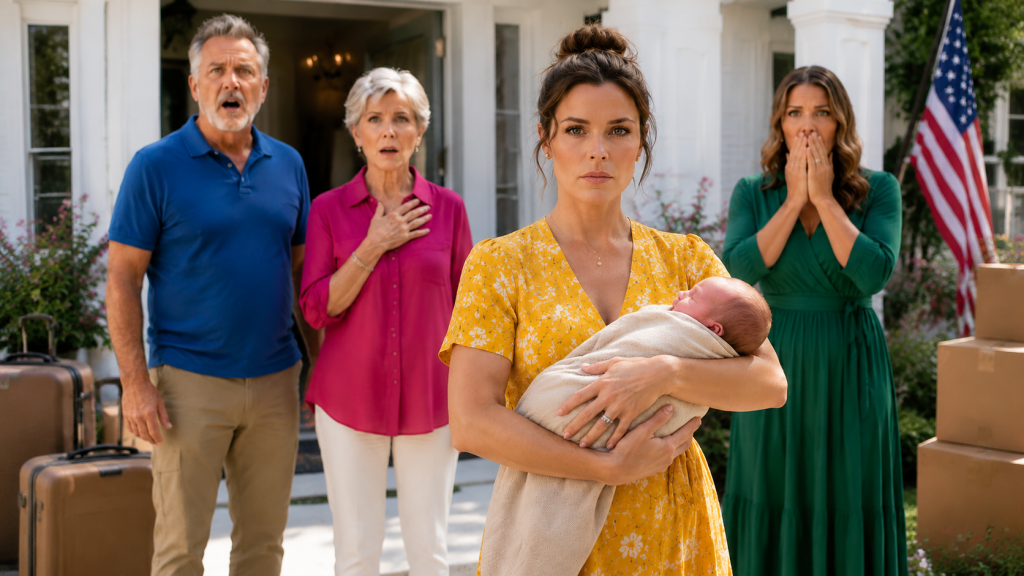
They both looked at Emma.
My mother immediately covered her mouth.
“Oh, Claire…”
Her eyes filled with tears.
“She’s beautiful.”
I said nothing.
My father stepped closer.
“Can I see her?”
I looked at Emma.
Then back at him.
“You can look.”
He stopped.
The words surprised him.
Not because they were cruel.
Because they were a boundary.
A boundary he had never expected from me.
My mother sat down slowly.
“We made mistakes.”
I remained quiet.
“We were wrong to leave.”
Still quiet.
My father looked at the floor.
“We thought you were stronger than you were.”
I felt a familiar pain.
Not anger.
Something deeper.
Disappointment.
Because even now, they were describing my strength as the reason they failed me.
“I was strong because I had no choice,” I said.
My mother wiped her eyes.
“Claire…”
“No.”
My voice was calm.
“I need you to understand something.”
They both looked at me.
“For years, you told me family takes care of family.”
My father nodded.
“Yes.”
“But when I needed my family, you told me to call strangers.”
My mother looked away.
The room became silent.
“I was thirty-two weeks pregnant. I was bleeding. I was alone. I was terrified.”
My voice shook slightly.
“But you were worried about missing a flight.”
“We didn’t know it was that serious,” my father said.
I looked at him.
“You knew enough.”
He had no answer.
Because he did.
They both did.
My mother reached toward my hand.
I moved it away.
A small movement.
But one that carried years of pain.
“I am not here to punish you,” I said.
“Then why are you doing this?”
My father’s voice was low.
“Why are you taking away the house? Why are you cutting off the money?”
I looked at him.
“Because I finally stopped confusing love with obligation.”
He frowned.
“You’re our daughter.”
“Yes.”
“And we’re your parents.”
“Yes.”
“Then why does it feel like you’re abandoning us?”
I looked at Emma.
Then answered.
“Because that is how I felt when you abandoned me.”
Neither of them spoke.
The truth was uncomfortable.
But for once, I was not going to make it easier for them.
My mother started crying.
“We never wanted to hurt you.”
“I believe that.”
She looked surprised.
“You do?”
“Yes.”
I paused.
“But good intentions do not erase consequences.”
That sentence stayed in the room.
My father sat down.
He looked older than I had ever seen him.
“We thought you would always be there.”
I nodded.
“I know.”
“And we took that for granted.”
“Yes.”
He looked at Emma again.
“She deserves better than what we gave you.”
That was the first honest thing he had said.
Not an excuse.
Not a defense.
An admission.
My mother whispered,
“Can we fix this?”
I looked at her.
That was the question I had waited years to hear.
Not “Why are you upset?”
Not “Why are you being dramatic?”
Can we fix this?
But forgiveness does not mean pretending nothing happened.
“I don’t know,” I said.
Her face fell.
“I want to believe people can change. I do.”
I looked at both of them.
“But change means accepting what happened.”
My father nodded slowly.
“What do you need from us?”
I took a deep breath.
“I need you to understand that I am not your retirement plan.”
My mother lowered her eyes.
“I need you to understand that helping you was my choice, but being used was not.”
My father whispered,
“We understand.”
“Do you?”
I looked at them.
“Because the moment I stopped giving money, everything changed.”
Neither answered.
Because that was the truth they could not avoid.
They had been comfortable because of my generosity.
They had confused comfort with entitlement.
Before leaving, my mother stood beside the bed.
“Can I hold her?”
I looked at Emma.
Then at my mother.
A thousand emotions passed through me.
Love.
Pain.
Memories.
Fear.
Finally, I nodded.
“Five minutes.”
My mother carefully took Emma into her arms.
For a moment, she looked like the grandmother I always hoped she would become.
She cried quietly.
“She’s perfect.”
“Yes,” I said.
“She is.”
My father touched Emma’s tiny hand.
Neither of them spoke.
Then they left.
And for the first time, I did not feel empty afterward.
I felt peaceful.
The months that followed were not easy.
My parents had to move out of the lake house.
They rented a smaller home.
They learned how to manage their own finances.
At first, they blamed me.
Then slowly, something changed.
They began taking responsibility.
My mother started working part-time at a local community center.
My father sold some of the things he had collected over the years.
They stopped asking what I could do for them.
Instead, they started asking how I was doing.
It was a small change.
But it mattered.
Six months later, my mother came to my house carrying a small box.
“I found something,” she said.
I opened it.
Inside was a letter Daniel had written before we were married.
My mother had kept it.
I unfolded the paper with shaking hands.
Claire,
If you are reading this, it means life has changed in ways we never expected. I want you to remember one thing. You are kind, but never let anyone convince you that kindness means losing yourself.
I stopped reading.
Because Daniel had known.
He had always known.
I looked at Emma playing nearby.
And I finally understood.
The hardest lesson of my life was not learning how to live without Daniel.
It was learning how to live without needing everyone else’s approval.
My parents hurt me.
They failed me.
But I survived.
And more importantly…
I became the mother my daughter deserved.
Years later, when Emma asked me why we moved away from the lake house, I smiled.
“Because sometimes people need to lose something before they understand its value.”
She thought about that.
Then she asked,
“Did Grandma and Grandpa learn?”
I looked out at the garden where my parents were visiting.
They were older now.
Humbler.
Different.
“Yes,” I said.
“They did.”
Because sometimes the greatest change happens when people finally face the consequences of their choices.
I did not take away my parents’ home because I hated them.
I did it because I needed to stop abandoning myself.
And the day I chose my daughter, my future, and my own worth…
was the day I finally came home to myself.
THE END! THANK YOU FOR READING!