

My stepdad raised me after I lost my mother — just hours before he died, he gripped my hand and whispered, “There’s something I’ve hidden from you your entire life.”
I was four when Frank married my mother.
She passed away not long afterward, but he never abandoned me.
He walked me down the aisle.
He stood proudly beside me at my daughter’s christening.
Even after I was grown, he would sometimes surprise me with the apple pancakes I had adored as a child.
Frank wasn’t just my stepfather.
He was my dad.
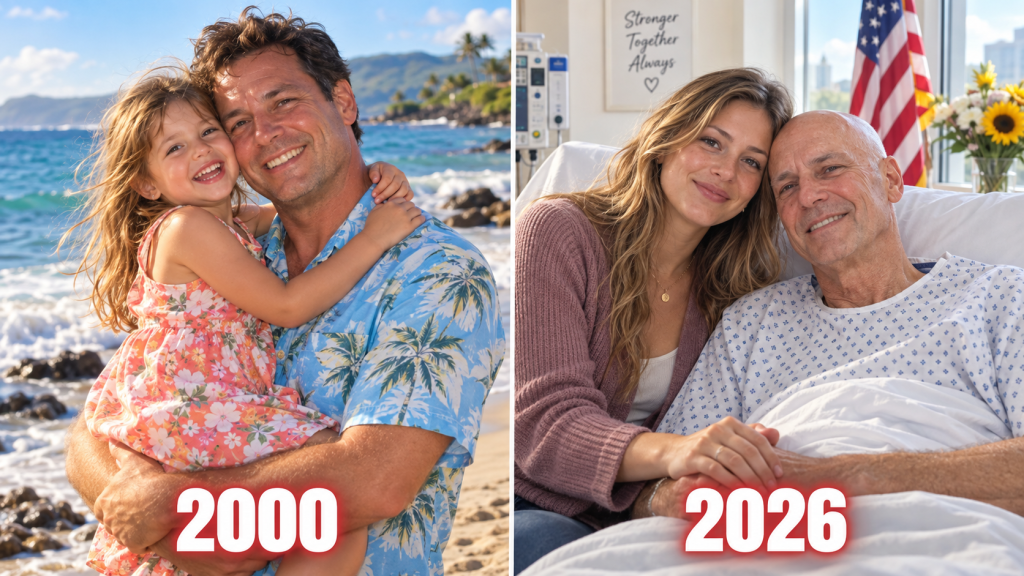
So when his health began failing rapidly, I barely left his hospital bedside.
The night the doctor told me he had only hours left, Frank suddenly closed his hand around my wrist.
“Promise you’ll listen before you decide to hate me.”
“I could never hate you.”
His icy fingers tightened against my skin.
“I’ve lied to you your entire life. Everything you believe about your childhood — and about who I am — is a lie.”
The room seemed to tilt beneath me, but I forced a nervous smile.
“Dad, you’re not making sense. Should I call the doctor?”
Frank slowly shook his head.
“My mind is perfectly clear. I need you to learn the truth before I die, even though someone begged me to carry it to my grave.”
Questions collided inside my head.
Before I could ask a single one, Frank pressed a folded scrap of paper into my palm and pushed my hand away.
“Go there. Now.”
Tears slipped into his gray stubble.
Those were the last words he ever spoke to me.
I stumbled into the hallway and unfolded the paper with trembling hands.
An address had been scrawled across it.
The house was only a short drive from Frank’s home — the place where I had spent nearly my entire childhood.
Every instinct told me not to go, but I couldn’t deny him his final request.
Twenty minutes later, I stopped outside an ordinary-looking house.
It was a small white bungalow with faded green shutters and a porch light glowing above the front door.
Nothing about it looked dangerous.
Nothing about it looked capable of destroying a lifetime.
I sat in my car for nearly five minutes with the scrap of paper resting on my steering wheel.
My hands wouldn’t stop shaking.
Maybe Frank had medication in his system.
Maybe he’d become confused.
Maybe this belonged to an old friend he wanted me to contact.
I kept trying to invent harmless explanations.
None of them explained his words.
Everything you believe about your childhood is a lie.
I finally forced myself out of the car.
As I approached the porch, I silently rehearsed an apology for disturbing strangers so late at night.
But the moment my knuckles touched the door, it swung wide open.
And when I saw the person waiting behind it, I screamed.
The woman standing there looked exactly like my mother.
Not vaguely similar.
Not the way strangers sometimes resemble someone you loved if the lighting is right.
Exactly like her.
Older, of course.
Her dark hair was threaded with silver now, and the soft skin I remembered from photographs was lined around her eyes and mouth.
But she had the same narrow nose.
The same dark brown eyes.
The same tiny scar above her left eyebrow.
A scar I had asked Frank about hundreds of times when I was little.
He always told me my mother had gotten it falling from a bicycle at twelve.
I stumbled backward so suddenly that my heel slipped off the edge of the porch.
The woman reached for me.
“Emma.”
I recoiled.
“Don’t touch me.”
Her hand froze in midair.
Tears immediately filled her eyes.
No stranger should have known my name before I introduced myself.
And there was something worse.
The way she said it.
Not “Emma” like a person reading a name from a piece of paper.
She said it the way Frank had when I was sick.
The way my grandmother used to before she died.
Softly.
As if my name belonged somewhere inside her.
“Who are you?” I whispered.
Her lower lip trembled.
“I think you already know.”
“No.”
“Emma—”
“No.”
I backed down another step.
“My mother is dead.”
The woman covered her mouth.
I saw her shoulders shake.
“My mother died when I was five.”
“I know what you were told.”
“What I was told?”
I laughed, but it sounded almost hysterical.
“There was a funeral. I spent my entire childhood putting flowers on her grave.”
Her expression broke.
“I know.”
That answer hurt more than denial would have.
I stared at her.
“You know?”
She nodded.
“I know.”
A surge of anger suddenly pushed through my fear.
“Then who are you?”
She looked directly into my eyes.
“My name is Laura.”
My mother’s name.
I felt the porch railing beneath my palm and grabbed it.
“No.”
She swallowed.
“You used to call strawberries ‘strawbabies.’”
My breath stopped.
“You hated socks with seams because you said they hurt your toes.”
I couldn’t move.
“When you were three, you had a yellow stuffed duck named Captain. You refused to sleep unless Captain was tucked underneath your chin.”
I stared at her.
Frank had never known about Captain.
Or at least, I didn’t think he had.
I barely remembered him myself.
The woman took one cautious step closer.
“When you were frightened during thunderstorms, you used to crawl into my bed and put both hands over my ears. I would count between the lightning and thunder so you’d know how far away the storm was.”
A memory surfaced so suddenly that my knees weakened.
A dark bedroom.
Rain on glass.
A woman’s voice counting.
One.
Two.
Three.
I had always assumed I’d invented that memory after seeing photographs.
My throat closed.
“No.”
“I’m sorry.”
“No!”
I practically shouted it.
A neighboring porch light flicked on across the street.
The woman flinched.
“Please come inside.”
I didn’t want to.
I wanted to drive straight back to the hospital, shake Frank awake, and demand that he explain what kind of cruel joke this was.
But Frank wasn’t going to wake up.
Somewhere deep inside me, I already knew that.
I stepped through the doorway.
The house smelled faintly of lavender and old books.
On a table beside the entrance sat three framed photographs.
I recognized myself in the first one.
I was about seven, missing my two front teeth, standing beside Frank at a county fair.
In the second, I was sixteen in my high school graduation gown.
In the third, I was wearing my wedding dress.
I picked up the wedding photograph.
It was the same picture Frank kept on his mantel.
Except this copy had a crease down the middle as if someone had folded and unfolded it many times.
My voice came out barely above a whisper.
“How do you have these?”
Laura wiped her cheeks.
“Frank sent them.”
The frame slipped from my hand.
She caught it before it hit the floor.
“Frank sent you pictures of me?”
“Yes.”
“For how long?”
She didn’t answer quickly enough.
My stomach twisted.
“For how long?”
“Your whole life.”
I stared at her.
The room suddenly felt too small.
“You watched me grow up?”
“From photographs.”
“You knew where I was?”
“Yes.”
“You knew who raised me?”
“Yes.”
“And you never came?”
She closed her eyes.
That was all the answer I needed.
Something ugly and furious exploded inside me.
I grabbed my purse.
“I’m leaving.”
“Emma, please.”
“You don’t get to say my name.”
“I understand that you’re angry.”
“Angry?”
I turned on her.
“I buried you!”
My voice cracked.
“I cried for you at school when the other kids made Mother’s Day cards. I used to hide mine in my desk because I didn’t have anyone to give them to.”
Laura pressed both hands against her mouth.
“I spent years wondering whether you would have liked me. I asked Frank whether you would have been proud when I graduated. I wished you were there when I got married. I wanted you when my daughter was born.”
“I know.”
“No, you don’t.”
“I do.”
“You were alive!”
The words tore out of me.
“You were alive for all of it.”
Laura whispered, “Yes.”
I wanted to slap her.
Instead I started crying so violently I could barely see.
“Why?”
Laura moved toward a small table in the living room and picked up a large envelope.
“Because somebody wanted you dead.”
I stopped.
The room went silent.
She held the envelope but didn’t hand it to me yet.
“His name was Victor Hale.”
I knew that name.
I had seen it on one document when I was a teenager.
Victor Hale was supposedly my biological father.
Frank had told me Victor died in a construction accident before I was old enough to remember him.
“What does my father have to do with this?”
Laura looked at me strangely.
Then she said four words that changed my life for the second time that night.
“Victor wasn’t your father.”
I stared at her.
“What?”
“He believed he was.”
My heart started pounding.
“Then who was?”
Laura began crying again.
“Frank.”
For several seconds, I heard nothing.
Not the refrigerator humming.
Not the clock on the wall.
Not the cars passing outside.
Just one word repeating inside my skull.
Frank.
Frank.
Frank.
I laughed once, quietly, because my mind seemed incapable of doing anything else.
“That’s impossible.”
“It isn’t.”
“He was my stepfather.”
“That was the story we told everyone.”
I shook my head.
“He married you when I was four.”
“Yes.”
“He met me when I was four.”
“No.”
I stared at her.
Laura walked to a cabinet and removed an old photograph album.
She opened it on the table.
The first picture showed my mother at maybe twenty-three, sitting on the hood of an old blue car.
Beside her stood Frank.
Young Frank.
His hair was thick and dark.
He had one arm around my mother’s shoulders.
And she was pregnant.
Very pregnant.
Laura turned the page.
Frank was holding a newborn baby.
Me.
On the back, in handwriting I recognized as his, were the words:
Emma Grace. Six days old. Best thing I’ve ever held.
My fingers began trembling.
“No.”
Laura opened another page.
Frank feeding me from a bottle.
Frank asleep in a chair with baby me on his chest.
Frank holding my hands while I tried to stand.
Images of a childhood I had been told never existed.
“He was there when I was born?”
Laura nodded.
“He was outside the delivery room.”
“Why did he pretend he barely knew me until I was four?”
“To keep you alive.”
I sank into a chair.
Laura sat across from me but kept several feet between us.
She seemed afraid that getting too close would make me leave.
For a while, neither of us spoke.
Finally I whispered, “Start at the beginning.”
Laura took a breath.
“I married Victor when I was nineteen.”
She told me Victor had been charming at first.
Generous.
Funny.
The kind of man who could enter a room full of strangers and leave with everyone convinced they’d known him for years.
But the charm didn’t last at home.
The first time he hit her, they had been married six months.
Afterward, he cried harder than she did.
He bought flowers.
Promised it would never happen again.
Then it happened again.
And again.
By the time Laura tried to leave, Victor had already isolated her from most of her friends and controlled every dollar she spent.
Frank had known my mother before Victor.
They had grown up only a few streets apart.
Frank was the shy boy who fixed bicycles for neighborhood kids and spent weekends rebuilding an old motorcycle in his father’s garage.
He and Laura had dated briefly in high school.
Then life pulled them apart.
Years later, Frank ran into her at a grocery store.
Laura was wearing sunglasses on a cloudy afternoon.
Frank noticed the bruise underneath them.
“He asked me once whether Victor was hurting me,” Laura said.
“I lied.”
She stared at her hands.
“Frank told me that if I ever needed somewhere safe, I could come to him. No questions.”
It took her almost a year to do it.
One night after Victor threw her down a staircase, she packed a small bag and ran.
Frank let her sleep in his spare room.
For weeks he never touched her.
Never pressured her.
He simply helped her find a lawyer and gave her rides to work.
Victor refused to accept the separation.
He followed her.
Called her workplace.
Threatened Frank.
Laura obtained a restraining order.
Victor ignored it.
Several months later, while the divorce was still tied up in court, Laura and Frank became more than friends again.
“I’m not proud of every choice I made,” she said. “But by then my marriage existed only on paper.”
Soon afterward, she discovered she was pregnant.
With me.
Victor found out before Laura could finalize the divorce.
“He said the baby was his.”
“But you knew I wasn’t?”
“Yes.”
“Did Frank know?”
“Yes.”
Laura smiled faintly through her tears.
“He cried when I told him.”
That sounded like Frank.
The man I knew cried when I told him I was pregnant with my daughter.
He cried when I graduated college.
He even cried at dog food commercials if the dog looked particularly lonely.
Laura continued.
Victor began making threats.
Not vague threats.
Specific ones.
If Laura publicly named Frank as the father, Victor said he would make sure Frank never lived long enough to raise me.
He claimed me as his child because Laura was still legally married to him during part of the pregnancy.
Victor had friends in places Laura didn’t understand then.
He was involved in stolen construction equipment, fraudulent insurance claims, and money laundering through several small businesses.
Laura had accidentally discovered financial records connecting him to men who had already been investigated for violent crimes.
“He wasn’t just an angry husband,” she said.
“He was dangerous.”
“Why didn’t you go to the police?”
“I did.”
She laughed bitterly.
“Many times.”
Sometimes they helped.
Sometimes Victor disappeared before they arrived.
Sometimes he spent one night in jail and came home worse.
Then one detective finally took her seriously.
Laura began secretly giving investigators documents she had copied from Victor’s office.
Bank records.
Names.
Dates.
Photographs of ledgers.
Eventually Victor was arrested.
Laura believed it was over.
For the first time, she thought we could become a normal family.
Frank wanted to put his name on my birth certificate.
Laura wanted to marry him.
Then Victor made bail.
Two days later, someone smashed every window in Frank’s house.
The following week, Laura found a photograph of toddler me tucked beneath her windshield wiper.
A red circle had been drawn around my face.
My stomach turned.
“He threatened me?”
Laura nodded.
“He called that night.”
“What did he say?”
She looked away.
“That if I testified, he would bury my child before I ever reached the courthouse.”
I felt suddenly cold.
Laura and Frank began moving from place to place.
Friends’ homes.
Cheap motels.
Once they stayed in a cabin belonging to Frank’s uncle for almost two months.
That explained why some of my earliest memories had never fit the childhood story I was told.
Different bedrooms.
Different curtains.
A long car ride in darkness.
Frank carrying me while I pretended to sleep.
Eventually Victor was arrested again on unrelated charges.
Laura and Frank believed they had time.
They married quietly when I was four.
To everyone around us, Frank became my stepfather.
They kept my true paternity secret.
Then Victor’s case began collapsing.
A witness vanished.
Another refused to testify.
One investigator warned Laura that Victor’s associates were searching for her.
And then somebody tried to run Frank’s car off the road while I was inside it.
Laura’s voice broke.
“That was the moment I knew he would never stop.”
My memory flashed.
Rain.
A horn.
Frank shouting.
A car swerving.
For years I had believed it was a nightmare.
“You were in the back seat,” Laura whispered. “Frank hit the guardrail instead of letting the other car force us over the embankment.”
I pressed both hands over my face.
Frank had a thin scar along his right shoulder.
He always said it came from a motorcycle accident.
Another lie.
“What happened next?”
Laura stared at me for a long moment.
“I disappeared.”
The plan had been desperate.
Victor wanted Laura.
He believed she possessed copies of documents that could put him away for years.
Frank and Laura decided that as long as Victor believed she was alive, he would keep hunting.
But if he thought she was dead, Frank and I might become useless to him.
Laura abandoned her car near a river after a storm.
Her coat and purse were left inside.
Blood from a cut on her arm was smeared across the driver’s seat.
The river was searched for days.
No body was found.
Eventually everyone assumed the current had taken her.
Frank told five-year-old me that my mother had died.
Years later, after she was legally declared dead, he bought a cemetery plot and placed a marker there so I would have somewhere to grieve.
The grave I visited every birthday contained no body.
I felt sick.
“You stood beside me at that grave.”
Laura nodded miserably.
“I know.”
“No. Frank stood beside me.”
“Yes.”
“You knew?”
“He told me.”
“How could either of you do that?”
Laura began sobbing.
“Because the alternative was letting Victor find you.”
“You don’t know that.”
“We did.”
“How?”
She reached for the envelope.
Inside were photocopies of letters.
The first was written in Victor’s handwriting.
I knew because Laura showed me another document with his signature.
The letter was short.
Tell Laura the little girl pays first.
My stomach tightened.
The next contained a photograph of me at a playground.
I looked about four.
Someone had taken it from behind a fence.
On the back:
Pretty kid. Shame if she grows up without a mother.
There were more.
Dates.
Threats.
Reports.
A newspaper clipping about Victor’s arrest.
Another clipping about a warehouse fire connected to one of his former business partners.
“This could have been fabricated,” I said weakly.
“I wish it had been.”
Laura reached deeper into the envelope and pulled out a cassette tape.
“Frank kept the original recording.”
“What recording?”
“One of Victor’s phone calls.”
I didn’t want to hear it.
But I did.
Laura had an old cassette player sitting on a shelf.
She inserted the tape.
Static filled the room.
Then a man’s voice.
Calm.
Almost amused.
“If you disappear, Laura, I’ll find the girl.”
My entire body went rigid.
Laura’s younger voice answered.
“If you touch her—”
“You’ll what?”
The man laughed.
“You think Frank can protect her every second? School. Grocery store. Playground. Kids wander off.”
Laura stopped the tape.
I was shaking.
For the first time, her disappearance stopped looking like simple abandonment.
But understanding wasn’t forgiveness.
Not yet.
“How long were you gone?”
“Twenty-nine years.”
I looked at her.
Twenty-nine years.
Nearly my entire life.
“Where?”
“Different places.”
At first she stayed with an aunt in another state under a different surname.
Then she moved again.
She worked in a bakery.
Later in a library.
For years she avoided social media entirely.
Frank communicated with her through a post office box registered under someone else’s name.
They had rules.
No telephone calls unless absolutely necessary.
No visits.
No letters containing addresses.
No photographs that showed street names, schools, businesses, or anything someone could use to identify where I lived.
“And you accepted that?”
“I hated it.”
“But you accepted it.”
“Yes.”
“Why didn’t you take me with you?”
That was the question that mattered most.
Laura looked devastated.
“We considered it.”
“Then why didn’t you?”
“Because Victor expected me to take you.”
I frowned.
“He was watching airports. Relatives. Friends. He had people asking about you. Frank was the one person Victor believed I would eventually contact. But once the police reported me missing and everyone assumed I was dead, Victor stopped looking for you.”
“Because I stayed with Frank.”
“Yes.”
“If I’d disappeared too—”
“He would have known I was alive.”
I looked away.
Laura whispered, “You were safest as the grieving child of a dead woman.”
The sentence made me flinch.
It was awful.
Cruel.
And I could see the logic.
I hated that most of all.
My phone suddenly rang.
The hospital.
I stared at the screen.
Laura’s face went pale.
I answered.
A nurse spoke softly.
“Mrs. Bennett?”
“Yes.”
“I’m calling about Frank Mercer.”
I closed my eyes.
He had died twelve minutes earlier.
The nurse said he had been peaceful.
She said someone had been holding his hand.
I didn’t hear the rest.
When the call ended, I remained sitting there with the phone against my ear.
Laura understood.
“He’s gone?”
I nodded.
A sound came from her that I will never forget.
It was not quite a sob.
It was grief dragged up from somewhere that had been buried for decades.
She folded forward, covering her face.
And for one second, despite everything, I saw not the woman who abandoned me.
I saw someone who had just lost the man she had loved for most of her life.
Then anger returned.
“You could have seen him.”
Laura looked up.
“What?”
“You’re twenty minutes away.”
“He asked me not to go to the hospital.”
“You listened?”
“He said that room belonged to you.”
I stood.
“Stop making him sound noble.”
“I’m not.”
“You both lied to me.”
“Yes.”
“For thirty years.”
“Yes.”
“And apparently I’m supposed to be grateful?”
“No.”
Her answer stopped me.
Laura stood slowly.
“You don’t owe me gratitude.”
She wiped her face.
“You don’t owe me forgiveness either.”
I stared at her.
“You owe me the truth.”
“Yes.”
“All of it.”
“Yes.”
“Was Frank really my father?”
“Yes.”
“Can you prove it?”
Laura walked into another room.
She returned carrying a small metal box.
Inside were birth records, photographs, and an old laboratory envelope.
A private paternity test.
Completed when I was six months old.
Probability of paternity: 99.98%.
Father: Franklin Mercer.
I read the page three times.
Frank.
My dad.
Not by choice.
Not because he was unusually kind.
Not because some widowed man had decided to raise another person’s child.
He had raised his daughter.
I started crying again.
Suddenly dozens of moments from my childhood took on another meaning.
The way people always said we had the same stubborn chin.
The way Frank laughed when I developed an obsession with fixing broken radios.
The way he kept every report card.
The way he once drove six hours through a snowstorm because my college roommate called and said I had pneumonia.
The way he whispered, “Your mother would be proud,” when he walked me down the aisle.
He hadn’t merely been honoring his dead wife.
He had been loving our mother for both of us.
And lying every day.
“Why didn’t he tell me after Victor went to prison?”
Laura’s face changed.
“He wasn’t in prison continuously.”
Victor served several years.
Then charges were reduced on appeal.
He was released.
He disappeared.
For almost a decade, they didn’t know where he was.
Every few years, something happened.
A strange call.
Someone asking questions about Laura.
A letter with no return address.
Once Frank found a photograph of me in his mailbox while I was in college.
No message.
Just the picture.
I remembered that semester.
Frank had suddenly become almost unbearable about safety.
Calling every night.
Insisting I never walk across campus alone.
I thought he was being overprotective.
Now I understood.
“When did Victor die?”
“Eight months ago.”
I looked at her sharply.
“Eight months?”
She nodded.
“He died in a prison hospital. Cancer.”
“And you came back?”
“Six weeks ago.”
That explained the house.
Laura hadn’t lived near Frank all these years.
She had rented this bungalow after Victor’s death.
“Frank called me after his diagnosis became terminal,” she said.
“He said there was no longer any reason for me to stay away.”
“So why didn’t you come to me?”
“I wanted to.”
“But?”
“I was afraid.”
I laughed bitterly.
“You were afraid?”
“Yes.”
“Of me?”
“Of destroying you.”
“You should have thought of that before pretending to be dead.”
“I did. Every day.”
I wanted to hate her.
It would have been simpler.
But nothing about the woman in front of me looked simple.
She had lost decades too.
Some by choice.
Some by fear.
Some because a violent man had taught her that disappearing was the only way to protect the people she loved.
That didn’t erase what she had done.
It just made the wound harder to name.
I left without hugging her.
Before I reached the door, Laura called after me.
“Emma.”
I turned.
She held out another envelope.
“This is from Frank.”
I almost refused it.
Then I took it.
I read it alone in my car.
Emma,
If you are reading this, then either I found the courage to tell you, or death finally scared the cowardice out of me.
There is no version of this letter where I look innocent.
I lied to you.
Your mother lied to you.
We told ourselves every lie was protecting you.
At first, I believe that was true.
Later, I’m not sure.
Fear becomes a habit if you practice it long enough.
By the time Victor was no longer a danger, I had spent so many years being your stepfather that I didn’t know how to tell you I had been your father all along.
That is my greatest shame.
I wanted to tell you when you turned eighteen.
Laura begged me not to.
Then I wanted to tell you when you got married.
I lost my nerve.
Then Sophie was born, and I held my granddaughter for the first time and almost told you right there in the hospital.
But I looked at your face and realized the truth would not only give you a mother.
It would also take away the childhood you thought you understood.
So I waited.
I kept waiting until there was almost no time left.
You once asked why I never remarried.
I told you I had already had the love of my life.
That was one truth inside thousands of lies.
I loved your mother.
I still do.
I also know you may never forgive her.
Please do not forgive her for me.
Decide for yourself.
Be angry.
Ask questions.
Walk away if you need to.
But know this.
Laura did not leave because she didn’t love you.
She left because someone convinced us that loving you meant becoming a ghost.
And Emma, there is one truth I should have given you from the day you could understand it.
I am your father.
I was there when you were born.
I heard your first cry.
I changed your first diaper badly enough that the nurse laughed at me.
I held your hands when you took your first steps.
I taught you to ride a bicycle before Victor knew where we were living.
Every Father’s Day card you gave me belonged to me more than you ever knew.
You never owed me gratitude for raising you.
You were mine.
I was yours.
That was never charity.
It was the greatest privilege of my life.
I hope someday when you think of me, the lie is not bigger than the love.
Dad.
I sat in the dark car until nearly two in the morning.
I read the letter again.
Then again.
When I finally drove home, my husband, Daniel, was waiting in the kitchen.
He took one look at my face and didn’t ask why I was late.
He simply stood.
“Frank?”
I nodded.
Daniel wrapped his arms around me.
I cried into his chest until his shirt was soaked.
Eventually he whispered, “What happened?”
I pulled away.
“My mother is alive.”
He stared at me.
I almost laughed because I knew exactly how insane it sounded.
Then I told him everything.
It took nearly an hour.
Daniel barely interrupted.
When I finished, he sat quietly for a while.
Finally he asked, “What do you want to do?”
“I don’t know.”
“Do you want to see her again?”
“I don’t know.”
“Do you believe her?”
That question was harder.
I looked at Frank’s letter on the table.
“Yes.”
Saying it out loud hurt.
Daniel reached for my hand.
“You don’t have to decide what she means to you tonight.”
For the next few days, grief swallowed everything else.
Frank’s funeral was scheduled for Saturday.
I handled arrangements because he had asked me years ago to keep things simple.
No elaborate service.
No expensive flowers.
“No point buying five thousand dollars’ worth of plants when I can’t complain about the colors,” he used to joke.
I chose white lilies anyway.
He hated lilies.
That was my revenge.
The morning before the funeral, I went to Frank’s house.
Our house.
The place where I had grown up.
For the first time, the familiar rooms felt like a stage after the actors had gone home.
Every object seemed suspicious.
What else had been hidden from me?
In the hall closet, Frank’s coat still hung on its hook.
His coffee mug was beside the sink.
On the refrigerator was a drawing Sophie had made for him.
GRANDPA + ME, written in purple marker.
I sat at the kitchen table and cried.
After a while I remembered something Laura had said.
Frank sent photographs.
I started searching.
I hated myself for doing it.
It felt like snooping.
Then I reminded myself that Frank had spent thirty years deciding what I was allowed to know.
I opened drawers.
Boxes.
Old cabinets.
Nothing.
Finally I climbed into the attic.
Behind Christmas decorations and a broken fan, I found a wooden trunk I had seen many times as a child.
Frank always said it contained old tax records.
The lock was gone.
Inside were hundreds of letters.
Every one was from Laura.
My mother had written to me for twenty-nine years.
Emma lost her first tooth today, one began.
She cried because she thought the tooth fairy might steal the others while she slept.
Another:
Frank, please tell her I am sorry I wasn’t there for her first day of school. Don’t say those words to her. I know you can’t. Just hug her for me.
Another:
She looks so beautiful in the prom picture. Does she still wrinkle her nose when she laughs?
Another:
I saw the graduation photograph. I had to leave work early because I couldn’t stop crying.
Then:
My baby got married today and I watched it happen in photographs three weeks later.
Please tell me she was happy.
Please tell me she didn’t look for me.
Please lie if you need to.
Near the bottom of the trunk was one written after Sophie’s birth.
Frank,
I stared at our granddaughter’s picture for two hours.
She has Emma’s eyes.
Do you remember when Emma used to fall asleep holding your thumb because her hand was too small to wrap around anything else?
I would give anything to hold Sophie once.
But I understand.
Love her for me.
Love them both enough for me.
Laura.
I pressed the letter against my chest.
My anger didn’t disappear.
But for the first time, I understood something important.
Laura had not escaped into a happier life.
She had built a prison without walls and lived inside it voluntarily because she believed the people she loved were safer without her.
Maybe she had been wrong.
Maybe Frank had been wrong.
But they had paid for the mistake too.
At the very bottom of the trunk was a bundle of letters tied with blue ribbon.
They were addressed directly to me.
Dear Emma.
Dozens.
None had ever been sent.
The earliest was dated shortly after Laura disappeared.
My sweet girl,
You asked me yesterday why birds know where home is.
I told you they feel it.
I hope someday you can still feel me, even if I can’t come home.
I couldn’t finish.
I closed the trunk.
Then I called Laura.
She answered on the first ring.
“Hello?”
“It’s me.”
Silence.
Then a shaky breath.
“Emma.”
“I found the letters.”
Another long silence.
“I’m sorry.”
“I believe you.”
She started crying.
“I’m still angry.”
“I know.”
“I don’t know if I can call you Mom.”
“You don’t have to.”
“I don’t know what you are to me yet.”
“I understand.”
I closed my eyes.
“Frank’s funeral is tomorrow.”
Laura didn’t speak.
“If you want to come, you can.”
Her breath caught.
“Are you sure?”
“No.”
That was the truth.
“But he loved you.”
“Yes.”
“And you loved him.”
“Every day.”
“Then come.”
Laura sat in the last row at Frank’s funeral.
Most people assumed she was an old friend.
A few elderly relatives stared at her longer than seemed normal, but nobody confronted her.
Maybe age had changed her enough.
Maybe people see what they expect to see.
I stood at the front and delivered the eulogy.
I had rewritten it six times.
In the end, I decided not to expose Frank’s secret publicly.
Not because I was ashamed.
Because that truth belonged to me first.
I stood beside his casket and looked at the faces of neighbors, former coworkers, old friends, and family.
“When I was five,” I began, “Frank Mercer became the person who stayed.”
My voice trembled.
“He packed my lunches. He checked beneath my bed for monsters. He taught me to drive, although he spent most of those lessons gripping the dashboard and praying.”
People laughed softly.
“He never missed a birthday. He pretended not to cry at my wedding. He spoiled my daughter shamelessly.”
I looked toward Laura.
She was already crying.
“For most of my life, I believed Frank chose to love a child who wasn’t his.”
I paused.
My hands shook around the paper.
“I learned this week that the truth was more complicated than that.”
Laura’s eyes widened.
I continued.
“But some truths don’t need every detail spoken aloud to matter.”
I looked at Frank’s casket.
“He was my father in every way I ever understood that word.”
Then, for the first time publicly, I said:
“And I was his daughter.”
After the burial, people gradually left.
Laura remained several yards away.
I stood beside Frank’s grave until only the two of us remained.
Eventually she approached.
The wind moved through the trees.
For a moment we simply stared at the fresh earth.
“He hated ties,” Laura said.
I looked at her.
“He was buried in one.”
A laugh escaped me before I could stop it.
“Daniel chose it.”
“Frank would come back just to complain.”
“He’d complain about the lilies first.”
Laura smiled.
“He hated lilies.”
“I know.”
Our laughter faded.
I stared at Frank’s name on the temporary marker.
“Did you ever see him after you left?”
“Once.”
I turned sharply.
“When?”
“Seventeen years ago.”
“Where?”
“At a bus station three towns from here. Victor had been missing for years. We convinced ourselves one meeting would be safe.”
“What happened?”
“We sat together for forty-three minutes.”
She smiled sadly.
“He brought coffee. It was terrible.”
“That sounds like him.”
“We talked about you.”
“Only me?”
“Mostly.”
She looked at the grave.
“Then he got on a bus and went home.”
“That was it?”
Laura nodded.
“I wanted to go with him.”
“Why didn’t you?”
“Because fear had already become our religion.”
Frank’s letter echoed in my mind.
Fear becomes a habit if you practice it long enough.
I understood then what he meant.
The danger had been real.
But danger had also outlived itself inside them.
Even when Victor wasn’t standing outside the door, they still behaved as if he were.
“I’m angry you didn’t come back sooner,” I said.
“You should be.”
“I’m angry Frank didn’t tell me.”
“Yes.”
“I’m angry that both of you decided I was too fragile to know my own life.”
Laura looked down.
“We did.”
“And I don’t want you explaining that away.”
“I won’t.”
I studied her.
This woman had given birth to me.
She had also vanished.
Both things were true.
She had loved me.
She had hurt me.
Both things were true too.
“I have a daughter,” I said.
Her eyes filled.
“Sophie.”
“You know her name.”
“I know everything Frank was willing to tell me.”
“She’s nine.”
“I know.”
“She thinks my mother died before she was born.”
Laura’s face crumpled.
“I know.”
“I’m not going to lie to her.”
Laura nodded.
“You shouldn’t.”
“If you become part of our lives, she gets the truth. An age-appropriate version, but the truth.”
“I understand.”
“And you don’t get to disappear again because things become uncomfortable.”
“I won’t.”
“You don’t know that.”
“No.”
She looked directly at me.
“But if you give me the chance, I will spend whatever time I have left proving it.”
I didn’t hug her.
Not that day.
But I gave her my phone number.
It was a beginning.
The first time Sophie met Laura happened two weeks later.
I told Sophie there was someone important she needed to meet.
Daniel and I explained that Grandma Laura had been alive but had stayed away because a dangerous person had once threatened our family.
Sophie listened with the serious expression children use when adults give them information that seems impossible.
Finally she asked, “So she’s your mom?”
“Yes.”
“And you thought she was in heaven?”
“Yes.”
“But she was actually in Ohio?”
I laughed despite myself.
“Not exactly Ohio the whole time.”
Sophie considered this.
“That is very confusing.”
“You’re telling me.”
When Laura arrived, she brought nothing.
No toys.
No gifts.
Later she told me she had wanted to bring half a store but worried it would look like she was trying to buy affection.
Sophie stared at her for several seconds.
Then she said, “You look like Mom.”
Laura’s eyes filled with tears.
“So do you.”
Sophie looked at me.
“Can I hug her?”
The question nearly broke me.
I nodded.
Laura knelt.
Sophie wrapped her arms around her.
Laura closed her eyes and held my daughter as if someone had returned oxygen to the room after twenty-nine years.
I had to turn away.
Our relationship did not magically become easy.
There were days I couldn’t speak to Laura.
Some stories hurt too much.
The first Christmas after Frank died, she mentioned a toy I had loved when I was six.
I suddenly realized she had known what I received that year.
I became furious.
I asked how she could possibly know that and still stay away.
We argued.
I told her she had no right to collect memories of a childhood she refused to participate in.
She cried.
I cried.
Then she left.
For two days, we didn’t speak.
On the third morning, I found an envelope beneath my door.
Inside was a letter.
I am learning that saying I stayed away because I loved you can sound like an excuse.
I don’t want to use love to erase the pain I caused.
I believed leaving protected you.
But there were years when I could have tried harder to find another way.
I was afraid.
Sometimes afraid for you.
Sometimes afraid for myself.
You deserve to know the difference.
I am sorry.
Laura.
That letter mattered.
Not because it fixed anything.
Because for once she wasn’t defending herself.
A few months later, we began seeing a family therapist together.
Laura hated the idea at first.
So did I.
Frank would have hated it most of all.
He believed nearly every emotional problem could be improved with pancakes, garage work, or pretending nothing was wrong until it became funny.
Therapy helped us say things we couldn’t say alone.
I told Laura that losing a mother twice was harder than losing one once.
The first time, I had lost her to death.
The second time, I had lost the version of her I had spent my life loving.
The dead mother in my imagination had never chosen to leave me.
The living woman had.
Laura told me she understood.
Then she said something I didn’t expect.
“You’re allowed to love the mother you thought died more easily than you love me.”
That sentence stayed with me.
One afternoon, nearly a year after Frank’s death, Laura came to my house carrying a battered recipe notebook.
“I found this in a box Frank mailed me years ago,” she said.
Inside, written in Frank’s terrible handwriting, was his apple pancake recipe.
I laughed.
“No.”
“What?”
“He always claimed it was secret.”
Laura smiled.
“It wasn’t even his.”
“What do you mean?”
“It was mine.”
I stared at her.
She pointed to a faded recipe taped beneath Frank’s handwritten version.
There was Laura’s handwriting.
Apple pancakes — extra cinnamon for Emma.
I read it twice.
“You made them?”
“When you were little.”
“All these years I thought they were Dad’s.”
“They became his.”
That was the strange thing about families, I realized.
Stories pass from one person to another until ownership stops mattering.
Laura and I made the pancakes together.
We burned the first batch.
Frank would have found that hilarious.
Sophie wandered into the kitchen and stole one before it reached the table.
Daniel complained that nobody had saved him enough.
For a brief moment, the room felt ordinary.
Not healed.
Not magically restored.
Just ordinary.
And ordinary felt enormous.
Later that afternoon, I drove alone to the cemetery.
I brought two things.
Flowers for Frank.
And the small metal plaque that had once marked my mother’s empty grave.
Laura had asked the cemetery to remove it after telling the appropriate people the truth.
For nearly thirty years, that stone had carried the name of a woman who was still breathing somewhere.
I set the old plaque beside Frank’s headstone.
His permanent stone had finally arrived.
FRANKLIN MERCER
BELOVED FATHER AND GRANDFATHER
I had chosen those words myself.
I sat in the grass.
“I’m still mad at you,” I told him.
The wind moved through the branches.
“You should have told me.”
No answer.
Typical Frank.
He had always become suspiciously interested in fixing something whenever a conversation got emotionally complicated.
I smiled.
“I found out about the pancakes.”
A bird hopped across the grass a few feet away.
“Mom says they were hers.”
Saying Mom still felt strange.
But it didn’t feel impossible anymore.
“I think you stole the recipe.”
I laughed softly.
Then I rested my hand against the stone.
“For what it’s worth, I don’t hate you.”
My throat tightened.
“I tried.”
Tears slipped down my face.
“I was furious enough that I wanted to.”
I thought about his final expression.
Promise you’ll listen before you decide to hate me.
“I understand why you were afraid.”
I paused.
“I also understand that fear made you make choices you didn’t have the right to make for me.”
That was the truth I had finally learned to hold.
Love did not automatically excuse harm.
Good intentions did not erase consequences.
But a mistake did not erase a lifetime of love either.
Frank had lied to me.
Frank had protected me.
Frank had been afraid.
Frank had been brave.
Frank had been my father.
All of those things could exist at once.
Before leaving, I touched the headstone one last time.
“Dad?”
The word felt different now.
He had always been Dad.
But now I knew it was true in every sense.
“Thank you for staying.”
Two years have passed since that night at the hospital.
Laura lives fifteen minutes from us now.
We are still learning each other.
Sometimes I discover something small and beautiful.
She hums when she cooks.
I do the same thing.
She hates peaches.
So do I.
She cries when she gets angry.
Apparently I inherited that too.
Sometimes I discover things that hurt.
She remembers birthdays she didn’t attend.
She knows the names of teachers she never met.
Frank told her about boyfriends I had long forgotten.
There are still moments when I want to ask why love wasn’t enough to make her come home.
Then I remember that love was exactly what convinced her to leave.
That doesn’t make it right.
It makes it tragic.
Sophie calls her Grandma Laura.
The first time she said it, Laura went into the bathroom and cried for ten minutes.
Daniel pretended not to notice.
I noticed.
Of course I did.
Last Sunday, Laura came over early.
I found her in the kitchen making apple pancakes.
She had flour on her cheek.
Sophie was standing on a chair beside her, stirring batter.
“You’re doing it wrong,” I said.
Laura turned.
“Excuse me?”
“Frank used more cinnamon.”
“He absolutely did not.”
“He did.”
“He stole my recipe.”
“He improved your recipe.”
Sophie groaned.
“You two argue about pancakes every week.”
Laura and I looked at each other.
Then we started laughing.
For a second, I imagined Frank sitting at the kitchen table.
Coffee in one hand.
That crooked smile on his face.
Pretending not to be pleased that the two people he loved most had finally found their way into the same room.
After breakfast, Laura helped Sophie with a school project.
I stood in the doorway and watched them.
Years ago, that sight would have been impossible.
A dead woman sitting beside her granddaughter.
A daughter learning that grief had been built around a secret.
A family continuing after discovering that its history had been written partly in fear.
I used to believe truth worked like a light switch.
On or off.
Known or hidden.
Right or wrong.
I know better now.
Sometimes truth arrives too late to save what was lost.
Sometimes it destroys stories you needed in order to survive.
Sometimes it gives you back people you had already mourned.
And sometimes the truth is simply this:
Frank lied to me.
Laura left me.
Victor frightened both of them into believing disappearance was safer than honesty.
I lost years I can never recover.
But I also had a father who stayed beside me through every scraped knee, every heartbreak, every graduation, every ordinary Tuesday.
A father who secretly kept photographs moving between a daughter and the mother who could not come home.
A father who carried an impossible secret until the weight of dying became heavier than the fear of telling me.
I wish he had told me sooner.
I will always wish that.
But his final confession did not destroy my childhood.
It changed the way I understood it.
The man I believed had chosen to raise somebody else’s daughter had actually been holding his own daughter all along.
Every apple pancake.
Every bedtime story.
Every ridiculous driving lesson.
Every Father’s Day card.
Every hug.
They had all belonged to us more completely than I ever knew.
And the woman I had mourned for almost thirty years had not stopped being my mother when she disappeared.
She had simply become a frightened woman making a terrible choice for a reason she believed was good enough.
I cannot give those lost years back to either of us.
What I can do is decide what happens with the years we still have.
So now, when Laura knocks on my door, I open it.
Sometimes I even call her Mom.
And every time I visit Frank’s grave, I tell him something new.
Last week I told him Sophie wants to learn how to fix a bicycle.
Yesterday I told him Laura finally admitted his pancake version might actually be better.
And this morning, before we left the cemetery, I rested my palm against his name and whispered the answer to the question he had been too afraid to ask before he died.
“No, Dad. I don’t hate you.”
I smiled through my tears.
“I finally know who you were.”
Then I looked at the word carved beneath his name.
Father.
And for the first time in my life, I understood just how true it had always been.
💬THE END! THANK YOU FOR READING!