
The name flashing across my phone screen was Marcus Bell.
I had known Marcus for nearly twenty-five years.
He was the kind of man who never called twice unless something was seriously wrong.
And considering what had happened at my mother’s house that evening, I had a terrible feeling I already knew why he was calling.
I glanced across the diner booth.
Owen was finishing his burger.
Lucy had somehow managed to get whipped cream on her nose, her sleeve, and the edge of her birthday card for Grandma.
Neither child looked particularly interested in the phone vibrating beside my coffee.
For the first time that evening, they looked happy.
I intended to keep it that way.
“Give me a minute,” I told them.
Owen nodded.
“Are we in trouble?”
The question caught me off guard.
“Of course not.”
“Because Aunt Brooke looked really mad when we left.”
I swallowed.
“Sometimes adults get angry when someone refuses to do what they want. That doesn’t mean the person refusing has done anything wrong.”
He considered that for a moment.
Then he went back to his fries.
I stepped outside the diner and answered Marcus’s call.
“Hey, buddy.”
“Rupert, I’ve got a strange situation over here.”
Marcus sounded tired.
Not irritated.
Not amused.
Just deeply confused.
“What happened?”
“Your sister called my emergency number about twenty minutes ago. Said your mother’s furnace shut down and the house was getting cold.”
“I know.”
“She told me you authorized an emergency service visit.”
My jaw tightened.
“I authorized nothing.”
There was a pause.
“That’s what I figured.”
“Why?”
“Because she also told my dispatcher that you were unavailable because you were having some kind of emotional breakdown.”
I closed my eyes.
Of course she had.
Brooke had never been particularly creative with her lies.
She simply relied on delivering them with enough confidence that people stopped asking questions.
“What exactly did she say?”
“That you stormed out of a family dinner, abandoned your responsibilities, and were refusing to answer your phone.”
I looked through the diner’s front window.
My children sat beneath a cheerful red neon sign.
Lucy was laughing at something Owen had said.
They were warm.
They were safe.
And apparently, according to my sister, getting them out of the freezing driveway constituted an emotional breakdown.
“Marcus,” I said, “did she mention why I left?”
“No. But based on your voice, I’m guessing there’s more to it.”
“She wanted Owen and Lucy to sit in my truck while everyone else ate dinner because her twins don’t like them.”
Silence.
Then Marcus said, “In this weather?”
“Thirty degrees.”
“During dinner?”
“Apparently children are now expected to observe boundaries from the parking lot.”
Marcus released a long breath.
“You’ve got to be kidding me.”
“I wish I were.”
“Where are your kids now?”
“Inside a diner. Eating enough sugar to concern a dentist.”
“Good.”
His voice softened.
“Keep them there.”
I leaned against the brick wall.
“What’s going on with the furnace?”
“That’s the other strange part.”
“What do you mean?”
“Brooke said the entire heating system failed. But when I asked whether the thermostat was displaying an error code, she wouldn’t answer.”
“Maybe she doesn’t know how to check.”
“Possibly. But then she asked whether I could bill everything directly to you.”
I almost laughed.
“Of course she did.”
“She said you always cover the house expenses.”
For a few seconds, I stared at the empty parking spaces beneath the streetlights.
There it was.
The assumption that had governed my family for years.
Rupert pays.
Rupert fixes.
Rupert handles it.
And when Rupert becomes inconvenient, Rupert is expected to disappear until the next problem requires his wallet.
“Marcus, don’t dispatch anyone without speaking directly to my mother. And don’t put anything on my account.”
“Already told my dispatcher that.”
“Thanks.”
“One more thing.”
Something in his tone made me straighten.
“What?”
“Your sister said they might have to replace the furnace. She asked whether I could prepare a quote for a completely new system.”
My eyes narrowed.
“A new system?”
“Yeah. She specifically mentioned a high-efficiency unit, new ductwork, and some kind of upgraded zoning controls.”
“That furnace is three years old.”
“Exactly.”
“And you installed it.”
“Exactly.”
I stared at the dark sky.
“Marcus, what’s actually happening over there?”
“I don’t know yet. But if the furnace truly stopped working, I’d want to inspect it before anyone starts ordering replacement equipment.”
“Fair enough.”
He hesitated.
“Rupert, has anyone been messing with the utility accounts?”
My stomach tightened.
“Why?”
“Because I just got a notification from the gas supplier’s contractor portal. Someone requested a change in responsible party for your mother’s service address.”
I looked down at the text notification still glowing on my screen.
ACCOUNT SERVICE CHANGE REQUESTED.
“Yeah,” I said quietly. “I just received the same notification.”
“Did you request it?”
“No.”
“Then you need to call the utility company.”
I thanked him and hung up.
For a moment, I stood motionless beside the diner.
Cold air slipped beneath my jacket.
A passing truck splashed through a shallow puddle.
And suddenly, the evening felt much less ridiculous.
It no longer seemed like an ordinary family argument.
Something was happening behind my back.
Something involving the house.
The furnace.
And the financial arrangements I had spent years maintaining.
I had no idea how much worse it was about to become.
But first, I needed to make sure my children understood one important thing.
I returned to the booth.
Lucy looked up immediately.
“Daddy, are we going back to Grandma’s?”
“No, sweetheart.”
“Is she mad?”
“Probably.”
Lucy lowered her eyes.
“I made her a present.”
She reached beside her and lifted a small package wrapped in purple paper.
Inside was a painted wooden picture frame.
Lucy had spent two afternoons decorating it with tiny flowers.
She had placed a photograph of herself, Owen, and Grandma inside.
The picture had been taken the previous summer.
Back when Lucy still believed her grandmother loved all her grandchildren equally.
“We can keep it,” I said.
“But I made it for her.”
I sat beside my daughter.
“Then we’ll put it somewhere safe until you decide what you want to do with it.”
Her bottom lip trembled.
“Did Grandma not want us there?”
I could have lied.
I could have told her Grandma was tired.
Or that Aunt Brooke had misunderstood.
Or that everything would be fine tomorrow.
Those were the explanations my family had used for years whenever someone hurt my children.
But I was tired of teaching them to doubt what they had witnessed.
“Grandma made a very unfair decision tonight,” I said gently. “And you didn’t deserve it.”
Lucy looked at her brother.
“Did we do something wrong?”
“No,” Owen answered before I could.
His voice was unusually firm.
“We didn’t.”
I reached across the table and squeezed his shoulder.
He looked at me.
And something in his expression made my chest ache.
He was twelve.
Old enough to recognize rejection.
Young enough to wonder whether he had somehow earned it.
That was the moment I decided things would never return to the way they had been.
Not because I wanted revenge.
Not because I enjoyed seeing my family struggle.
But because I refused to let my children grow up believing they had to buy affection with silence.
We finished dinner.
I paid the check.
And when Lucy asked whether we could stop for hot chocolate on the way home, I said yes.
I didn’t care that she’d already had dessert.
Some evenings deserved a little extra sweetness.
My mother had lived in the same colonial-style house for thirty-four years.
It sat on a quiet street outside Columbus, Ohio, surrounded by mature oak trees and neatly trimmed hedges.
The house had always looked impressive from the road.
White columns.
Black shutters.
A curved driveway.
A wide front porch decorated differently for every holiday.
My father, Thomas, had bought it when Brooke and I were children.
He worked as a civil engineer and spent most of his life believing that a beautiful home could keep a family together.
He was a good man.
Quiet.
Patient.
Sometimes too willing to overlook unpleasant truths.
When he died five years earlier, my mother inherited the house.
She also inherited a mortgage balance she hadn’t fully understood, property taxes that seemed to rise every year, and a lifestyle her retirement income couldn’t support.
Brooke was supposed to help.
She was the older child.
She lived fifteen minutes away.
Her husband, Derek, managed a regional car dealership.
From the outside, they appeared financially comfortable.
They drove expensive vehicles.
Took elaborate vacations.
And posted photographs from restaurants where the appetizers cost more than my weekly grocery budget used to.
Yet whenever Mom needed money, Brooke somehow became unavailable.
I was the one who stepped in.
At first, it was temporary.
I paid a utility bill.
Then another.
When the water heater failed, I replaced it.
When the roof leaked, I covered the repairs.
When the furnace began making frightening noises one winter, Marcus inspected it and recommended replacement.
I paid for that too.
Eleven thousand four hundred dollars.
I remembered the amount because I had postponed buying a newer truck to cover it.
My mother cried when I handed her the invoice marked PAID.
“You’re just like your father,” she whispered.
At the time, I considered that a compliment.
Now I wasn’t so sure.
Because my father had also been the person everyone called when they wanted something.
And like him, I had mistaken being needed for being appreciated.
After his funeral, Mom had asked me to put the gas bill in my name.
Only temporarily.
Her credit history had taken a hit from several late payments, and the utility company required a substantial deposit to keep the account under her information.
“Just until everything settles,” she promised.
I agreed.
Three years passed.
Then four.
The account stayed in my name.
I also kept paying for the annual furnace maintenance agreement.
And the emergency service plan.
And, occasionally, the electric bill when Brooke forgot to send her promised contribution.
I never mentioned those payments to Owen or Lucy.
They didn’t need to know.
Helping family was something I’d been raised to do.
But somewhere along the way, helping had become an obligation.
An obligation that apparently did not extend to allowing my children to eat dinner inside a warm house.
My wife, Hannah, had understood the problem long before I did.
We lost Hannah two years earlier after a sudden illness.
She was forty-one.
For sixteen years, she had been the calmest, strongest person I knew.
She worked as an elementary school librarian and loved children with the kind of openhearted sincerity that made even shy students feel important.
She also had the remarkable ability to see through Brooke.
I remembered one Thanksgiving when Lucy was only five.
Brooke’s twins, Addison and Avery, were seven.
They had received matching electronic tablets as early Christmas presents from Grandma.
Lucy received a coloring book.
When she asked why the twins had tablets, Brooke said, “Because they’re older and understand responsibility.”
Hannah didn’t argue.
She simply sat beside Lucy and helped her color a picture.
That night, after the children were asleep, she said something I hadn’t forgotten.
“Rupert, your mother thinks she’s keeping the peace by giving Brooke whatever she wants.”
“She doesn’t want anyone fighting.”
“Then why does keeping the peace always require our children to be disappointed?”
I hadn’t answered.
Because I couldn’t.
Months later, Hannah brought it up again.
“If something ever happens to me,” she said, “promise me you’ll make sure Owen and Lucy never feel like unwanted guests in their own family.”
I’d told her not to talk that way.
She smiled sadly.
“Promise anyway.”
I did.
And tonight, standing in that foyer, I had finally kept my promise.
We arrived home shortly before ten.
Our house was smaller than Mom’s.
A comfortable three-bedroom ranch with pale blue siding, a brick fireplace, and a backyard dominated by an enormous maple tree.
Hannah and I had bought it when Owen was a baby.
Every room still contained reminders of her.
Her favorite yellow curtains hung in the kitchen.
Her gardening books remained on a shelf beside the back door.
And a framed family photograph sat above the fireplace.
Owen went upstairs to shower.
Lucy changed into pajamas and asked whether we could watch a movie.
I agreed.
We settled on the couch beneath a thick blanket.
Halfway through the opening credits, my phone began vibrating again.
Brooke.
I ignored it.
Another call.
Then a text.
This is childish. Mom is freezing because of you.
I stared at the message.
Then another arrived.
You can’t punish a 68-year-old woman over a misunderstanding.
I typed a reply.
There was no misunderstanding. You asked my children to sit outside in freezing weather. Mom agreed. We left.
Three dots appeared.
Disappeared.
Appeared again.
The twins have anxiety. You know that.
I looked at Lucy curled against my side.
My daughter had cried quietly in the truck after we left Mom’s house.
She hadn’t wanted Owen to notice.
I’d watched her wipe her cheeks with her coat sleeve.
Apparently, her feelings hadn’t qualified as important.
I typed:
Your twins’ feelings matter. So do my children’s. A reasonable boundary would have been separate seating or a conversation. Not sending two children into a thirty-degree driveway.
Brooke replied almost immediately.
You always make everything about Hannah.
I froze.
The cruelty of that sentence was so familiar that it almost failed to surprise me.
Whenever I defended Owen and Lucy, Brooke accused me of being overly sensitive because I was a widower.
As though losing my wife had somehow made me incapable of recognizing ordinary decency.
I didn’t respond.
Instead, I blocked her calls for the night.
Then I returned my attention to the movie.
Lucy was asleep before it ended.
I carried her upstairs.
Tucked her beneath her favorite blanket.
And kissed her forehead.
Then I found Owen standing in his doorway.
“Dad?”
“Yeah, buddy?”
“Can I ask something?”
“Anything.”
He hesitated.
“Do Grandma and Aunt Brooke like Addison and Avery more than us?”
I felt the words settle heavily between us.
“What makes you ask?”
He shrugged.
“It’s always different when they’re there.”
Different.
Such a small word.
Such an enormous accusation.
I sat on the edge of his bed.
“Tell me what you mean.”
He looked toward the hallway.
“Last Christmas, Grandma made us wait to open presents until the twins woke up. But when we got there, they’d already opened theirs.”
I remembered.
Brooke had explained that her daughters were excited.
I had accepted it.
“And at Easter,” Owen continued, “Grandma told Lucy she couldn’t touch the chocolate display because it belonged to the twins.”
I remembered that too.
“She said she’d make us something later.”
“Did she?”
He shook his head.
I closed my eyes.
“How long have you been noticing this?”
“A while.”
“Why didn’t you tell me?”
Owen studied his hands.
“Because you always looked happy when Grandma called.”
That nearly broke me.
My son had been protecting my feelings.
While I had been failing to protect his.
I moved closer.
“Listen to me carefully, Owen. You never have to pretend something is okay just to make me happy.”
He nodded.
“And you never have to earn the right to be treated kindly.”
“Even by family?”
“Especially by family.”
He leaned against me.
For a few moments, neither of us spoke.
Then he whispered, “Mom wouldn’t have made us sit outside.”
“No,” I said.
“She wouldn’t.”
The following morning, I called the gas company.
I expected a routine conversation.
Instead, I learned that someone had attempted to remove my name from the account and replace it with Brooke’s.
The request had been submitted through an online portal.
It hadn’t been completed.
The utility company required additional verification because the account holder information didn’t match the identification submitted.
The representative couldn’t disclose every detail of the attempted request.
But she could confirm one important fact.
The account was still mine.
And no one could authorize changes on my behalf without my consent.
“Would you like us to add an enhanced verification requirement?” she asked.
“Yes.”
“Would you also like to update your authorized contacts?”
I hesitated.
For years, my mother had been listed as someone permitted to discuss service appointments and billing questions.
That arrangement had seemed reasonable.
Until now.
“Please remove all third-party access,” I said.
“Certainly.”
She paused.
“Mr. Keller, I also see that you have an active payment method associated with the account.”
“I know.”
“And an automatic payment scheduled next week.”
“I know that too.”
I looked at the kitchen table.
Hannah used to sit there drinking coffee while the children ate breakfast.
On the wall beside the refrigerator hung a calendar covered with school activities and dentist appointments.
My own family had needs.
Real needs.
Not extravagant vacations or luxury dog strollers.
School supplies.
Winter coats.
College savings.
Home repairs.
And a father who wasn’t constantly distracted by problems someone else expected him to solve.
“Please turn off automatic payments,” I said.
The representative confirmed the change.
Then I asked about transferring the account to the actual homeowner.
She explained the process.
The gas service wouldn’t simply be disconnected because I stopped paying automatically.
The household could establish its own account.
Any outstanding balance would need to be addressed according to the utility company’s procedures.
I thanked her.
Then I paid the small remaining balance on my account.
I wasn’t interested in creating an emergency.
I was interested in ending a dependency that should never have become permanent.
My mother would have time to establish service under her own name.
But I would no longer be the invisible wallet behind her thermostat.
At eleven that morning, Marcus arrived at my house.
He parked his service truck in the driveway and came inside carrying a cardboard tray with two coffees.
He was fifty-three, broad-shouldered, with silver beginning to show in his beard.
He had known Hannah well.
After her funeral, he had repaired my kitchen sink without charging me.
When I protested, he’d said, “You can argue with me when your kids are grown.”
That was Marcus.
Gruff.
Reliable.
And allergic to nonsense.
He set the coffees on the table.
“Your mother’s furnace is fine.”
I stared at him.
“What?”
“Perfectly fine.”
“Then why wasn’t the heat working?”
He took a slow sip.
“Because somebody switched off the emergency service disconnect beside the furnace.”
I frowned.
“Accidentally?”
“It’s possible. But that switch is mounted high enough that nobody would bump it while walking past.”
“Who turned it back on?”
“I did.”
“You went over there?”
“Your mother called the office this morning and authorized a diagnostic visit. I sent one of my guys first. Then I went myself because I wanted to make sure there wasn’t a safety issue.”
“And?”
“The furnace started immediately when we restored power.”
I rubbed my forehead.
“That’s unbelievable.”
“There’s more.”
Of course there was.
Marcus reached into his jacket and removed a folded copy of the service report.
“Brooke met us at the door.”
I nodded.
“She wanted a complete furnace replacement estimate.”
“Even after you fixed it?”
“Especially after we fixed it.”
I stared at him.
“She said the system couldn’t be trusted because it had failed.”
“But it hadn’t failed.”
“Exactly.”
“Did you explain that?”
“Three times.”
He leaned forward.
“Rupert, she asked whether I could classify the replacement as an urgent safety upgrade.”
My stomach tightened.
“Why?”
“Because she wanted to submit the invoice to you.”
I said nothing.
“She told me you had already agreed to pay whatever was necessary.”
I laughed once.
Without humor.
“And you told her?”
“That the furnace doesn’t need replacing.”
He paused.
“Then she got angry.”
I could imagine Brooke’s expression perfectly.
The narrowed eyes.
The stiff smile.
The voice that grew sweeter as her temper worsened.
“She said you owed your mother a comfortable home after upsetting her on her birthday.”
I looked away.
Marcus waited.
Finally, I asked, “Was Mom there?”
“Yes.”
“What did she say?”
“Not much.”
“Did she hear all of this?”
“Every word.”
That hurt more than Brooke’s behavior.
It always did.
Brooke could demand whatever she wanted.
But Mom’s silence was what made those demands feel acceptable.
Marcus reached across the table.
“Rupert, I need to ask you something.”
“Go ahead.”
“How much are you still paying for that house?”
I hesitated.
He raised his eyebrows.
“That much?”
I sighed.
“Gas. Furnace maintenance. Some repairs. Occasionally other bills.”
“Occasionally?”
“Marcus.”
“Rupert.”
We stared at each other.
Then he said, “Your father was my friend. I respected him. But he had a bad habit of rescuing people who never learned to swim.”
I looked down.
“And you’ve inherited it.”
“I know.”
“No,” Marcus said gently. “I think you’re only just starting to know.”
That afternoon, I opened a folder on my computer labeled MOM HOUSE.
It contained years of receipts.
Utility statements.
Repair invoices.
Insurance payments.
Property tax contributions.
Emergency plumbing bills.
A driveway resurfacing invoice.
A new refrigerator.
A kitchen range.
And even a payment for landscaping after Brooke complained that the front yard looked embarrassing before a family gathering.
I had forgotten some of those expenses.
Not because they were insignificant.
But because they had become routine.
I began adding the numbers.
The total grew.
And grew.
Until I finally sat back in my chair.
Over five years, I had spent more than seventy-eight thousand dollars helping maintain my mother’s home.
Seventy-eight thousand dollars.
That did not include birthday gifts.
Groceries.
Holiday dinners.
Or the countless afternoons I had spent fixing things myself.
It was more than I had saved for Owen’s education.
More than I had saved for Lucy’s.
And nearly three times the amount sitting in my emergency savings account.
I stared at the spreadsheet.
Then I opened Hannah’s old notebook.
She had been the organized one in our marriage.
Every bill had a category.
Every savings goal had a date.
Every large expense required a discussion.
On one page, written in her neat handwriting, were the words:
Our children come first. Help others when we can, but never at the expense of their future.
I sat there for a long time.
Finally, I closed the notebook.
And made a decision.
I would continue helping my mother navigate an orderly transfer of her household responsibilities.
I would not abandon her to an unsafe situation.
But the blank checks were finished.
The emergency rescues were finished.
And the assumption that my children’s dignity could be sacrificed while my money remained available was finished too.
On Monday morning, I met with my accountant, Denise Walker.
Denise had handled my taxes for fourteen years.
She had an extraordinary memory and the unnerving ability to ask a question that exposed whatever excuse I’d been telling myself.
I showed her the spreadsheet.
She read quietly.
Then removed her glasses.
“Rupert, why have you been supporting two households?”
“My mother needed help.”
“For five years?”
“Yes.”
“And your sister?”
“She has her own expenses.”
Denise folded her hands.
“So do you.”
I looked at the floor.
She leaned back.
“I’m not saying you shouldn’t support your mother. I’m asking whether you’ve built this into a sustainable financial plan.”
“No.”
“Then we should start there.”
For the next hour, we reviewed my income, savings, mortgage, and the costs of raising two children alone.
I worked as a commercial refrigeration technician.
My job paid well, especially during emergencies.
But it wasn’t effortless money.
It involved long hours.
Heavy equipment.
Cold rooftops.
And occasional middle-of-the-night calls when grocery store refrigeration systems failed.
I earned every dollar.
Somehow, my family had begun treating that income as an endless resource.
Denise prepared a revised budget.
The numbers were sobering.
Without the expenses from Mom’s house, I could increase both children’s college savings contributions.
I could finally replace my aging truck.
And I could rebuild the emergency fund I’d depleted after Hannah’s illness.
“Here’s what I recommend,” Denise said. “Separate your finances completely. Document what you’ve already contributed. And communicate any changes clearly.”
“I don’t want Mom without heat.”
“Then give her written notice and help arrange the account transfer. But don’t confuse responsibility with unlimited financial access.”
I nodded.
Then Denise asked a question that stayed with me.
“Rupert, if you had treated your own children this way, would your mother have defended you?”
I didn’t answer.
We both knew.
My mother called that evening.
For the first time since the birthday dinner, she sounded uncertain.
“Rupert?”
“Hi, Mom.”
“I’ve been trying to reach you.”
“I know.”
“Brooke said you blocked her.”
“I blocked her calls for the night.”
Mom sighed.
“She’s very upset.”
I looked toward the living room, where Owen and Lucy were assembling a puzzle.
“I’m aware.”
“She’s only trying to protect the twins.”
“From what?”
Silence.
“Mom?”
“They’ve been having some emotional difficulties.”
“Then Brooke should speak with a professional about appropriate ways to support them.”
“You don’t understand.”
“Explain it.”
She hesitated.
“Addison says Owen makes her uncomfortable.”
I frowned.
“Why?”
“Because he’s quiet.”
I waited.
“And?”
“She says he looks at people strangely.”
My hand tightened around the phone.
Owen had become quieter since Hannah died.
He was thoughtful.
Sensitive.
He sometimes needed a few minutes before joining conversations.
Apparently, those traits had been transformed into something suspicious.
“Mom, Owen is twelve. He’s grieving his mother. He’s also a wonderful kid.”
“I know he is.”
“Then why did you agree he should sit outside?”
She exhaled.
“Brooke said it would only be for dinner.”
“An hour? Two hours? In freezing weather?”
“The truck has heating.”
“Only while the engine runs, Mom. And I wasn’t leaving two children alone in a running truck so adults could enjoy a roast.”
“I didn’t think of it that way.”
I closed my eyes.
That was always her explanation.
She hadn’t thought.
She hadn’t realized.
She hadn’t understood.
Somehow, her lack of thought always favored Brooke.
“Mom, Lucy cried after we left.”
There was a pause.
“She did?”
“Yes.”
“Oh, sweetheart.”
The tenderness in her voice almost softened me.
Then she added, “Brooke says Lucy has been a little dramatic lately.”
I stared at the wall.
“She’s nine.”
“I know.”
“She made you a birthday present.”
Mom fell silent.
“She spent two afternoons painting a frame. She was excited to give it to you.”
“Oh.”
“Instead, she watched you agree that she wasn’t welcome at your dinner table.”
“Rupert, please don’t put it that way.”
“That’s what happened.”
I could hear a television playing in the background.
Then Mom asked, “Could we just move past this?”
I swallowed.
“No.”
“What?”
“We can’t move past something until you acknowledge it.”
She sounded offended.
“I’ve already said I didn’t think it through.”
“That’s not an apology.”
“Rupert.”
“Mom, I love you. But I won’t teach my children to accept humiliation because the person humiliating them is family.”
For several seconds, neither of us spoke.
Then she changed the subject.
“Marcus said there’s nothing wrong with the furnace.”
“That’s good.”
“But Brooke thinks we should replace it anyway.”
I almost smiled.
“Why?”
“She says it isn’t reliable.”
“Marcus installed it three years ago. He inspected it. It’s fine.”
“But what if it happens again?”
“Then call him and arrange service.”
Mom hesitated.
“And the bill?”
There it was.
I took a breath.
“I’m ending the automatic payments. I’ll send you the information you need to transfer the gas account into your name.”
The silence was immediate.
Then Mom said, “You can’t be serious.”
“I am.”
“But I’ve always relied on you.”
“I know.”
“Rupert, I’m on a fixed income.”
“Then we need to discuss a budget. I’m willing to help you understand the expenses. But I’m not continuing an open-ended arrangement.”
Her voice hardened.
“So you’re punishing me.”
“No. I’m changing something that should have changed years ago.”
“Because of one dinner?”
“Because of a pattern.”
She didn’t answer.
I continued.
“Mom, do you know how much I’ve spent helping maintain that house?”
“Of course I appreciate everything you’ve done.”
“How much?”
A pause.
“I don’t keep track.”
“I know.”
Something in my voice must have frightened her.
Because suddenly she sounded small.
“Rupert, what are you saying?”
“I’m saying my children deserve my time, attention, and financial security. And I’ve been giving too much of all three to people who don’t seem to respect them.”
She began crying.
A year earlier, that sound would have ended the conversation.
I would have apologized.
Offered to cover another bill.
Promised everything would be okay.
But not this time.
“I love you, Mom,” I said softly. “And I hope we can talk when we’re both ready.”
Then I ended the call.
My hands were shaking.
Not because I regretted what I’d said.
But because setting a boundary with my mother felt like breaking a rule I’d obeyed my entire life.
The family response arrived the next morning.
Brooke sent a message to our extended-family group chat.
I hate to bring private matters into the family, but Rupert is refusing to help Mom with basic necessities because he got upset at her birthday dinner. She’s nearly seventy and doesn’t deserve financial threats.
Within minutes, my Aunt Patricia replied.
What’s going on?
My cousin Eric asked whether Mom was safe.
Brooke answered before I could.
She’s scared he might have the gas shut off.
I stared at the screen.
Then I typed one message.
For clarity: Mom’s gas service is active. I paid the outstanding balance and am helping arrange a proper account transfer. I have not requested a shutoff. I am ending my personal responsibility for ongoing household expenses after years of paying them.
Brooke responded immediately.
You left out WHY you’re doing this.
I typed:
Because you told Owen and Lucy to wait in my truck during Mom’s birthday dinner while everyone else ate inside. It was thirty degrees outside. Mom agreed with your request, so I took my children home.
For almost a minute, nobody answered.
Then Aunt Patricia wrote:
You wanted children to sit outside in thirty-degree weather?
Brooke replied:
It’s more complicated than that.
Eric wrote:
How?
I stared at the question.
I was curious too.
Brooke began typing.
Stopped.
Started again.
My twins have anxiety, and Rupert refused to respect their boundaries.
Aunt Patricia responded:
A boundary doesn’t require other children to freeze.
I nearly dropped my phone.
In forty-eight hours, Aunt Patricia had shown more concern for my children than my mother had managed at dinner.
Brooke left the group chat.
Ten minutes later, my phone rang.
It was Derek.
I answered cautiously.
“Hello?”
“Rupert, it’s Derek.”
“Hey.”
He sounded exhausted.
“I think we need to talk.”
I leaned back in my chair.
“About what?”
“Brooke.”
I waited.
Then he said something I hadn’t expected.
“I didn’t know she told your kids to sit in the car.”
I frowned.
“You were at dinner.”
“I was in the kitchen helping your mother when you arrived. By the time I came back, you were leaving.”
“Brooke didn’t tell you?”
“She said you got offended because the girls wanted some space.”
I closed my eyes.
Of course.
Derek continued.
“I asked Addison and Avery what happened.”
My stomach tightened.
“And?”
“They said they never asked for Owen and Lucy to sit outside.”
I went completely still.
“What?”
“They wanted to sit at the far end of the table.”
I stared at my kitchen wall.
“That’s it?”
“That’s it.”
“Then why did Brooke—”
“I don’t know.”
His voice sounded strained.
“But I intend to find out.”
Derek came to my house that afternoon.
I hadn’t always liked him.
He could be arrogant.
He sometimes talked too much about money.
But he’d never been openly cruel to my children.
And over the years, I’d noticed that Brooke rarely allowed him to finish a sentence during family gatherings.
He stood on my porch looking uncomfortable.
I invited him inside.
Owen was at school.
Lucy was at a friend’s house.
We sat at the kitchen table.
Derek refused coffee.
That alone told me something was wrong.
“I spoke with the girls separately,” he began.
I nodded.
“Addison said Owen barely talks to her. Avery said Lucy wanted to play a board game last month, but they didn’t feel like it.”
“Okay.”
“Neither girl said she was afraid of them.”
I folded my arms.
“Then where did all this come from?”
Derek rubbed his face.
“Brooke has been saying for months that she doesn’t want the kids competing for your mother’s attention.”
I frowned.
“Competing?”
“She thinks your mother gives Owen and Lucy too much sympathy because Hannah died.”
I stared at him.
For a moment, I couldn’t even speak.
Too much sympathy.
My children had lost their mother.
And Brooke viewed their grandmother’s occasional kindness as unfair competition.
Derek looked ashamed.
“I know how that sounds.”
“Do you?”
“Yes.”
He lowered his eyes.
“I should have asked more questions.”
I didn’t argue.
He should have.
Then he said, “There’s something else.”
I felt my stomach tighten.
“What?”
“Brooke’s been telling your mother you’re planning to sell the house.”
I blinked.
“What house?”
“Your mother’s.”
I stared at him.
“Why would I do that?”
“She says because you’ve paid so many bills, you think you own part of it.”
I almost laughed.
“I don’t own a square inch.”
“I know.”
“Then why would she say that?”
Derek hesitated.
“I think she’s worried about the inheritance.”
I leaned back.
There it was.
The word that changes ordinary family disagreements into something uglier.
Inheritance.
My father had left the house to Mom.
Her estate plan divided whatever remained between Brooke and me.
I had never asked about it.
Never calculated its value.
Never considered the house mine.
But apparently, Brooke had been thinking about it for years.
Derek continued.
“She believes the money you’ve paid should be treated as gifts. She’s afraid you might later claim reimbursement from the estate.”
I stared at him.
“Has Mom been told that?”
He nodded.
“And she believes it?”
“I don’t know.”
I thought of every repair invoice.
Every payment.
Every time Mom thanked me and promised she’d remember.
Apparently, gratitude had been replaced with suspicion.
“Derek, I don’t want Mom’s house.”
“I believe you.”
“I don’t want reimbursement.”
“I believe that too.”
He looked relieved.
Then his expression darkened.
“But Brooke doesn’t.”
Three days later, Aunt Patricia invited me to lunch.
She was my father’s younger sister.
Seventy-one years old.
Retired from teaching high school history.
Sharp as a tack.
And entirely uninterested in family performances.
We met at a small café near her house.
She arrived carrying a folder.
I raised an eyebrow.
“Should I be worried?”
“Only if you’ve been lying to me.”
I smiled for the first time that day.
She ordered tea.
Then looked directly at me.
“Tell me what happened at your mother’s birthday dinner.”
I told her everything.
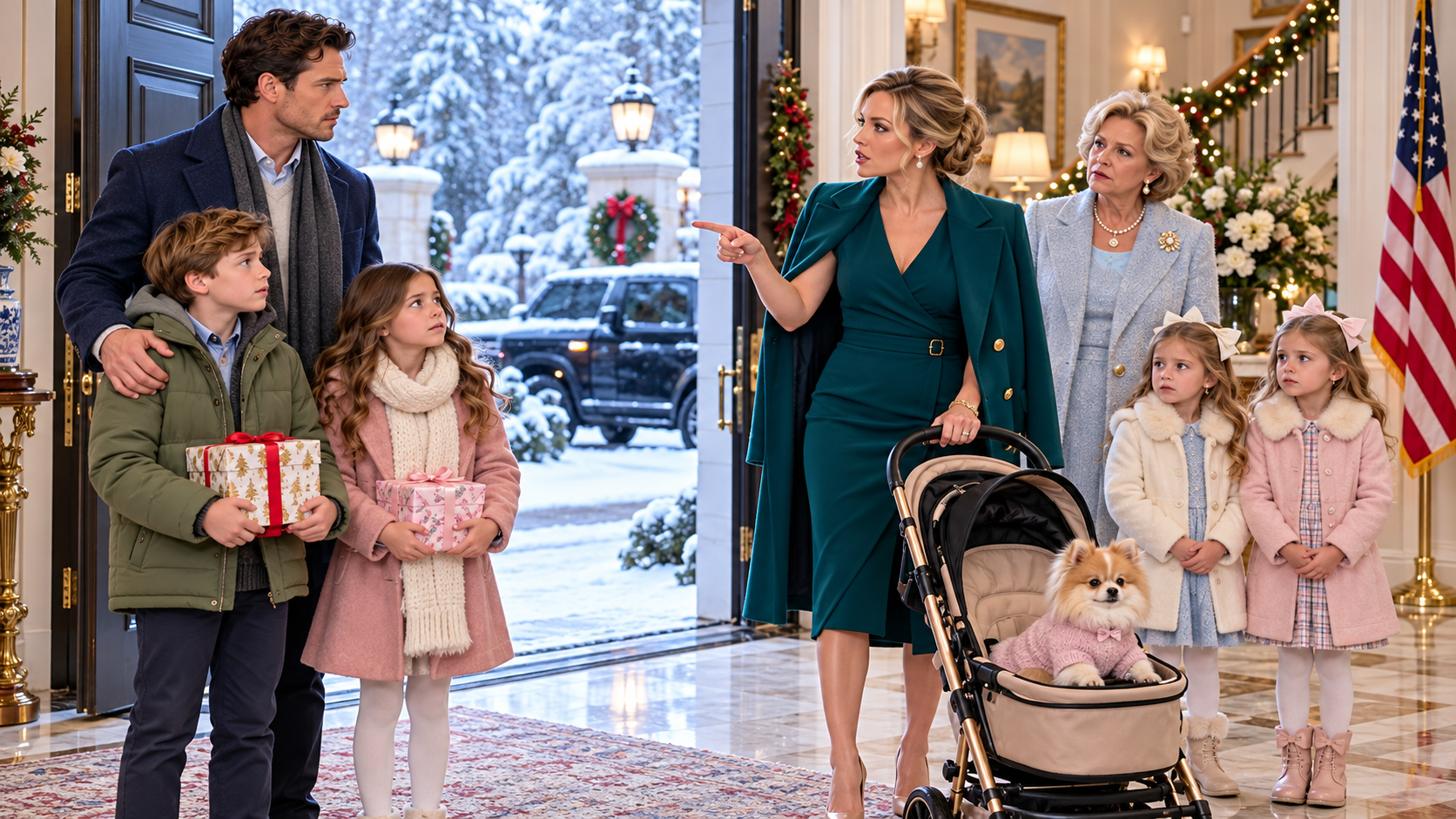
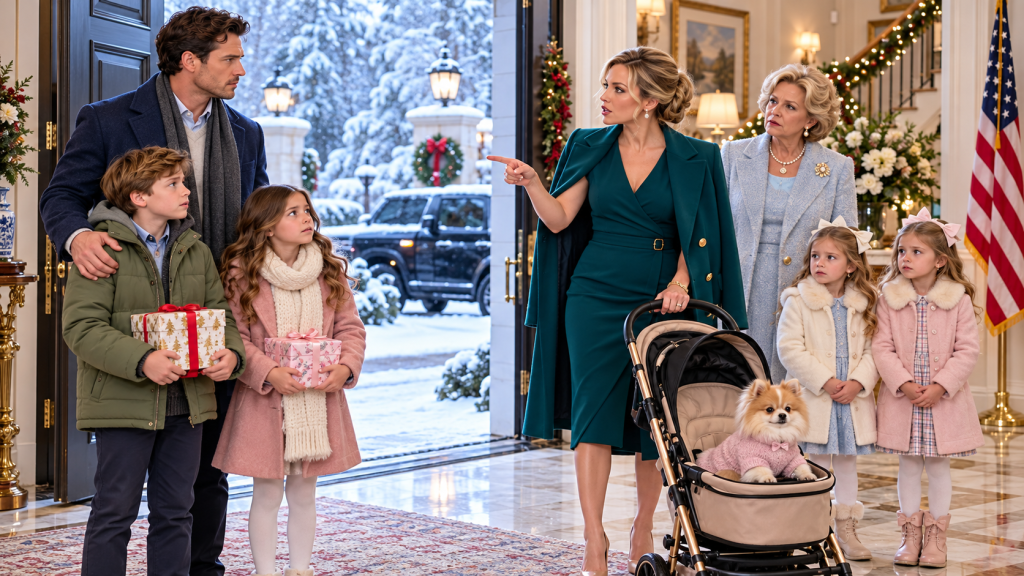
The foyer.
The twins.
The dog stroller.
The thirty-degree weather.
Mom’s nod.
Lucy’s gift.
Owen’s silence.
I didn’t exaggerate.
I didn’t need to.
When I finished, Aunt Patricia stared at the table.
Then she said, “Your father would have been furious.”
I swallowed.
“I’ve been thinking about him a lot.”
“He loved those children.”
“I know.”
“He would have carried them inside himself before letting anyone put them in a freezing car.”
My throat tightened.
Patricia reached across the table and squeezed my hand.
“Rupert, your mother has always been afraid of Brooke.”
I frowned.
“Afraid?”
“Not physically. Emotionally.”
She stirred her tea.
“Brooke learned very young that threatening to withdraw affection would make your mother surrender.”
I remembered countless childhood arguments.
Brooke refusing to attend family holidays unless she got her way.
Brooke threatening not to visit.
Brooke accusing Mom of loving me more whenever someone challenged her.
“And your mother,” Patricia continued, “has spent decades trying to prevent Brooke from becoming angry.”
“At everyone else’s expense.”
“Yes.”
I looked down.
“Why didn’t anyone say anything?”
Patricia gave me a sad smile.
“Some of us did. Your father tried. But your mother always insisted Brooke would grow out of it.”
I thought about the twins.
About the boundaries Brooke had supposedly established.
And about the possibility that they were being taught the same emotional habits.
Patricia opened her folder.
Inside was a copy of a letter my father had written shortly before his death.
My name appeared at the top.
I stared at it.
“What is that?”
“Your father gave it to me when he was ill.”
My heart began pounding.
“Why?”
“He said I should keep it in case you ever felt responsible for holding the entire family together.”
I looked at her.
“Why didn’t you give it to me sooner?”
“Because I hoped you wouldn’t need it.”
She slid the paper across the table.
I recognized Dad’s handwriting immediately.
The strong capital letters.
The uneven spacing.
The way he always pressed too hard with his pen.
I unfolded the page.
And began reading.
Rupert,
You have always been the one who notices when someone needs help. That is a good quality, son. But I worry that you’ve confused love with responsibility.
Your mother loves you. Your sister loves you in the only way she currently knows how. But neither of those things makes you responsible for their choices.
When I was younger, I thought keeping everyone comfortable meant I was doing my job as a husband and father. Sometimes all I did was teach people they could avoid consequences because I would carry them.
Don’t make my mistake.
Take care of Hannah. Take care of your children. Take care of yourself.
And remember that a family is not held together by the person who pays the most. It is held together by the people willing to treat one another with kindness.
I’m proud of you.
Dad.
I read it twice.
By the second reading, I couldn’t see the words clearly.
Patricia passed me a tissue.
“He knew,” I whispered.
“Yes.”
“He knew what was happening.”
“He did.”
I covered my face.
For five years, I’d believed that supporting Mom financially was how I honored Dad.
But Dad had been trying to tell me something different.
He wanted me to avoid repeating his mistakes.
That evening, I showed the letter to Owen.
Not every detail.
Just the parts I thought he could understand.
He read slowly.
Then pointed to one sentence.
A family is not held together by the person who pays the most.
“Grandpa wrote that?”
“He did.”
Owen thought for a moment.
“Was he talking about you?”
“Maybe.”
He looked at me.
“Then you should listen.”
I laughed softly.
“You sound like your mother.”
He smiled.
It was the first genuine smile I’d seen from him since the birthday dinner.
And I realized how much I’d missed it.
A week passed.
Then another.
I sent Mom a clear written outline of the utility transfer process.
I included the account information she needed, the date my payment authorization would end, and contact details for a utility representative who could explain her options.
I also offered to sit down with her and review a monthly budget.
She never responded to that offer.
Instead, Brooke sent me a lengthy email accusing me of financial manipulation.
She claimed I was using money to control an elderly woman.
She accused me of trying to embarrass the family.
And she wrote that Owen and Lucy would eventually understand how selfish their father had behaved.
That final sentence ended any possibility of an immediate reconciliation.
I saved the email.
Then I wrote one reply.
Do not involve my children in this dispute. I will communicate directly with Mom about the accounts in my name. I will not discuss household expenses or parenting decisions through you.
I sent it.
Then I stopped responding.
For the first time in years, the silence felt peaceful.
Until the next Sunday.
At 7:32 that morning, someone rang my doorbell.
I opened the door to find my mother standing on the porch.
She looked smaller than I remembered.
Her gray hair was loosely pinned back.
She wore a beige winter coat and carried her handbag with both hands.
“Mom?”
“May I come in?”
I stepped aside.
She walked into the living room and looked around.
Owen and Lucy were still asleep.
The house smelled of freshly brewed coffee.
For a moment, Mom’s eyes rested on Hannah’s photograph above the fireplace.
Then she began crying.
I didn’t know what to say.
She sat on the couch.
I brought her tea.
Finally, she spoke.
“Brooke says you’re turning everyone against her.”
I sighed.
“Mom, I haven’t asked anyone to choose sides.”
“She says Derek is angry with her.”
“That’s between them.”
“She says the twins are upset.”
“I’m sorry they’re upset.”
Mom looked at me.
“You sound different.”
“Maybe I am.”
She twisted a tissue between her fingers.
“I’ve spent two weeks thinking about that night.”
I waited.
“At first, I thought you were being unreasonable.”
I nodded.
“Brooke kept saying you’d embarrassed her. And I suppose I wanted to believe that because it was easier.”
Her voice cracked.
“Then I remembered Lucy standing in the doorway holding that purple package.”
My throat tightened.
“She looked so excited when she arrived.”
“Yes.”
“And then she looked at me after Brooke spoke.”
Mom pressed the tissue to her eyes.
“I saw her face, Rupert.”
I said nothing.
“I saw it. And I still nodded.”
For the first time since the birthday dinner, my mother was describing what had actually happened.
Not excuses.
Not explanations.
Not Brooke’s feelings.
Her own choice.
“I was wrong,” she whispered.
The words hung in the quiet room.
“I was terribly wrong.”
I sat opposite her.
“Why did you do it?”
She looked down.
“Because I knew Brooke would make a scene if I disagreed.”
I swallowed.
“So you let my children pay the price.”
“Yes.”
She began crying harder.
“And I am ashamed of it.”
I wanted that admission to erase everything.
But it couldn’t.
Five years of unequal treatment didn’t disappear because someone finally acknowledged one terrible evening.
Still, it mattered.
Mom looked toward the hallway.
“Are the children home?”
“They’re sleeping.”
“I’d like to apologize.”
“I appreciate that.”
She looked relieved.
Then I added, “But not today.”
Her expression changed.
“Why?”
“Because I need to talk to them first. They deserve to decide when they’re ready.”
Mom stared at me.
For a moment, I thought she would argue.
Instead, she nodded.
“All right.”
It was a small thing.
But for my mother, it was an enormous step.
We spent the next hour talking.
Really talking.
Perhaps for the first time since Dad died.
Mom admitted that Brooke had become increasingly controlling over the years.
She wanted to approve holiday menus.
Choose seating arrangements.
Decide who attended family gatherings.
And determine which grandchildren received which gifts.
Whenever Mom resisted, Brooke threatened to stop visiting.
“I know it sounds foolish,” Mom said.
“It sounds exhausting.”
“It is.”
“Then why keep doing it?”
She stared at her hands.
“Because after your father died, I was afraid of being alone.”
I felt some of my anger soften.
Not disappear.
But soften.
Loneliness could explain a great deal.
It couldn’t excuse hurting children.
Yet I could understand how fear had shaped Mom’s choices.
She continued.
“Brooke kept telling me you didn’t need me as much as she did.”
I frowned.
“What?”
“She said you were independent. That you had Hannah, and then the children. That the twins needed their grandmother more.”
I looked away.
Mom began crying again.
“And when Hannah died, I should have been there for you.”
“Yes,” I said quietly.
“You were doing everything alone.”
“Yes.”
“Instead, I let you keep helping me.”
I nodded.
“And you never asked whether I could afford it.”
She covered her mouth.
“I’m so sorry.”
For several minutes, neither of us spoke.
Finally, I asked about the gas account.
Mom sighed.
“Brooke tried to move it into her name.”
“Why?”
“She said it would prevent you from controlling the house.”
I leaned back.
“And did you agree?”
“At first.”
I stared at her.
“Mom.”
“I know.”
She wiped her eyes.
“But then she told me I should demand reimbursement for the furnace because it was unreliable.”
I frowned.
“Reimbursement from whom?”
“Marcus.”
I almost laughed.
“The furnace is working perfectly.”
“I know that now.”
She looked embarrassed.
“Brooke said if we replaced it, we might be able to claim the cost under a service warranty.”
I shook my head.
“That’s not how any of this works.”
“I understand.”
Then she reached into her handbag.
And removed an envelope.
“I brought you something.”
I opened it.
Inside was a check.
Three thousand dollars.
I stared at the amount.
“Mom, what’s this?”
“It’s part of what I owe you.”
I looked at her.
“You don’t owe me reimbursement for every bill.”
“I know. But you’ve been paying too much for too long.”
“Can you afford this?”
She nodded.
“I sold some jewelry.”
My stomach dropped.
“Mom, you didn’t need to do that.”
“It was jewelry I never wore.”
She took my hand.
“Rupert, for years, I let you believe I had nothing. But I do have some savings. Not a fortune, but enough that I could have paid more of my own expenses.”
I stared at her.
“Then why didn’t you?”
Her eyes filled again.
“Because it was easier to let you.”
That answer hurt.
But it was also the most honest thing she’d said.
I pushed the check gently back toward her.
“Keep it.”
“Rupert—”
“Use it to establish the utility account and build a household emergency fund. That’s what I want.”
She shook her head.
“I want to make this right.”
“Then start by treating Owen and Lucy like grandchildren you love.”
Her face crumpled.
“I do love them.”
“Then show them.”
Mom left shortly before ten.
Afterward, I stood in the kitchen staring at the empty driveway.
I felt relieved.
Sad.
Angry.
Hopeful.
All at once.
For years, I’d believed that a single conversation could repair a damaged relationship.
Now I understood something more difficult.
Apologies begin repairs.
They don’t complete them.
The real work happens afterward.
In changed behavior.
In uncomfortable decisions.
In choosing fairness when someone else becomes angry.
I had no idea whether Mom could do that.
But I was willing to watch.
From a healthy distance.
The next complication arrived on Wednesday.
Derek called me during my lunch break.
“Rupert, I need to tell you something.”
His voice sounded strained.
I sat in my truck.
“What happened?”
“Brooke and I had a fight.”
“I’m sorry.”
“Don’t be.”
I waited.
“She admitted something.”
My stomach tightened.
“What?”
“She turned off the furnace.”
For a moment, I thought I’d misunderstood.
“Excuse me?”
“The night of your mother’s birthday. After you left.”
I stared through the windshield.
“Brooke turned off the furnace?”
“Yes.”
“Why?”
Derek sighed.
“She wanted your mother to think you were withholding help.”
I closed my eyes.
The absurdity of it was almost impossible to process.
“She deliberately shut off a working heating system?”
“Yes.”
“In a house with her own children?”
“She thought Marcus would come immediately.”
I stared at the steering wheel.
“And then what?”
“She said she wanted to demonstrate that you couldn’t be trusted.”
I let out a slow breath.
There it was.
The missing piece.
The emergency hadn’t simply been exaggerated.
It had been manufactured.
Brooke had created a problem.
Then tried to make me responsible for fixing it.
And when I refused, she had presented my refusal as evidence of cruelty.
“Does Mom know?” I asked.
“Not yet.”
“Are you going to tell her?”
“Yes.”
I nodded.
Then Derek said, “There’s something else. Brooke has been telling people that your mother promised her the house.”
My jaw tightened.
“Did she?”
“I don’t know.”
“Then why does Brooke believe it?”
He hesitated.
“Because she’s been pressuring your mother to change her will.”
I stared at the passing traffic.
Suddenly, a great many things made sense.
The accusations about my financial contributions.
The attempts to control the utility account.
The story that I wanted to sell the house.
The growing hostility whenever Mom showed affection toward my children.
Brooke wasn’t simply protecting her twins.
She was protecting a future she believed belonged entirely to her.
I thanked Derek.
Then I drove back to work.
But I couldn’t stop thinking about what he’d told me.
Because if Brooke was willing to fabricate a heating emergency to manipulate our mother, what else might she be willing to do?
I didn’t confront Brooke.
I didn’t threaten her.
I didn’t call the family group chat.
Instead, I called my mother.
“Mom, I think you need to speak with an independent estate attorney.”
She sounded startled.
“Why?”
“Because there seems to be confusion about your wishes, your finances, and what people expect to inherit.”
Silence.
Then she asked, “Did Brooke tell you?”
“Tell me what?”
Mom sighed.
“She wants me to leave the house to the twins.”
I closed my eyes.
“Both of them?”
“Yes.”
“What about you?”
“What about me?”
“Mom, it’s your house. What do you want?”
She didn’t answer.
I waited.
Finally, she whispered, “I don’t know anymore.”
Those five words frightened me more than any argument we’d had.
My mother had spent so long accommodating Brooke that she no longer trusted herself to make decisions.
I told her she didn’t need to discuss her estate plans with me.
She didn’t owe me an inheritance.
She didn’t owe Brooke one either.
She needed independent advice.
And the freedom to decide without pressure.
Mom agreed.
Aunt Patricia helped her find an attorney.
I stayed out of the meeting.
I didn’t want anyone claiming I’d influenced her.
For once, the decision truly needed to belong to Mom.
Two weeks later, Brooke arrived at my house unannounced.
I was in the garage replacing a worn hinge on a cabinet when her SUV pulled into the driveway.
She stepped out wearing an expensive cream-colored coat.
Her sunglasses stayed on even though the sky was overcast.
“Rupert.”
“Brooke.”
“We need to talk.”
I set down my screwdriver.
“About what?”
She folded her arms.
“You’ve been turning Mom against me.”
I shook my head.
“No.”
“Don’t insult my intelligence.”
“I wouldn’t dream of it.”
Her mouth tightened.
“She hired a lawyer.”
“Good.”
“Good?”
“Yes. She should have independent advice.”
Brooke stepped closer.
“You think you’re clever.”
“I think Mom should make her own decisions.”
“She was perfectly happy until you started filling her head with nonsense.”
I leaned against the workbench.
“Brooke, did you turn off the furnace?”
Her face changed.
Only for a second.
But I saw it.
“What?”
“On Mom’s birthday. Did you switch off the furnace after we left?”
She laughed sharply.
“That’s ridiculous.”
“Marcus found the disconnect turned off.”
“Maybe someone bumped it.”
“It’s mounted high on the wall.”
She shrugged.
“I don’t know anything about furnaces.”
“Derek says you admitted it.”
Her expression froze.
For a moment, the only sound was wind moving through the trees.
Then she said, “Derek had no right discussing our marriage with you.”
I nodded.
“So it’s true.”
She looked away.
“It wasn’t supposed to be a big deal.”
I stared at her.
“You deliberately turned off the heat in Mom’s house in freezing weather.”
“For a few minutes.”
“And then blamed me when I wouldn’t pay for an emergency repair.”
She rolled her eyes.
“You always have to sound like the victim.”
I laughed.
Not because anything was funny.
Because the audacity was breathtaking.
“Brooke, you invented an emergency.”
“I was making a point.”
“What point?”
“That Mom can’t depend on you whenever you get your feelings hurt.”
I stared at her.
Then I asked, “Did you ever consider that my children were the ones whose feelings got hurt?”
Her expression hardened.
“Your kids are not the center of the universe.”
“No,” I agreed. “But they’re the center of mine.”
She looked genuinely offended.
“Family is supposed to come first.”
“They are my family.”
“So is Mom!”
“And I helped her for years.”
“You’re acting like some kind of saint because you paid a few bills.”
I nearly answered with the number.
Seventy-eight thousand dollars.
But I stopped myself.
Because I finally understood something.
There was no amount of evidence that would satisfy Brooke.
If I had paid ten thousand, it wouldn’t be enough.
If I had paid a hundred thousand, it wouldn’t be enough.
If I paid every bill for the rest of Mom’s life, Brooke would still believe I owed more.
Because this was never about gratitude.
It was about control.
I picked up my screwdriver.
“We’re done talking.”
Brooke stared.
“You can’t just dismiss me.”
“I can ask you to leave my property.”
She laughed bitterly.
“You’ve changed.”
“Yes.”
“Not for the better.”
I looked directly at her.
“For my children, I have.”
She stood there another moment.
Then turned sharply and walked toward her SUV.
Before opening the door, she called over her shoulder.
“Don’t expect us at Thanksgiving.”
I nodded.
“Okay.”
She froze.
That wasn’t the response she expected.
She had spent years using her attendance as leverage.
Threatening to withdraw herself and her children from family gatherings.
But the threat had lost its power.
I wasn’t going to beg.
Brooke got into her vehicle and drove away.
I returned to repairing the cabinet hinge.
And for the first time in my life, I didn’t feel compelled to call her back.
Spring arrived slowly.
The snow melted.
The trees began budding.
And life at our house settled into a peaceful rhythm.
Owen joined a robotics club at school.
Lucy started taking art classes on Saturdays.
I began cooking actual meals again instead of relying on takeout after work.
We planted flowers in the backyard.
Hannah had always loved tulips.
So Lucy insisted we plant yellow ones near the porch.
One afternoon, while we were digging in the garden, Owen asked whether Grandma would ever visit again.
I sat back on my heels.
“Would you like her to?”
He thought for a moment.
“Maybe.”
“That’s okay.”
He looked at Lucy.
“She still hasn’t apologized to us.”
“She asked to,” I said.
“Then why hasn’t she?”
“Because I wanted you both to decide whether you were ready.”
He nodded slowly.
“Can we talk to her somewhere that’s not her house?”
“Absolutely.”
That weekend, I called Mom.
We arranged to meet at a public park.
No Brooke.
No Derek.
No twins.
No big family gathering.
Just Grandma and her two grandchildren.
Mom arrived carrying nothing.
I noticed that immediately.
No elaborate gifts.
No bags of candy.
No attempt to purchase forgiveness.
She simply walked toward us and stopped a few feet away.
Owen stood beside me.
Lucy held my hand.
Mom looked at them.
Then she began.
“I owe you both an apology.”
Her voice trembled.
“On my birthday, I allowed something cruel and unfair to happen. You came to celebrate with me, and I made you feel unwelcome.”
Lucy lowered her eyes.
Mom continued.
“You should never have been asked to sit outside in the cold. And I should have spoken up immediately.”
Owen studied her.
“Why didn’t you?”
Mom swallowed.
“Because I was afraid your aunt would be angry with me.”
He frowned.
“So you let her be mean to us instead?”
“Yes.”
The honesty startled all of us.
Mom’s eyes filled.
“And that was wrong.”
Lucy whispered, “I made you a picture.”
“I know, sweetheart.”
“I didn’t give it to you.”
“You don’t have to.”
Lucy looked up.
“Were you mad at us?”
Mom shook her head.
“No.”
“Then why didn’t you want us at dinner?”
Mom began crying.
“I did want you there. But I made a terrible decision because I was afraid to disagree with your aunt.”
Lucy considered that.
Then she asked the question I’d been dreading.
“Do you love Addison and Avery more?”
Mom covered her mouth.
For a few seconds, she couldn’t speak.
Then she knelt carefully in front of my daughter.
“No, Lucy. I love all four of you.”
Lucy didn’t move.
“Then why do they always get everything first?”
Mom looked at me.
I said nothing.
This was her question to answer.
Mom wiped her cheeks.
“Because I’ve been unfair. And I’m going to work on changing that.”
Owen crossed his arms.
“Can you promise?”
Mom hesitated.
Then, wisely, she said, “I can promise to try every day and to listen when you tell me I’ve made a mistake.”
It wasn’t a perfect answer.
But it was honest.
And for the first time, that seemed more important.
We walked through the park for almost an hour.
Mom asked Owen about robotics.
She listened while Lucy described her art class.
She didn’t compare them to their cousins.
She didn’t mention Brooke.
She didn’t turn the conversation toward her own problems.
She simply listened.
When we reached the parking lot, Lucy surprised me.
She opened her backpack.
And removed the purple package.
The wrapping paper was wrinkled now.
One corner had torn.
But she’d kept it safe for months.
She held it toward Grandma.
“This was for your birthday.”
Mom accepted it carefully.
Then opened the package.
When she saw the painted frame, her face crumpled.
Inside was the photograph of the three of them smiling beneath the summer sun.
Mom traced the little flowers with her fingertips.
“You made this?”
Lucy nodded.
“All by myself. Daddy helped with the picture.”
Mom pressed the frame against her chest.
“It’s beautiful.”
Then she began crying.
Not loudly.
Not dramatically.
Just quietly, with the full weight of understanding what she had nearly thrown away.
Lucy stepped forward and hugged her.
I looked away.
Not because I was embarrassed.
But because I was fighting tears of my own.
Over the following months, Mom made genuine changes.
She transferred the gas account into her own name.
She created a budget.
She reduced unnecessary expenses.
She sold the second car she rarely drove.
And she arranged a smaller maintenance plan for the house.
When a plumbing issue arose, she called a plumber directly.
She didn’t call me expecting payment.
Instead, she asked whether the estimate seemed reasonable.
I helped her compare prices.
That was all.
It felt strange.
For both of us.
But it was healthier.
She also began setting boundaries with Brooke.
The first real test came at Easter.
Mom invited Owen and Lucy to an afternoon egg hunt.
Brooke objected.
She insisted her twins should have exclusive time with Grandma because they were experiencing stress at school.
Mom told her the invitation stood.
Brooke threatened not to come.
Mom replied, “I’m sorry to hear that. You’re welcome if you change your mind.”
Then she hung up.
Later, she called me.
Her voice was shaking.
“Rupert, I did it.”
“Did what?”
“I told Brooke no.”
I smiled.
“How do you feel?”
“Terrified.”
I laughed softly.
“That’s understandable.”
Then she added, “And a little proud.”
“You should be.”
She paused.
“Your father would have been proud too.”
I looked toward his photograph on my bookshelf.
“Yes,” I said.
“I think he would.”
Brooke did not attend Easter.
Neither did Derek or the twins.
I felt sorry for the girls.
They were still children.
Whatever habits they had learned, they deserved opportunities to grow beyond them.
But I wasn’t responsible for correcting their mother’s choices.
At the egg hunt, Mom hid colorful plastic eggs throughout her backyard.
Owen pretended he was too old to participate.
Then spent twenty minutes helping Lucy find the difficult ones.
Mom laughed.
Really laughed.
I hadn’t heard that sound in years.
Afterward, she served sandwiches and lemonade at the kitchen table.
The same table where my children had once been told they weren’t welcome.
This time, she pulled out chairs for them herself.
Lucy sat beside Grandma.
Owen sat across from me.
No one was excluded.
No one was compared.
No one was asked to leave.
It was an ordinary family afternoon.
And that made it extraordinary.
In June, Derek called again.
He and Brooke had separated.
I wasn’t surprised.
Their marriage had been strained for years.
But I was sad for the twins.
Derek told me he had started counseling.
He wanted to learn how to support his daughters without teaching them that other children’s needs were threats.
“I should have spoken up sooner,” he said.
I nodded, even though he couldn’t see me.
“Yes.”
“I owe Owen and Lucy an apology too.”
“I appreciate that.”
He hesitated.
“Do you think they’d ever want to spend time with Addison and Avery again?”
I considered the question.
“Maybe someday.”
“I understand.”
“But it would need to be their choice.”
“Of course.”
He paused.
“Rupert, for what it’s worth, I’m sorry.”
“Thank you.”
After hanging up, I sat quietly for a long time.
I had spent months angry with Brooke.
But I was beginning to understand that anger didn’t have to become the central story of my life.
I could acknowledge what she’d done.
Maintain boundaries.
And still move forward.
Forgiveness wasn’t the same as trust.
And peace didn’t require pretending nothing had happened.
That summer, I finally replaced my truck.
Not with anything extravagant.
Just a dependable blue pickup with enough room for the kids and their endless collection of backpacks, sports equipment, and art supplies.
Lucy insisted on naming it Blueberry.
Owen said that was embarrassing.
Then immediately started calling it Blueberry too.
We took our first road trip in July.
Three days at a lake cabin.
Nothing fancy.
Fishing.
Swimming.
Board games.
Marshmallows over a campfire.
On the second evening, we sat outside watching the sun disappear behind the trees.
Lucy leaned against my shoulder.
“Daddy?”
“Yeah?”
“Do you think Mommy can see us?”
I looked toward the pink and orange sky.
“I don’t know exactly how heaven works, sweetheart.”
She nodded.
“But I like to think she knows we’re happy.”
Lucy smiled.
“Me too.”
Owen poked the campfire with a stick.
Then said, “Mom would’ve liked this place.”
“She would have loved it.”
He looked at me.
“Are we going to come back?”
“Absolutely.”
“Just us?”
I smiled.
“Just us.”
He nodded with satisfaction.
And I realized something that made my eyes sting.
For years, I’d been so busy keeping my mother’s house comfortable that I’d overlooked how much my own children needed ordinary, uninterrupted time with me.
Not money.
Not expensive gifts.
Just time.
Attention.
Presence.
The things Hannah had always said mattered most.
In September, my mother invited us to dinner again.
This time, she asked before planning anything.
“Would you and the children feel comfortable coming over Saturday?”
I appreciated the question.
“Who’s going to be there?”
“Just me.”
“Are you sure?”
She laughed softly.
“Yes, Rupert. Just me.”
I asked the kids.
Owen shrugged.
Lucy smiled.
So we went.
Mom had prepared roast chicken, mashed potatoes, green beans, and homemade apple pie.
Dad’s favorite meal.
The table was set for four.
Four plates.
Four glasses.
Four chairs.
No empty places waiting to be filled by more important guests.
We ate slowly.
Talked about school.
Laughed about Lucy’s attempt to teach our cat to fetch.
And for the first time in years, I felt comfortable sitting at my mother’s table.
After dessert, Mom asked me to help carry a box down from the hall closet.
Inside were old family photographs.
We spread them across the living room rug.
There was Dad holding me as a baby.
Brooke wearing a ridiculous enormous bow on her first day of kindergarten.
Mom and Dad dancing at their twentieth anniversary party.
And Hannah on our wedding day, laughing with her head thrown back.
I picked up that photograph.
For a moment, the room blurred.
Mom sat beside me.
“She was wonderful,” she whispered.
“Yes.”
“I wasn’t always fair to her either.”
I looked at her.
Mom kept staring at the photograph.
“She tried to tell me things I didn’t want to hear.”
I nodded.
“She did.”
“I thought she was trying to come between us.”
I swallowed.
“She was trying to protect our family.”
“I know that now.”
Mom reached for my hand.
“I wish I’d listened.”
I looked at Hannah’s smile.
“So do I.”
We sat quietly.
Then Mom said something I’d waited years to hear.
“Rupert, you don’t have to take care of everyone anymore.”
I turned toward her.
She smiled through tears.
“You have already done more than enough.”
For a moment, I couldn’t speak.
Then I leaned forward and hugged her.
Not because everything was repaired.
Not because the past had disappeared.
But because she’d finally released me from a responsibility I had never been meant to carry alone.
A few days before Thanksgiving, Brooke sent me a message.
It was the first direct communication we’d had in months.
I heard Mom invited you for dinner.
I stared at the screen.
Then another message arrived.
I suppose you’ve finally gotten what you wanted.
I considered ignoring it.
Instead, I typed:
What I wanted was for my children to feel welcome in their grandmother’s home.
She replied:
You made everyone choose sides.
I wrote:
No one needed to choose sides. Everyone needed to choose how to behave.
There was a long pause.
Then her next message surprised me.
The girls miss Grandma.
I looked at the words.
I believed that.
Whatever Brooke had done, Addison and Avery loved their grandmother.
And Mom loved them.
I didn’t want that relationship destroyed.
So I replied:
They should be able to see her. You and Mom can work out a healthy arrangement. I won’t interfere.
Brooke didn’t answer immediately.
Then she wrote:
Do you hate me?
I sat back.
For years, I had believed that loving my sister meant accepting her behavior.
Now I knew better.
No, Brooke. But I don’t trust you right now. And I won’t let you mistreat my children again.
Three dots appeared.
Disappeared.
Then one final message arrived.
I don’t know how to fix this.
I stared at it for a long time.
Part of me wanted to deliver a speech.
Part of me wanted to list every insult.
Every unfair holiday.
Every bill.
Every tear my children had cried.
But none of that would tell her what she needed to do.
So I wrote:
Start by taking responsibility for what happened without making excuses. Then give people time to see whether your actions change.
She didn’t respond.
And that was all right.
Some lessons couldn’t be completed through text messages.
Thanksgiving came.
We celebrated at my house.
Mom brought a pumpkin pie.
Aunt Patricia brought sweet potatoes.
Marcus and his wife joined us.
Derek had the twins that weekend, and after speaking with Owen and Lucy, I agreed they could stop by briefly in the afternoon.
It wasn’t a dramatic reunion.
There were no speeches.
No sudden declarations of forgiveness.
Addison and Avery arrived looking nervous.
Owen greeted them politely.
Lucy showed them her latest painting.
For a while, the children sat at the dining room table drawing pictures.
Eventually, Avery asked whether she could use Lucy’s markers.
Lucy handed them over.
Just like that.
A tiny act of ordinary kindness.
Nothing extraordinary.
Nothing forced.
And yet I watched from the kitchen with a strange feeling of hope.
Derek stood beside me.
“Thank you,” he said quietly.
I nodded.
“Just make sure this stays about the kids.”
“It will.”
When the twins left, Lucy hugged me.
“That was nice.”
“I’m glad.”
“Can they come again sometime?”
“Maybe.”
She smiled.
Then ran upstairs.
I looked toward Hannah’s photograph.
And for a moment, I imagined her standing beside me.
Smiling.
Proud.
Not because I’d defeated anyone.
But because I’d finally learned to protect our peace.
One year after the birthday dinner, Mom turned sixty-nine.
This time, she called me three weeks in advance.
“I’d like to have a small dinner,” she said. “But only if everyone feels comfortable.”
I asked who was invited.
She told me.
Brooke.
Derek.
The twins.
Aunt Patricia.
My children.
And me.
I hesitated.
Mom heard it.
“Rupert, I understand if you don’t want to come.”
I appreciated that.
“No pressure?”
“None.”
I talked with Owen and Lucy.
They surprised me by agreeing.
As long as they could leave whenever they wanted.
I promised.
Then I called Mom back.
“We’ll come.”
Her relief was audible.
“Thank you, sweetheart.”
“But Mom?”
“Yes?”
“If anything happens that makes the children uncomfortable, we leave.”
She answered immediately.
“I understand.”
The evening arrived cold and windy.
Almost exactly like the year before.
I parked Blueberry in the driveway.
Owen wore a navy sweater.
Lucy carried a fresh handmade birthday card.
I looked at them before getting out.
“Remember, we can leave whenever you want.”
Owen nodded.
Lucy squeezed my hand.
We walked to the front door.
Mom opened it before I rang the bell.
She smiled.
Then stepped aside.
“Come in, my loves. It’s freezing outside.”
The warmth wrapped around us.
For a moment, I remembered the previous year.
The foyer.
The cold brass doorknob.
The humiliating suggestion.
The sight of my children trying not to cry.
Then Mom knelt and hugged Lucy.
She hugged Owen too.
And she looked at me.
“I’m so glad you’re here.”
I nodded.
“Happy birthday, Mom.”
Inside, the dining room table was beautifully arranged.
But what caught my attention wasn’t the decorations.
It was the seating.
Mom had placed handwritten name cards beside every plate.
Owen’s seat was next to hers.
Lucy’s was beside mine.
Addison and Avery sat across from them.
Everyone had a place.
Everyone belonged.
Brooke stood near the fireplace.
She looked nervous.
For a moment, neither of us spoke.
Then she walked toward me.
“Rupert.”
“Brooke.”
She glanced at the children.
Then looked back at me.
“I owe you an apology.”
I waited.
She swallowed.
“Last year, I treated Owen and Lucy terribly. I used my daughters as an excuse for something they never asked for.”
I felt my chest tighten.
She continued.
“I was jealous.”
I hadn’t expected that admission.
“Of what?”
She gave a humorless laugh.
“Of how much Mom depended on you. Of how Dad trusted you. Of how everyone always said you were reliable.”
I stared at her.
“You had no reason to be jealous.”
“I know that now.”
She looked down.
“I kept thinking if Mom needed me more, she’d love me more.”
For the first time, I saw something beneath Brooke’s arrogance.
Fear.
Insecurity.
The same desperate need for reassurance that had shaped so many of Mom’s choices.
It didn’t excuse what she’d done.
But it helped explain it.
Brooke looked toward Owen and Lucy.
“I also owe them an apology.”
I nodded.
“Then talk to them.”
She approached carefully.
She didn’t demand hugs.
Didn’t ask them to forgive her immediately.
She simply apologized.
For excluding them.
For making them feel unwanted.
For using the twins as an excuse.
Owen listened quietly.
Then said, “Thank you for saying that.”
Lucy nodded.
Neither child rushed toward her.
And Brooke, to her credit, didn’t insist.
It was enough for one evening.
Dinner began shortly afterward.
The roast was delicious.
Mom had made everyone’s favorite side dishes.
Aunt Patricia told embarrassing stories about Dad.
Marcus teased me about my inability to fix a simple kitchen faucet without making a mess.
The children laughed.
Even Brooke smiled.
Halfway through dinner, Mom tapped her glass.
“I’d like to say something.”
The room grew quiet.
She looked around the table.
“Last year, I made a terrible mistake on my birthday.”
Nobody interrupted.
“I allowed fear and favoritism to matter more than kindness. I hurt two grandchildren who had come to celebrate with me.”
Her voice trembled.
“I cannot change that evening. But I can make sure it never happens again.”
She looked at Owen.
Then Lucy.
“You will always have a place at my table.”
My daughter smiled.
Mom continued.
“And I want everyone here to understand something. This house is my home. I love my children and my grandchildren. But no one will ever again be excluded from a family meal because someone else demands it.”
Aunt Patricia raised her glass.
“Hear, hear.”
Mom smiled through tears.
Then she looked at me.
“Rupert, thank you for teaching me something I should have understood long ago.”
I shook my head.
“Mom—”
She raised a hand.
“Please. Let me finish.”
I smiled.
She took a breath.
“Love isn’t measured by how much someone pays for. And family isn’t about keeping one person comfortable while everyone else suffers.”
My throat tightened.
Those words.
They were almost exactly what Dad had written in his letter.
Mom glanced toward his photograph on the mantel.
“He tried to teach me that too.”
For a moment, the room was silent.
Then we raised our glasses.
Not to a perfect family.
We had never been one.
But to a family finally learning how to be better.
Later that evening, I stepped onto the porch.
The air was bitterly cold.
A thin layer of frost glittered across the grass.
Behind me, laughter drifted through the windows.
I stood with my hands in my pockets, remembering how different everything had felt one year earlier.
Back then, I’d left this house furious.
Humiliated.
Heartbroken for my children.
I had believed that walking away meant losing my family.
But something unexpected had happened.
By refusing to accept mistreatment, I’d given the people I loved an opportunity to change.
Some had taken it.
Others were still trying.
And some relationships might never return to what they had been.
That was okay.
Not every broken thing needed to be restored exactly as it was.
Sometimes it needed to be rebuilt differently.
The front door opened.
Owen stepped outside.
“Dad?”
“Hey, buddy.”
He joined me at the railing.
“It’s cold.”
“Sure is.”
He looked through the window.
“Everybody seems happy.”
“Yeah.”
He was quiet for a moment.
Then he asked, “Are you happy?”
I thought about the question.
About Hannah.
About Dad.
About the difficult conversations.
The sleepless nights.
The months of uncertainty.
And the peaceful home waiting for us when the evening ended.
“Yes,” I said.
“I am.”
Owen nodded.
Then he smiled.
“Good.”
He started toward the door.
But before going inside, he turned around.
“Dad?”
“Yeah?”
“Thanks for not making us stay in the truck last year.”
I felt my throat close.
I looked at my son.
The boy who had been quiet for so long.
The boy who had tried to protect my feelings.
The boy who needed to know his father would always stand beside him.
“Never,” I said.
He smiled.
Then disappeared into the warm house.
I stood there for another moment.
And finally understood something.
The most important thing I had done that night wasn’t refusing to call Marcus.
It wasn’t ending the automatic payments.
It wasn’t confronting Brooke.
It wasn’t even leaving the birthday dinner.
It was showing my children that their dignity mattered.
That love without respect wasn’t enough.
That kindness didn’t require surrender.
And that sometimes, the bravest thing a parent could do was take two disappointed children by the hand, walk out of a beautiful house, and choose a simple diner where everyone was welcome.
I had spent years believing my value to the family was measured by the problems I solved.
The bills I paid.
The emergencies I answered.
But that cold evening had taught me something far more valuable.
My children didn’t need a father who could keep everyone else’s house warm.
They needed a father who would never leave them out in the cold.
And this time, I had finally become that man.
I turned toward the front door.
Warm light spilled across the porch.
Inside, Lucy was laughing.
Owen was helping Grandma carry dessert plates.
Aunt Patricia was telling another story.
And my mother’s old furnace hummed steadily beneath the floorboards.
The same furnace Brooke had once switched off to manufacture a crisis.
The same furnace I’d paid to install.
The same furnace everyone had insisted I was responsible for.
I smiled to myself.
Funny how much could change when a person finally stopped confusing generosity with obligation.
Then I stepped inside.
And closed the door against the cold.
💬THE END! THANK YOU FOR READING!