

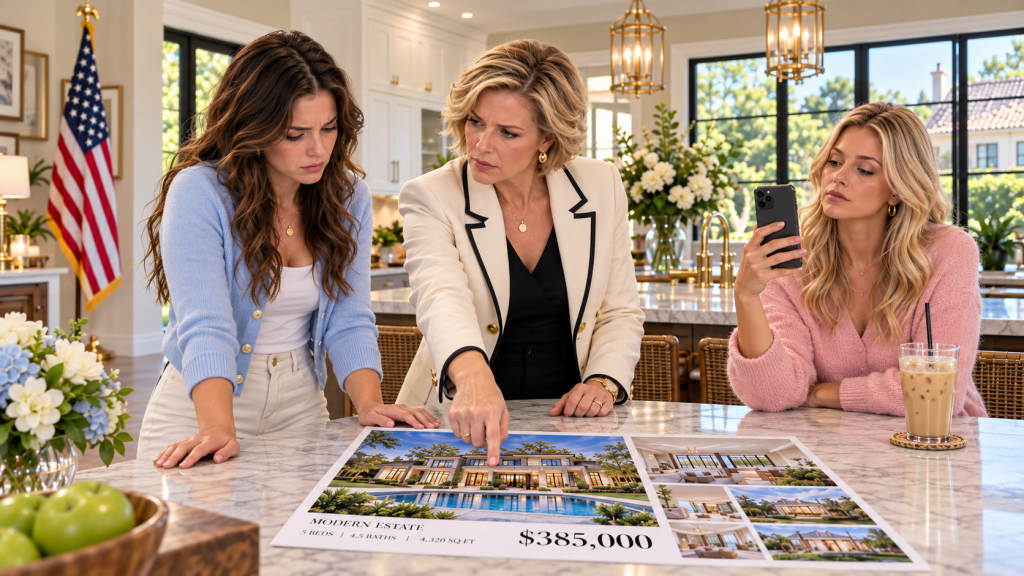
My mother slid a glossy real estate listing across the kitchen table and said, “We’re selling the farmhouse. You have sixty days to get out.”
My younger sister immediately raised her phone and started recording.
“Finally!” Presley laughed. “Good luck finding somewhere to live, loser.”
I stared at the listing.
$385,000.
That was the price my mother had put on the only place I had ever truly called home.
But what neither of them knew was that my late grandmother had left me a faded quilted pouch containing a brass key, an attorney’s business card, and a letter with instructions I had never understood.
That afternoon, I took the pouch to a lawyer named Arthur Finley.
He read one sentence from my grandmother’s letter, closed his office door, and turned the lock.
“Ms. Somers,” he said, his voice suddenly grave. “You need to sit down.”
Then he opened a folder that would change everything.
Because my mother wasn’t just trying to sell a house she didn’t own.
Someone had already forged my signature on documents worth nearly half a million dollars.
And the person who witnessed that signature was someone I had trusted my entire life.
My name is Bridget Somers.
I was thirty-two years old when I discovered that the woman who raised me had spent most of my life trying to take away the one thing my grandmother had protected for me.
To understand what happened, you need to understand the farmhouse.
It wasn’t an impressive mansion with marble columns or a circular driveway.
It was a two-story white farmhouse outside Hendersonville, North Carolina, with blue shutters, a wide front porch, and a tin roof that sang whenever the rain came down hard.
In spring, wildflowers grew along the gravel driveway.
In summer, the apple trees behind the barn filled the air with the smell of fruit and warm grass.
And every autumn, the mountains turned gold and red beyond the pasture fences.
My grandmother, Evelyn Somers, had lived there for more than forty years.
She raised chickens, grew vegetables, repaired broken furniture, and knew exactly which floorboards creaked when someone tried sneaking downstairs after midnight.
She was also the only person in my childhood who never made me feel like an inconvenience.
My father died when I was five.
Three years later, my mother married a man named Richard Bell, and eventually they had my half-sister, Presley.
From the moment Presley arrived, our household seemed to divide into two categories.
There was Presley, the precious little girl who deserved everything.
And there was me, the older daughter who was expected to understand why there was never enough left over.
When Presley turned sixteen, she received a brand-new car decorated with a giant pink ribbon.
For my sixteenth birthday, I received a grocery-store cake and a reminder that I needed to find a summer job.
When Presley wanted to attend a private dance academy, my mother found the money.
When I asked for help buying community college textbooks, she told me that adulthood meant learning to make sacrifices.
I learned.
I worked the overnight shift at a diner beside the interstate, poured coffee for truck drivers, and saved every dollar I could.
Sometimes I came home smelling like burnt bacon and cheap coffee while Presley was leaving for another shopping trip.
She would wrinkle her nose.
“Seriously, Bridget, you smell like a gas station.”
My mother would glance at me and say, “Well, that’s what happens when you don’t have ambition.”
I never understood that particular insult.
I was working, studying, and paying my own expenses.
Presley was twenty-seven before she held a job for longer than three weeks.
Yet somehow I was the disappointment.
Nana Evelyn saw it all.
She didn’t interfere every time my mother said something cruel.
Instead, she waited until we were alone.
Then she would make tea, sit beside me on the porch swing, and remind me that my worth was not determined by the people who refused to recognize it.
“Never confuse being overlooked with being ordinary,” she told me once.
I was seventeen.
She had been teaching me how to replace a broken window latch in the old barn.
At the time, I laughed and told her she sounded like one of those inspirational calendars.
She smiled.
“Maybe those calendars occasionally get something right.”
When I turned twenty-one, she offered me the small upstairs bedroom overlooking the orchard.
“Stay as long as you need,” she said. “This house will always have room for you.”
My mother hated that arrangement.
She said I was taking advantage of an elderly woman.
Nana responded by asking why Presley still needed a monthly allowance.
That ended the conversation.
For the next several years, I helped Nana manage the property.
I repaired fences.
Painted shutters.
Kept records of repairs.
Handled grocery shopping when her knees became too painful for the supermarket.
Most importantly, I listened to her stories.
She told me how she and Grandpa Thomas bought the property with almost nothing in their savings.
How they survived terrible winters.
How they planted every apple tree themselves.
How they nearly lost the farm during the recession but managed to keep it through sheer determination.
“This land is not just dirt,” she told me. “It’s forty years of promises we kept.”
Then her health began failing.
At first, it was small things.
She forgot appointments.
She became tired while walking to the mailbox.
Then came the hospital visits.
The diagnosis.
The treatments.
And eventually the terrible conversation in which the doctors explained that there was nothing more they could do.
During her final weeks, I slept in the chair beside her hospice bed.
My mother visited occasionally.
Presley came twice.
The second time, she complained that the room smelled like disinfectant.
Nana waited until both of them were gone before asking me to close the door.
“Bridget,” she whispered, “there’s something I need you to keep.”
She reached beneath her pillow and pulled out a faded blue quilted pouch.
The fabric had tiny white flowers stitched along one side.
I recognized it immediately.
She had made it herself years earlier.
Inside, I could feel something metallic.
“What is it?”
“Something for when you’re ready.”
“Nana, you’re scaring me.”
She squeezed my hand.
“Don’t be frightened. Just promise me you won’t give it to your mother.”
I promised.
“Not for any reason,” she continued.
“Not even if she tells you I’m confused?”
“Especially then.”
Her expression became unusually serious.
“One day, Bridget, someone may try to convince you that you don’t belong in the place you’ve spent your life protecting.”
I started crying.
“Nana, please.”
She touched my cheek.
“Listen carefully. If that happens, don’t argue. Don’t beg. Take this pouch to Arthur Finley.”
“Who’s Arthur Finley?”
“A man who has kept his promises.”
She closed her eyes for a moment.
Then she whispered something I would remember forever.
“You are not going to lose your home.”
Nana died eleven days later.
After her funeral, I placed the pouch in an old wooden box beneath my bed.
I couldn’t bring myself to open it.
For almost four years, it remained untouched.
And during those four years, my mother’s behavior became increasingly difficult.
She began treating the farmhouse as though it belonged exclusively to her.
She replaced the curtains without asking.
She removed Nana’s photographs from the living room.
She turned Grandpa’s study into a storage room for Presley’s clothes.
And whenever I questioned anything, she reminded me that I was living under her roof.
I never understood why that phrase bothered me so much.
Perhaps because the roof had been there long before my mother decided she owned it.
Still, I avoided confrontation.
I was saving to finish my accounting certification, and moving away from Nana’s house felt like abandoning the last piece of her I had left.
Then came that Saturday morning.
I had just finished a twelve-hour diner shift and was drinking coffee at the kitchen table when my mother entered carrying a folder.
Presley followed with her phone already in her hand.
“Sit down, Bridget.”
I looked up.
“I’m already sitting.”
“Don’t be difficult.”
She dropped the folder in front of me.
Inside was a glossy photograph of the farmhouse.
Underneath, bold lettering announced:
CHARMING HISTORIC FARMHOUSE — $385,000.
I felt my stomach tighten.
“What is this?”
“We’re selling.”
My mother said it as casually as though she were announcing that we’d run out of milk.
“Selling what?”
“The property, obviously.”
She folded her arms.
“Richard and I found a beautiful new construction home near Asheville. Four bedrooms, a two-car garage, and a proper community clubhouse.”
Presley grinned.
“And a pool.”
My mother nodded.
“We’re ready for something modern.”
I stared at her.
“What about me?”
She gave a small, irritated sigh.
“Bridget, you’re thirty-two. Surely you weren’t planning to live here forever.”
“I wasn’t asking that.”
“Then what’s the problem?”
“You’re giving me sixty days to leave Nana’s house.”
“Your grandmother is gone.”
The sentence struck harder than I expected.
Presley lifted her phone.
“Oh, this is going to be good.”
“Put that away,” I said.
She laughed.
“Why? Afraid people will see you throwing a tantrum?”
My mother pushed a folded piece of paper toward me.
It was a notice instructing me to vacate the property.
At the bottom was a handwritten deadline.
Sixty days.
“I’ve already spoken to a real estate agent,” she said. “Photographs are scheduled for Monday.”
I looked down at the listing.
Then back at her.
“Did Nana leave the house to you?”
Her expression shifted.
Only for a second.
But I noticed.
“Of course she did.”
“Did she leave a will?”
“Bridget, I’m not discussing private estate matters with you.”
“I’m her granddaughter.”
“And I’m her daughter.”
She leaned forward.
“Stop embarrassing yourself.”
Presley pointed her camera directly at my face.
“Say goodbye to the farmhouse, Bridget!”
Then she laughed.
“Maybe your diner has a storage closet you can sleep in.”
I stood.
My mother immediately narrowed her eyes.
“Where are you going?”
“Upstairs.”
“We haven’t finished talking.”
“Yes,” I said quietly. “We have.”
I walked up the staircase and entered my bedroom.
For a moment, I stood beside the bed without moving.
My hands were shaking.
Not because I was angry.
Because something my grandmother had said four years earlier suddenly made terrible sense.
One day, someone may try to convince you that you don’t belong.
I knelt beside the bed.
Pulled out the wooden box.
And opened it.
The blue pouch was exactly where I had left it.
Its fabric smelled faintly of cedar.
Inside were three things.
A heavy brass key.
A business card bearing the name Arthur Finley, Attorney at Law.
And a sealed envelope.
My name was written across the front in Nana’s familiar handwriting.
I opened it carefully.
My dearest Bridget,
If you are reading this, your mother has done what I always feared.
Do not argue with her.
Do not show her this letter.
Go directly to Arthur Finley.
He has been holding the protection I built for you.
The brass key will make sense when you arrive.
Whatever your mother tells you, remember this:
You have never been a guest in that house.
You are the reason I made certain it would survive.
All my love,
Nana Evelyn.
I read the letter three times.
Then I put everything into my purse.
Downstairs, Presley was still laughing over the video she’d recorded.
My mother stood at the counter discussing paint colors for her new house.
Neither noticed when I left through the back door.
I drove thirty minutes into Hendersonville.
Finley & Associates occupied an old brick building near the courthouse.
There were two large oak trees outside and a brass sign beside the entrance.
I parked.
Sat for a moment.
Then went inside.
The reception area smelled of polished wood and coffee.
An elderly woman with silver hair sat behind the front desk.
She looked up as soon as I entered.
And went completely still.
Her eyes moved from my face to the blue quilted pouch in my hand.
Without asking my name, she picked up the telephone.
“Arthur,” she whispered. “She’s here.”
A door opened at the end of the hallway.
A tall man in his late sixties appeared.
He wore a charcoal suit and thin-framed glasses.
When he saw me, his expression changed.
Not to surprise.
To relief.
He walked toward me with both hands extended.
“Bridget Somers.”
I nodded.
“Yes.”
He took my hands.
“I am Arthur Finley. I’ve been hoping to meet you for a very long time.”
I couldn’t think of anything to say.
He glanced at the pouch.
“May I see Evelyn’s letter?”
I handed it to him.
He read it silently.
Then his eyes stopped on the final sentence.
His jaw tightened.
“Come into my office.”
We walked down the hallway.
He closed the door.
And turned the lock.
The sound made me flinch.
He noticed immediately.
“Forgive me,” he said. “This conversation involves confidential documents, and I’d rather we not be interrupted.”
He gestured toward a chair.
“Ms. Somers, you need to sit down.”
I sat.
Arthur opened a drawer and removed a thick leather folder.
My grandmother’s name was printed across the cover.
EVELYN MARIE SOMERS.
Beneath it were the words:
SOMERS FAMILY LAND TRUST.
He placed it between us.
“Before we discuss your mother’s plans, I need you to understand something important.”
I nodded.
“Your grandmother did not leave the farmhouse to your mother.”
My heart started beating faster.
“She didn’t?”
“No.”
He opened the folder.
“Seven years before her death, Evelyn established an irrevocable trust. She transferred the farmhouse, surrounding acreage, and several related property interests into that trust.”
I stared at him.
“What does that mean?”
“It means the property was legally separated from your grandmother’s personal estate and placed under the management of trustees for designated beneficiaries.”
“Who were the beneficiaries?”
Arthur turned the page.
Then pointed to a single sentence.
I read it once.
Then again.
The sole remainder beneficiary of the Somers Family Land Trust shall be Bridget Elaine Somers.
My hands went cold.
“Me?”
Arthur nodded.
“You.”
I leaned back.
“But my mother says she owns the house.”
“She does not.”
“Then why has she been living there?”
“Your grandmother granted her daughter a limited right of occupancy under specific conditions.”
He slid another document toward me.
“Your mother was permitted to reside in the farmhouse while she maintained the property, paid agreed household expenses, and did not attempt to sell, mortgage, transfer, or otherwise interfere with the trust property.”
I swallowed.
“And if she broke those conditions?”
Arthur looked directly at me.
“Her occupancy privilege could be terminated through the procedure specified in the trust.”
I stared at the papers.
All those years.
All those insults.
All those times my mother reminded me that I was living in her house.
She had known.
I could see it now.
She had known the whole time.
Arthur seemed to understand what I was thinking.
“Your grandmother worried that your mother would try to pressure you into leaving. She wanted you to have a stable home regardless of what happened to the rest of the family.”
Tears filled my eyes.
“Why didn’t Nana tell me?”
“She wanted to,” Arthur replied. “But she also knew your mother was capable of making your life difficult if she learned you understood the arrangement.”
He paused.
“Evelyn’s intention was to let you finish your education and establish your independence before assuming responsibility for the property.”
I wiped my face.
“Then why am I finding out now?”
“Because circumstances have changed.”
He opened another folder.
This one was thinner.
And newer.
Arthur removed a photocopy.
“Yesterday, someone attempted to submit documentation claiming that you had assigned your beneficial interest to your mother.”
I frowned.
“What?”
“The document purports to contain your signature.”
He pushed it toward me.
There was my full name.
Bridget Elaine Somers.
And underneath, a signature that resembled mine.
I stared.
“I never signed this.”
“I believed that would be your answer.”
“That’s not my signature.”
“Look at the witness line.”
I lowered my eyes.
My chest tightened.
The witness was listed as:
Richard Bell.
My stepfather.
For twenty-four years, Richard had been the quiet man in our household.
He wasn’t particularly affectionate.
But he wasn’t openly cruel either.
When my mother shouted, Richard usually disappeared into the garage.
When Presley mocked me, he pretended not to hear.
I had always interpreted his silence as weakness.
Now his name appeared beneath a forged signature.
Arthur watched my reaction.
“Do you recognize him?”
I nodded slowly.
“He’s my stepfather.”
Arthur reached for another page.
“Bridget, that’s not the most troubling part.”
He showed me a notarization certificate.
The document claimed I had personally appeared before a notary three weeks earlier.
On a Tuesday afternoon.
At 2:14 p.m.
I looked at the date.
Then almost laughed.
Because I knew exactly where I had been.
“At 2:14 that afternoon,” I said, “I was at the diner.”
Arthur raised his eyebrows.
“Are you certain?”
“Absolutely. We had a health inspection that day. I stayed after my overnight shift to help the manager fix a freezer inventory issue.”
“Could you prove it?”
“I clocked out at 3:06.”
Arthur leaned back.
“Excellent.”
For the first time since entering his office, I felt something other than fear.
I felt the beginning of a plan.
Arthur explained that the purported assignment hadn’t been accepted as valid by the trust.
It had been forwarded to him because he was the designated successor trustee.
But the forged paperwork suggested that someone was attempting to manufacture a basis for my mother to control the property.
“Have they actually listed the house?” I asked.
“Yes.”
He turned his computer monitor.
There it was.
My farmhouse.
Photographed from the driveway.
The same blue shutters.
The same porch where Nana and I drank tea.
And underneath it, the same price.
$385,000.
Arthur studied the screen.
“That’s unusual.”
“What is?”
“The price.”
“Why?”
“Bridget, when was the last time you had the acreage professionally appraised?”
“Never.”
He nodded.
“I suspected that.”
He opened another file.
“Your grandmother owned forty-three acres. Twenty-nine are wooded. Eight are pasture. The remainder includes the farmhouse, barns, and orchard.”
“I know.”
“But did you know that the county approved utility access for a development corridor near the eastern boundary eighteen months ago?”
I shook my head.
“Did you know that two neighboring properties sold to a development company this spring?”
“No.”
Arthur folded his hands.
“A preliminary valuation prepared last year placed the trust property substantially above the listing price.”
“How much?”
He hesitated.
“Depending on access rights, improvements, and development restrictions, somewhere between $920,000 and $1.3 million.”
I couldn’t speak.
The farmhouse wasn’t just worth more than my mother had claimed.
It might be worth nearly three times as much.
“Why would she sell it for $385,000?”
Arthur removed his glasses.
“That’s the question we need to answer.”
He looked at the forged document again.
“And I suspect the answer is connected to whoever arranged this paperwork.”
I sat there, trying to absorb everything.
My grandmother had protected the property.
My mother had lied.
Richard had apparently witnessed a signature I never made.
And someone wanted the land badly enough to risk creating false documents.
Arthur opened his desk drawer.
“Do you have the key Evelyn gave you?”
I took it from the pouch.
He smiled sadly.
“I remember when she brought that to my office.”
“What does it open?”
He stood.
“Something she wanted you to see only after you learned the truth.”
He walked to a tall cabinet behind his desk.
Near the bottom was an old brass lock.
I inserted the key.
It turned smoothly.
Inside sat a narrow cedar box.
On its lid was a small engraved plate.
For Bridget, when the time comes.
My throat tightened.
Arthur stepped back.
“Your grandmother asked that you open this yourself.”
Inside were photographs, handwritten letters, and a small notebook.
The first photograph showed Nana and Grandpa standing in front of the farmhouse.
They were young.
Laughing.
Grandpa had one arm around Nana’s shoulders.
Behind them, the roof was unfinished and the yard was mostly dirt.
On the back, Nana had written:
Our first summer. Everything we own, and everything we hope for.
The next photograph showed me at six years old, sitting on Nana’s lap.
I was holding a kitten.
She was smiling down at me as though I were the most wonderful thing she’d ever seen.
Beneath the photographs was a handwritten journal.
Arthur pointed to it.
“Evelyn wanted you to understand why she established the trust.”
I opened the first page.
The date was from fifteen years earlier.
Nana had written about my mother’s financial problems.
About loans she had requested.
About money that disappeared.
And about a frightening conversation in which my mother suggested selling part of the orchard to cover Richard’s business debts.
I turned another page.
Nana described discovering that my mother had tried to persuade Grandpa, shortly before his death, to sign documents he didn’t understand.
Another entry mentioned Presley.
My mother had demanded $18,000 for a private school program, insisting that the money could come from the farmhouse.
Nana refused.
A later entry made my heart ache.
Bridget came home from work exhausted today. Her mother told her she was embarrassing the family because she works at a diner. Bridget washed the dishes anyway. She thinks nobody notices how much she carries. I notice.
I began crying.
Arthur quietly placed a box of tissues beside me.
There were dozens of entries.
Some angry.
Some hopeful.
Many about me.
Then I reached one written shortly before Nana entered hospice.
I fear Linda will eventually turn her attention to the farm. She sees land as money, not memory. Richard follows her wherever money is concerned. I have made arrangements with Arthur. Bridget must never be left at their mercy.
I closed the notebook.
For several minutes, neither of us spoke.
Finally, I asked, “What do we do now?”
Arthur’s expression became businesslike.
“We protect the property, preserve evidence, and find out how far this attempt has gone.”
He explained that the first step was obtaining certified copies of every suspicious document.
The second was notifying the real estate brokerage that my mother had no authority to offer the trust property for sale.
The third was reviewing the trust accounts and property records.
“And Bridget,” he said, “don’t confront your mother yet.”
I looked up.
“Why?”
“Because we don’t know who is involved, and once they realize you’ve discovered the trust, they may destroy evidence or attempt something else.”
I thought of Presley’s video.
“My sister recorded the entire conversation this morning.”
Arthur nodded.
“Did she send it to you?”
“No.”
“Could you obtain a copy without alerting her?”
I considered it.
Presley posted nearly everything online.
Within minutes of arriving home, I checked her social media account.
There it was.
A video titled:
When your freeloading sister finally gets evicted.
It showed my mother announcing the sale.
It showed the listing.
And it showed Presley laughing at me.
I saved the publicly available video and sent Arthur the link.
He watched without interrupting.
When it ended, he looked almost astonished.
“She posted this herself?”
“Yes.”
“Well,” he said quietly, “that may save us considerable trouble.”
Before I left, Arthur asked me to sign several documents confirming that I disputed the purported assignment and had not authorized anyone to act on my behalf.
He also arranged an appointment with a forensic document examiner.
Then he handed me a copy of the trust summary.
“Keep this somewhere safe.”
I placed it in my bag.
At the door, I hesitated.
“Arthur?”
“Yes?”
“Did Nana really think my mother would do something like this?”
His face softened.
“She hoped she was wrong.”
I looked down.
“And was she?”
He didn’t answer.
He didn’t have to.
When I returned to the farmhouse that evening, my mother was sitting at the kitchen island with Presley.
Spread across the counter were glossy brochures for luxury homes.
Richard stood by the refrigerator eating leftovers.
My mother looked up.
“Where have you been?”
“Out.”
“That’s not an answer.”
“It is the one I’m giving you.”
Presley laughed.
“Somebody’s feeling dramatic.”
My mother pointed toward the hallway.
“I need your room cleaned by tomorrow. The photographer wants to stage the upstairs bedrooms.”
I thought about the trust documents inside my bag.
Then I looked at her.
“I won’t be removing my things.”
She blinked.
“Excuse me?”
“I’m not clearing my room for photographs.”
Her face hardened.
“Bridget, I own this house.”
I held her gaze.
For the first time in my life, I knew she was lying.
But I remembered Arthur’s warning.
So I only said, “We’ll see.”
Richard stopped chewing.
My mother’s eyes narrowed.
“What exactly does that mean?”
“It means I’m tired, and I’m going to bed.”
I walked upstairs.
Behind me, Presley muttered, “She’s finally losing it.”
I closed my bedroom door.
Then I sat beside Nana’s old cedar chest and cried.
Not because I had lost hope.
Because for the first time, I realized how much hope Nana had left me.
The following morning, something strange happened.
At 8:17 a.m., a black SUV pulled into the driveway.
A man wearing a blue jacket stepped out carrying a measuring wheel and a folder.
My mother hurried outside to greet him.
I watched from the upstairs window.
They walked toward the eastern pasture.
Then toward the wooded section near the old stone wall.
The man took photographs.
Measured distances.
And pointed repeatedly toward the county road.
This wasn’t a real estate photographer.
He was studying the land.
I quietly took pictures through the window and sent them to Arthur.
He called five minutes later.
“Did you recognize the vehicle?”
“No.”
“Any company markings?”
I zoomed in on the photograph.
There was a small logo on the jacket.
RIDGELINE DEVELOPMENT GROUP.
Arthur became silent.
Then he said, “Bridget, that’s very important.”
“Why?”
“Because Ridgeline owns the neighboring parcels.”
I looked outside again.
The man was speaking to Richard now.
Both were looking toward the orchard.
“Do they want Nana’s land?”
“I believe they may.”
Arthur’s voice was careful.
“But I need to confirm something before we draw conclusions.”
By noon, the man had left.
My mother seemed delighted.
She ordered takeout and opened a bottle of expensive sparkling wine.
Presley posted another video from the porch.
Big changes coming. Manifesting our luxury era.
I watched her through the kitchen window.
It was almost unbelievable.
They were celebrating the sale of property they didn’t own.
That evening, Arthur called again.
This time, his voice was more serious.
“I found something.”
I stepped into the barn for privacy.
“What?”
“Ridgeline Development Group has been negotiating with your mother and Richard for several months.”
My stomach dropped.
“Negotiating what?”
“The purchase of land connected to a proposed private residential development.”
“But they can’t purchase it from her.”
“No. However, it appears your mother represented herself as the controlling owner.”
He paused.
“And Bridget, there’s a second number you need to hear.”
I gripped the phone.
“What number?”
“One million, one hundred and eighty thousand dollars.”
I stared at the barn wall.
Arthur continued.
“That is the approximate amount Ridgeline offered for an assembled package including the farmhouse acreage, subject to clear title and development approvals.”
I couldn’t breathe.
“Then why is the listing $385,000?”
“Because the listing may not represent the transaction they are actually planning.”
He explained what he had uncovered.
My mother and Richard appeared to have negotiated a private arrangement with an intermediary company.
The public listing made it look as though the farmhouse was being sold for a relatively modest amount.
But the much larger developer transaction would potentially occur through a separate assignment or resale arrangement.
The details were still unclear.
The records suggested that someone connected to the family hoped to capture the difference.
“Are you saying my mother was planning to keep hundreds of thousands of dollars?”
“I’m saying we have reason to investigate that possibility.”
I sat on an overturned bucket.
For years, my mother had complained about every dollar Nana spent maintaining the farmhouse.
She had mocked the old roof.
The aging barn.
The orchard.
Now she was apparently willing to exploit all of it for a chance at a luxury house.
“There’s more,” Arthur said.
I closed my eyes.
“Of course there is.”
“The notary whose stamp appears on your supposed assignment has reported her seal missing.”
I straightened.
“What?”
“She says she did not notarize the document.”
“Then someone stole her stamp?”
“Possibly. We’re preserving the evidence and referring the matter to the appropriate authorities.”
I looked toward the house.
My mother was standing on the porch, talking on her phone.
For the first time, she looked like a stranger.
Over the next five days, Arthur and his team worked quickly.
They obtained property records.
Notified the brokerage.
Contacted the trust’s accountant.
And arranged for me to meet with an investigator about the signature.
I brought my diner time records.
My manager, Denise, gave a signed statement confirming that I had worked through the period when the document claimed I was signing papers elsewhere.
The diner’s security footage showed me carrying a box of frozen supplies into the kitchen at 2:11 p.m.
Three minutes before the alleged notarization.
Arthur also discovered that Richard had received a large electronic payment from an unfamiliar limited liability company.
The payment description read:
CONSULTING SERVICES.
The amount was $25,000.
“What kind of consulting does Richard do?” Arthur asked me.
I almost laughed.
“None that I know of. He repairs lawn equipment for neighbors.”
Arthur made a note.
“Interesting.”
Then he asked something that made my skin crawl.
“Has anyone in the family recently asked you for identification documents?”
I thought back.
Three months earlier, Richard had knocked on my bedroom door.
He claimed the household insurance company needed copies of everyone’s driver’s licenses.
I handed him mine.
I hadn’t questioned it.
Now I felt sick.
“He took a picture of my license.”
Arthur nodded grimly.
“That may explain how your identifying information appeared on the paperwork.”
I returned home that evening with a knot in my stomach.
My mother was waiting in the living room.
The real estate brochures were gone.
Her expression was furious.
“Did you contact our agent?”
I set down my bag.
“Why?”
“Don’t play games with me.”
Presley stood behind her.
Richard sat in the armchair, unusually pale.
My mother held up her phone.
“Our agent says the listing has been suspended because of a title dispute.”
I remained silent.
“Bridget!”
“What?”
“Did you do this?”
I looked at her.
“Did you ever own this house?”
The room went completely still.
Presley’s smile vanished.
Richard lowered his eyes.
My mother stared at me.
“What did you say?”
“I asked whether you ever owned Nana’s farmhouse.”
My mother took one step closer.
“Who have you been talking to?”
I could hear my heartbeat.
“Answer me.”
Her face reddened.
“This is family business.”
“Then I’m asking my family.”
Presley scoffed.
“Why are you acting like you have some secret inheritance?”
I turned toward her.
“Maybe you should ask Mom.”
My mother’s gaze snapped to Presley.
“Go upstairs.”
Presley blinked.
“What?”
“Now.”
“But—”
“Presley!”
My sister stormed out, muttering angrily.
Richard started to rise.
My mother pointed at him.
“Sit down.”
He obeyed.
Then she turned back to me.
“Whatever your grandmother told you, she wasn’t thinking clearly near the end.”
I felt something inside me go quiet.
“Don’t.”
“Bridget—”
“Don’t use Nana’s illness to explain away what she did.”
Her face hardened.
“You have no idea how complicated things were.”
“Then explain them.”
She folded her arms.
“My mother favored you. She always did.”
“She loved me.”
“She made me feel like a stranger in my own childhood home!”
I stared at her.
For a moment, I saw something beneath the anger.
Resentment.
Old and deeply rooted.
My mother continued.
“You moved in, and suddenly everything revolved around poor little Bridget. Your grandmother paid attention to you, defended you, and acted like I was some terrible person.”
I spoke quietly.
“Did you ever wonder why she defended me?”
My mother’s expression twisted.
“You always make yourself the victim.”
I looked toward Richard.
He wouldn’t meet my eyes.
“Did you witness my signature on a document three weeks ago?”
His head jerked upward.
My mother went pale.
“What document?” she demanded.
I kept my eyes on Richard.
“Did you?”
He swallowed.
“Bridget, I think you should listen to your mother.”
That was all I needed.
I picked up my bag.
“I’m done with this conversation.”
My mother stepped in front of the hallway.
“You’re not leaving until you tell me what you’ve done.”
I looked her directly in the eyes.
“You told me I had sixty days to leave.”
“Yes.”
“Then you shouldn’t be surprised that I decided to find out whether you had the right to say it.”
I walked past her.
She didn’t follow.
But as I climbed the stairs, I heard her whisper to Richard.
“You told me she wouldn’t know.”
I stopped.
Just for a second.
Then continued upstairs.
That night, someone tried to enter my bedroom.
I woke at 1:43 a.m. to the sound of my doorknob turning.
Once.
Twice.
Then a soft knock.
“Bridget?”
Richard.
I sat upright.
“What do you want?”
“I need to talk.”
“It’s almost two in the morning.”
“Please.”
I didn’t open the door.
“What about?”
There was a long silence.
Then he whispered, “Your mother has gotten herself into something.”
My pulse quickened.
“Something like what?”
He didn’t answer immediately.
Finally, he said, “I didn’t know it would go this far.”
I stared at the door.
“Did you forge my signature?”
“No.”
“Did you witness someone else forging it?”
Silence.
“Richard?”
He exhaled shakily.
“I made a mistake.”
I reached for my phone.
“Then you need to tell the lawyer.”
“Linda will never forgive me.”
I felt a sudden surge of anger.
“You’re worried about whether she’ll forgive you?”
“Bridget—”
“You helped someone use my name to take Nana’s property.”
“I didn’t think—”
“That’s the problem.”
He leaned against the other side of the door.
“I thought it was just paperwork.”
“Whose paperwork?”
No answer.
Then footsteps sounded downstairs.
My mother’s voice called sharply.
“Richard!”
He moved away.
I heard them arguing in low voices.
Then their bedroom door slammed.
I didn’t sleep again that night.
The next morning, I told Arthur everything.
He listened carefully.
Then said, “From this point forward, I’d prefer that you have no private discussions about the transaction with anyone involved.”
“Why?”
“Because the situation is becoming more volatile, and the evidence needs to be handled properly.”
He also suggested that, if I felt unsafe, I stay somewhere else temporarily.
I resisted.
The farmhouse was mine.
Why should I leave?
But Arthur reminded me that protecting a home didn’t require putting myself at risk inside it.
So I packed a small bag and spent the next two nights at Denise’s apartment.
My mother sent eleven messages.
The first three demanded to know where I was.
The next four accused me of manipulating Nana.
Then came threats.
You will regret trying to embarrass this family.
You have no idea what I can do.
If you destroy our future, don’t expect me to forgive you.
I forwarded every message to Arthur.
Presley sent only one.
Are you seriously trying to ruin Mom’s dream house?
I didn’t reply.
Instead, I remembered Nana’s journal.
She thinks nobody notices how much she carries. I notice.
For years, I had tried to earn my mother’s affection by being useful.
Perhaps that was why Nana’s words hurt so much.
She had seen what I couldn’t.
Love was never supposed to be a prize awarded for obedience.
Three days later, Arthur called me to his office.
This time, I wasn’t alone.
A woman in a navy suit sat beside him.
She introduced herself as Caroline Mercer, a forensic document examiner.
On the conference table were enlarged copies of signatures.
Mine.
Nana’s.
And several taken from the suspicious property documents.
Caroline explained that the disputed signature contained inconsistencies in movement and letter formation.
She was careful not to make claims beyond her examination.
But her findings strongly supported my assertion that the signature had not been written naturally by me.
Then she showed me something else.
An image taken from a page submitted with the assignment.
It purported to authorize Richard to act on behalf of the trust.
Beneath the text was a signature attributed to Nana Evelyn.
I stared at it.
“Nana died four years ago.”
Arthur nodded.
“And this page is dated six months ago.”
My stomach dropped.
For a moment, the room seemed to tilt.
“Someone forged Nana’s signature too?”
Arthur’s expression was grave.
“That appears to be the case.”
I looked at the paper.
The handwriting was wrong.
Not dramatically wrong.
But enough.
Nana always placed a small loop beneath the last letter of her name.
This signature didn’t.
I pointed it out.
Caroline nodded and made a note.
Then Arthur opened another folder.
“We’ve identified the company that received Richard’s consulting payment.”
“Who owns it?”
He hesitated.
“Your sister.”
I stared at him.
“Presley?”
“Technically, the company is registered under her legal name.”
I shook my head.
“That doesn’t make sense.”
Arthur slid the paperwork toward me.
BELL CREATIVE VENTURES LLC.
Registered agent:
Presley Bell.
Business purpose:
Marketing and property consulting.
My mouth went dry.
Presley had never owned a business.
She had never mentioned property consulting.
She spent most days filming coffee drinks, clothing hauls, and carefully staged photographs of herself beside luxury vehicles she couldn’t afford.
Arthur continued.
“The company received $62,000 from an intermediary associated with the proposed land transaction.”
I felt dizzy.
“Sixty-two thousand?”
“Yes.”
“And Richard received twenty-five?”
“Correct.”
I stared at the figures.
For years, Presley mocked me for working at the diner.
Now money connected to an attempted sale of Nana’s property had been routed through her company.
Arthur leaned forward.
“Bridget, I need to ask you a difficult question.”
I nodded.
“Do you believe your sister understood that the property belonged to the trust?”
I thought about Presley’s video.
Her laughter.
Her smug certainty.
Then I remembered something else.
Six weeks earlier, I had walked into the kitchen while Presley was speaking to my mother.
She’d said, “Once the paperwork clears, we can finally get everything.”
When they noticed me, they stopped talking.
At the time, I assumed they were discussing another shopping trip.
Now I wasn’t so sure.
“I think she knew something,” I said.
Arthur nodded.
“Then we need to determine how much.”
The investigation moved beyond an ordinary family property dispute.
Arthur arranged for the suspicious documents and related financial information to be provided to the appropriate authorities.
He also filed an emergency civil action seeking to prevent unauthorized transfers and clarify the trust’s rights.
A court order soon prohibited my mother and anyone acting on her behalf from attempting to sell or encumber the property while the matter was being examined.
For the first time, the law stood between my mother’s plans and Nana’s farmhouse.
But the situation was about to become worse.
Because my mother had already spent money she expected to receive.
Arthur discovered that she and Richard had signed a contract to purchase the new house near Asheville.
They had paid a substantial nonrefundable deposit.
They had also ordered expensive upgrades.
Custom cabinets.
Imported stone countertops.
Premium flooring.
A larger patio.
And a home theater Presley intended to use as a filming studio.
The entire purchase depended on money from the farmhouse transaction.
Money my mother had no legal right to receive.
When the brokerage suspended the listing, her plans began collapsing.
And she blamed me.
I learned just how much when she appeared at the diner during my shift.
It was nearly midnight.
Only six customers sat in the booths.
Denise was working the register.
I was carrying two plates of pancakes when the front door opened.
My mother walked in wearing a cream-colored coat and an expression I recognized immediately.
She was furious.
“Bridget!”
Several customers looked up.
I stopped beside the counter.
“Mom?”
She marched toward me.
“Are you satisfied?”
I set the plates down.
“Please don’t do this here.”
“Do what? Tell people what you’ve done to your own family?”
Denise stepped closer.
“Ma’am, is there a problem?”
My mother ignored her.
“You’ve destroyed our chance at a better life!”
I felt every eye in the diner turn toward us.
I had spent years being embarrassed by my mother.
But this time, something was different.
I wasn’t ashamed of myself.
“Please leave,” I said.
She laughed bitterly.
“You think you’re so important now because some lawyer told you a few things?”
I stood still.
“I’m at work.”
“You ungrateful little—”
“That’s enough.”
Denise came around the counter.
Her voice was calm but firm.
“You need to leave my restaurant.”
My mother turned toward her.
“This is my daughter.”
“And she’s my employee,” Denise replied. “You are disturbing her while she’s working.”
My mother’s mouth opened.
Then closed.
She stared at me.
“You’re choosing strangers over your family?”
I met her eyes.
“No. I’m choosing to be treated like a person.”
She stepped closer.
“This isn’t over.”
Then she turned and walked out.
The bell above the diner door rang behind her.
For several seconds, nobody spoke.
Then an elderly man sitting near the window raised his coffee mug.
“Miss Bridget?”
I looked over.
“Would you mind bringing me a refill?”
His voice was gentle.
As if nothing terrible had happened.
I almost cried from gratitude.
I filled his cup.
Then returned to work.
Denise pulled me aside later.
“You need to take some time off.”
I shook my head.
“I can’t afford it.”
She folded her arms.
“Bridget, you’ve covered shifts for me when my son was sick. You’ve stayed late when employees quit. You’ve worked holidays nobody else wanted.”
I looked down.
She touched my shoulder.
“Let someone help you for once.”
I didn’t know how to respond.
I was so accustomed to proving I deserved kindness that receiving it freely felt unfamiliar.
The next morning, I received a call from a number I didn’t recognize.
A man introduced himself as Daniel Reeves.
He was the owner of Ridgeline Development Group.
My immediate instinct was to hang up.
But he asked whether he could speak with me in the presence of my attorney.
I agreed to relay the request to Arthur.
Two days later, Daniel arrived at Finley & Associates with his own lawyer.
He was in his forties, with dark hair and a tired expression.
He looked nothing like the ruthless developer I’d imagined.
He looked worried.
Arthur began by making it clear that I was not interested in discussing any sale until the ownership and document issues were resolved.
Daniel nodded.
“I understand.”
Then he looked at me.
“Ms. Somers, I owe you an apology.”
I said nothing.
He continued.
“My company believed it was negotiating with parties who had authority to sell the land.”
“Did you know there was a trust?”
“We were initially told the trust was inactive and that your mother controlled the beneficial interests.”
I looked at Arthur.
He nodded for Daniel to continue.
“When our title counsel requested documents, we were given copies that appeared to support that representation. We later learned those documents were disputed.”
I leaned forward.
“Why did you offer more than a million dollars?”
Daniel explained that Ridgeline wanted to connect two neighboring parcels with an access corridor.
The eastern portion of Nana’s land was strategically important because it bordered a road suitable for future development.
But the farmhouse and orchard weren’t essential.
That detail caught my attention.
“You didn’t need the whole farm?”
“Not necessarily,” Daniel replied. “We originally asked about purchasing a limited strip near the eastern boundary.”
Arthur looked up sharply.
“What changed?”
Daniel hesitated.
“Your mother insisted on discussing the entire property.”
I felt a chill.
“Why?”
“She said she wanted a clean break from the old place.”
I stared at him.
A clean break.
Forty-one years of family history.
Nana’s orchard.
Grandpa’s barn.
My childhood home.
To my mother, it was something she wanted to erase.
Daniel continued.
“At some point, another company became involved as a proposed intermediary. That complicated matters. We eventually stopped negotiations pending title clarification.”
Arthur asked several more questions.
Daniel’s attorney provided copies of correspondence.
Among them was an email from my mother.
The subject line read:
Urgent — Family Beneficiary Issue Resolved.
The email claimed that I had agreed to assign my interest.
It included the forged document.
And one sentence that made me feel physically ill.
Bridget is financially dependent and unlikely to object once the sale proceeds.
I read it twice.
Then placed it on the table.
“She thought I’d just accept it.”
Arthur looked at me.
“Yes.”
Daniel shifted uncomfortably.
“I am sorry.”
I didn’t know whether to believe him.
But I appreciated that he had come forward through the lawyers.
Before leaving, he said something unexpected.
“Your grandmother was well known around here.”
I looked up.
“You knew her?”
“Not personally. But I remember her orchard. When I was a child, my parents took us to the roadside apple stand she ran every fall.”
I felt tears rise.
“She used to give children an extra apple.”
Daniel smiled sadly.
“She gave me one.”
For the first time, I understood that Nana’s farm meant something to people beyond our family.
It wasn’t just land on a map.
It was part of the community’s memory.
That realization would eventually shape the biggest decision of my life.
But first, I had to survive what happened next.
On a rainy Thursday afternoon, Arthur called.
“Bridget, can you come to the office?”
His voice sounded different.
“Is something wrong?”
“We’ve received a statement from Richard.”
I froze.
“What kind of statement?”
“A written account prepared with his own attorney.”
I closed my eyes.
“Did he admit anything?”
Arthur paused.
“He has acknowledged participating in the preparation of the disputed documents.”
My heart pounded.
“He forged my signature?”
“He says the signature was already on the page when he signed as a witness.”
“Do you believe him?”
“That will be for the evidence to establish. But he’s provided information about who arranged the paperwork.”
“Who?”
Arthur spoke carefully.
“Your mother.”
I sat on the edge of my bed.
The rain tapped against the window.
For years, I had tried to explain away her cruelty.
Perhaps she was stressed.
Perhaps she was unhappy.
Perhaps she loved me but didn’t know how to show it.
Now there was evidence that she had been involved in an attempt to take property Nana deliberately protected for me.
The truth hurt more than I expected.
Richard’s statement described a series of meetings.
According to his account, my mother had learned about the development company’s interest in the eastern acreage through a real estate contact.
She had requested copies of old property records.
Those records revealed the trust.
At first, she apparently believed she could persuade Arthur to authorize a sale.
When that failed, she began looking for another route.
Richard claimed she hired an intermediary who promised to “resolve the beneficiary issue.”
The intermediary prepared documents.
Presley’s company received consulting payments.
And Richard signed as a witness without ever seeing me execute the assignment.
The most painful detail came from an email exchange.
My mother had written:
Bridget won’t fight. She never does.
I stared at that sentence until the letters blurred.
She had mistaken my patience for weakness.
My silence for permission.
My desire to be loved for a willingness to surrender anything.
And perhaps, until recently, she would have been right.
Because before Nana’s letter, I might have begged my mother to let me stay.
I might have apologized for upsetting her.
I might have accepted a tiny share of the proceeds just to avoid being called selfish.
But Nana had known something I didn’t.
She knew that some people would take everything you offered and still accuse you of withholding more.
Arthur told me that investigators were also examining the intermediary’s role and the financial transfers.
The matter could take time.
The civil proceedings would determine the rights and remedies relating to the trust.
Any criminal charges would depend on a separate investigation.
I appreciated that he didn’t promise instant justice.
He never told me everything would be easy.
He simply said, “We have strong evidence, and we will proceed carefully.”
Then he added, “Your grandmother made sure you had a chance to defend yourself. What you’re doing now is using that chance.”
That evening, I drove back to the farmhouse.
The rain had stopped.
The clouds were breaking over the mountains.
I parked beside the old apple tree and sat in the car.
For a long time, I watched the porch.
I thought of Nana sweeping the steps.
Grandpa repairing the railing.
My younger self running through the yard with muddy shoes.
And my mother announcing that everything would be sold.
Then I went inside.
The house was strangely quiet.
Presley’s ring light was gone from the living room.
The expensive coffee machine had disappeared.
Several framed photographs were missing from the walls.
My mother sat at the dining table.
Alone.
When she saw me, she didn’t speak.
I set down my keys.
“Where’s Richard?”
“Staying with his brother.”
“And Presley?”
“At a friend’s.”
I nodded.
My mother looked exhausted.
Her hair was pulled back.
There were dark circles beneath her eyes.
For a moment, I almost felt sorry for her.
Then she spoke.
“Are you proud of yourself?”
The sympathy disappeared.
“What?”
“You’ve turned your own family against itself.”
I pulled out a chair.
“Mom, Richard gave a statement.”
Her face tightened.
“He betrayed me.”
I stared at her.
“You mean he told the truth?”
She slammed her palm against the table.
“Don’t you dare lecture me!”
I remained seated.
She looked toward the window.
“You have no idea what I went through growing up here.”
“Then tell me.”
My mother laughed bitterly.
“My parents expected perfection. Your grandmother always had rules. Always had opinions. When I wanted to leave town, she told me to be realistic. When I made mistakes, she never forgot them.”
I listened.
For once, she was speaking about something other than money.
She told me about feeling trapped in a small town.
About marrying young.
About watching friends travel while she struggled with bills.
About resenting the farmhouse because it represented everything she wanted to escape.
Then she looked at me.
“And when you came along, your grandmother acted as though you were everything I wasn’t.”
I felt a deep sadness.
“Mom, Nana loving me didn’t mean she stopped loving you.”
My mother’s expression hardened.
“Easy for you to say. You got everything.”
I looked around the room.
“Everything?”
She followed my gaze.
I thought of all the birthdays she forgot.
All the insults.
All the times she chose Presley.
All the years I worked nights to pay for necessities while she called me lazy.
“You think Nana’s house makes up for all of that?” I asked.
She looked away.
“I worked hard for this family.”
“So did I.”
“You don’t understand what it’s like to be a mother.”
I took a breath.
“Maybe not. But I understand what it’s like to be your daughter.”
For the first time, she had no immediate response.
I continued.
“I spent years trying to make you proud. I thought if I worked harder, earned more, helped more, or complained less, eventually you’d look at me the way you look at Presley.”
She stared at the table.
“But you never did.”
“Bridget—”
“And when you couldn’t give me love, I settled for being useful.”
My voice shook.
“I cleaned this house. Paid household bills. Took care of Nana. Helped you whenever you asked.”
Tears slipped down my cheeks.
“And you still tried to throw me out.”
My mother covered her face.
For one brief moment, I thought she might apologize.
Instead, she whispered, “If you hadn’t gotten that lawyer involved, none of this would have happened.”
I closed my eyes.
There it was.
Even now, she believed the problem wasn’t what she had done.
It was that I had refused to let her do it.
I stood.
“I can’t keep having this conversation.”
She looked up.
“Where are you going?”
“Upstairs.”
Then she said something that stopped me.
“Your grandmother should have left the house to me.”
I turned.
“Maybe.”
She looked surprised.
I continued.
“Maybe if she’d trusted you, she would have.”
My mother’s face crumpled.
I walked away before she could answer.
Two weeks later, the court held a hearing concerning the disputed transfer documents and the trust.
I wore a navy dress I had bought for a college graduation ceremony several years earlier.
Arthur met me outside the courtroom.
He carried a briefcase and a calm expression.
“Are you ready?”
“No.”
He smiled faintly.
“That’s an honest answer.”
Inside, my mother sat with her attorney.
Richard was seated several rows behind her.
Presley wore oversized sunglasses and a white blazer.
She looked like she’d come to a press event.
When she saw me, she whispered something to my mother.
Neither smiled.
The hearing lasted most of the morning.
Arthur presented the trust documents.
The recorded property transfer.
My grandmother’s instructions.
The disputed assignment.
My employment records.
And the forensic findings.
He also explained the limits of my mother’s occupancy privilege.
My mother’s attorney argued that there had been a misunderstanding about her authority and the family’s intentions.
But the documents told a different story.
The judge asked pointed questions about why a document dated years after Evelyn’s death purported to bear her signature.
No convincing explanation was offered.
The judge also asked why a purported assignment from me had been submitted despite evidence I was working elsewhere when it was allegedly notarized.
The courtroom became painfully quiet.
Presley stopped looking at her phone.
Richard stared at the floor.
My mother sat rigidly beside her lawyer.
After reviewing the evidence and hearing the arguments, the judge maintained the restrictions on any sale or transfer of the property.
The court also directed that the trust records be preserved and that the parties proceed under a schedule for further evidentiary review.
It wasn’t the final resolution.
But it was a decisive beginning.
When we stepped outside, Arthur turned toward me.
“The property remains protected.”
I exhaled.
For the first time in weeks, my lungs felt full.
Then Presley approached.
Her heels clicked against the courthouse pavement.
“Are you happy now?”
I looked at her.
“Presley.”
“Mom’s losing the new house because of you!”
“Mom tried to sell something she didn’t own.”
Presley rolled her eyes.
“You’re being so dramatic.”
I felt a strange calm.
“Did you know your company received money connected to the deal?”
She froze.
“What?”
“Bell Creative Ventures.”
Her expression changed.
Arthur stepped beside me.
“Bridget, let’s not discuss matters currently under investigation.”
Presley looked from him to me.
Then she turned and walked quickly toward the parking lot.
That was the moment I realized something.
Presley wasn’t just arrogant.
She was frightened.
And frightened people sometimes revealed things they had kept hidden for years.
Three days later, she called me.
I almost didn’t answer.
But curiosity won.
“Bridget?”
Her voice sounded small.
“Yes?”
“Can we talk?”
“About what?”
A pause.
“Mom.”
I sat down.
“What about her?”
“I didn’t know everything.”
I remained quiet.
Presley continued.
“She told me Nana had promised her the farm. She said you were being difficult about signing the paperwork.”
I closed my eyes.
“Presley, the trust existed before Nana died.”
“I know that now.”
“Did you know my signature was forged?”
“No!”
Her response came so quickly it sounded genuine.
Then she began crying.
“I thought it was some kind of inheritance adjustment.”
I wanted to be angry.
Part of me was.
But I also knew my sister had spent her entire life believing whatever made her comfortable.
“Why did your company receive sixty-two thousand dollars?”
Silence.
Then she whispered, “Mom told me it was an advance for marketing work.”
“What marketing work?”
“She said I’d promote the new development online.”
“Did you?”
“Not yet.”
“Then where’s the money?”
Another pause.
“I transferred most of it to her.”
I stared at the wall.
“Why?”
“Because she said she needed it for the house deposit.”
The pieces were falling into place.
Presley’s company had been used to move money connected to the proposed transaction.
Whether she fully understood the arrangement would be for investigators to determine.
But she had helped.
Even if she preferred to think she hadn’t.
“Presley,” I said carefully, “you need your own lawyer, and you need to tell the truth.”
She sniffed.
“Are you going to forgive me?”
The question stunned me.
For years, Presley had humiliated me without hesitation.
Now she wanted reassurance before facing consequences.
“I don’t know,” I said.
She began crying harder.
“I’m your sister.”
“Yes,” I replied. “You are.”
Then I added, “And I needed you to remember that when you were filming me losing my home.”
She went silent.
I ended the call.
That night, I watched her original video one last time.
There she was, smiling into the camera.
Finally. Good luck, loser.
I didn’t feel the same anger anymore.
I felt distance.
A distance I should have allowed myself years earlier.
Over the following months, the legal proceedings continued.
My mother fought the trust.
She claimed Nana had been unfair.
She argued that the arrangements should be interpreted differently.
She insisted the attempted sale was an innocent family transaction.
But the recorded deeds, trust provisions, financial records, witness statements, and disputed documents steadily undermined her position.
Eventually, through a court-approved settlement, she relinquished any claim to continued occupancy of the farmhouse.
The trust’s protective provisions were affirmed.
The purported assignments were formally rejected.
And I was appointed to serve in the role Nana had intended for me under the trust’s succession terms, with Arthur continuing to provide legal oversight during the transition.
Separate investigations into the false documents and related financial transactions continued.
Those matters were not magically resolved in a single dramatic courtroom moment.
There were interviews.
Records requests.
Legal bills.
Difficult conversations.
And long stretches of uncertainty.
But one thing became clear.
My mother would not receive the farmhouse.
She would not receive its sale proceeds.
And she would not decide who belonged there.
When the occupancy settlement became final, she was given a lawful period to remove her belongings.
She moved into a rented townhouse with Richard.
Their luxury home purchase collapsed.
They lost part of the money they had committed to upgrades and the deposit, according to the terms of their contracts.
Presley moved in with a friend after her social media income declined and her involvement in the transaction became a subject of family gossip.
For the first time in their lives, all three were dealing with the consequences of decisions I had not made for them.
I didn’t celebrate their financial problems.
I didn’t need to.
The important thing was that they could no longer make their choices my responsibility.
On the morning my mother moved out, I stood beside the apple tree while a moving truck backed into the driveway.
Workers carried boxes through the front door.
Furniture.
Clothes.
Decorations.
The expensive coffee machine.
Presley’s ring lights.
My mother supervised from the porch.
She wouldn’t look at me.
Richard approached first.
He looked older than I remembered.
“Bridget.”
I nodded.
“Richard.”
He rubbed his hands together.
“I owe you an apology.”
I waited.
“I should never have signed those papers.”
“No,” I said. “You shouldn’t have.”
He looked down.
“I thought keeping the peace meant doing what Linda wanted.”
I considered that.
“Keeping the peace for whom?”
He didn’t answer.
I continued.
“Because the peace you protected always came at my expense.”
His eyes filled with tears.
“I know.”
For once, he didn’t offer an excuse.
He simply nodded and walked away.
A few minutes later, my mother came down the porch steps.
She carried a small cardboard box.
Her face was pale.
She stopped a few feet from me.
“Your grandmother would hate seeing us like this.”
I looked toward the house.
“Maybe.”
She stared at me.
“You could still help us.”
I didn’t answer immediately.
“What kind of help?”
Her expression changed slightly.
Hopeful.
“You know we lost a lot of money. Maybe you could sell a few acres and—”
“No.”
The word came out calmly.
She blinked.
“Bridget—”
“No, Mom.”
Her face hardened.
“After everything I’ve done for you?”
I looked at her.
And suddenly, I understood that some conversations were circles.
You could spend years running around them, hoping to find an exit.
But sometimes the only way out was to stop moving.
“I hope you find stability,” I said. “But I’m not selling Nana’s land to pay for your decisions.”
She stared at me.
Then her mouth tightened.
“You really have changed.”
I nodded.
“Yes.”
She waited.
Perhaps she expected me to apologize.
I didn’t.
Finally, she turned away.
The moving truck pulled out shortly after noon.
My mother’s car followed.
I watched until both vehicles disappeared beyond the bend in the gravel road.
Then I stood alone.
The farmhouse was quiet.
Really quiet.
No arguments from the kitchen.
No sarcastic remarks from the hallway.
No phone recording every vulnerable moment.
Just the wind moving through the apple trees.
And somewhere in the distance, a woodpecker tapping against an old pine.
I walked onto the porch.
Sat in Nana’s chair.
And cried.
Not because I regretted anything.
Because I had spent almost thirty years believing that protecting myself meant losing my family.
Now I understood that sometimes losing the version of a family that hurts you is the first step toward finding peace.
But I still had one more surprise waiting.
Three weeks after my mother moved out, Arthur asked me to visit his office again.
When I arrived, he was standing beside the same cedar box Nana had left behind.
He smiled.
“There’s something we haven’t discussed.”
I laughed nervously.
“Please tell me it isn’t another forged document.”
“No.”
He opened the box.
Underneath the journal was a sealed envelope I hadn’t noticed.
Across the front, Nana had written:
For Bridget, when she finally understands that she is safe.
I stared.
Arthur handed it to me.
“Evelyn asked me to wait until the property was secure.”
My fingers trembled as I opened the envelope.
Inside was another handwritten letter.
My sweetest Bridget,
If Arthur is giving you this, then I imagine you’ve had to be braver than I ever wanted you to be.
I wish I could have spared you the pain.
I wish your mother had chosen differently.
But I know you, sweetheart.
You have a habit of believing that if you love someone hard enough, they will eventually learn to love you properly.
Sometimes they do.
Sometimes they don’t.
Neither outcome changes your worth.
I did not protect the farmhouse because I wanted you trapped in the past.
I protected it because I wanted you to have choices.
You may live there.
You may restore it.
You may raise a family beneath its roof.
Or, when the time is right and the law permits, you may make decisions about its future.
But make those choices from freedom.
Never from fear.
And please remember something important.
You were never the child I felt sorry for.
You were the child I admired.
You worked harder than anyone expected.
You stayed kind even when kindness was rarely returned.
You made my last years beautiful.
There is one more thing.
Ask Arthur about the education fund.
I love you beyond all the mountains,
Nana Evelyn.
I pressed the letter against my chest.
Then slowly looked at Arthur.
“The education fund?”
He smiled.
“Yes.”
“What education fund?”
“Your grandmother established a separate account years ago.”
I blinked.
“For what?”
“For you.”
Arthur explained that Nana had quietly set aside money from farm income, a life insurance benefit, and long-term investments.
She wanted me to finish my education without working myself into exhaustion.
The fund had grown.
After accounting for its restrictions and authorized expenses, it held enough to cover my remaining education and provide a meaningful financial cushion.
I began shaking my head.
“No.”
Arthur smiled.
“Yes.”
“But Nana never said anything.”
“She hoped you would accept the help when you were ready.”
I laughed through my tears.
“She knew me.”
“She certainly did.”
For years, I had been working endless night shifts because I was afraid of depending on anyone.
Nana had understood.
And instead of forcing me to accept money, she had quietly prepared a safety net.
I looked down at her letter.
Make those choices from freedom. Never from fear.
That was when I finally began to understand the full meaning of her gift.
It wasn’t the house.
It wasn’t the land.
It wasn’t even the money.
It was the right to stop living as though every mistake would leave me homeless and every disappointment proved I wasn’t enough.
That afternoon, I drove to the diner.
Denise was standing behind the counter, arguing with a stubborn receipt printer.
I waited until she finished.
Then I said, “I need to change my schedule.”
She looked up.
“Everything okay?”
I nodded.
“For the first time in a long time.”
I told her about the education fund.
About Nana’s letter.
And about my plan to finish my accounting qualification.
Denise listened.
Then she grinned.
“So you’re finally letting that brain of yours do something besides calculate table tips?”
I laughed.
“Apparently.”
She came around the counter and hugged me.
“I am so proud of you.”
Four simple words.
I had waited most of my life to hear them from my mother.
But when Denise said them, I realized that affection didn’t become less meaningful because it came from someone who wasn’t related to me.
Over the next several months, I began rebuilding my life.
I completed my coursework.
I passed my professional examinations.
And I accepted a position with a small accounting firm in Hendersonville.
The salary was better.
The hours were humane.
And for the first time, I had evenings free.
I used them to restore the farmhouse.
Not into a luxury mansion.
Not into something unrecognizable.
I wanted it to remain the place Nana loved.
I repainted the porch railings.
Repaired the kitchen cabinets.
Replaced damaged floorboards.
And restored the small flower garden beneath the front windows.
I invited a local carpenter to inspect the barn.
He told me the structure was sound but needed repairs.
I smiled.
“Then we’ll repair it.”
I also commissioned a professional appraisal and land-use review so I could understand the property and make responsible decisions.
Arthur helped me establish proper accounting practices for the trust.
For the first time, I knew what the property cost to maintain, how its income worked, and which decisions required formal approvals.
I wasn’t interested in proving that I had become wealthy.
I was interested in becoming capable.
One evening, while sorting through Nana’s old belongings, I found a box of handwritten recipes.
Apple butter.
Peach preserves.
Cinnamon bread.
Chicken pot pie.
At the bottom was a faded photograph of Nana standing beside a roadside produce stand.
A sign behind her read:
EVELYN’S ORCHARD.
I smiled.
I remembered that stand.
Every autumn, neighbors stopped for apples, cider, and homemade preserves.
Nana had closed it when her health began declining.
I carried the photograph outside.
The sun was setting beyond the mountains.
The orchard was still there.
Some trees were old.
Others needed pruning.
But many were healthy.
And suddenly, I knew what I wanted to do.
The following spring, with advice from agricultural specialists and local small-business owners, I began restoring the orchard.
I hired a few local workers.
Repaired the old stand.
And invited Denise to help me plan a seasonal opening.
She insisted on handling the coffee.
“You can’t run a farm stand without good coffee,” she said.
I laughed.
“Is that an official rule?”
“It is now.”
By September, we were ready.
I hung a wooden sign beside the driveway.
EVELYN’S ORCHARD.
Underneath, in smaller letters, I added:
Growing memories since 1981.
Opening day arrived beneath a brilliant blue sky.
I expected a few neighbors.
Maybe some former customers.
Instead, cars began arriving before nine.
An elderly couple told me they had bought apples from Nana for twenty years.
A woman brought her children and said Nana had once helped her family when her husband lost his job.
A retired schoolteacher remembered Evelyn donating fruit to students who couldn’t afford lunch.
Story after story.
Kindness after kindness.
I had known Nana as the woman who loved me.
Now I was learning how many other people she had quietly helped.
By noon, the tables were nearly empty.
Denise was laughing behind the coffee stand.
Children ran along the fenced paths.
And I stood beside the orchard gate, overwhelmed.
Then I saw Arthur.
He was walking toward me with his silver-haired receptionist.
Her name was Margaret, and she had worked with him for more than thirty years.
Arthur held a small bouquet of daisies.
“For the owner,” he said.
I smiled.
“For the trustee, technically.”
He chuckled.
“Evelyn would approve of that correction.”
Margaret hugged me.
“She would have loved today.”
I looked around.
“I wish she could see it.”
Arthur placed a hand on my shoulder.
“I think she saw the possibility long before the rest of us.”
As the afternoon continued, I realized that the farmhouse no longer felt like a place I was desperately trying to keep.
It felt like a place I was finally free to build something.
And yet, one final chapter with my family remained.
Nearly a year after the original confrontation, I received a handwritten letter from Presley.
Not a text.
Not a social media message.
An actual letter.
The envelope arrived on a rainy Monday.
I recognized her handwriting immediately.
Inside were three pages.
She began by telling me that she had moved into a small apartment and started working for a marketing agency.
For the first time, she was paying her own rent.
She admitted that the experience had been humiliating.
But also necessary.
Then she wrote about the property transaction.
She said she had been selfish.
That she had accepted money without asking enough questions.
That she had repeated our mother’s claims because they benefited her.
And that she had filmed my humiliation because she enjoyed feeling superior.
I stopped reading for a moment.
The admission hurt.
But it was the first honest thing I could remember Presley saying about how she treated me.
Then I continued.
I used to think you were weak because you didn’t fight back when Mom insulted you.
Now I realize you were trying to keep our family together.
I was cruel to you because I knew Mom would never make me stop.
I don’t expect you to forgive me.
But I am sorry.
There were additional details about her cooperation with investigators and efforts to resolve the financial issues associated with her company.
She explained that she was receiving legal advice and trying to make appropriate restitution where required.
I read the letter twice.
Then placed it in Nana’s cedar chest.
I didn’t call her immediately.
Forgiveness wasn’t something I wanted to offer simply because someone finally asked for it politely.
But I didn’t throw the letter away.
A month later, Presley visited the orchard.
She called first.
I agreed to meet her on the porch.
When she arrived, she looked different.
Not dramatically.
Her hair was still perfectly styled.
Her clothes were fashionable.
But she wasn’t carrying a camera.
There was no phone in her hand.
No performance.
She stood beside the steps.
“Hi.”
“Hi.”
We sat.
For several minutes, neither of us spoke.
Then she looked toward the apple trees.
“I forgot how pretty it is here.”
I nodded.
“Nana loved this time of year.”
Presley swallowed.
“I wasn’t very nice to her.”
I didn’t answer.
“She used to ask me to help pick apples. I always said I was busy.”
I looked at her.
“You were young.”
She shook her head.
“No. I was selfish.”
The honesty surprised me.
She continued.
“Mom always told me you got everything because Nana loved you more.”
I stared at the orchard.
“Do you believe that now?”
Presley shook her head.
“I think Nana loved both of us. But you showed up for her.”
Tears filled her eyes.
“And I didn’t.”
I reached for a tissue.
Handed it to her.
For the first time in our adult lives, we sat together without competing for anyone’s approval.
Presley looked at me.
“Can we ever be sisters again?”
I considered the question.
“I don’t know what that looks like yet.”
She nodded.
“I understand.”
“But we can start with honesty.”
She gave a small, shaky smile.
“I’d like that.”
Our relationship didn’t heal overnight.
There were boundaries.
Difficult conversations.
Long stretches when we needed distance.
But Presley began showing up in small, consistent ways.
She volunteered at the orchard one weekend.
Then another.
She helped with social media marketing without asking for payment.
And when customers asked about the farm, she talked about Nana instead of herself.
I didn’t forget what she’d done.
But I began to see that people could change when they stopped blaming others for their choices.
My mother was different.
For a long time, she sent messages demanding money.
Then messages accusing me of stealing her inheritance.
Then messages claiming Nana had manipulated everyone.
I stopped responding.
Eventually, through our attorneys, we established a practical way to handle the remaining legal matters without direct confrontation.
There were consequences from the document investigation, including resolutions reached through the legal process, and she remained responsible for obligations determined in those proceedings.
I won’t pretend watching that happen was easy.
She was still my mother.
Part of me still remembered being five years old and holding her hand at my father’s funeral.
Part of me still wished she would come to the farmhouse, sit across from me, and say, “Bridget, I was wrong.”
Not because a lawyer told her to.
Not because she needed money.
But because she finally understood what she had done.
That moment never came.
At least, not in the way I’d imagined.
Instead, two years after the farmhouse listing, she sent a short birthday card.
It contained no demands.
No accusations.
Just a sentence.
I hope you’re well.
I sat at the kitchen table with the card in my hands.
Then I placed it beside Nana’s photograph.
I didn’t know whether it was the beginning of genuine change or simply another attempt at contact.
I didn’t have to decide immediately.
I had finally learned that love and access were not the same thing.
I could wish my mother peace without allowing her to control mine.
And I could leave a door closed without spending my life standing behind it in anger.
By then, Evelyn’s Orchard had become a local favorite.
We expanded the produce stand.
Added educational visits for local schools.
And began offering seasonal workshops on preserving fruit and caring for small gardens.
I partnered with a community organization to provide fresh produce to families struggling with food costs.
Every time we donated a box of apples, I thought of Nana slipping an extra piece of fruit into a child’s bag.
I also restored Grandpa’s old study.
I kept his wooden desk.
His reading lamp.
And the faded map of the property hanging on the wall.
But I added something new.
A framed copy of Nana’s letter.
The one that said:
You have never been a guest in that house.
I hung it above the desk.
Not because I needed to prove ownership to anyone.
But because it reminded me how dangerous it was to let other people define where I belonged.
One autumn afternoon, Arthur came to visit.
We sat on the porch while the orchard workers finished packing for the day.
He had recently announced that he would be reducing his workload.
Margaret was retiring too.
He joked that after forty years of legal practice, he might finally learn to fish.
I laughed.
“You’ll last three days.”
“Probably two,” he admitted.
Then he looked across the yard.
“You’ve done something remarkable here, Bridget.”
I smiled.
“I had help.”
“Everyone who does anything worthwhile does.”
He took a sip of coffee.
“Your grandmother came to my office years ago carrying that same blue pouch.”
I turned toward him.
“She did?”
He nodded.
“She was frightened.”
That surprised me.
“Nana never seemed frightened.”
Arthur smiled sadly.
“Brave people are frightened all the time. They simply refuse to let fear make all their decisions.”
He looked toward the orchard.
“She told me that if something happened to her, she wanted to make certain you had a home.”
I felt my eyes sting.
“She worried about your mother’s influence. But she also worried about something else.”
“What?”
“That you might spend your entire life believing you had to earn the right to be loved.”
I looked down.
Arthur continued.
“She told me, ‘Arthur, that girl works herself to the bone for people who wouldn’t lift a finger for her. I want her to have something nobody can take simply because she finally says no.’”
I couldn’t speak.
He reached into his coat pocket.
And pulled out a small folded photograph.
It showed Nana standing on the porch.
She was holding the blue quilted pouch.
Smiling.
On the back, in her handwriting, were four words.
She’s going to be okay.
I pressed the photograph against my heart.
Arthur looked away, giving me a moment.
Then I began to laugh through my tears.
Because she had been right.
Not about everything.
There had been pain she couldn’t prevent.
Betrayal she couldn’t soften.
And years of learning I wished I hadn’t needed.
But she had given me what mattered most.
A chance.
A foundation.
And the knowledge that I was worthy of protecting.
That winter, we had the first real snowfall in several years.
The mountains turned white.
The orchard branches glittered beneath the morning sun.
I woke early and made coffee.
Then I pulled on my boots and stepped outside.
The farmhouse stood behind me, warm and bright.
Fresh paint covered the shutters.
The porch railing was sturdy.
Smoke curled from the chimney.
And the old barn, newly repaired, stood against the pale sky.
I walked down to the apple trees.
The snow crunched beneath my boots.
At the far end of the orchard stood the tree Nana and Grandpa planted when they first bought the property.
It was old and crooked.
Its branches had survived storms, droughts, and decades of mountain winters.
Nana called it the Promise Tree.
When I was little, she’d tell me that trees were like people.
They needed strong roots.
Room to grow.
And sometimes a careful pruning to survive another season.
I used to think she was only talking about gardening.
Now I understood.
I brushed snow from the small wooden plaque I’d placed near the trunk.
It read:
IN LOVING MEMORY OF EVELYN MARIE SOMERS.
SHE GAVE US ROOTS AND TAUGHT US HOW TO GROW.
I stood there for a long time.
Then I whispered, “We did it, Nana.”
The wind moved softly through the branches.
And I remembered another morning.
A kitchen table.
A glossy real estate listing.
My mother’s cold voice telling me I had sixty days to leave.
Presley’s laughter.
Her phone held high.
Finally. Good luck, loser.
At the time, I believed my life was falling apart.
I didn’t know I was standing at the beginning of my freedom.
I didn’t know a faded pouch beneath my bed contained the truth.
I didn’t know a silver-haired attorney had been guarding my grandmother’s promises.
And I certainly didn’t know that the little farmhouse I was being ordered to leave had never belonged to the woman giving the orders.
For years, my mother called me a failure.
My sister called me a loser.
They treated my hard work like proof that I was beneath them.
And they believed that because I rarely fought back, I never would.
They were wrong.
Not because I became crueler than they were.
Not because I humiliated them publicly.
Not because I took pleasure in watching their plans collapse.
They were wrong because I finally learned to say one word.
No.
No, you cannot sell my home.
No, you cannot forge my consent.
No, you cannot turn my grandmother’s love into a financial opportunity.
And no, I will not apologize for protecting the life she wanted me to have.
One evening the following spring, I invited Denise, Arthur, Margaret, Presley, and several close friends to dinner at the farmhouse.
We set a long table beneath the porch lights.
There was roasted chicken.
Fresh bread.
Vegetables from the garden.
And Nana’s apple pie recipe for dessert.
The air smelled of cinnamon and blooming flowers.
As everyone settled into their chairs, I looked around the table.
There were people who had helped me.
People who had believed me.
People who had shown kindness without demanding obedience in return.
Presley was arranging flowers in an old ceramic vase.
Denise was arguing playfully with Arthur about whether homemade biscuits needed more butter.
Margaret was laughing so hard she had tears in her eyes.
And for the first time in my life, a family gathering didn’t make my stomach tighten.
Nobody was waiting to insult me.
Nobody was filming me.
Nobody was calculating what they could take.
We were simply sharing a meal.
At one point, Arthur raised his glass.
“To Evelyn.”
Everyone smiled.
“To Evelyn,” we repeated.
Then Denise looked at me.
“And to Bridget, for keeping this old place alive.”
I shook my head.
“Nana did that.”
Arthur smiled.
“She started it.”
I looked toward the porch railing Nana used to lean against.
Then toward the orchard beyond.
And I realized he was right.
Nana had planted the roots.
But I was the one who had finally learned how to grow.
That night, after everyone left, I washed the dishes and turned off the kitchen lights.
The farmhouse settled into its familiar quiet.
I walked upstairs to my bedroom.
The same bedroom my mother once gave me sixty days to empty.
I opened the cedar chest and took out the faded blue pouch.
The brass key still rested inside.
Beside it was Arthur’s business card.
And Nana’s first letter.
I smoothed the paper carefully.
Then read her words one last time.
Whatever your mother tells you, remember this: You have never been a guest in that house.
I smiled.
For so many years, I thought those words referred only to the farmhouse.
Now I understood their deeper meaning.
I had spent my life feeling like a guest in my own family.
Someone who had to behave perfectly to remain welcome.
Someone who could be dismissed whenever she became inconvenient.
But I wasn’t a guest in my own life.
I didn’t need anyone’s permission to belong.
I didn’t need my mother’s approval to be worthy.
And I didn’t need my sister’s admiration to know what I had accomplished.
I placed the pouch back into the cedar chest.
Then I walked to the window.
The porch light illuminated the old apple tree.
Beyond it, the mountains rested beneath a sky full of stars.
I thought of Nana.
Her rough hands.
Her warm laugh.
The smell of her kitchen.
The way she always saved the last piece of pie for me.
And I whispered the words I wished I’d had the chance to say while she was alive.
“Thank you for seeing me.”
A soft breeze touched the curtains.
I stood there smiling.
Then I turned out the light.
The farmhouse was mine to protect.
The future was mine to build.
And for the first time in thirty-two years, I went to sleep knowing that nobody could threaten me into believing I didn’t deserve a home.
Because the greatest inheritance my grandmother left me wasn’t forty-three acres, a farmhouse, or a carefully protected trust.
It was the courage to stop begging for a place in the hearts of people who had never made room for me.
And the wisdom to recognize the people who already had.
Sometimes the people who call you a loser are simply angry that they can no longer use you.
Sometimes the door they slam in your face is the very door that leads you toward freedom.
And sometimes, when someone tells you that you have sixty days to leave, the best thing you can do is open the envelope left by the one person who always believed you deserved to stay.
Because my mother thought she was giving me an eviction notice.
She had no idea she was giving me the reason to discover my inheritance.
And Nana Evelyn, even after she was gone, had one final lesson waiting for me.
Never surrender what someone sacrificed a lifetime to protect for you. Especially when that someone believed in you before you learned to believe in yourself.
💬THE END! THANK YOU FOR READING!