

Three days after the funeral, my mother finally texted me.
Not to ask whether I had eaten.
Not to ask whether I had slept.
Not to ask how I was surviving in a house where Lily’s purple rain boots were still beside the back door and Noah’s toy fire engine was parked beneath the coffee table exactly where he had left it.
Her message said:
“Melissa was very hurt that you didn’t wish her a happy birthday.”
I read it twice because I honestly believed grief had damaged my ability to understand words.
Then another message appeared.
This one was from my father.
“Grief doesn’t excuse disrespecting family.”
I stared at my phone until the screen went dark.
For thirty-seven years, I had been trained to explain my pain in ways that would not inconvenience anyone else.
Melissa had always been the one whose feelings filled the room.
When we were children, if she cried because I received a better grade, my mother told me not to brag.
If Melissa wanted the bedroom with the larger closet, I was expected to move.
When I got engaged first, my parents spent half the dinner discussing how difficult it must be for Melissa to watch her older sister “move ahead.”
Even at my wedding, my father disappeared for almost an hour because Melissa had broken up with her boyfriend and needed someone to comfort her in the hotel bar.
Ethan noticed.
Of course he noticed.
He noticed everything about me.
That night, after our wedding reception, when I finally admitted that I was embarrassed by my family’s behavior, Ethan took my face gently between his hands and said, “Claire, one day you’re going to stop begging people to choose you.”
I laughed then.
I told him that sounded dramatic.
He kissed my forehead.
“I hope I’m there when you do.”
Standing alone in our kitchen after his funeral, I remembered those words.
Then I blocked my parents’ numbers.
I blocked Melissa too.
For the first time in my life, I did not explain myself.
The silence that followed should have felt lonely.
Instead, it felt clean.
The weeks after the funeral barely resembled time.
Days became a collection of necessary tasks.
Death certificates.
Insurance forms.
Police reports.
Calls from investigators.
Meetings with attorneys.
Boxes delivered from Lily’s elementary school containing her notebooks, pencils, artwork, and the cardigan she had forgotten on the back of her chair.
Noah’s preschool teacher brought me a paper bag filled with finger paintings.
One had three uneven people standing beneath a giant yellow sun.
He had written DADDY, MOMMY, ME in crooked letters.
Lily was missing from the picture.
His teacher cried when she explained that Noah had been angry with his sister that morning because she had hidden one of his dinosaurs.
“He said he was going to draw her tomorrow instead,” she whispered.
Tomorrow.
I learned to hate that word.
Tomorrow was where everything I had expected to have was buried.
Margaret and Robert, Ethan’s parents, became the people who carried me through those first months.
They never told me to be strong.
They never said everything happened for a reason.
They never told me Ethan, Lily, and Noah were “in a better place.”
Margaret came over without asking and sat quietly at my kitchen table while I stared at nothing.
Robert changed the porch light when it burned out.
Sometimes he mowed the lawn even though winter was coming and there was barely anything to cut.
They had lost their son and grandchildren too, yet somehow they still found enough strength to keep me from disappearing.
One afternoon, almost six weeks after the funeral, Margaret found me sitting on the floor of Lily’s bedroom.
I had been holding one of her sweaters for nearly two hours.
“I can’t do this,” I whispered.
Margaret lowered herself beside me.
She did not ask what I meant.
Living.
Packing.
Breathing.
Any of it.
She simply took my hand.
“You don’t have to do your whole life today,” she said. “Just this hour.”
So I survived one hour.
Then another.
Eventually, Marcus Reed called.
Marcus had been Ethan’s closest friend since college and his business partner for almost nine years.
I had seen him at the funeral, standing near the back of the church with his wife, looking like someone had removed half his body.
Afterward, he had hugged me and said only, “When you’re ready, there are some things Ethan wanted you to know.”
I had forgotten about that sentence.
When Marcus called again in December, he asked if he could come over.
I almost refused.
Anything connected to Ethan’s company felt unbearable.
Ethan had spent years building Aureline Medical with Marcus, developing emergency diagnostic systems designed to help paramedics detect internal bleeding before patients reached a hospital.
He had talked about it endlessly.
At dinner.
In bed.
During long drives.
He believed the technology could save thousands of lives, especially children injured in car accidents.
The irony of that nearly destroyed me.
Marcus arrived carrying a leather portfolio.
He sat across from me in the dining room while I poured coffee neither of us drank.
“There’s no good way to do this,” he said.
“Then just do it.”
He nodded.
“Ethan changed his estate documents last summer.”
I frowned.
I knew we had updated our wills after Noah was born, but Ethan handled most of the business paperwork himself.
Marcus opened the portfolio.
“Aureline received two acquisition offers last year. Ethan rejected both. After the second offer, our attorneys told us we needed stronger succession planning.”
He pushed several documents toward me.
I looked down.
My name appeared again and again.
Claire Bennett.
Voting rights.
Shares.
Intellectual property.
Board authority.
I looked back at Marcus.
“I don’t understand.”
“You own Ethan’s interest in Aureline.”
“I assumed that.”
“You don’t understand how much he owned.”
Marcus paused.
“Ethan was the largest individual shareholder.”
I stared at him.
“How large?”
“Forty-one percent.”
My hands went cold.
Aureline was not some neighborhood business.
It had offices in three states, nearly four hundred employees, several patents, and contracts with major hospital networks.
Still, Ethan had always lived simply.
We had a comfortable house and savings, but there had been no private jets, sports cars, or obvious fortune.
Most of his wealth existed on paper inside the company.
Marcus continued.
“With voting agreements Ethan signed with two early investors, his shares carry controlling authority in several circumstances. Those rights transferred to you.”
I actually laughed.
It was not amusement.
It was disbelief.
“Marcus, I was a school counselor.”
“You still are Claire.”
“I resigned.”
“Then you’re a school counselor who owns forty-one percent of a medical technology company.”
I pushed the paperwork away.
“I don’t want it.”
“I know.”
“Sell everything.”
“We could.”
“Do it.”
Marcus did not move.
“There’s something else.”
Of course there was.
He removed a sealed envelope from the portfolio.
My name was written across it in Ethan’s handwriting.
I stopped breathing.
Marcus looked away while I opened it.
Claire,
If you’re reading this because something happened to me, I’m sorry.
Those were the first words.
I pressed my hand over my mouth.
The letter was not long.
Ethan explained that he had structured his ownership so that if anything happened to him, I would have the final voice over what happened to Aureline.
He said Marcus could run the company.
He said the lawyers could handle the technical details.
But there was one thing he did not trust anyone else to decide.
Whether Aureline remained what they had intended it to be.
Toward the end, he wrote:
I know you never cared about the valuation. That’s why I trust you with it.
People who want money will eventually sell the purpose to get more of it.
You won’t.
If an offer ever comes that protects the people, keeps the technology affordable, and gives you the freedom to live whatever life comes next, take it.
If it doesn’t, tell them no.
And Claire?
Stop letting people make you audition for love.
You already have mine.
I read that sentence until the ink blurred beneath my tears.
Marcus stayed almost four hours.
By the time he left, I had not agreed to run Aureline.
I had not agreed to keep the shares.
I had agreed only to read.
So I read.
For weeks.
I read company reports Ethan had once tried to explain to me over breakfast while I nodded and reminded Lily to finish her cereal.
I read investor agreements.
Clinical trials.
Patent filings.
Financial projections.
Hospital contracts.
Ethan’s handwritten notes.
The deeper I went, the more I understood what he had been building.
Aureline’s newest device was called Beacon.
It was small enough to be carried in an ambulance and capable of identifying certain types of internal trauma rapidly through a combination of ultrasound imaging and predictive software.
Ethan had wanted rural emergency teams to have access to it.
The problem was cost.
A global healthcare corporation called Dorian Health had offered to acquire Aureline eight months before Ethan died.
Ethan refused because Dorian intended to increase licensing prices and prioritize large metropolitan hospital systems.
There was another potential buyer.
Halcyon Medical.
Their offer was lower, but their proposal included manufacturing expansion, grants for rural emergency departments, and employment guarantees for Aureline’s staff.
Ethan had been negotiating with them when he died.
For the first time since the accident, I felt something other than grief.
Purpose was too large a word.
It was more like a thread.
Something thin enough that I could hold it between two fingers.
I met Halcyon’s executives in January.
They expected Marcus.
They did not expect me.
The lead negotiator, a man named Gregory Shaw, spent most of the first meeting speaking toward Marcus even when I asked the questions.
Finally, after the third time he did it, I closed the proposal.
“Mr. Shaw.”
He looked at me.
“The person whose signature you need is sitting here.”
The room went very quiet.
Marcus hid a smile behind his coffee cup.
Gregory never made that mistake again.
Negotiations lasted eleven weeks.
I learned faster than anyone expected.
Mostly because I did not care about impressing anyone.
Money sounded abstract after standing between three caskets.
Once you have chosen flowers for your children’s funeral, there are very few conference rooms capable of intimidating you.
Halcyon raised its offer.
I rejected it.
They raised it again.
I demanded permanent funding provisions for rural access.
They offered five years.
I demanded fifteen.
They offered employment protections for eighteen months.
I demanded four years.
They wanted Aureline’s headquarters consolidated in Boston.
I insisted the Richmond research division remain open.
Marcus warned me privately that I might kill the deal.
“Then we kill it,” I said.
His eyebrows rose.
“You sound exactly like Ethan.”
I looked out the conference-room window.
“No. Ethan liked negotiating.”
Marcus smiled.
“Fair.”
The final agreement valued Aureline at six hundred and eighty million dollars.
My shares, once taxes, obligations, and various restrictions were considered, were worth more money than I could emotionally comprehend.
But that was not what made me sign.
Halcyon agreed to establish the Ethan Bennett Emergency Access Program, guaranteeing discounted Beacon systems for small and rural emergency departments.
They also agreed to fund a separate charitable foundation.
I named it after Lily and Noah.
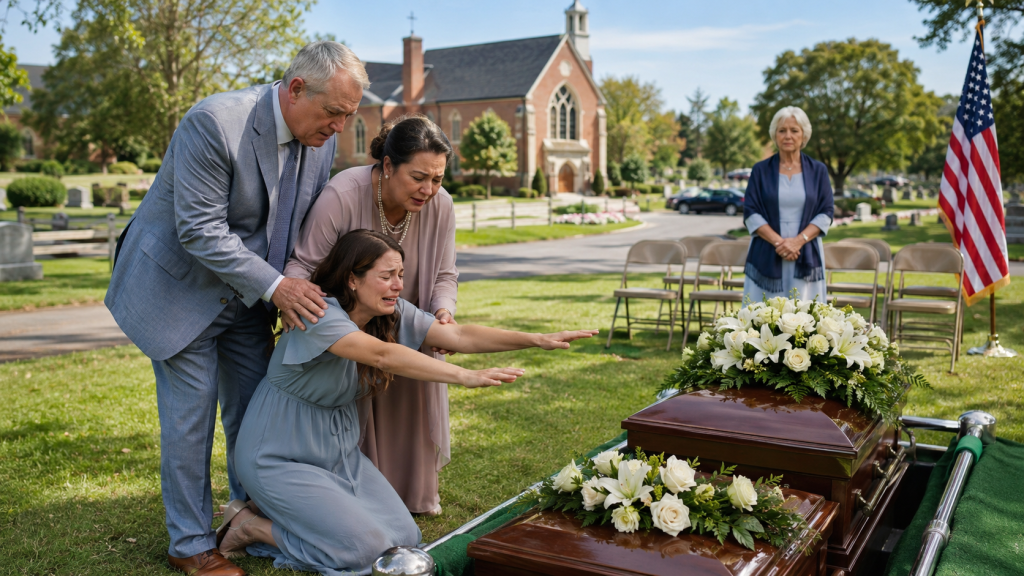
The Lily & Noah First Response Foundation would provide pediatric trauma equipment and training grants to volunteer rescue organizations across Virginia and neighboring states.
When I signed the final document, I went to the bathroom afterward and vomited.
Then I sat on the tile floor and cried because Ethan should have been there.
I called Margaret before anyone else.
She answered on the second ring.
“It’s done,” I told her.
She knew what I meant.
There was a long silence.
Then she asked, “Would he be proud?”
“I hope so.”
“He would.”
Two days later, at 6:17 in the morning, my name appeared on the front page of a national financial website.
By eight, it had spread everywhere.
The headline read:
“WIDOW CLAIRE BENNETT APPROVES $680 MILLION AURELINE MEDICAL ACQUISITION, LAUNCHES $40 MILLION FOUNDATION IN MEMORY OF HUSBAND AND CHILDREN.”
There was a photograph of me leaving Halcyon’s Richmond office.
I looked thinner than I remembered being.
My hair was pulled into a low knot.
I wore Ethan’s wedding ring on a chain around my neck.
Under the photograph, the article described me as Aureline’s controlling shareholder.
It estimated my personal proceeds from the transaction.
The number was wrong.
But it was large enough to change everything.
I was making tea when my phone started vibrating on the counter.
Unknown number.
I ignored it.
Another number called.
Then another.
My email began filling.
By 8:30, Margaret called.
“Have you looked online?”
“I have.”
“You might want to turn your phone off.”
“Why?”
She hesitated.
“Your mother called me.”
I closed my eyes.
Of course she did.
“What did she want?”
“She wanted your new number.”
“And?”
“I told her I didn’t have permission to give it to her.”
I smiled for the first time that morning.
“Thank you.”
“She also said there has been some kind of terrible misunderstanding.”
I almost laughed.
“Six months is a long misunderstanding.”
“That’s more or less what I told her.”
At 9:14, an email arrived from Melissa.
The subject line was:
PLEASE CALL US. THIS IS SERIOUS.
I deleted it.
At 9:19, another appeared.
MOM IS CRYING.
Deleted.
Then my father emailed.
Claire,
I don’t know what has gotten into you, but this situation has gone far enough.
Whatever happened between us after Ethan’s accident should have remained private family business.
Your mother and sister are devastated to learn about something this important through the media.
You need to call us today.
Dad
I read the message several times.
Not one sentence mentioned Ethan.
Not one mentioned Lily.
Not one mentioned Noah.
They were devastated because they learned about my money from the internet.
I closed my laptop.
That afternoon, someone knocked on my apartment door.
I was not expecting anyone.
When I looked through the peephole, my mother was standing in the hall.
My father was beside her.
Melissa stood behind them wearing enormous sunglasses despite being indoors.
I did not open the door.
My mother knocked again.
“Claire?”
Silence.
“We know you’re home.”
I stayed perfectly still.
My father tried the handle.
Locked.
“Claire, open the door.”
I felt my pulse quicken.
Six months earlier, that tone would have worked.
I would have opened the door automatically because my father had spent my entire life making his demands sound like moral obligations.
I stepped closer.
“You need to leave.”
My mother gasped from the other side.
“Oh, thank God. Claire, sweetheart, please open up.”
Sweetheart.
I could not remember the last time she had called me that.
“Why are you here?”
“We’ve been worried sick.”
“For six months?”
Melissa spoke next.
“This isn’t fair.”
I almost admired the consistency.
Even outside my door, after everything, Melissa’s first concern was fairness to Melissa.
My father lowered his voice.
“We need to discuss what’s happening.”
“What’s happening?”
“The company. The sale. Your finances. You’re obviously making enormous decisions while still grieving.”
There it was.
Not congratulations.
Not concern.
Control.
“I have attorneys.”
“We’re your family.”
“No.”
Silence followed.
Then my mother began crying.
Not the quiet grief I had heard from Margaret at the funeral.
This was loud, performative crying.
“Claire, how can you say that?”
I leaned my forehead against the door.
“I asked you to come to my husband’s funeral.”
No one answered.
“I asked you to stand beside me while I buried my seven-year-old daughter and my four-year-old son.”
My voice shook, but I kept going.
“Dad told me Melissa’s birthday dinner was more important.”
“That is not what I said,” my father snapped.
I actually stepped back from the door.
“Yes, it is.”
“You were hysterical. Everyone was upset. Things were said.”
“You said, ‘Friday is your sister’s birthday dinner. That reservation has been booked for weeks.’”
“That’s out of context.”
“What context makes it better?”
He had no answer.
Melissa finally spoke.
“You know what? My birthday was already ruined too.”
I closed my eyes.
My mother whispered her name sharply.
But Melissa continued.
“You called during my party. Everyone was crying afterward. Dad barely spoke through dinner. It was horrible.”
Something extraordinary happened then.
I stopped being angry.
Completely.
The last small piece of me that had spent months wondering whether I had been too harsh simply disappeared.
I unlocked the door.
All three of them looked startled when I opened it.
My mother immediately moved forward to hug me.
I raised one hand.
“Don’t.”
She stopped.
My father looked older.
Melissa looked almost exactly the same.
Perfect hair.
Designer handbag.
Glossy lipstick.
For months I had imagined this confrontation.
In some versions, I screamed.
In others, I slammed the door.
In reality, I simply looked at them.
“I’m going to say this once.”
My father straightened.
“You didn’t miss a dinner party,” I said. “You missed their funeral.”
My mother’s face crumpled.
“We made a mistake.”
“No. Forgetting an appointment is a mistake. Taking the wrong exit is a mistake. You made a choice.”
“Claire—”
“You knew where I was. You knew what happened. You heard me begging on the phone. And you chose a birthday dinner.”
Melissa crossed her arms.
“Are you going to punish us forever?”
I looked directly at her.
“This isn’t punishment.”
“Then what is it?”
“A consequence.”
That silenced her.
My father stepped forward.
“All right. We handled it badly. Fine. But cutting off your entire family is extreme. Especially now.”
“Especially now?”
His eyes shifted.
Just once.
Toward the apartment behind me.
That tiny movement told me everything.
Especially now that I had money.
I laughed softly.
“There it is.”
“What?”
“You didn’t come here because you miss me.”
My mother looked offended.
“Of course we miss you!”
“What’s my therapist’s name?”
She blinked.
“What?”
“What was Lily buried in?”
My mother’s mouth opened.
Nothing came out.
“What song played at Noah’s funeral?”
No answer.
“What date did I sell the house?”
Silence.
I looked at my father.
“You don’t know anything about the last six months of my life.”
His face hardened.
“We saw the article.”
“I know.”
“We were shocked.”
“I know.”
“You are talking about generational wealth, Claire.”
Finally.
The truth had entered the hallway.
Melissa glanced at him, embarrassed.
Dad continued anyway.
“Money like this changes responsibilities.”
“Whose responsibilities?”
“Yours.”
“To whom?”
“To your family.”
I stared at him.
Then I laughed.
I could not help it.
He became furious.
“You think this is funny?”
“I think you drove three hours to tell the daughter whose children’s funeral you skipped that her dead husband’s money creates responsibilities to you.”
My mother whispered, “Please lower your voice.”
I looked at her.
“Why? Are you embarrassed?”
That struck somewhere tender.
Her cheeks reddened.
Our neighbors had begun opening doors.
My father noticed.
“Inside,” he said.
“No.”
“Claire.”
“This is my home. You don’t give orders here.”
Melissa suddenly removed her sunglasses.
Her eyes were red.
“Dad, tell her.”
He shot her a warning look.
That caught my attention.
“Tell me what?”
“Nobody needs to discuss that here,” my father said.
“Discuss what?”
Melissa looked at him, then at me.
“My business is struggling.”
Of course.
Melissa had opened a luxury home boutique two years earlier with significant financial help from my parents.
I had attended the opening.
I had bought thousands of dollars’ worth of furniture I did not need because my mother said supporting family mattered.
“How badly?”
Melissa swallowed.
“We’re behind.”
“How far?”
“Claire, this is not the place,” Dad interrupted.
“How far?”
Melissa looked at the floor.
“About two hundred and eighty thousand.”
I stared at her.
“In debt?”
She nodded.
“And Mom and Dad?”
My mother started crying again.
“We helped her.”
I looked at my father.
“How much?”
His jaw tightened.
“We refinanced the house.”
The house my parents had owned for twenty-nine years.
The house they constantly described as the inheritance Melissa and I would someday share.
“How much?”
“Enough.”
I suddenly understood the urgency.
“You need money.”
Dad bristled.
“We need family to act like family.”
“You mean you need me to pay Melissa’s debt.”
“It would be nothing to you.”
That sentence ended any remaining doubt.
Nothing to me.
Money that existed because my husband had spent nine years working sixteen-hour days.
Money tied to technology he had hoped would save lives.
Money I possessed because Ethan was dead.
Dad spoke about it as though I had won a scratch-off ticket.
I stepped backward.
“Leave.”
“Claire, be reasonable.”
“Leave.”
“Your sister could lose everything.”
I looked at Melissa.
“For six months, did you ever once consider that I already did?”
She started crying.
Real tears this time.
I shut the door.
My father pounded on it for several minutes.
Then the hallway became quiet.
I thought that would be the end.
It wasn’t.
Three days later, my father gave a statement to a local gossip website.
He did not use my name directly.
He did not have to.
He told a reporter that a “recently wealthy relative” had become emotionally unstable after bereavement and was abandoning lifelong family relationships because of “outside influences.”
The story was picked up by another site.
Then another.
People online began speculating.
My attorneys advised me to stay silent.
I agreed.
Then Dad made a mistake.
He spoke to a television reporter outside Melissa’s boutique.
The reporter asked whether he was referring to me.
Dad said, “I’m simply praying that my daughter remembers who loved her before the money came.”
The clip went viral.
Not because people sympathized with him.
Because someone in Richmond recognized him.
A woman named Denise Carter commented beneath the video.
“I attended Claire Bennett’s family funeral. Her parents weren’t there.”
Another person confirmed it.
Then another.
Someone posted a photograph from the church.
Three caskets.
Me standing between Margaret and Robert.
Rows of empty seats behind us.
The story changed overnight.
A reporter contacted Ethan’s parents.
Margaret initially refused to speak.
Then she called me.
“Do you want me to say something?”
“You don’t have to.”
“I didn’t ask whether I had to.”
I sat quietly.
“What do you want?”
She answered without hesitation.
“To tell the truth.”
The next evening, Margaret appeared on camera.
She wore the navy dress she had worn to the funeral.
I knew because I had helped fasten the back zipper that morning when her hands were shaking too badly.
The reporter asked whether my parents had been present when Ethan, Lily, and Noah were buried.
“No,” Margaret said.
“Do you know why?”
Margaret looked directly at the camera.
“Yes.”
She paused.
“They attended their younger daughter’s birthday celebration instead.”
The interview lasted less than four minutes.
It destroyed my father’s narrative.
Melissa’s boutique social media pages filled with angry comments.
My mother stopped attending church because people asked uncomfortable questions.
Dad threatened to sue three newspapers.
Nobody cared.
I hated the attention.
I hated seeing my family’s funeral photograph on television.
I hated hearing strangers debate the worst day of my life.
But I refused to defend my parents from the consequences of the truth.
Then Melissa came to see me alone.
It was late March.
She did not knock on my apartment door.
Instead, she waited downstairs and sent an email asking whether I would meet her in the lobby.
I nearly ignored it.
Then I went.
She was sitting on a sofa beside the windows.
No designer handbag.
No makeup.
She looked tired.
When I sat across from her, she did not try to hug me.
“I’m not here for money,” she said immediately.
“That’s a promising beginning.”
She flinched.
“I deserve that.”
I waited.
For once, Melissa seemed uncertain how to make herself the center of the conversation.
Finally, she said, “I’ve been thinking about the funeral.”
I said nothing.
“I should have been there.”
“Yes.”
“I knew I should have been there then.”
That surprised me.
She looked down at her hands.
“When you called Dad during my birthday party, Mom told everyone there had been an accident. Then Dad took the phone into the hallway.”
I remembered.
“When he came back, he said Ethan and the kids were dead.”
Her voice cracked.
“Everybody stopped talking.”
I stared at her.
“Then why didn’t you come?”
Melissa wiped her eyes.
“Because Dad said there was nothing we could do.”
The words made my stomach turn.
“He said funerals were for closure and you had Ethan’s parents. He said canceling my birthday plans wouldn’t bring anyone back.”
“And you agreed.”
“Yes.”
At least she did not lie.
“I wanted to go,” she continued. “I even packed a dress Thursday night. Mom saw it on my bed.”
I felt anger rise.
“She told me that if we canceled everything, then the accident would destroy two daughters instead of one.”
For a moment, I could not speak.
Melissa began crying.
“I let her convince me.”
“You were thirty-four years old.”
“I know.”
“You weren’t a child.”
“I know.”
“You didn’t need permission to attend.”
“I know.”
Each answer became quieter.
I looked out through the lobby windows.
People crossed the street carrying grocery bags and coffee cups.
Normal lives.
“You know what I kept thinking at the funeral?” I asked.
Melissa shook her head.
“Every time the church door opened, I thought one of you had changed your mind.”
She covered her mouth.
“I kept looking back.”
“I’m sorry.”
“I watched people enter until the service started.”
Her shoulders shook.
“I’m sorry, Claire.”
“For months, I wondered what was wrong with me that my own parents couldn’t show up.”
“Nothing.”
“I know that now.”
That made her cry harder.
I did not comfort her.
Not because I wanted to punish her.
Because her guilt belonged to her.
After a while, she whispered, “The business is closing.”
I waited.
“I’m filing bankruptcy.”
“I’m sorry.”
She looked surprised.
“You are?”
“I don’t want your life destroyed, Melissa. I just won’t rescue you from every consequence.”
She nodded.
“Dad keeps saying you could fix everything with one check.”
“I could.”
“I know.”
“I’m not going to.”
“I know that too.”
That was the first honest conversation my sister and I had ever had.
Before leaving, Melissa placed something on the table between us.
A small pink envelope.
“What is it?”
“I found it at Mom and Dad’s house.”
I opened it.
Inside was a birthday card Lily had made for Melissa before the accident.
The front had purple hearts and a badly drawn cake.
Inside, Lily had written:
HAPPY BIRTHDAY AUNT MELISSA.
MOM SAYS YOU LIKE FLOWERS SO I DREW 8.
LOVE LILY.
I stopped breathing.
Melissa was crying again.
“She mailed it the week before.”
I traced Lily’s handwriting with my finger.
“She loved you.”
“I know.”
“No,” I whispered. “I don’t think you do.”
Melissa closed her eyes.
“I’m trying to.”
I took the card upstairs.
For the first time, I did not shut the door completely on my sister.
But I did not open it either.
I left it where trust actually belonged.
Barely cracked.
My parents were different.
My mother sent letters.
Lots of them.
The early letters were excuses.
We were in shock.
We didn’t understand how much you needed us.
Your father made the decision.
Melissa was emotionally fragile.
The reservation could not be canceled.
I returned every letter unopened.
Eventually, the letters changed.
One arrived almost a year after the accident.
It contained only four sentences.
Claire,
I chose what was easy instead of what was right.
There is no excuse for missing their funeral.
I failed you when you needed a mother.
I am sorry.
I kept that letter.
I did not answer it.
Forgiveness, I learned, is not the same as access.
My father never reached that point.
He remained convinced that my boundaries were cruelty.
When Melissa’s business failed, he blamed me.
When my parents sold their house to satisfy the refinancing debt, he blamed me.
When they moved into a smaller condominium, he told relatives that I had “allowed my own parents to become homeless.”
They were not homeless.
They owned a condominium.
But Dad had always preferred a dramatic accusation to an honest consequence.
Eventually even some relatives stopped listening.
A year after the acquisition, the first Lily & Noah Foundation grants were awarded.
The ceremony took place at a volunteer rescue station about forty miles outside Richmond.
I almost canceled my appearance.
Public events were still difficult.
Then Marcus reminded me that one of the departments receiving equipment served the same stretch of Interstate where Ethan and the children had died.
That made me go.
Margaret and Robert sat in the front row.
Marcus sat beside them.
Melissa came too.
She stood near the back and did not approach until I waved her forward.
The foundation funded twelve Beacon units that year.
It also created pediatric trauma training scholarships for paramedics.
During the ceremony, a young EMT named Daniel approached me.
He looked nervous.
“Mrs. Bennett?”
“Claire is fine.”
He nodded.
“I was off duty the day your family’s accident happened, but my station responded.”
I braced myself.
He noticed.
“I’m sorry. I shouldn’t have brought that up.”
“No. It’s okay.”
He swallowed.
“I just wanted you to know what this equipment means to us. We usually have to transport patients thirty or forty minutes before they can get imaging. That time matters.”
I looked at the Beacon case beside him.
“Ethan believed that.”
“He was right.”
Something inside me shifted.
Not healed.
People love that word because it implies broken things return to what they were.
I would never return to what I had been.
But grief changed shape.
At first, it was an ocean.
Later, it became something I carried.
Heavy.
Permanent.
But carryable.
After the ceremony, Margaret took my hand.
“You did it.”
I shook my head.
“Ethan did.”
“No.”
Her eyes filled.
“He started it.”
She squeezed my fingers.
“You finished it.”
That evening, I drove alone to the cemetery.
The sun was setting.
I brought three bouquets.
White roses for Ethan.
Purple tulips for Lily.
Yellow daisies for Noah because he had once declared that yellow was the “loudest color.”
I sat in the grass between their graves.
For a long time, I said nothing.
Then I told them everything.
I told Ethan about the acquisition.
I told him Marcus still drank terrible office coffee.
I told Lily that the foundation website used one of her drawings in the children’s emergency-kit program.
I told Noah that Robert had found one of his plastic dinosaurs beneath the passenger seat of his truck.
Then I told them about my parents.
“I finally stopped auditioning,” I whispered.
The wind moved through the trees.
I touched Ethan’s name on the stone.
“You were supposed to be here when I did.”
My voice broke.
For a few minutes, I cried the way I had cried during those first weeks.
Without dignity.
Without restraint.
When the tears stopped, I stayed until the cemetery lights came on.
Two years after the accident, I bought a house.
Not a mansion.
Not the giant estate my father apparently told relatives I should purchase.
A house with tall windows, a small garden, and enough bedrooms that visiting friends could stay without sleeping on the sofa.
There was a maple tree in the backyard.
The first autumn, its leaves turned the same shade of red as Lily’s favorite coat.
I kept Ethan’s ring around my neck.
I kept Noah’s toy fire engine on a bookshelf in my office.
I framed Lily’s last drawing.
I also went back to work.
Not as a full-time school counselor.
I joined the foundation and designed programs supporting children who survived serious accidents and families dealing with traumatic loss.
Some mornings were still terrible.
Birthdays were difficult.
Christmas was worse.
The anniversary of the crash remained nearly impossible.
But there were also mornings when I woke and heard birds instead of remembering the hospital.
Days when I laughed without immediately feeling guilty.
Days when saying Ethan’s name made me smile before it made me cry.
Melissa and I rebuilt something slowly.
It was not the relationship we had before.
That was probably a good thing.
The relationship we had before was built on me surrendering and calling it peace.
The new one had rules.
She stopped asking me to rescue her.
I stopped pretending her apologies erased everything.
She found a job managing another retail store.
Later, she began taking accounting classes at night.
On Lily’s tenth birthday, Melissa asked if she could come to the cemetery with me.
I almost said no.
Then I said yes.
She brought eight flowers.
Exactly eight.
Just like Lily’s card.
She placed them beneath Lily’s name and whispered, “I should have been there.”
I stood beside her.
“Yes.”
She looked at me with tears in her eyes.
“I’ll be sorry for the rest of my life.”
I believed her.
That did not undo anything.
But it mattered.
My mother and I eventually began exchanging occasional letters.
Then short phone calls.
Then coffee once every few months.
She never again asked me to forgive my father.
That was one of the reasons I allowed her back into my life.
Dad and I remained estranged.
Five years after the funeral, he sent me a birthday card.
Inside, he wrote:
Family shouldn’t hold grudges forever.
I put the card in the recycling bin.
What I felt was not a grudge.
A grudge is anger you keep feeding.
I had stopped feeding mine years earlier.
I simply knew who my father was.
Knowing someone clearly can look cruel to people who benefited from your confusion.
The strangest thing about losing everything is discovering what remains.
I had thought family meant blood.
Then I stood between three caskets and learned that family was Margaret gripping my hand so tightly her knuckles turned white.
Family was Robert replacing my porch light because I had forgotten darkness came early in winter.
Family was Marcus sitting quietly while I read Ethan’s final letter.
Family was the EMT who hugged me after receiving equipment purchased in my children’s names.
Family was Melissa, eventually, when she learned to arrive without needing to be the most important person in the room.
And family was also me.
The version of me Ethan had spent years trying to introduce me to.
The woman who could survive being abandoned.
The woman who could say no.
The woman who finally understood that love offered only when you were useful was not love.
Years later, a journalist interviewing me about the foundation asked a question I had not expected.
“If you could go back to the morning of the accident and tell yourself one thing, what would it be?”
I looked across my office.
On the wall was a photograph taken six weeks before the crash.
Ethan was sitting on our back steps.
Noah was on his shoulders.
Lily was leaning against him, laughing because Noah had just dropped a popsicle onto Ethan’s hair.
I had taken the picture.
All three were looking at me.
For a moment, I could almost hear them.
I answered carefully.
“I would tell her that survival is not betrayal.”
The journalist lowered her pen.
I continued.
“For a long time, I thought being alive when they weren’t meant I had somehow been spared by mistake. So I believed I had to suffer enough to justify surviving.”
My voice softened.
“But the people we love don’t become more loved because we destroy ourselves after losing them.”
The journalist’s eyes filled.
“What changed that for you?”
I touched the ring hanging beneath my blouse.
“A letter.”
That night, after the interview, I drove home in light rain.
When I reached my street, I saw something moving near the maple tree.
Three neighborhood children were chasing fireflies across my yard.
Their mother stood on the sidewalk apologizing.
“They keep escaping me,” she called.
I laughed.
“It’s fine.”
One little boy ran past holding a glass jar.
For half a second, the angle of his shoulders reminded me of Noah.
The grief came.
It always would.
But this time, it arrived beside something else.
Gratitude.
Not gratitude that they were gone.
Never that.
Gratitude that they had existed.
I went inside and opened the drawer where I kept Ethan’s letter.
The paper had softened along the folds from being opened so many times.
I read the final lines again.
Stop letting people make you audition for love.
You already have mine.
I sat near the window and watched the children chase fireflies beneath the maple tree.
Somewhere along the way, I had believed losing Ethan, Lily, and Noah meant the story of our family had ended on a highway outside Richmond.
It hadn’t.
The story continued every time a paramedic opened a Beacon unit.
Every time a frightened child received emergency care faster because of a foundation grant.
Every time Melissa placed eight flowers beside Lily’s grave.
Every time I refused to confuse guilt with obligation.
Every time I chose a life Ethan would have wanted me to live.
The headline my parents had panicked over disappeared from the internet’s front page within days.
Another acquisition replaced it.
Another scandal.
Another billionaire.
Another story.
But the thing that headline gave me lasted much longer.
It forced my family to reveal why they had returned.
And once I saw that clearly, I stopped wishing they had been different.
My parents had made their choice on the worst day of my life.
For years, I thought the lesson of that day was that I had not mattered enough for them to come.
I was wrong.
Their absence had never measured my worth.
It measured theirs.
Ethan had understood that long before I did.
And maybe that was the final gift he left me.
Not the shares.
Not the money.
Not the company.
Permission to stop chasing people who had already shown me where I stood.
I spent decades trying to earn a place at my parents’ table.
Then, in one terrible year, I learned how to build my own.
At that table were the people who stayed.
The people who remembered.
The people who showed up.
And for the first time in my life, every seat was filled by someone who had chosen to be there.
💬THE END! THANK YOU FOR READING!