

Ten caregivers became thirty.
Then sixty.
Within five years, Northlight was operating across three counties, specializing in home recovery, dementia support, and end-of-life care.
I stopped counting how many nights I slept on the office couch.
What mattered was that families trusted us.
That was always the thing I cared about most.
Not expansion.
Not revenue.
Not headlines.
Trust.
I remembered what it felt like to be eighteen years old, standing beneath twelve frames and being told I had not yet accomplished anything worthy of belonging.
I remembered carrying my clothes down the sidewalk in trash bags.
I remembered the porch light shutting off.
And every time Northlight grew, some quiet piece of me waited for the moment when success would finally feel like proof.
Proof that I had mattered.
Proof that I had not thrown my life away.
Proof that my family had been wrong.
But the strange thing was, after a while, I stopped wanting their approval.
There was always another family who needed us.
Another elderly woman whose children lived three states away.
Another widower terrified of being sent to a facility.
Another overwhelmed daughter sitting at a kitchen table with unpaid bills, medication lists, and no idea how she was supposed to keep caring for her father while raising two children of her own.
Those were the people I thought about.
Not my mother.
Not my father.
Not Camille.
At least, that was what I told myself.
Then Grandma Adele died.
I found out two days after her funeral.
I was standing in the supply room of our original office, arguing on the phone about a shipment of disposable gloves, when an old family friend named Marjorie called.
Her voice changed the moment I answered.
“Oh, sweetheart.”
Everything inside me went still.
“What happened?”
There was a pause.
Then she said, “You don’t know?”
I lowered myself onto a box of medical pads.
“Know what?”
“Adele passed away on Monday.”
For several seconds, I couldn’t hear anything except the hum of the refrigerator in the break room beyond the wall.
“Monday?”
“Yes.”
“And the funeral?”
Another pause.
“Yesterday.”
The words landed harder than I expected.
Not because Grandma was gone.
I had known she was getting older.
She had written to me less frequently in the past year, and when we spoke on the phone, she sometimes sounded tired.
What broke something inside me was realizing they had buried her without telling me.
I asked Marjorie who had been there.
She named nearly everyone.
Mom.
Dad.
Camille.
My aunt Susan.
Uncle Robert.
Cousins I had not seen since I was nineteen.
“Did anyone ask where I was?”
Marjorie hesitated.
That was answer enough.
But I made her say it.
“Please.”
She sighed.
“Camille said you made your choice years ago.”
I closed my eyes.
Of course she did.
I thanked Marjorie for calling and ended the conversation before my voice cracked.
Then I sat in that supply room and cried into my hands until Teresa found me.
Teresa had become Northlight’s director of operations by then.
She stepped inside, closed the door, and sat beside me without asking anything.
After a minute, she put a hand on my shoulder.
“My grandmother died,” I whispered.
She didn’t offer some polished sentence about grief.
She just stayed.
That was why I trusted her.
Three months later, an attorney named Samuel Greene called me.
He introduced himself as the executor of Grandma Adele’s estate.
My first thought was that there had been some mistake.
My second was that my family had finally decided to send me one of her old sweaters or perhaps the nursing textbooks she had kept in the basement.
Instead, Mr. Greene asked me to come to his office.
“I can mail the documents,” he said, “but there is one item Mrs. Whitmore specifically requested be delivered to you in person.”
I drove there the following Friday.
His office smelled like paper, coffee, and old wood.
He handed me a long envelope sealed with blue wax.
Inside was a note written in Grandma’s familiar slanted handwriting.
Meredith,
If you are reading this, then I am gone.
I am sorry you were not given the chance to say goodbye.
I suspected that might happen.
Please do not confuse the choices of others with my wishes.
You were never the empty frame.
The frame was theirs.
One day, they will understand.
Until then, keep building the kind of medicine that remembers the patient after the diagnosis.
Love always,
Grandma Adele.
I read it twice.
Then a third time.
“You were never the empty frame.”
My throat tightened.
Mr. Greene waited quietly.
“What does she mean by ‘the frame was theirs’?”
“I don’t know,” he said. “But there is something else.”
He opened a drawer and removed a small wooden box.
Inside was Grandma’s steel nursing watch.
The same one she had fastened around my wrist the night my parents threw me out.
I had worn it for years until the clasp broke.
I had given it back to Grandma during one of my last visits because she said she knew someone who could repair it.
Now it had been polished.
Beneath it was a tiny brass key.
I stared at it.
“What does that open?”
Mr. Greene shook his head.
“She left no explanation.”
I took the key home.
For three years, it stayed inside my desk.
By year nine, Northlight no longer fit inside any definition I had imagined when I started it.
We had expanded into six states.
We employed nearly eight hundred caregivers, nurses, therapists, social workers, schedulers, patient advocates, and support staff.
We had built partnerships with hospital systems that previously treated home care as an afterthought.
We had developed a program that reduced preventable hospital readmissions among elderly patients.
We helped people stay in their homes longer.
We helped families navigate hospice.
We trained caregivers who had never been given formal support.
We even created scholarships for people entering nursing and patient-care careers.
The scholarship was named after Grandma Adele.
I never put my own name on anything.
That would become important later.
The year I turned twenty-eight, Northlight entered negotiations to acquire a struggling regional home-health company called HavenBridge.
It was our biggest move yet.
If the deal went through, Northlight would become one of the largest independent home-care networks in the region.
I spent six months buried in meetings.
That was why I nearly ignored the thick cream envelope that arrived at my office one Tuesday.
The front simply said:
Meredith Whitmore.
No return address.
Inside was a wedding invitation.
Camille Whitmore and Dr. Adrian Wells.
My sister was getting married.
For several seconds, I simply stared at her name.
Nine years.
Nine years without a Christmas card.
Nine years without a birthday text.
Nine years without a single call.
And now this.
But there was something strange.
My name was not printed on the formal invitation.
There was a second card tucked behind it.
Handwritten.
Ms. Whitmore,
I know this invitation may be confusing.
Camille does not know I contacted you.
I would be grateful if you would attend.
There is something you need to know about your grandmother.
Adrian Wells.
I read the message twice.
Then I locked my office door.
The wedding was six weeks away.
At first, I had no intention of going.
Then I took Grandma’s letter out of my desk.
You were never the empty frame.
The frame was theirs.
One day, they will understand.
I looked at the brass key beside it.
And I accepted.
The wedding was held at the Bellweather Estate, a restored mansion outside the city.
The kind of place my mother would have selected even if it required refinancing a house.
White stone.
Tall windows.
Perfect gardens.
Valets in gray jackets.
I almost laughed when I arrived.
My family had always treated presentation like morality.
If something looked impressive enough, nobody was supposed to notice what was underneath.
I wore a simple navy dress.
No designer label.
No dramatic jewelry.
Just Grandma’s steel watch on my wrist.
Teresa had insisted I bring a driver because she said there was a reasonable chance I would either leave furious or be too emotionally exhausted to drive.
She was probably right.
The ceremony had already ended when I arrived.
Guests were moving toward the reception hall.
I recognized relatives almost immediately.
Some had aged.
Some had not changed much.
None recognized me.
That was easier than I expected.
Then I saw my mother.
She stood near the entrance wearing silver silk, holding a champagne glass, talking to three women I vaguely remembered from childhood.
Her hair was shorter.
Her face was thinner.
But the expression she gave me when our eyes met was exactly the same one she had worn when I told her I wanted to become a nurse.
Disbelief first.
Then embarrassment.
Then anger.
She excused herself and crossed the room.
“Meredith?”
“Hello, Mom.”
Her eyes swept over me.
Not with affection.
Assessment.
Clothes.
Shoes.
Jewelry.
Status.
Nine years, and she still measured people in visible evidence.
“What are you doing here?”
Before I could answer, Camille appeared.
She wore an elaborate wedding gown and looked exactly like the version of our family my mother had always wanted to display.
Beautiful.
Successful.
Perfect.
Her expression hardened when she saw me.
“You came?”
“Yes.”
She glanced at Mom.
Then back at me.
“You weren’t invited.”
A few nearby conversations slowed.
I could feel people listening.
“I received an invitation.”
“Not from me.”
“I know.”
Camille folded her arms.
“Then why are you here?”
Before I could answer, a man stepped between us.
Tall.
Dark hair.
Tuxedo.
Calm expression.
Adrian Wells.
The groom.
He looked from Camille to my mother.
“Wait.”
Camille turned.
“What?”
Adrian pointed gently toward me.
“You really don’t know who she is?”
Mom’s eyebrows drew together.
“Of course we know who she is. She’s our daughter.”
“That’s not what I mean.”
I almost smiled.
Camille looked irritated.
“Adrian, please. This is not the time for some dramatic misunderstanding.”
He stared at her.
“I don’t think you understand.”
Then he turned to me.
“Ms. Whitmore.”
I extended my hand.
“Congratulations.”
He shook it.
“Thank you.”
My father joined us.
“What’s going on?”
Camille answered before anyone else could.
“Meredith showed up uninvited.”
Dad looked at me with a tired expression.
“Meredith.”
The way he said my name made me seventeen again.
A problem to be managed.
A disappointment requiring diplomacy.
I looked at all of them.
My mother.
My father.
My sister.
Then at Adrian.
And I smiled.
“You have no idea, do you?”
Camille’s face flushed.
“No idea about what?”
Adrian exhaled slowly.
“Meredith Whitmore founded Northlight.”
Silence.
Absolute silence.
My mother blinked.
Dad looked confused.
Camille actually laughed.
“You mean the home-care company?”
“Yes.”
“She works there?”
“She owns it.”
My father’s expression changed.
“No.”
I said nothing.
Adrian continued.
“She founded it nine years ago. Northlight now operates in six states.”
Mom stared at me.
“That’s impossible.”
That sentence, more than anything else, made me laugh softly.
Not because it was funny.
Because it was familiar.
Apparently success only became unbelievable when it belonged to me.
Camille shook her head.
“Northlight is backed by investors.”
“Yes,” Adrian said. “Now. But she started it.”
Dad looked at me.
“How large is the company?”
There it was.
Not Are you happy?
Not How have you been?
Not I’m sorry.
How large is the company?
I answered anyway.
“Just under eight hundred employees.”
Mom’s glass lowered slightly.
Camille looked at Adrian.
“How do you even know this?”
His expression changed.
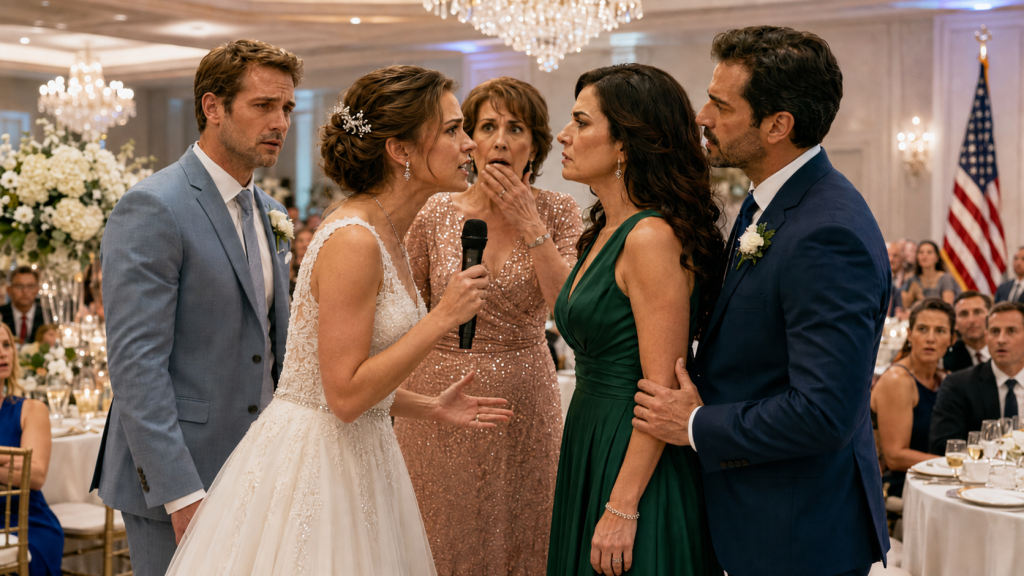
“Because Northlight is acquiring HavenBridge.”
That got my father’s attention.
He knew the name.
HavenBridge had long contracts with several hospitals.
Including the hospital system where my parents worked.
Camille’s face went pale.
“What does that have to do with you?”
Adrian hesitated.
“I’m medical director for one of HavenBridge’s transitional-care divisions.”
Now I understood.
His name had appeared in acquisition paperwork.
I had never connected it to Camille.
He continued.
“I met Meredith during due diligence. She was leading the patient-care integration review.”
Mom looked between us.
“You knew?”
“That she was your daughter? No.”
Adrian glanced at me.
“Not until three months ago.”
Camille’s voice sharpened.
“How?”
He didn’t answer immediately.
Instead, he reached into his jacket and removed a small folded paper.
“Because of Adele.”
My heart stopped.
“What about Grandma?”
Adrian looked at me.
“She was my patient.”
I stared at him.
He continued.
“Not for long. Toward the end.”
My mother stiffened.
“Adrian.”
He looked at her.
“Camille told me her grandmother had been treated at St. Catherine’s before she died. I checked because the name sounded familiar.”
Camille’s mouth tightened.
“You accessed her record?”
“No. I remembered her. I was a resident.”
He turned back to me.
“She talked about you.”
My throat tightened.
“What did she say?”
“That depends on whether we’re having this conversation here.”
I looked around.
Half the reception seemed to be pretending not to listen.
“Somewhere private.”
Adrian led us into a small library off the main hall.
My parents came.
So did Camille.
I almost told them not to.
Then I thought of Grandma’s letter.
One day, they will understand.
So I let them follow.
Adrian closed the door.
“There’s something you should know first,” he said to me. “Your grandmother knew you weren’t told when her condition worsened.”
I looked at my mother.
She avoided my eyes.
Adrian continued.
“She asked repeatedly whether Meredith had been contacted.”
Camille interrupted.
“She was confused.”
“No,” Adrian said.
The word was calm.
Firm.
“She was not confused when she asked me.”
Camille stared at him.
He continued.
“She was weak. But oriented.”
My father shifted.
“This isn’t appropriate.”
Adrian ignored him.
“She told me she had a granddaughter who had built something important.”
My mother frowned.
“She knew about Northlight?”
“Yes.”
I covered my mouth.
I had never told Grandma how large it had become.
Whenever we spoke, I downplayed it.
Too much paperwork.
A few more employees.
Busy week.
I never wanted her to think I was bragging.
Adrian smiled faintly.
“She knew.”
“How?”
“She followed everything.”
He looked at Mom.
“She had newspaper clippings.”
My eyes filled.
I looked away.
Adrian handed me the folded paper.
It was a photocopy.
Grandma’s handwriting.
A list of Northlight milestones.
First hospital contract.
First dementia-care program.
First scholarship.
First expansion.
Dates beside each one.
At the bottom she had written:
Meredith built the medicine nobody in this family thought counted.
I pressed my lips together.
For a few moments, nobody spoke.
Then Adrian said, “There was also a box.”
My hand went instinctively toward the brass key in my purse.
“What box?”
“She asked me to make sure her lawyer received it.”
My heart began pounding.
“Was it wooden?”
“Yes.”
“Small?”
He nodded.
I took the brass key from my purse and held it up.
“Did it have a lock?”
Adrian stared.
“Yes.”
Mr. Greene had given me a wooden box.
But I had assumed the watch and key were the only things inside.
Suddenly I remembered the false bottom.
I had noticed the velvet lining seemed unusually thick.
I had never tried to remove it.
“Do you still have the box?” Adrian asked.
“At home.”
My father spoke.
“What exactly are you suggesting?”
Adrian looked at him.
“That Adele left something for Meredith.”
“She already received her estate items.”
“I know.”
Mom folded her arms.
“This is becoming ridiculous.”
I turned toward her.
“Why didn’t you call me?”
Silence.
Nine years compressed into that question.
Mom looked at the floor.
Then at me.
“We assumed you wouldn’t come.”
“You assumed.”
“You had made it clear you wanted a separate life.”
“I was nineteen when you stopped speaking to me.”
“You left.”
“You threw me out.”
Her face tightened.
“Because you rejected everything we sacrificed for you.”
“No.”
My voice stayed calm.
“I rejected medical school.”
“In this family, that meant something.”
“Yes.”
I nodded.
“It meant more than being your daughter.”
My father stepped forward.
“That is unfair.”
“Is it?”
I looked at him.
“You transferred my college fund to Camille.”
He stiffened.
“You refused the educational plan we had prepared.”
“You told me investment goes where the return is.”
He remembered.
I could see it.
Then Camille spoke.
“You always make everything sound crueler than it was.”
I turned toward her.
“You told people I chose not to come to Grandma’s funeral.”
“You had cut us off.”
“You had my phone number.”
“You never called us either.”
I nodded slowly.
“You’re right.”
She seemed surprised.
I continued.
“I stopped begging people to love me.”
Camille’s expression changed.
Not much.
But enough.
I looked at Adrian.
“Why did you invite me?”
He hesitated.
“Because when I learned who you were, something Camille once told me stopped making sense.”
My sister went still.
“What?”
He looked at her.
“You said Meredith had no real career.”
Camille’s face flushed.
Adrian continued.
“You said she left home because she refused to do anything with her life.”
“Adrian—”
“You said Adele barely knew where she was.”
He looked at me.
“But Adele carried newspaper clippings about you.”
Camille’s eyes filled with anger.
“You’re humiliating me at my wedding.”
“No,” Adrian said quietly.
“I’m asking why you lied.”
Silence.
Camille glanced at our parents.
Nobody answered.
Then my father did something unexpected.
He sat down.
Not dramatically.
Just suddenly, like his legs had become too tired.
“I knew about the company,” he said.
Every head turned toward him.
Mom stared.
“What?”
He looked at me.
“Not at first.”
My chest tightened.
“When?”
“About four years ago.”
My voice came out barely above a whisper.
“You knew?”
He nodded.
“How?”
“A hospital administrator mentioned your name.”
He rubbed his forehead.
“I looked it up.”
I stared at him.
“You knew for four years.”
“Yes.”
“And you never called.”
His eyes met mine.
“No.”
I laughed once.
It sounded hollow.
“Why?”
He looked toward my mother.
Then back at me.
“Pride.”
The honesty almost hurt more than another excuse would have.
He continued.
“At first, I thought it was small. Then I saw an article about the dementia program. Later, another about your readmission numbers.”
He swallowed.
“I read your interviews.”
I folded my arms.
“You must have been disappointed.”
His face tightened.
“No.”
“Then what?”
“I was ashamed.”
That silenced me.
Dad looked down at his hands.
“You built something I didn’t understand.”
He took a breath.
“When you said you wanted nursing and home care, I heard lack of ambition.”
I said nothing.
“I thought medicine happened in hospitals.”
His voice was quieter now.
“I thought authority came with titles.”
He looked at me.
“I was wrong.”
Mom turned sharply.
“Richard.”
He ignored her.
“I told myself I would call once I understood what to say.”
He laughed bitterly.
“Then another year passed.”
My anger shifted.
Not disappeared.
But changed shape.
“You could have said hello.”
“I know.”
“You could have said congratulations.”
“I know.”
“You could have told me Grandma was dying.”
His eyes closed.
“I know.”
Mom’s voice cracked.
“She asked for you.”
I turned toward her.
She was crying now.
Not dramatically.
Just silently.
“She asked almost every day during the last week,” Mom whispered.
Something inside me broke open.
“Then why didn’t you call me?”
Mom shook her head.
“Because I was afraid.”
“Of what?”
“That you would come.”
I stared at her.
She wiped her cheek.
“And everyone would see that you had become exactly what I said you never could.”
The room went silent.
Camille looked at Mom like she had slapped her.
My father stared at the floor.
Mom continued.
“I spent years telling people you were irresponsible.”
Her voice trembled.
“That you were stubborn. That you had thrown your future away.”
She looked at me.
“Then Northlight kept appearing everywhere.”
I could barely breathe.
“And instead of being proud of me, you hid me?”
“Yes.”
The word was almost inaudible.
I looked toward the window.
Outside, wedding guests moved through the gardens beneath strings of white lights.
Nine years.
I had imagined this reunion a hundred different ways.
In some versions, I shouted.
In others, I walked away without speaking.
Sometimes they apologized.
Sometimes I told them exactly how much Northlight was worth and watched them finally respect me.
But standing there, none of that mattered.
Because I understood something I had never understood before.
They had not rejected me because I failed.
They had rejected me because my choice threatened the story they told about themselves.
The story where there was only one respectable kind of success.
One acceptable kind of medicine.
One path worth displaying beneath picture lights.
I turned toward Mom.
“Grandma said the frame was yours.”
She stared at me.
“What?”
I reached into my purse and removed the letter.
“You were never the empty frame. The frame was theirs.”
Dad’s face changed.
Mom looked confused.
Then my father whispered, “The wall.”
“What?”
He looked at me.
“The empty frame.”
Camille frowned.
“What about it?”
Dad stood.
“Your grandmother put it there.”
My heart stopped.
“No. Mom showed it to me.”
Dad shook his head.
“She told your mother to hang it.”
Mom stared at him.
“Richard.”
But he continued.
“Adele bought that frame.”
I looked at Mom.
She closed her eyes.
“You told me it was waiting for my medical degree.”
She said nothing.
Dad answered.
“That wasn’t what Adele intended.”
My skin prickled.
“What did she intend?”
Mom walked toward the window.
For several seconds, she did not speak.
Then she said, “She wanted something different on that wall.”
“What?”
“A photograph.”
I stared.
“Of what?”
“Of all of us.”
Dad continued quietly.
“Your grandmother hated that wall.”
Camille looked genuinely shocked.
“What are you talking about?”
“She said it made the family look like a medical board meeting.”
Despite everything, Adrian almost smiled.
Dad continued.
“Adele said the diplomas mattered, but we had turned them into a ranking system.”
My throat tightened.
“She bought the empty frame because she wanted a family photograph beneath them.”
Mom’s shoulders shook.
“She said someday we needed to remember the people were more important than the credentials.”
Suddenly Grandma’s unfinished sentence made sense.
You were never the empty—
Frame.
I sat down.
For twenty years, I had remembered that night incorrectly.
Or rather, I had understood it through my mother’s version.
The frame had never been mine to fill with a diploma.
It had been theirs to fill with family.
And they never had.
I laughed through tears.
“Oh my God.”
Camille sat across from me.
For once, she had nothing to say.
Adrian broke the silence.
“There’s still the box.”
I looked at him.
Then at my family.
“I need to go home.”
Mom stepped forward.
“Meredith.”
I raised my hand.
“Not now.”
To her credit, she stopped.
Adrian offered to come.
I almost said no.
Then I remembered he was the reason I knew any of this.
“Fine.”
Camille immediately said, “I’m coming too.”
Adrian looked at her.
“This is our wedding.”
“I know.”
She looked at me.
“But I think Grandma intended this for all of us.”
I nearly refused.
Then I remembered the words.
The frame was theirs.
“Come.”
My parents came too.
So twenty minutes later, the strangest wedding procession in history left the Bellweather Estate.
The bride.
The groom.
The bride’s parents.
And the estranged sister nobody had invited.
We drove to my house.
It was modest compared to what my family probably expected.
Northlight had made me wealthy.
But I still lived in a three-bedroom house near the park.
I liked hearing children ride bicycles past my windows.
I liked knowing my neighbors.
I liked the maple tree beside the porch.
When my mother entered, she looked around slowly.
Her eyes stopped on a photograph of Grandma Adele beside my desk.
I ignored her.
The wooden box was exactly where I had left it.
I carried it to the dining table.
Adrian examined the velvet lining.
“There.”
A tiny brass keyhole was hidden beneath the edge.
My hands shook as I inserted the key.
Click.
The bottom lifted.
Inside were four envelopes.
One said MEREDITH.
One said HELEN.
My mother.
One said RICHARD.
My father.
And one said CAMILLE.
Beneath them was a photograph.
I picked it up.
It had been taken when I was eleven.
Our whole family stood in Grandma’s backyard.
Mom.
Dad.
Camille.
Me.
Grandma Adele in the middle.
On the back she had written:
For the twelfth frame.
My mother began crying.
Nobody comforted her.
Not because we were cruel.
Because some moments needed to be endured.
We opened the letters separately.
Mine was short.
Meredith,
You understood medicine before anyone gave you permission to.
Do not ever let them convince you otherwise.
Care is not beneath cure.
Comfort is not beneath diagnosis.
Listening is not beneath prescribing.
The person who stays when everyone else has gone home is practicing medicine too.
I hope you build something kinder than what we taught you.
And if your family ever sees that, give them one chance to become better.
One.
Not endless chances.
Love,
Grandma.
I pressed the paper against my chest.
Across from me, Camille was sobbing.
Dad had removed his glasses.
Mom’s hands trembled.
I never asked what their letters said.
They were not mine.
After several minutes, Dad stood.
“I owe you an apology.”
I looked at him.
He swallowed.
“I valued prestige over my daughter.”
His voice cracked on the last word.
“I cannot undo that.”
“No.”
“I know.”
He looked down.
“But I am sorry.”
Camille spoke next.
“I hated you.”
I raised my eyebrows.
She laughed through tears.
“I suppose subtlety is pointless now.”
I said nothing.
She continued.
“When you left, everything became easier for me at first.”
Her confession came slowly.
“I became the good daughter by default.”
She looked at Mom.
“Every accomplishment got compared to Meredith’s failure.”
Her eyes met mine.
“And then you stopped failing.”
I almost smiled.
“You mean I started succeeding.”
“No.”
She shook her head.
“You were succeeding the whole time. We just didn’t know.”
That was the first thing she had said all night that felt true.
She looked at the wedding dress pooled around her chair.
“When Northlight became recognizable, I knew.”
My chest tightened.
“You knew too?”
“Two years ago.”
“And you said nothing.”
“I was ashamed.”
Apparently shame was a popular family tradition.
Camille continued.
“And jealous.”
“Of home care?”
“Of you.”
That surprised me.
She laughed bitterly.
“I did everything right.”
Her voice cracked.
“Medical school. Residency. Fellowship. The specialty Mom wanted.”
She looked toward our mother.
“And I still never knew if any of it was mine.”
The room stayed quiet.
“You left,” she said. “And somehow you became yourself.”
I looked at her.
For the first time, I saw not the golden child.
Not the sister who had been handed my college fund.
Not the woman who had told people I chose not to attend Grandma’s funeral.
I saw another daughter raised beneath those frames.
A daughter rewarded for obedience so consistently that she had never learned where expectation ended and desire began.
It did not erase what she had done.
But it explained something.
Adrian reached for her hand.
She held it.
Then my mother spoke.
“I don’t expect forgiveness.”
I looked at her.
“That’s good.”
Her face crumpled.
I had imagined saying something harsher.
But Grandma’s letter echoed in my mind.
Give them one chance to become better.
One.
Not endless chances.
So I continued.
“But I’ll give you a chance.”
Mom stared.
“A chance?”
“To know me.”
Her lips trembled.
I looked at Dad.
“You too.”
Then Camille.
“And you.”
She nodded.
“But there are conditions.”
Nobody argued.
“You don’t get to pretend the last nine years didn’t happen.”
Dad nodded.
“You don’t get to rewrite why I left.”
Mom looked down.
“You don’t get to introduce me as the founder of Northlight like my company finally made me acceptable.”
That one landed.
I continued.
“If you want me in your lives, you get Meredith.”
I touched Grandma’s watch.
“The nurse.”
I smiled faintly.
“The caregiver.”
Then I looked at Mom.
“The daughter who chose the wrong career according to you.”
Her eyes filled again.
“That’s who you get.”
She nodded.
“That’s who I want.”
I believed she wanted to believe that.
Whether she could live it was another matter.
Healing, I had learned through years of patient care, was rarely the same thing as being cured.
Sometimes healing meant scar tissue.
Sometimes healing meant limitations.
Sometimes the best outcome was not returning to what existed before.
It was learning how to live differently after the damage.
We returned to the wedding ninety minutes later.
Guests were confused.
Rumors had apparently multiplied.
Camille disappeared upstairs to repair her makeup.
Dad spoke to the coordinator.
Adrian checked on his family.
I considered leaving.
Then Mom stopped me.
“Stay.”
It was one word.
No demand.
No guilt.
Just a request.
So I stayed.
During dinner, I was seated at a table near the front.
Some relatives recognized me.
Aunt Susan hugged me awkwardly.
Uncle Robert asked three questions about Northlight before asking anything about my life.
Old habits.
But I noticed something else.
My father corrected him.
“She didn’t become successful because she founded a large company,” Dad said.
Robert looked confused.
Dad glanced at me.
“She was already doing important work when we refused to see it.”
I nearly dropped my fork.
Later, Camille stood for a toast.
That was unusual.
Usually the bride did not give one.
But she held the microphone with both hands.
“I planned to thank everyone for celebrating this perfect day.”
Guests laughed softly.
She looked at Adrian.
“But it wasn’t perfect.”
The room quieted.
“My family has spent generations confusing achievement with worth.”
My mother stared at her plate.
Camille continued.
“I benefited from that system.”
She looked toward me.
“And my sister was hurt by it.”
Every eye in the room followed hers.
I wanted to disappear.
Then she said something I never expected.
“Meredith, I am sorry.”
No justification.
No explanation.
Just that.
Applause would have ruined the moment.
Thankfully, nobody clapped.
Camille continued.
“Our grandmother Adele believed medicine was about staying beside people when they were most vulnerable.”
Her voice trembled.
“My sister built a company around that idea.”
Adrian smiled.
“And although Meredith was not on my bride’s original guest list…”
A ripple of uncomfortable laughter moved through the room.
Camille actually smiled.
“…I am very glad my husband was smart enough to invite her anyway.”
That time, people laughed.
Even me.
Three weeks later, I received a photograph from my father.
The diploma wall.
Eleven medical degrees.
And beneath them, inside the twelfth frame, Grandma’s family photograph.
I stared at it for a long time.
Then I noticed something else.
Beside the frame was a small brass plaque.
CARE COUNTS.
I called Dad.
“Was that your idea?”
“No.”
“Mom?”
“No.”
“Camille?”
“No.”
“Then who?”
He laughed softly.
“Your grandmother.”
Apparently the plaque had been inside my mother’s envelope.
For the first time in nine years, I visited my childhood home.
Walking through the front door felt stranger than I expected.
The staircase looked smaller.
The kitchen had been renovated.
My old bedroom was now an office.
But the diploma wall remained.
I stood in front of it.
Great-grandfather.
Grandfather.
Parents.
Aunts.
Uncles.
Eleven achievements arranged like commandments.
And beneath them, a faded photograph of five people laughing in a backyard.
That was the frame I looked at.
Mom stood behind me.
“I was wrong.”
I nodded.
“Yes.”
She almost smiled.
“You don’t make forgiveness easy.”
“I’m not supposed to.”
“No.”
She looked at the photograph.
“I suppose not.”
Our relationship did not magically repair itself.
There were bad days.
Mom once introduced me at a hospital fundraiser as “our daughter who runs Northlight.”
I pulled her aside afterward.
“You did it.”
She closed her eyes.
“I did.”
Then she corrected herself.
The next time she introduced me, she said, “This is our daughter Meredith. She works in home care.”
That mattered more.
Dad started calling every Sunday.
At first our conversations lasted eight minutes.
Then fifteen.
Then sometimes an hour.
He asked about Northlight, but not just numbers.
He asked about patients.
Caregivers.
Training.
He even spent one afternoon shadowing a Northlight nurse named Denise.
That evening he called me.
“I thought I knew what difficult medicine looked like.”
I smiled.
“Denise had a bad day?”
“A ninety-two-year-old man with dementia threw applesauce at me.”
“That’s practically a welcome ceremony.”
Dad laughed.
Then his voice softened.
“You were right.”
I leaned back in my chair.
“About what?”
“This work.”
He paused.
“It matters.”
Camille took longer.
We were polite for months before we became anything resembling sisters.
Then one Tuesday she called me crying.
She had been offered a leadership position at her hospital.
The kind of job Mom would have bragged about for years.
She did not want it.
“What do you want?” I asked.
Silence.
“I don’t know.”
“Then maybe that’s the question.”
Six months later, Camille changed specialties.
Mom struggled.
Then, remarkably, she survived.
Adrian and I became friends.
He joined a Northlight advisory board after HavenBridge’s acquisition finalized.
The deal made business news.
There were interviews.
Articles.
Photographs.
One reporter asked me what had inspired Northlight.
I told the truth.
“My grandmother.”
“What did she teach you?”
I looked down at the steel watch on my wrist.
“That nobody should have to earn the right to be cared for.”
The quote appeared in the article.
Mom framed it.
Not on the diploma wall.
In the kitchen.
That somehow meant more.
Two years after the wedding, Northlight opened the Adele Whitmore Institute for Caregiving Education.
We offered free training for family caregivers.
Scholarships for nursing students.
Programs for home-health workers.
Support groups for people caring for relatives with dementia.
At the opening ceremony, I invited my family.
Mom sat in the first row.
Dad beside her.
Camille and Adrian behind them.
Teresa stood near the stage, crying before I even started speaking.
“You are embarrassing me,” I whispered.
“I helped build this.”
“You filled out payroll forms in my kitchen.”
“Exactly. Historical significance.”
I laughed.
When I stepped to the microphone, I looked out at hundreds of caregivers.
Some wore scrubs.
Some wore suits.
Some wore jeans because they had come directly from taking care of someone at home.
I thought about eighteen-year-old me.
The girl staring at an empty frame.
The girl who believed her future had to become impressive enough to deserve love.
I wished I could go back to that night.
I wished I could stand beside her on the sidewalk while the porch light turned off.
I would take one of those trash bags from her hands.
I would tell her she was going to be okay.
Not because she would become wealthy.
Not because she would build a company.
Not because hospitals would someday call her.
Not because hundreds of people would work for her.
I would tell her she was already enough before any of that happened.
So that was what I said to the room.
“For years, I believed success would prove I had chosen the right life.”
I paused.
“But care does not need to become powerful before it becomes valuable.”
People grew quiet.
“A nurse holding someone’s hand matters.”
“A home aide heating soup matters.”
“A daughter changing her father’s sheets at three in the morning matters.”
“A caregiver remembering how someone takes their coffee matters.”
I looked toward my mother.
She was crying.
“Human dignity often lives in very small acts.”
Then I looked at Grandma’s watch.
“And sometimes the people doing the most important work are the ones nobody puts in a frame.”
The applause lasted almost a minute.
Afterward, Mom found me backstage.
She hugged me.
No speech.
No apology.
Just a hug.
Then she whispered, “She would have been so proud.”
I closed my eyes.
“She was.”
Mom pulled back.
“How do you know?”
I smiled.
“Because she kept the clippings.”
That Christmas, for the first time in more than a decade, the whole family gathered at my parents’ house.
Not because everything had been repaired.
It hadn’t.
There were still awkward pauses.
Still old instincts.
Still moments when Mom started bragging about Camille and caught herself before turning the conversation into a scoreboard.
Still moments when Dad overcompensated by telling everyone how many Northlight employees there were.
Still moments when Camille and I accidentally reopened old wounds.
But we stayed.
That mattered.
After dinner, Dad called everyone into the hallway.
He had changed the wall.
The eleven degrees were still there.
But they were no longer arranged by generation or prestige.
They surrounded the family photograph.
And beside the photograph were new frames.
A photograph of Grandma Adele in her nursing uniform.
A picture of Camille with her first patient-care team.
A photo of me standing with Northlight’s original ten caregivers.
A picture of Adrian mentoring medical residents.
A photo of Mom holding the hand of a patient during a volunteer clinic.
Dad looked embarrassed.
“I thought maybe the wall needed updating.”
I stared at it.
For the first time, the wall did not feel like a scoreboard.
It felt like a family.
Camille stood beside me.
“So.”
“So?”
She pointed toward one remaining empty frame at the bottom.
“You noticed?”
I laughed.
“Of course I noticed.”
Mom walked over.
“That one stays empty.”
I looked at her suspiciously.
“Why?”
She smiled.
“For whoever comes next.”
I stared at her.
“No conditions?”
“No medical degree required.”
Camille gasped theatrically.
“Mom, are you feeling well?”
Mom rolled her eyes.
Dad laughed.
And I looked at the empty frame again.
For years, emptiness had meant failure to me.
Something missing.
Something not earned.
Something waiting for me to become worthy enough to fill it.
Now I understood what Grandma had known all along.
An empty frame was not an accusation.
It was possibility.
Space.
Room for someone whose life had not happened yet.
Room for a path nobody in the family had imagined.
Room for a child who might become a doctor.
Or a nurse.
Or a teacher.
Or an artist.
Or a carpenter.
Or a caregiver.
Or something none of us had a name for yet.
Years later, when people asked how I built Northlight, they usually expected a business answer.
Capital.
Strategy.
Growth.
Market demand.
But that was never the real beginning.
Northlight began on a sidewalk.
With two trash bags.
A broken heart.
And an old nurse fastening a steel watch around my wrist.
It began when one person refused to treat me like a disappointment.
One person believed care was not second-class medicine.
One person understood that love should not depend on a diploma.
Grandma Adele never saw our final office tower.
She never attended the institute opening.
She never saw my mother volunteer for Northlight’s caregiver support hotline twice a month.
She never saw Dad lecture young physicians about respecting home-health workers.
She never saw Camille bring her residents to Northlight for community-care rotations.
But sometimes I think she knew.
Maybe that was why she left the letters.
Maybe that was why she kept the brass key.
Maybe that was why she trusted one empty frame to do what years of arguments never could.
Not force us back together.
Just leave room.
Room for truth.
Room for apology.
Room for change.
And eventually, room for us.
I still wear her watch.
It doesn’t keep perfect time anymore.
Every few months it loses a minute.
Teresa keeps telling me to replace it.
I always tell her no.
Some things do not need to be perfect to be worth keeping.
I learned that from Grandma too.
And from my family.
And, eventually, from myself.
💬THE END! THANK YOU FOR READING!