

My son was stealing from me on Mother’s Day, and he was foolish enough to do it while I stood six feet behind him. What he didn’t know was that the membership number he was reading aloud belonged to the woman who controlled the entire restaurant. But the worst betrayal wasn’t the thirty-eight thousand dollars he was trying to charge to my account. It was the name I discovered attached to twelve earlier transactions. A name that should have been impossible to see, because the man it belonged to had been dead for six years.
My name is Margaret Whitmore. I’m sixty-eight years old, a widow, and apparently an embarrassment to the only child I spent thirty-five years raising.
That Sunday, I sat alone at Bellavita, an elegant Italian restaurant in downtown Boston.
Around me, families laughed, champagne glasses clinked, and mothers received flowers wrapped in pale pink paper.
At the table beside mine, a little boy handed his grandmother a crooked card decorated with glitter.
She pressed it against her chest as though he’d given her something priceless.
I looked down at the untouched second bread plate across from me.
The waiter had asked whether someone would be joining me.
I’d told him no.
He’d removed the extra setting without asking another question.
I appreciated that kindness more than he probably realized.
Three weeks earlier, I’d invited my son, Adam, and his wife, Vanessa, to Mother’s Day dinner.
I’d offered to make reservations anywhere they liked.
I even suggested that Vanessa’s parents could join us.
I didn’t care about the restaurant.
I simply wanted to spend an evening with my son.
Vanessa had answered Adam’s telephone.
“We’re celebrating with my parents, Margaret. It’s really a family occasion.”
I remembered staring at the telephone in my hand.
“Am I not family?”
She laughed.
“Don’t be dramatic. You know what I mean.”
Actually, I didn’t.
But I said nothing.
Adam called two days later.
He sounded distracted.
“Mom, Vanessa told me you were upset about Sunday.”
“I was disappointed.”
“Well, her parents already made plans. You know how these things go.”
“I suppose I do.”
“We’ll do lunch another time.”
Another time.
Those three words had become the foundation of our relationship.
Birthdays became another time.
Christmas visits became another time.
Even the anniversary of his father’s death had been postponed because Vanessa’s parents had invited them to their summer house.
I told myself that adult children developed their own lives.
I told myself that marriage naturally changed priorities.
I told myself that a good mother didn’t demand attention.
But sitting in that restaurant, watching complete strangers celebrate women they loved, I realized I’d spent years inventing explanations for behavior that was becoming increasingly difficult to excuse.
Still, I refused to stay home and feel sorry for myself.
I dressed in my favorite navy suit.
I pinned my late husband’s pearl brooch to my lapel.
I put on lipstick, arranged my silver hair, and drove downtown.
Bellavita had always been special to me.
The dining room had cream-colored walls, polished walnut tables, and enormous windows overlooking the city.
Fresh white roses stood beneath soft pendant lights.
The food was excellent, but that wasn’t why I went there.
Bellavita was where my husband, Richard, had taken me on our twenty-fifth wedding anniversary.
It was also the first restaurant we’d opened together.
The one that started everything.
Most people knew Bellavita as an exclusive restaurant with difficult reservations and expensive wine.
Very few knew that it had begun with two exhausted people, a borrowed refrigerator, and a secondhand pizza oven that broke down almost every Thursday.
Richard had believed in the dream long before the world did.
So had I.
After his death, I stopped being visible in the day-to-day operations.
That was my choice.
I appointed capable managers, established a professional executive team, and allowed the business to function without my constant presence.
I remained the controlling shareholder of Whitmore Hospitality, the company that owned Bellavita and sixteen other restaurants.
But I didn’t advertise that fact.
I preferred being Margaret.
Not Mrs. Whitmore, the founder.
Not the woman people approached with investment proposals.
Just Margaret.
On Mother’s Day, I wanted nothing more complicated than a good plate of pasta and perhaps a telephone call from my son.
Neither required a fortune.
I ordered mushroom ravioli, a small salad, and a glass of sparkling water.
For dessert, I chose tiramisu.
When the waiter brought my check, I noticed he’d written a small message beneath the total.
Happy Mother’s Day. We hope you have a lovely evening.
My eyes stung unexpectedly.
I paid the eighty-six-dollar bill with my personal credit card.
I left a generous tip.
Then I stood, collected my handbag, and prepared to go home.
That was when I heard Vanessa’s laugh.
It came from the entrance, loud and unmistakable.
I turned.
Adam stood near the hostess station with Vanessa, her parents, and six other relatives.
Graham Price, Vanessa’s father, wore a gold Rolex and a charcoal suit that looked as though it had been chosen specifically to impress strangers.
His wife, Celeste, carried a designer handbag worth more than my first car.
Vanessa wore an ivory dress and enough jewelry to attract attention from halfway across the room.
Adam noticed me first.
His smile disappeared.
“Mom?”
I stopped.
“Hello, sweetheart.”
He looked behind me, then toward the dining room.
“What are you doing here?”
“Having dinner.”
“Here?”
I almost laughed.
“Yes, Adam. That’s generally what people do in restaurants.”
Vanessa approached with a smile that never reached her eyes.
“Margaret. What a surprise.”
“It certainly is.”
She glanced toward the table I’d just left.
“Were you meeting someone?”
“No.”
Her eyebrows lifted.
“You came alone?”
“I did.”
“On Mother’s Day? How depressing.”
Celeste exchanged an amused glance with her husband.
“Some mothers have trouble accepting that their children grow up.”
The words were delivered softly enough to sound polite.
But I understood them perfectly.
I looked at Adam.
He wouldn’t meet my eyes.
Instead, he adjusted his cuffs.
I had raised that boy through fevers, broken bones, school disappointments, and sleepless nights.
I had taught him to ride a bicycle in a church parking lot.
I had sat beside his hospital bed when he needed surgery at twelve.
When his first serious girlfriend broke his heart, I’d found him sitting on our back steps and listened until sunrise.
Now he couldn’t look at me while his wife mocked me for eating alone.
Something inside me went very still.
“Enjoy your evening,” I said.
I turned toward the exit.
I had taken only three steps when I heard Adam addressing the restaurant manager.
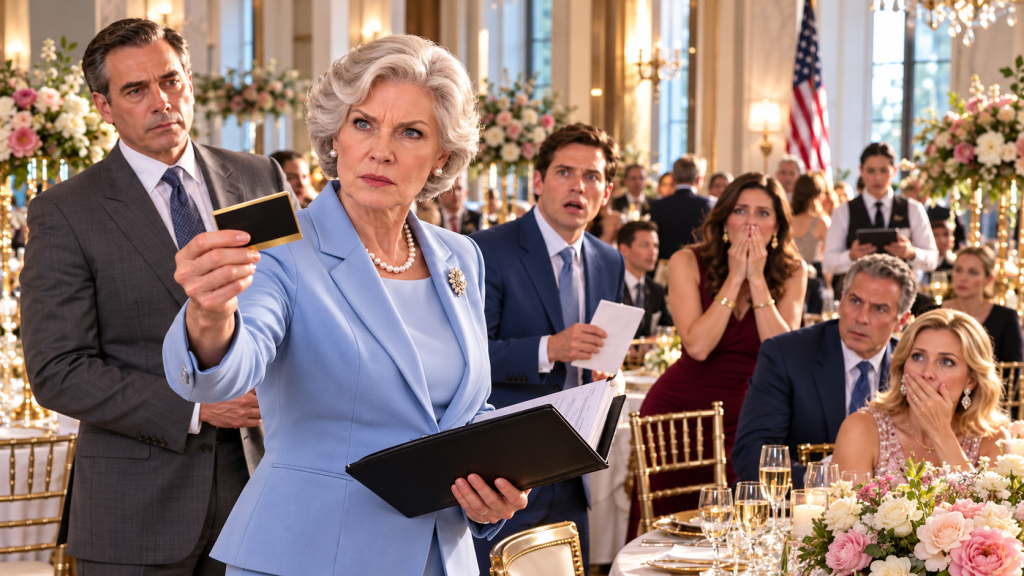
“The membership number is zero-zero-zero-one-four-seven. Margaret Whitmore. Just charge everything to her account.”
My feet stopped.
The manager, a young woman named Sofia, frowned at her computer.
“Sir, this is a Founder’s Reserve account. Additional authorization is required.”
Adam reached into his jacket.
“I have authorization.”
He produced a folded document.
Vanessa stepped closer.
“Margaret’s getting forgetful lately. She doesn’t really understand financial arrangements anymore.”
Graham leaned over the counter.
“We’re booking a private reception. Thirty-eight thousand dollars. Her membership covers it.”
For a moment, I couldn’t move.
Thirty-eight thousand dollars.
My son had deliberately excluded me from Mother’s Day, then arrived at my restaurant intending to spend my money entertaining his wife’s family and their business associates.
But the amount wasn’t what frightened me.
It was the document Adam placed in Sofia’s hand.
Even from several feet away, I recognized the signature printed across the bottom.
My signature.
Perfectly copied.
Completely forged.
I walked back toward the counter.
“Sofia,” I said, “before you process anything, may I see that authorization?”
Adam turned sharply.
“Mom, don’t make a scene.”
I smiled.
“Oh, sweetheart. I haven’t even started.”
Sofia hesitated.
She was young, perhaps twenty-seven, with dark hair pulled into a neat bun.
I recognized her from a management training program I’d attended several months earlier.
She recognized me, too.
Her expression changed almost imperceptibly.
“Of course, Mrs. Whitmore.”
Adam snatched the document toward himself.
“That isn’t necessary.”
I held out my hand.
“Then you won’t mind showing it to me.”
Vanessa folded her arms.
“Margaret, you’re embarrassing everyone.”
“Am I?”
“Adam handles your business affairs. There’s no reason to interrogate him in public.”
I looked at my son.
“Since when do you handle my business affairs?”
His jaw tightened.
“We discussed this.”
“No, Adam. We didn’t.”
He gave a strained laugh.
“Mom, you forget conversations sometimes.”
The words hung between us.
I knew exactly what he was attempting.
And suddenly, several small incidents from the previous months began fitting together.
The comments about my memory.
The suggestions that I should stop driving at night.
The way Vanessa had started speaking for me during family gatherings.
The uncomfortable afternoon when Graham had recommended an attorney who specialized in estate planning for elderly clients.
At the time, I’d dismissed those things as thoughtless interference.
Now I wondered whether they were part of something deliberate.
Sofia carefully unfolded the authorization and placed it on the counter.
The signature was convincing.
It had the same sweeping M, the same narrow cross on the final T, and the little flourish I’d used since I was twenty-one.
But the date immediately caught my attention.
Three months earlier, I had personally revoked Adam’s access to all family-related business accounts.
I’d done it after discovering an eleven-thousand-eight-hundred-dollar hospitality expense he’d attempted to place on my membership.
He’d claimed it was a misunderstanding.
I’d believed him enough not to pursue the matter further.
But I had been very clear.
From that day forward, he was not authorized to charge anything to me.
And yet the document in front of me claimed I’d restored his access.
I hadn’t.
“Where did you get this, Adam?”
He shrugged.
“You signed it.”
“No.”
“Mom.”
“Don’t call me that while you’re lying to me.”
Vanessa moved between us.
“You’re making a perfectly normal arrangement sound criminal.”
I looked at her.
“Then perhaps you’d like to explain why my signature appears on a document I’ve never seen.”
Her face flushed.
“Because you signed it and forgot.”
There it was again.
Forgot.
A small word.
A convenient word.
A word they apparently believed could erase anything I said.
Graham tapped impatiently on the counter.
“We’re wasting time. Our reception needs to be confirmed tonight.”
I turned toward him.
“Then pay for it yourself.”
His expression hardened.
“Excuse me?”
“You heard me.”
He gave a condescending smile.
“Margaret, you clearly don’t understand the arrangement.”
“Then explain it.”
He straightened.
“The membership provides certain benefits to immediate family.”
“Only with my authorization.”
“Adam is your son.”
“Being my son doesn’t make him my signature.”
For the first time, Graham seemed uncertain.
Sofia looked from him to me.
“Mrs. Whitmore, would you like me to contact Mr. Romano?”
Adam frowned.
“Who’s Romano?”
I removed my reading glasses.
“Matteo Romano. The managing director.”
Vanessa let out a sharp laugh.
“And why would the managing director concern himself with your little family disagreement?”
I looked directly at her.
“Because he reports to me.”
Silence.
Then Graham laughed.
“You’re claiming you run Bellavita?”
“No.”
I paused.
“I own the controlling interest in the company that runs Bellavita.”
Adam stared at me.
Vanessa blinked.
I continued.
“Whitmore Hospitality operates seventeen restaurants. Bellavita was the first. Richard and I founded the company thirty-two years ago.”
Celeste’s mouth opened slightly.
But Vanessa recovered quickly.
“Adam told us your husband handled the investments.”
I felt something sharp move through my chest.
“Did he?”
Adam looked at the floor.
That hurt more than I expected.
Richard and I had built our company together.
He developed menus, recruited chefs, and charmed suppliers.
I negotiated leases, arranged financing, paid employees, and kept the business alive through years when our bank accounts were nearly empty.
We’d been partners in every meaningful sense.
And my son had apparently told his in-laws that I’d simply inherited a comfortable life.
“Richard was a remarkable man,” I said quietly. “But he never confused being my husband with being my owner.”
Before anyone answered, Sofia turned her computer monitor toward me.
“Mrs. Whitmore, there’s something else.”
I leaned forward.
The screen showed a list of transactions associated with membership 000147.
Private dining reservations.
Wine packages.
Catering services.
Exclusive event deposits.
Twelve transactions.
The combined amount exceeded two hundred and forty thousand dollars.
I felt the blood leave my face.
“How far back do these go?”
“Thirteen weeks.”
“Have they all cleared?”
“Some are posted. Others remain pending.”
She scrolled down.
“Each one has a legacy authorization attached.”
I examined the column on the right.
Then I saw the name.
Richard Whitmore.
My husband.
Dead for six years.
I caught the edge of the counter.
For a moment, the sounds of the restaurant faded.
I could almost hear Richard’s laughter.
I remembered him standing in our kitchen with flour on his sleeves, promising that one day we’d own a restaurant with real linen tablecloths.
I remembered holding his hand during his final hospital stay.
I remembered the cold morning when I signed the paperwork after his death.
And now his name appeared twelve times on a computer screen as though he were still authorizing payments.
“That isn’t possible,” I whispered.
Sofia looked distressed.
“I’m sorry.”
I straightened.
“Don’t apologize. You’ve done exactly what you should.”
Adam moved closer.
“Mom, I can explain.”
I turned toward him.
“Then explain why your father’s name is authorizing transactions six years after his funeral.”
He went pale.
Vanessa grabbed his arm.
“Don’t answer that.”
Those four words told me more than any confession could have.
I looked at Sofia.
“Please suspend further transactions on this membership immediately, preserve the original records, and contact Mr. Romano.”
She nodded.
Then I addressed Adam.
“Nobody is being charged another cent tonight.”
Graham slammed his palm against the counter.
“You cannot cancel our reception!”
I looked at him.
“I haven’t canceled anything you’ve paid for.”
He began to protest.
I held up one hand.
“But if you expect me to finance it, the answer is no.”
Two minutes later, Matteo Romano appeared from the private dining corridor.
He was fifty-three, impeccably dressed, and had worked with our company for nearly nineteen years.
When Richard died, Matteo had been among the people who helped me keep the business steady.
He stopped when he saw my face.
“Margaret? What’s happened?”
I pointed toward the computer.
“Apparently my dead husband has been approving parties.”
Matteo stared at the screen.
His expression changed.
He immediately asked Sofia to secure the documents and bring a senior finance representative into the conversation.
Then he turned to me.
“Would you like to move somewhere private?”
“Yes. And I want every transaction preserved.”
Adam reached for my elbow.
“Mom, please. Let’s talk at home.”
I stepped away.
“We’ll talk when I understand what you’ve done.”
Vanessa’s voice rose.
“This is ridiculous. You’re treating your own son like a criminal!”
“No, Vanessa.”
I looked at the forged signature.
“I’m treating a forged authorization like a forged authorization.”
Matteo guided us toward a private office behind the restaurant.
I asked Sofia to join us.
Graham protested that they had dinner reservations.
I told him he was free to enjoy dinner.
He didn’t move.
Apparently the meal was less appealing when he realized I wasn’t paying.
Inside the office, Matteo closed the door.
The room smelled faintly of espresso and polished wood.
A framed photograph hung above the desk.
It showed Richard and me standing outside Bellavita on opening night.
Richard wore a black suit that hadn’t fit properly.
I wore a cream dress I’d purchased on sale.
Our smiles were enormous.
We had no idea how difficult the next thirty years would be.
Looking at that photograph steadied me.
I sat down.
“Adam, tell me everything.”
He rubbed both hands over his face.
“It’s not what you think.”
“Then you should have no difficulty explaining.”
He glanced at Vanessa.
She spoke before he could.
“The charges were investments in Graham’s business expansion.”
I looked at her.
“Investments?”
“Business development expenses.”
“Charged to my restaurant membership?”
“They were going to be reimbursed.”
“By whom?”
“Graham’s company.”
“When?”
She hesitated.
“Soon.”
I turned to Graham.
“What company?”
“Price Hospitality Ventures.”
“What hospitality business do you operate?”
He lifted his chin.
“Luxury event planning and investment development.”
I knew the name.
Not because it was successful.
Because three years earlier, Graham had approached Whitmore Hospitality about a partnership.
Our investment committee rejected the proposal after reviewing its financial statements.
Graham’s company had considerable debts, very little reliable revenue, and a habit of describing proposed ventures as though they were completed successes.
I remembered his furious response to the rejection.
He’d called our management team shortsighted.
Now he was standing in my restaurant trying to spend my money.
I turned back to Adam.
“Did you sign my name?”
He said nothing.
“Did you?”
His eyes filled.
“Mom, we needed help.”
My stomach sank.
Need.
That word had justified so many things over the years.
When Adam was twenty-three and needed a car, we helped him.
When he was twenty-nine and needed a down payment, I gave him the money.
When he decided to leave a stable job and start consulting, I covered his health insurance for a year.
I had never regretted helping him build a life.
But help had slowly become expectation.
Expectation had become entitlement.
And entitlement had apparently become fraud.
“How much did you take?” I asked.
Adam looked at Vanessa again.
“Just enough to keep things moving.”
“How much?”
He swallowed.
“I don’t know the exact total.”
I looked toward Sofia.
“Two hundred and forty-six thousand, four hundred and thirty dollars,” she said softly.
Vanessa stared.
Even she seemed surprised by the amount.
Graham cleared his throat.
“That figure includes future reservations.”
“Then we’ll distinguish completed charges from pending ones,” I replied. “But every transaction needs to be explained.”
Celeste suddenly placed a hand over her heart.
“This is a terrible way to treat family.”
I looked at her.
“Mrs. Price, I spent Mother’s Day eating alone because your daughter told me this evening was only for family.”
Her cheeks reddened.
“That was a misunderstanding.”
“No. It was a decision.”
Nobody answered.
I continued.
“You were comfortable excluding me from your celebration while expecting me to pay for it.”
Vanessa muttered, “Here comes the guilt trip.”
I turned toward her.
“No, Vanessa. The guilt trip was convincing my son that loving his mother meant funding your family’s lifestyle.”
Adam stood abruptly.
“That’s enough!”
I looked at him.
His face was red.
For one brief moment, I saw the frightened boy who used to panic when he disappointed his father.
Then he said something I’ll never forget.
“If Dad were alive, he would never humiliate me like this.”
The room went silent.
I felt the impact of those words more deeply than anything Vanessa or Graham had said.
I folded my hands.
“Your father spent thirty-two years teaching you that integrity matters when nobody is watching.”
Adam looked away.
“He wouldn’t have turned his back on me.”
“Neither have I.”
I paused.
“But you’re asking me to turn my back on the truth.”
Matteo’s telephone vibrated.
He checked the screen.
Then he looked at me.
“Margaret, our finance director is unavailable. I think we should involve legal counsel.”
I nodded.
“Contact Elaine Porter.”
Elaine had represented our company for more than twenty years.
She knew every major operating agreement, shareholder structure, and estate document associated with Whitmore Hospitality.
I trusted her judgment.
More importantly, I trusted her not to confuse compassion with foolishness.
While Matteo made the call, Sofia brought up the authorization history.
The older transactions included restaurant locations across Massachusetts, Rhode Island, and Connecticut.
Some involved expensive private dinners.
Others included wine purchases and event deposits.
The charges had been routed through the Founder’s Reserve program.
That membership wasn’t a normal restaurant loyalty account.
It had been created years earlier for founders, major investors, and approved business hosts.
Expenses could be billed through a designated account, but each transaction required valid authorization.
Richard and I had maintained our own membership for business hospitality.
After he died, I retained the account but restricted its use.
Adam once had permission to make modest family reservations.
Three months earlier, I revoked that permission.
Yet somehow his access continued.
Worse, the system appeared to accept approvals under Richard’s old founder profile.
The question was no longer whether Adam had used my account.
The question was who inside the company had allowed it.
Elaine arrived forty minutes later.
She wore a simple gray jacket and carried a leather briefcase that had accompanied her to more difficult meetings than I could count.
After reviewing the documents, she asked everyone except Sofia, Matteo, Adam, and me to wait outside.
Vanessa objected.
Elaine looked at her calmly.
“You may remain if Margaret wishes. Otherwise, this discussion concerns company records and potential unauthorized activity.”
Vanessa looked at Adam.
He said nothing.
She walked out.
For the first time that evening, my son and I were alone in a room without his wife’s family surrounding him.
Elaine sat across from him.
“Adam, did your mother authorize these charges?”
He stared at the table.
“No.”
The word was almost inaudible.
I closed my eyes.
Hearing the truth should have brought relief.
Instead, it broke something in me.
“Did you forge her signature?” Elaine asked.
Adam hesitated.
“Vanessa had a copy.”
“That’s not what I asked.”
He nodded.
“Yes.”
My throat tightened.
“Why?”
He finally looked at me.
“Because I thought you’d say no.”
I sat back.
There it was.
The simplest explanation of all.
He knew I wouldn’t agree.
So he decided my consent was unnecessary.
Elaine asked how the authorization had passed through the restaurant’s controls.
Adam rubbed his forehead.
“Martin helped.”
I looked up sharply.
“Martin Hale?”
He nodded.
Martin was our senior finance director.
He’d worked for Whitmore Hospitality for fifteen years.
Richard had hired him.
I’d attended his daughter’s wedding.
After Richard’s death, Martin had personally helped reorganize several legacy accounts.
I remembered thanking him for his loyalty.
Now my husband’s name was appearing on transactions that Martin apparently knew about.
“Explain what Martin did,” Elaine said.
Adam swallowed.
“He said the old founder authorization profile was still in the system. He could process the requests if the paperwork looked correct.”
I stared at him.
“How long has this been happening?”
“Since February.”
“And Martin knew the signature wasn’t mine?”
Adam hesitated.
“Yes.”
Elaine wrote something down.
I looked toward the photograph above the desk.
Richard was smiling back at me.
For six years, I had believed that the business we’d built remained in the hands of people who respected what it stood for.
Suddenly I wasn’t sure.
Elaine closed her notebook.
“Margaret, I recommend preserving every record, suspending the affected permissions, and involving independent forensic accountants. We also need to notify the appropriate financial institutions and consider reporting the suspected fraud to law enforcement.”
I nodded.
“Do it.”
Adam looked horrified.
“Mom, please. You’re not calling the police on me.”
I studied him.
“Would you prefer I pretend somebody else forged my signature?”
He opened his mouth.
Nothing came out.
I leaned forward.
“Adam, I asked you to have dinner with me. You couldn’t spare an evening. But you found time to plan thirty-eight thousand dollars in spending under my name.”
His eyes reddened.
“I’m sorry.”
“Are you sorry you did it?”
I glanced at the documents.
“Or are you sorry I was standing behind you when you tried to do it again?”
He began crying.
I wish I could tell you that seeing my son cry softened everything.
It didn’t.
I remembered holding him as a newborn.
I remembered teaching him to tie his shoes.
I remembered the little voice that once told me I was the best mother in the world.
But the man across from me had made choices.
And those choices had consequences.
I asked Elaine to arrange for the records to be secured immediately.
Then I stood.
“Adam, you need your own attorney. Don’t destroy any documents or delete any messages. We’ll communicate properly from here.”
He looked shattered.
“You’re really doing this?”
“No.”
I picked up my handbag.
“You did this. I’m responding.”
Outside the office, Vanessa rushed toward him.
“What happened?”
Adam didn’t answer.
Graham stepped in front of me.
“Margaret, surely we can resolve this privately.”
“I hope the investigators establish the facts thoroughly.”
He lowered his voice.
“You understand how damaging allegations like this could be to your company’s reputation.”
I looked at him.
“Are you threatening me?”
He smiled thinly.
“I’m advising caution.”
“And I’m advising you to preserve your records.”
His smile disappeared.
Celeste began crying.
Vanessa called me cruel.
Adam followed me toward the entrance, pleading for another conversation.
I stopped beside the hostess station.
Sofia stood behind the counter, looking frightened.
She had spent the evening doing her job while wealthy customers attempted to intimidate her.
I thanked her.
“You handled this professionally.”
She shook her head.
“I was afraid I’d caused trouble.”
“No. You prevented more trouble.”
Then I turned to my son.
“Go home, Adam.”
He stood motionless.
I walked out of Bellavita alone.
But this time, being alone felt very different.
I wasn’t abandoned.
I was leaving a situation in which remaining would have meant surrendering my dignity.
The Boston night was cool.
Traffic moved along the wet streets.
I reached my car, shut the door, and sat in silence.
Then I cried.
Not because of the money.
I’ve been wealthy long enough to know that money can replace objects, settle debts, and create opportunities.
It cannot purchase loyalty.
It cannot manufacture love.
And it cannot make your child respect you.
I cried because I finally understood how thoroughly Adam had allowed people to diminish me.
And because, for the first time, I could no longer pretend he was merely being influenced by a difficult wife.
He had participated.
Willingly.
I stayed in the parking garage until the tears stopped.
Then I drove home.
The house was quiet when I arrived.
Richard’s photograph stood on the hallway table.
I touched the frame.
“What would you do?” I whispered.
Of course, photographs don’t answer.
But I remembered something Richard said when Adam was seventeen.
Our son had taken money from my purse to buy concert tickets.
It wasn’t much.
Forty dollars.
Adam had confessed after we questioned him.
I wanted to forgive him immediately.
Richard insisted he repay the money through summer work.
I accused my husband of being too strict.
He’d taken my hand.
“Margaret, loving him means teaching him that our trust is worth more than forty dollars.”
I remembered those words as I stood in the hallway.
Our trust.
More than forty dollars.
More than two hundred thousand dollars.
More than every expensive watch and designer handbag Vanessa’s family displayed.
That night, I made tea and opened the old leather notebook Richard used to keep beside our bed.
Inside were handwritten notes from the early days of Bellavita.
Supplier telephone numbers.
Recipe ideas.
Employee birthdays.
A reminder to fix the kitchen sink.
On one page, in Richard’s unmistakable handwriting, was a sentence he’d underlined twice.
Build something worth protecting.
I sat with that notebook until dawn.
By Monday morning, Elaine had arranged an emergency meeting with our chief executive, an outside forensic accounting firm, and our technology director.
Martin Hale had been placed on administrative leave pending investigation.
His access to financial systems was suspended.
We also froze the Founder’s Reserve membership and reviewed every account using old authorization procedures.
The auditors began reconstructing the transactions.
What they found was worse than I’d imagined.
The two hundred and forty-six thousand dollars wasn’t one accidental excess.
It represented a series of deliberately structured charges.
Some were genuine restaurant services used by the Price family.
Others were deposits for events that had never occurred.
Several appeared to have been routed through entities associated with Graham’s business.
And the authorization records showed that Martin had used a dormant administrative profile still labeled with Richard’s name.
That was why my dead husband appeared beside every transaction.
He hadn’t authorized anything, of course.
The profile had simply never been properly retired.
Martin had exploited a weakness in our old system.
He’d used it to bypass restrictions that should have stopped the charges.
One auditor asked me whether I’d known the legacy profile remained active.
“No.”
“Did anyone alert you to these transactions?”
“No.”
“Did you receive statements?”
“Not for these charges.”
They discovered that account notifications had been redirected to a different email address.
The address looked deceptively similar to an official Whitmore Hospitality contact.
But it wasn’t ours.
It had been created shortly after I revoked Adam’s access.
The recovery telephone number belonged to Vanessa.
I stared at the report.
She hadn’t simply accepted the benefits.
She had helped conceal the transactions.
By Tuesday afternoon, Elaine received a packet of documents from a former employee of Graham’s company.
The woman, named Lydia Marsh, had worked as an administrative assistant for Price Hospitality Ventures.
She said she’d resigned two weeks earlier because she became uncomfortable with the company’s financial practices.
At first, I was skeptical.
I had no interest in building a case around gossip.
But Lydia supplied original emails, invoices, and meeting notes that the accountants could compare against our records.
One email from Graham instructed staff to describe private family events as investor hospitality.
Another discussed transferring deposits from restaurant accounts to outside event vendors.
A third mentioned Martin by name.
The subject line was simple.
Whitmore Authorization.
I read the email twice.
Graham had written that the arrangement needed to remain discreet until Margaret’s “formal retirement” could be arranged.
Formal retirement.
I was sixty-eight.
Healthy.
Competent.
Actively involved in major corporate decisions.
I had never announced any retirement.
I looked at Elaine.
“What does that mean?”
She hesitated.
“We’re investigating.”
I knew that tone.
Elaine used it when she was concerned but didn’t want to speculate.
“Tell me what you’re thinking.”
She folded her hands.
“I think the financial misuse may have been connected to an effort to remove you from decision-making.”
I felt cold.
“By my son?”
“We don’t know the full extent of his involvement.”
That evening, another document surfaced.
It was a draft letter addressed to members of Whitmore Hospitality’s board.
The letter expressed concern about my judgment, memory, and ability to oversee the company’s financial interests.
It referred to alleged episodes of confusion.
It suggested that a temporary family representative might be necessary.
And it nominated Adam.
I stared at the page.
There were examples.
Margaret allegedly forgot a family luncheon.
Margaret reportedly struggled to remember recent discussions.
Margaret had become suspicious of legitimate spending.
I recognized the incidents immediately.
The luncheon was one Vanessa had rescheduled without telling me.
The forgotten discussion was a conversation that had never taken place.
And my suspicion of spending was the moment I’d questioned Adam’s attempted eleven-thousand-eight-hundred-dollar charge.
They had taken ordinary disagreements and transformed them into evidence of mental decline.
At the bottom of the draft appeared Graham’s name.
Celeste had contributed comments.
Vanessa had made revisions.
And Adam had been copied.
I sat back in my chair.
It was one thing to discover my son had stolen money.
It was another to discover his wife’s family had been preparing to portray me as incapable of controlling my own company.
I thought about Vanessa saying I was forgetful at the restaurant.
I thought about Graham telling the manager that I didn’t understand financial arrangements.
I thought about how confidently they spoke those lies in front of strangers.
They weren’t improvising.
They were rehearsing a story they intended other people to believe.
That night, Adam called seventeen times.
I didn’t answer.
He left three voicemails.
The first was angry.
The second was frightened.
The third was quiet.
“Mom, I know you’re hurt. I know I messed up. But you don’t understand what Vanessa’s parents are capable of. Please call me.”
I listened twice.
Then I saved the recording and sent it to Elaine.
My instinct was to rush toward my son.
To rescue him.
To ask whether he was safe.
But a difficult truth had begun emerging.
Every time Adam experienced consequences, my first impulse was to protect him from them.
I’d done it when he failed classes.
I’d done it when his first business collapsed.
I’d done it when he borrowed more money than he could repay.
And perhaps, without intending to, I’d taught him that his mother’s love meant he would never have to stand alone in the wreckage of his decisions.
This time, I couldn’t fix it for him.
Thursday morning, our board held a special meeting.
I arrived fifteen minutes early.
The conference room overlooked Boston Harbor.
Seven directors sat around the polished table.
Some had worked with me for decades.
Others had joined after our company expanded.
They knew me as a demanding but fair businesswoman.
I could see concern in their faces.
Our chief executive, Julian Mercer, opened the meeting.
He summarized the unauthorized spending, the compromised authorization process, and the independent investigation.
He explained that Martin Hale had been suspended.
He confirmed that additional controls had already been implemented.
Then Elaine presented the draft letter alleging I was mentally unfit.
The atmosphere changed.
One director, a retired banker named Harold Greene, removed his glasses.
“Who prepared this?”
“Documents indicate Graham Price originated the draft,” Elaine replied.
“Was it submitted?”
“Not formally. We located it among the communications relevant to the investigation.”
Harold looked toward me.
“Margaret, were you aware of any concerns about your capacity?”
I almost smiled.
“Only from people attempting to spend my money.”
A few directors exchanged uncomfortable looks.
I continued.
“I understand why this document needs to be addressed. Our shareholders deserve clarity. I’m willing to cooperate with any reasonable, independent governance review. But I will not allow invented family anecdotes to substitute for evidence.”
The room grew quiet.
Julian nodded.
“That’s entirely appropriate.”
Elaine then presented the actual authorization records.
The disputed signatures.
The redirected account notifications.
The legacy profile.
The communications involving Martin and Graham.
Every piece was documented.
Every conclusion was carefully separated from what remained unproven.
I appreciated that.
I didn’t want revenge built on exaggeration.
I wanted the truth to survive scrutiny.
Near the end of the meeting, Elaine revealed something I hadn’t known.
Martin had attempted to request expanded administrative authority over several additional founder-controlled accounts.
The request had not been approved.
Our technology director had flagged it before Mother’s Day because the requested permissions were unusually broad.
The review was still pending when Sofia discovered Adam’s forged document.
I looked at Julian.
“So this might not have stopped at restaurant expenses.”
“We can’t establish what they intended,” he answered carefully. “But the requested access would have created additional exposure.”
I thought of Graham’s draft letter.
My supposed declining memory.
Adam’s proposed role as family representative.
Suddenly the pieces looked terrifyingly close to fitting together.
They wanted financial access.
And they wanted a story that would explain why I no longer controlled it.
The board approved an independent review of all relevant accounts and controls.
It also reaffirmed the existing governance structure.
My authority had not been transferred.
No valid document had appointed Adam to act for me.
No family member could simply declare me incapable and assume control.
When the meeting ended, Harold walked beside me toward the elevator.
He had known Richard almost thirty years.
“Margaret,” he said, “Richard would have been furious.”
I looked down.
“I know.”
Harold shook his head.
“Not at you.”
That nearly undid me.
Because beneath my anger, there was still a terrible feeling of failure.
Had I raised Adam badly?
Had I been too generous?
Had I worked too much?
Had I mistaken providing opportunities for teaching responsibility?
Harold seemed to recognize what I was thinking.
“You can give someone every good example in the world,” he said, “and they still have to decide what kind of person they’re going to be.”
I carried those words with me.
Over the next several days, the investigation expanded.
We received records from vendors.
We reviewed invoices.
We traced payments.
And with every new document, the family’s polished image began cracking.
Graham’s luxury events company was struggling.
His expensive clothes and lavish dinners concealed serious financial pressure.
He had borrowed heavily against property.
Several business partners had withdrawn.
His planned expansion depended on securing new investors.
And the expensive reception Adam had tried to book at Bellavita wasn’t simply a family celebration.
It was supposed to introduce Graham’s next venture to potential backers.
A venture whose financial projections had been built on assumptions no responsible investor would have accepted without careful verification.
The dinner on Mother’s Day was intended to finalize the reception arrangements.
My son was supposed to provide the authorization.
I was supposed to remain conveniently absent.
They’d organized their plans around one belief.
Margaret Whitmore wouldn’t know.
And if she found out, she could be pressured into silence.
Unfortunately for them, they had misunderstood the woman they were dealing with.
I had negotiated with hostile landlords.
I’d survived two recessions.
I’d rebuilt our company after a fire destroyed one of our busiest restaurants.
I’d sat across from bankers who believed a woman couldn’t manage a restaurant group.
And I’d spent months beside my dying husband while still making payroll for hundreds of employees.
I knew the difference between a problem and a catastrophe.
More importantly, I knew how to respond without allowing emotion to replace judgment.
On Friday, Elaine informed me that Martin had retained an attorney.
His lawyer indicated that Martin wanted to cooperate with the investigation.
The accountants had established that he received payments from an entity associated with Graham.
Some were described as consulting fees.
Others lacked meaningful documentation.
Martin’s attorney disputed certain interpretations but did not deny the existence of the payments.
I felt sick.
Richard had trusted him.
I had trusted him.
Trust can take fifteen years to build and disappear in fifteen seconds.
That afternoon, Vanessa appeared at my house.
She arrived without calling.
My housekeeper, Ruth, informed me that Vanessa was standing outside the front door with Celeste.
I asked Ruth not to admit them.
Then I stepped onto the porch.
Vanessa looked exhausted.
Her perfect hair was pulled into a messy ponytail.
Celeste wore sunglasses despite the overcast sky.
“Margaret,” Vanessa began, “we need to talk.”
“Your attorney can contact mine.”
She made an impatient gesture.
“Can we stop acting like strangers?”
I looked at her.
“You told me I wasn’t family.”
Her expression tightened.
“Are you going to keep bringing that up?”
“Until you understand why it mattered.”
Celeste stepped forward.
“Margaret, we’re women. We should be able to settle this sensibly.”
I studied her.
“Did you know about the forged authorization?”
She looked away.
“That’s a matter for the lawyers.”
“Did you know Graham was preparing a letter suggesting I was mentally incapable?”
Vanessa’s face changed.
“Where did you get that?”
“Does it matter?”
“You weren’t supposed to see it.”
The words escaped before she could stop them.
I looked at her for a long moment.
“That’s becoming a pattern, isn’t it?”
Vanessa crossed her arms.
“Adam was only trying to protect the family.”
“From what?”
“Financial disaster.”
“Whose financial disaster?”
Neither answered.
I continued.
“Your parents have made decisions about their business. Those decisions have consequences. My son had no right to transfer those consequences to me.”
Celeste removed her sunglasses.
“You have millions, Margaret. Millions. We’re talking about an amount you probably wouldn’t even notice.”
I stared at her.
And there it was.
The argument beneath everything.
You have more.
Therefore, we may take some.
Your comfort makes our dishonesty acceptable.
I thought of my first years with Richard.
The nights we slept in the restaurant office because we couldn’t afford rent and business loan payments at the same time.
The weeks I worked the lunch shift while pregnant because our payroll was short.
The morning I sold my mother’s wedding bracelet to keep the electricity connected.
Nobody had seen that struggle.
They saw the result and decided the result belonged to anyone bold enough to demand it.
“Celeste,” I said, “you don’t know what it cost to build my life.”
She waved her hand.
“Don’t be sentimental.”
I felt something settle inside me.
“I’m not being sentimental. I’m explaining why you will never get to decide what my work is worth.”
Vanessa suddenly burst into tears.
“If you ruin my parents, you’ll ruin my marriage.”
I looked at her.
“Why?”
“Adam will blame me.”
I was quiet.
“Vanessa, Adam made his own decisions.”
She shook her head.
“You don’t understand. He promised he would take care of things.”
“He promised you money that wasn’t his.”
She looked away.
I stepped backward toward the door.
“Please leave.”
Celeste’s expression hardened.
“You’ll regret treating us this way.”
I met her eyes.
“What I regret is not recognizing sooner how much cruelty you were willing to disguise as family.”
Then I went inside.
Ruth locked the door.
I stood in the hallway, trembling.
Not from fear.
From the exhaustion of holding boundaries that should never have been necessary.
Two days later, a letter arrived from Adam.
It was handwritten.
I’d almost forgotten what his handwriting looked like.
As a boy, he’d written notes to Richard and me whenever he wanted to apologize.
He used to leave them beneath our bedroom door.
The envelope brought back memories so powerful that I sat down before opening it.
Mom,
I know you’re not ready to speak to me. I understand why.
I want to tell you something, even if you never forgive me.
It started with one dinner.
Graham said an investor was visiting and they needed somewhere impressive to entertain him.
I told Vanessa I couldn’t afford it.
She said you wouldn’t mind.
I knew you would.
I did it anyway.
Afterward, Martin said he could arrange future expenses through the old account.
I told myself I’d replace the money when Graham’s investment came through.
Then the amounts got bigger.
I kept saying the next transaction would be the last.
I lied to myself because telling the truth meant admitting what I’d become.
Mom, I wasn’t confused. You weren’t forgetful.
You told me no, and I decided I deserved yes.
I don’t know how to face you.
I love you.
Adam.
I read the letter three times.
Then I folded it and placed it in Richard’s notebook.
I wanted to call Adam.
Instead, I called Elaine.
I asked whether there was any legal reason I couldn’t send a short response.
She advised that I keep communication factual and avoid discussing the investigation.
So I wrote six words.
I love you. Tell the truth.
I mailed the letter the following morning.
The next week, Adam retained separate counsel.
That decision mattered.
Until then, he’d relied on Graham’s attorney, the same man advising Vanessa’s family.
Elaine had warned me that their interests could conflict.
And conflict was exactly what emerged.
Adam began providing records and messages to investigators through his attorney.
Those records showed that Graham had repeatedly promised to reimburse the charges once his company secured financing.
He’d also pressured Adam to keep me away from conversations about the business.
One message particularly disturbed me.
Vanessa had written:
Your mother doesn’t need details. She gets emotional about money because she still thinks like someone who had nothing.
Adam had responded:
She’ll find out eventually.
Vanessa’s reply was immediate.
By then everything will be settled.
Nothing was settled.
Instead, every hidden arrangement began unraveling.
Our company referred the suspected fraud and relevant evidence to the appropriate authorities.
The financial institutions reviewed the transactions.
Our attorneys initiated recovery efforts against parties identified in the investigation.
Pending reservations were canceled where permitted, and disputed charges were examined individually.
Not every dollar could be recovered immediately.
Some money had already been spent on actual services.
Other payments were tied up in agreements requiring legal review.
But we no longer allowed the account to function as a private bank for the Price family.
Our independent auditors also recommended changes throughout Whitmore Hospitality.
Old administrator profiles were removed.
Authorization procedures were redesigned.
Notifications were sent directly to verified account holders.
Large or unusual charges required independent confirmation.
No employee could approve a transaction involving a personal acquaintance without additional review.
I insisted that the changes apply to everyone.
Including me.
If an organization depends entirely on trusting the founder, it isn’t protected.
Richard and I had built something larger than ourselves.
It needed safeguards capable of surviving our mistakes.
Throughout the investigation, Sofia remained one of the people I thought about most.
She could easily have accepted Adam’s explanation.
He was well dressed.
He knew my membership number.
He had a document that appeared official.
He arrived with wealthy guests who acted as though they owned the room.
And when she questioned the authorization, they attempted to make her feel foolish.
She didn’t surrender to their confidence.
She checked.
That single decision prevented another unauthorized charge and exposed the broader problem.
A month after Mother’s Day, I invited her to lunch.
Not as a reward for flattering me.
As an employee whose judgment deserved recognition.
We ate in the same restaurant where everything happened.
Sofia looked nervous when she sat down.
“Mrs. Whitmore, I hope I didn’t do anything wrong.”
I smiled.
“Why would you think that?”
“People have been talking.”
“People always talk.”
She glanced at her hands.
“I didn’t know whether I should have called you directly.”
“You followed the approval process. That’s what matters.”
She relaxed slightly.
I asked about her career.
She told me she’d studied hospitality management while working nights.
Her father had been a mechanic.
Her mother cleaned offices.
Sofia had worked in restaurants since she was sixteen.
She wanted to move into operations, but she worried that her background made senior management unlikely.
I almost laughed.
Not at her.
At the familiarity of the fear.
“When Richard and I opened Bellavita,” I told her, “a banker asked why my husband had brought his secretary to a loan meeting.”
Sofia looked shocked.
“What did you say?”
“I told him his secretary appeared to be better informed about the loan than he was.”
She laughed.
It was the first genuinely happy sound I’d heard in that restaurant since Mother’s Day.
I explained that I would support her applying for our management development program.
She would still have to qualify.
She would still have to work.
But she deserved a fair opportunity.
Sofia’s eyes filled.
“Thank you.”
I shook my head.
“You earned the opportunity when you decided procedures mattered more than appearances.”
As we finished lunch, Matteo approached our table.
He told me something that made my chest ache.
The waiter who’d served me on Mother’s Day had asked whether I’d enjoyed my dinner.
He’d remembered that I was alone.
He’d also remembered that I’d thanked him for a small handwritten note.
I asked Matteo to give the waiter another message.
Tell him that kindness is never as small as it seems.
Sometimes it’s the only gentle thing someone experiences all day.
By early summer, the Price family’s carefully constructed image was deteriorating.
Graham’s proposed investor reception never took place.
Several potential partners withdrew after learning that financial irregularities were under investigation.
His company faced mounting claims and scrutiny.
Celeste stopped attending the social events she’d once described to me in exhausting detail.
Vanessa moved out of the home she shared with Adam.
I learned this through Adam’s attorney, not through gossip.
They were living separately.
I didn’t celebrate.
Whatever Vanessa had done, a collapsing marriage wasn’t entertainment.
And although I knew she’d influenced Adam, I refused to pretend he had been an innocent victim.
He’d signed documents.
He’d concealed charges.
He’d allowed people to describe his mother as mentally incompetent.
No amount of pressure erased those facts.
One July afternoon, Adam asked through his attorney whether I’d agree to meet him.
Elaine and I discussed it.
The investigation was still active.
I wasn’t going to discuss disputed transactions privately.
But I was willing to see my son.
We arranged to meet in a public garden near the waterfront.
It was a bright Saturday.
I arrived early and sat on a wooden bench beneath a maple tree.
Families walked along the paths.
Children chased pigeons.
A young mother pushed a stroller while balancing a coffee in one hand.
I watched her adjust the blanket around her sleeping baby.
I remembered doing that for Adam.
When he appeared, I hardly recognized him.
He’d lost weight.
His shoulders were hunched.
He wore an ordinary blue shirt and jeans.
For the first time in years, there was no expensive watch on his wrist.
He stopped several feet away.
“Hi, Mom.”
“Hello, Adam.”
He sat beside me.
Neither of us spoke for a while.
Finally, he said, “I remember Dad bringing me here.”
I nodded.
“He used to buy you lemonade from the little stand near the entrance.”
Adam smiled faintly.
“I always wanted the biggest one.”
“You always did.”
The smile disappeared.
“I’m sorry.”
I looked at the trees.
“I know you’ve said that.”
“I didn’t understand how much I’d hurt you.”
I turned toward him.
“Adam, you told strangers I was becoming forgetful. You used your father’s name to authorize money that didn’t belong to you. You excluded me from Mother’s Day because you knew I might discover what you were doing.”
Tears filled his eyes.
“I know.”
“How am I supposed to trust you?”
He looked down.
“I don’t think you can. Not now.”
For the first time, he wasn’t asking me to make everything easier.
He wasn’t explaining why Vanessa had influenced him.
He wasn’t insisting that he had good intentions.
He was sitting beside the damage he’d caused.
And he was acknowledging it.
That was a beginning.
Not forgiveness.
Not reconciliation.
But a beginning.
“Why did you do it?” I asked.
He remained quiet for so long that I thought he wouldn’t answer.
Then he said, “Because I wanted to be somebody.”
I frowned.
“You are somebody.”
“Not to them.”
I waited.
“Vanessa’s family always acted like I was ordinary. Graham knew investors and businessmen. He wore expensive watches. Everyone listened when he spoke.”
He swallowed.
“I wanted them to think I belonged.”
I felt a painful sadness.
“So you used my money to buy their respect.”
He nodded.
“And when I couldn’t keep up, I kept spending.”
I looked at him.
“Did they respect you more?”
His face crumpled.
“No.”
I let the silence settle.
Then I said, “Your father used to come home smelling like garlic and dish soap. Some nights he’d been washing dishes for fourteen hours.”
Adam closed his eyes.
“I remember.”
“He never thought that made him less of a man.”
“I know.”
“Do you?”
He began crying quietly.
I wanted to reach for him.
Every part of my body remembered comforting my child.
But I kept my hands folded.
“Adam, you’re thirty-five years old. The people you wanted to impress were willing to use you. But you were willing to use me, too.”
He nodded.
“I know.”
“You don’t rebuild your life by finding someone else to blame.”
“I know.”
“And you don’t rebuild my trust with a letter or a few tears.”
“I understand.”
I studied him.
“What are you going to do?”
He took a shaky breath.
“I’m cooperating with the investigation. I’m working with my attorney. I’ve started selling things I don’t need. I’ve found a regular job.”
“What kind of job?”
“Operations coordinator for a distribution company.”
It was honest work.
Probably less glamorous than the consulting business he’d abandoned.
I felt an unexpected flicker of pride.
“Good.”
He looked surprised.
“Good?”
“Yes. You’re working.”
He wiped his face.
“I know it won’t fix what I did.”
“No.”
“But I want to repay what I can.”
“Then follow through on that commitment.”
We sat together for another twenty minutes.
We spoke about ordinary things.
His new apartment.
The old dog he’d adopted from a shelter.
A recipe Richard used to make.
When we stood to leave, Adam looked at me.
“Can I hug you?”
I hesitated.
Then I opened my arms.
He held me tightly.
For a moment, he was my little boy again.
But only for a moment.
When we stepped apart, I looked at him carefully.
“I love you, Adam.”
“I love you, Mom.”
“That doesn’t mean I’m going to rescue you from the consequences.”
He nodded.
“I know.”
This time, I believed he understood.
Autumn arrived.
The legal and financial processes moved forward more slowly than anyone wanted.
There were interviews, document requests, negotiations, and continuing efforts to recover money.
Martin’s involvement remained under investigation, and the evidence surrounding his financial relationship with Graham became a central issue.
Graham denied wrongdoing through his attorney.
Vanessa’s attorney disputed her level of responsibility.
Adam continued cooperating through counsel.
I won’t pretend every question was answered neatly or that justice arrived in a single dramatic courtroom moment.
Real investigations are rarely that simple.
But the records were preserved.
The unauthorized transactions were documented.
Our company tightened its controls.
And the people who had treated my account as an unlimited source of money could no longer access it.
Eventually, a combination of returned funds, canceled obligations, and negotiated repayment arrangements recovered a substantial portion of the financial loss.
Some matters remained subject to further legal proceedings.
I accepted that reality.
The purpose of pursuing accountability wasn’t to stage a public humiliation.
It was to establish what happened, recover what could be recovered, and prevent it from happening again.
During those months, I thought often about the strange relationship between love and boundaries.
As mothers, we’re taught to give.
We give our time.
Our sleep.
Our patience.
Our food.
Our energy.
Sometimes we give so much that people forget we’re human beings with needs of our own.
I had willingly sacrificed for Adam throughout his childhood.
That was part of loving him.
But somewhere along the way, he began treating my sacrifices as proof that I would always surrender.
If I was disappointed, I would understand.
If I was hurt, I would forgive.
If I was excluded, I would remain available.
And if he wanted money, I would provide it.
The problem wasn’t that I loved him too much.
The problem was that I’d spent years making my boundaries negotiable.
That needed to change.
In November, Adam invited me to lunch.
Not at Bellavita.
Not anywhere expensive.
A small neighborhood café served sandwiches and homemade soup.
When I arrived, he was already sitting at a table.
There were two glasses of water.
Two menus.
Two chairs occupied.
He stood when he saw me.
“Mom.”
I smiled.
“Hello, sweetheart.”
We ordered lunch.
We talked about his job.
He told me he’d received positive feedback from his supervisor.
He’d been learning inventory systems and helping improve delivery schedules.
For once, he didn’t talk about becoming wealthy.
He talked about doing his work well.
Afterward, the waiter brought the bill.
Adam reached for it.
“I’ve got this.”
I studied him.
“Are you sure?”
He smiled sadly.
“It’s fourteen dollars, Mom. I can afford fourteen dollars.”
I laughed.
For the first time in many months, it felt natural.
He paid using his own debit card.
No founder membership.
No elaborate arrangements.
No forged signature.
Just an ordinary lunch.
As we left, he turned to me.
“I used to think you and Dad were lucky.”
I smiled.
“We were lucky in many ways.”
“No. I mean I thought the restaurants just became successful.”
I looked at him.
He continued.
“I never really understood what you built. I saw the big house and the nice cars. I didn’t think about everything before that.”
“Most children don’t.”
He shook his head.
“I should have.”
I touched his arm.
“Then understand it now.”
A few weeks before Christmas, I received an unexpected envelope.
Inside was a photograph.
It showed Richard and me standing inside our first restaurant kitchen.
The walls were unfinished.
The counters were scratched.
Richard held a wooden spoon like a microphone.
I was laughing so hard my eyes were closed.
On the back, in Adam’s handwriting, were three words.
I remember now.
I put the photograph on my desk.
It didn’t erase what he’d done.
But it reminded me that people are capable of recognizing truths they’ve spent years avoiding.
Christmas was quiet.
I invited Adam for dinner.
He came alone.
We decorated a small tree, prepared Richard’s favorite roast chicken, and talked until late evening.
We didn’t pretend the past year had been happy.
We didn’t force a conversation about Vanessa.
We didn’t discuss details of the ongoing investigation.
But we shared a meal.
That was enough.
At one point, Adam noticed Richard’s old notebook on the bookshelf.
“Do you still read that?”
“Sometimes.”
He opened it carefully.
When he reached the page that said Build something worth protecting, he stopped.
I watched his expression.
“Dad wrote that?”
“Yes.”
He traced the words with one finger.
For several seconds, he couldn’t speak.
Then he closed the notebook and handed it back.
“I wish I’d understood him better.”
I placed it beside his plate.
“You still can.”
Winter passed.
Then spring.
With spring came the anniversary of Richard’s death.
Adam asked whether he could accompany me to the cemetery.
We took flowers.
We stood beside the headstone in silence.
Then Adam knelt and brushed dried leaves away from the base.
“I’m sorry, Dad,” he whispered.
I looked toward the trees.
Grief had become a familiar companion over the years.
But that morning felt different.
For so long, I’d grieved Richard while also grieving the slow disappearance of the son I’d known.
Now I was beginning to understand that reconciliation doesn’t always mean returning to the past.
Sometimes it means building something new, with fewer illusions and stronger foundations.
As Mother’s Day approached again, I found myself remembering that awful Sunday at Bellavita.
The empty chair.
Vanessa’s laughter.
The forged document.
The twelve transactions.
Richard’s name on the computer.
I could still recall every detail.
But the memory no longer held the same power over me.
I’d survived it.
More importantly, I’d learned from it.
A week before Mother’s Day, Adam called.
“Mom, can I ask you something?”
“Of course.”
“Would you have dinner with me on Sunday?”
I smiled to myself.
“Where?”
“Anywhere you want.”
I thought for a moment.
“Actually, I have plans.”
There was a pause.
“Oh.”
I could hear the disappointment in his voice.
Then he said, “That’s okay. We can do another day.”
I closed my eyes.
For years, those had been my words.
Now I understood how they sounded from the other side.
“Adam, I haven’t finished.”
“Sorry.”
“I’ve arranged a Mother’s Day luncheon at Bellavita for women who might otherwise spend the day alone.”
He was quiet.
“Some are widows. Some don’t have children. Some live far from their families. Others simply need a place where they feel welcome.”
“That sounds wonderful.”
“I’d like you to join us.”
He hesitated.
“You want me there?”
“Yes.”
“Even after everything?”
I looked at Richard’s photograph.
“Especially because you understand what it means to be given a chance to do better.”
On Mother’s Day, Bellavita looked beautiful.
Soft flowers filled the dining room.
The tables were arranged to encourage conversation rather than isolate guests.
There were women in their forties, sixties, eighties, and nineties.
Some arrived with friends.
Others arrived alone.
Every guest received a handwritten card.
Every table had fresh flowers.
The luncheon was paid for through a properly approved community hospitality budget.
No secret charges.
No special favors.
No borrowed signatures.
Sofia helped coordinate the event as part of her management development program.
She moved through the dining room with the confidence of someone who knew she belonged there.
Matteo greeted guests at the entrance.
Our chef prepared a special menu.
And Adam arrived carrying two large boxes of flowers.
He’d purchased them himself.
I watched him hand individual bouquets to the women entering the restaurant.
He didn’t ask anyone to notice.
He didn’t mention his position.
He didn’t attempt to impress wealthy strangers.
He simply helped.
At one table sat an eighty-two-year-old widow named Eleanor.
Her only daughter lived overseas.
She’d spent the last four Mother’s Days alone.
Adam brought her tea and listened while she told him stories about her childhood.
At another table, he helped a woman with limited mobility adjust her chair.
Later, he carried dessert plates to the kitchen.
I watched him from across the room.
The transformation wasn’t dramatic.
He wasn’t suddenly a perfect person.
He hadn’t erased the consequences of his actions.
But he was doing something he hadn’t done in years.
He was giving without calculating what he would receive.
Near the end of the luncheon, Matteo approached with a small velvet box.
“Margaret, this was left for you.”
I frowned.
“From whom?”
He smiled.
“Your son.”
I opened it.
Inside was a delicate silver chain.
Attached was a small pendant shaped like a restaurant key.
Beneath it lay a folded note.
Mom,
I couldn’t replace Dad’s brooch, and I wouldn’t want to.
But I wanted to give you something from my own earnings.
When I was little, you used to tell me that every door worth opening required responsibility.
I spent years thinking your success was something I was entitled to.
Now I understand it was something you earned.
You gave me a home, an education, and more chances than I deserved.
I’m sorry I confused your generosity with permission to take.
Thank you for teaching me that being your son doesn’t make me the owner of your life.
I love you.
Adam.
I held the note for a long time.
Then I looked across the room.
Adam was helping Eleanor put on her coat.
He caught my eye.
I smiled.
He smiled back.
That evening, after the guests departed and the staff finished clearing the tables, Adam joined me near the window.
The restaurant was quiet.
Outside, the lights of Boston reflected against the glass.
He looked at the pendant around my neck.
“You wore it.”
“Of course.”
“I wasn’t sure you’d like it.”
“I love it.”
He sat down.
For a while, we watched the city.
Then he asked a question I hadn’t expected.
“Mom, did you ever regret having me?”
I turned toward him.
“Never.”
His eyes filled.
“Even after what I did?”
I took his hand.
“Adam, I regret that you hurt me. I regret the choices you made. I regret that I didn’t recognize sooner what was happening between us.”
I squeezed his fingers.
“But I have never regretted that you are my son.”
He began crying.
This time, I held his hand.
And this time, I knew exactly what that gesture meant.
It wasn’t a promise to solve his problems.
It wasn’t forgiveness without accountability.
It was love.
The kind that tells the truth.
The kind that sets boundaries.
The kind that allows another person to grow without surrendering your own dignity.
A little later, Adam asked whether he could make another reservation for us.
“Just dinner,” he said. “No special occasion.”
I smiled.
“That sounds lovely.”
He glanced toward the hostess station.
“Should I give them your membership number?”
For one terrible second, I stared at him.
Then I saw the mischievous smile tugging at his mouth.
I laughed.
A genuine, helpless laugh.
“Absolutely not.”
He grinned.
“Fair enough.”
“And Adam?”
“Yes?”
“You’re paying.”
He nodded.
“Wouldn’t have it any other way.”
After he left, I remained at our table for a few minutes.
I looked around the restaurant Richard and I had built.
The polished tables.
The warm lights.
The photographs.
The people working hard to make strangers feel welcome.
For years, I’d believed that the greatest thing we created was a successful business.
Seventeen restaurants.
Hundreds of jobs.
A secure future.
But sitting there, I finally understood that our greatest accomplishment wasn’t the money.
It was the example.
We had built a life through work, honesty, patience, and respect.
And although Adam had wandered far from those principles, he was beginning to find his way back.
Not because I’d paid to bring him home.
Not because I’d surrendered to his demands.
But because, for once, I’d loved him enough to let him face the truth.
Before leaving, I walked to the hostess station.
Sofia was finishing the evening’s paperwork.
“Everything all right, Mrs. Whitmore?”
I smiled.
“Everything is moving in the right direction.”
She glanced at the pendant around my neck.
“That’s beautiful.”
“My son gave it to me.”
She smiled warmly.
“Happy Mother’s Day.”
I looked toward the dining room.
A year earlier, I’d walked into Bellavita feeling like an unwanted mother.
I’d walked out with proof of my son’s betrayal and the terrible discovery that someone had used my dead husband’s name to steal from me.
That night had changed my family.
It had also changed me.
I no longer confused silence with peace.
I no longer believed that love required unlimited sacrifice.
And I no longer accepted being treated as invisible simply because I was growing older.
I had earned every gray hair.
Every wrinkle.
Every lesson.
Every dollar.
And every inch of the dignity I’d fought to protect.
I touched Richard’s pearl brooch, pinned just above the silver pendant Adam had given me.
One gift belonged to the love that had helped build my life.
The other represented a relationship learning, painfully, how to become honest again.
Neither could replace the other.
Both had a place.
As I stepped outside, the evening breeze moved gently through the street.
I looked up at the sky.
“Richard,” I whispered, “I think we’re going to be all right.”
Then I walked toward my car.
Not as a forgotten widow.
Not as a helpless elderly woman.
Not as a mother whose only purpose was to finance her son’s happiness.
But as Margaret Whitmore.
A woman who had built a life worth protecting.
A mother who had finally learned that saying no could be an act of love.
And a person who understood that family isn’t measured by how much money someone can take from you.
It’s measured by how they treat you when they have nothing to gain.
The most valuable gift I received that Mother’s Day wasn’t the silver necklace.
It was the knowledge that I could love my son without losing myself.
And that was worth more than every dollar in my bank account.
💬THE END! THANK YOU FOR READING!