

My mother looked me straight in the eyes across the Valentine’s Day dinner table and said something no daughter should ever have to hear.
“No man will ever truly want you, Amelia. You’re too difficult to love.”
She said it with a smile.
Not an angry smile.
Not the kind people wear when they lose control of their emotions.
It was the satisfied smile of a woman who believed she had finally found the perfect words to hurt someone.
My older sister, Vanessa, laughed softly into her champagne glass.
“Mom, don’t be so harsh,” she said, although her expression suggested she was enjoying every second. “Amelia can’t help being the way she is.”
My father, Richard Hart, continued cutting his steak.
He didn’t look up.
He never did when my mother humiliated me.
At thirty-six years old, I should have been accustomed to my family’s cruelty.
But there’s something about being insulted by the people who raised you that makes even old wounds ache again.
Especially on Valentine’s Day.
Especially when you’re sitting in one of the most beautiful restaurants in New York City, surrounded by couples holding hands, exchanging flowers, and whispering words of affection.
My mother glanced toward a nearby table where a young man had just presented his girlfriend with a diamond necklace.
“See that, Amelia?” she asked. “That’s what happens when a woman knows how to make a man happy.”
I folded my hands in my lap.
“That’s nice for them.”
Vanessa rolled her eyes.
“Always so cold. Honestly, I don’t know how you expect to have a family with that attitude.”
She leaned closer to her husband, Graham, who kissed her cheek as though demonstrating what a successful marriage looked like.
“Some women simply aren’t meant for marriage,” my mother continued. “And there’s nothing wrong with accepting that.”
I looked down at my water glass.
There was a time when those words would have reduced me to tears.
At sixteen, I would have cried in my bedroom.
At twenty-two, I would have begged my mother to explain what was wrong with me.
At twenty-eight, I might have defended myself, listing every accomplishment I had achieved and desperately hoping one would finally impress her.
But at thirty-six, I had learned something important.
Some people don’t criticize you because they want you to improve.
They criticize you because your confidence threatens the version of you they need to believe in.
So I remained silent.
What none of them knew was that my husband was about to walk through the restaurant doors.
And when he did, the evening would become a nightmare for the people who had spent my entire life treating me like a disappointment.
My name is Amelia Hart-Giovanni.
Although, as far as my family knew, I was still just Amelia Hart.
For almost three years, I had been married to Marcus Giovanni, a man whose restaurants were known around the world.
Marcus owned forty-eight restaurants across twelve countries.
He employed thousands of people.
His company had become one of the most respected private hospitality groups in the industry.
And I was not simply his wife.
I was his business partner, chief financial strategist, and one of the largest shareholders in the company we had built together.
My family knew none of this.
They believed I worked as an independent financial consultant, renting a small apartment and struggling to establish a career.
They assumed I was unmarried, lonely, and too stubborn to accept their advice.
I had never corrected them.
Not because I was ashamed of Marcus.
Not because I wanted to deceive anyone.
But because years of experience had taught me that every good thing I shared with my family eventually became something they tried to control, criticize, or claim as their own.
My mother had once told me that happiness was wasted on women who didn’t know their place.
Eventually, I stopped giving her access to mine.
Seven years earlier, my life had looked very different.
I was twenty-nine, living in a modest apartment above a bakery, working long hours as a financial consultant and saving almost every dollar I earned.
I’d left my father’s real estate development company after a terrible disagreement that had fractured our family.
My savings represented years of work.
I had no wealthy husband.
No inheritance.
No trust fund.
Just a laptop, a carefully maintained investment account, and a determination never to depend on my parents again.
Then, one rainy Thursday evening, I met Marcus.
It happened at a tiny Italian restaurant in Brooklyn.
I’d gone there because a friend recommended the mushroom risotto.
The restaurant was nearly empty.
Rain tapped against the windows, and soft jazz played from an old speaker near the kitchen.
A tired-looking man wearing a white chef’s jacket brought my food himself.
“Sorry about the wait,” he said. “My sous-chef called in sick.”
I took one bite.
Then another.
And then I looked up.
“Did you make this?”
He smiled nervously.
“Is something wrong?”
“Yes,” I said. “There’s something seriously wrong.”
His face fell.
“This might be the best risotto I’ve ever tasted, and there are only four customers in your restaurant.”
He laughed.
It was the first time I’d heard Marcus Giovanni laugh.
Over the next hour, we talked.
I learned that he had inherited his love of cooking from his grandmother, who had operated a little family trattoria in Italy.
He’d come to America with the dream of building something extraordinary.
Instead, he’d accumulated enormous debt.
His landlord was threatening eviction.
Two suppliers had stopped extending credit.
And a business adviser had told him to close before he lost everything.
“I guess I’m better at cooking than running a business,” he admitted.
I asked whether I could see his financial statements.
He looked startled.
“You’re serious?”
“Completely.”
He disappeared into the office and returned with a battered folder.
For nearly two hours, I studied his numbers.
His food cost was too high.
His menu was complicated.
He’d spent too much on advertising that attracted the wrong customers.
He was buying ingredients in quantities that created unnecessary waste.
And his excellent dishes weren’t being presented to the customers most likely to appreciate them.
But beneath the problems, I saw something extraordinary.
The restaurant had loyal customers.
Strong reviews.
An exceptionally talented chef.
And the potential to become something much larger.
“You’re not failing because your dream is impossible,” I told him.
“Then why am I failing?”
“Because you’re trying to run a successful restaurant using a business model designed to destroy one.”
Marcus stared at me.
Then he started laughing.
“You’re very direct.”
“I’ve been told it’s my worst quality.”
“I think it might be your best.”
Two weeks later, after reviewing his books, his lease, and his business plan, I offered to invest ninety thousand dollars.
Not as a gift.
Not as a favor.
As a documented investment with a clear ownership stake and an agreement that I would help restructure the business.
Marcus stared at the paperwork.
“That’s an enormous amount of money.”
“I know.”
“What if we lose it?”
“Then we’ll learn an expensive lesson. But I don’t think we will.”
He looked at me for a long moment.
“Why do you believe in me?”
I considered the question.
“Because the food is exceptional. Because your employees trust you. Because you admit when you’re wrong. And because you haven’t stopped trying.”
His eyes became suspiciously bright.
“Nobody has ever explained my own business to me like that.”
“Then you’ve been asking the wrong people.”
That was the beginning.
We worked together every day.
He rebuilt the menu.
I renegotiated the supplier contracts.
We changed the restaurant’s marketing strategy.
We reduced waste, improved scheduling, and developed a pricing structure that allowed the business to grow without sacrificing quality.
Six months later, the restaurant was profitable.
Within eighteen months, we opened a second location.
Then a third.
By the time we opened our twelfth restaurant, Marcus had fallen in love with me.
And somewhere between reviewing invoices at midnight and celebrating our first million-dollar month, I had fallen in love with him.
He proposed in the kitchen of our original restaurant.
There were no photographers.
No elaborate decorations.
Just a little velvet box placed beside a plate of homemade pasta.
“I can’t promise you a life without problems,” he said.
I laughed.
“Considering how many restaurants we own, that would be a ridiculous promise.”
“But I can promise that you’ll never have to face those problems alone.”
I said yes before he finished asking.
We married in a small ceremony overlooking the Hudson River.
Our closest friends attended.
So did several employees who had been with us from the beginning.
My parents weren’t there.
Neither was Vanessa.
By then, our relationship had deteriorated so badly that I hadn’t spoken to my family for almost two years.
My mother had ignored my last attempt at reconciliation.
My father had sent back a letter I’d written without opening it.
And Vanessa had told relatives that I was unstable and selfish.
I decided my wedding day would not become another opportunity for them to hurt me.
So I married Marcus surrounded by people who genuinely loved us.
For the first time in my life, I felt completely at peace.
That peace lasted until my mother unexpectedly contacted me three weeks before Valentine’s Day.
Her message was short.
Amelia, your father and I aren’t getting any younger. Perhaps it’s time we put the past behind us. Come to dinner on Valentine’s Day. Vanessa and Graham will be there. Let’s start again.
I stared at the message for almost an hour.
Marcus found me sitting at the kitchen island.
“What’s wrong, sweetheart?”
I showed him my phone.
He read it carefully.
“Do you want to go?”
“I don’t know.”
“Then don’t decide tonight.”
I looked at him.
“What if they’ve changed?”
He gently tucked a strand of hair behind my ear.
“Then they’ll show you. And if they haven’t, you can leave.”
“Would you come with me?”
“I’ll come anywhere you need me.”
I shook my head.
“Actually, I think I should go alone first. I want to know whether they can treat me like a person without being influenced by who I’m married to.”
Marcus considered that.
Then he nodded.
“We’re supposed to leave for Paris that night anyway. I’ll meet you at the restaurant before we head to the airport.”
He smiled.
“Besides, I’ve been meaning to inspect the new executive dining room.”
That was when I realized the restaurant my mother had selected belonged to our hospitality group.
She had chosen one of Marcus’s most prestigious establishments.
Saint Aurelia.
A Michelin-starred restaurant famous for its private dining rooms, historic wine collection, and breathtaking view of the city.
My mother had no idea.
For a moment, I considered telling her.
Then I decided not to.
I wanted one evening when my family had the opportunity to show who they really were.
Without the possibility of money, status, or influence changing their behavior.
And by the time dessert arrived, I had my answer.
The evening had begun badly.
My mother criticized my navy dress before I even sat down.
“Still dressing like a secretary, I see.”
Vanessa examined my handbag.
“Is that the same one you carried three years ago?”
“Yes.”
“How economical.”
She exchanged a knowing smile with Graham.
My father asked whether I had found steady employment yet.
When I explained that my consulting work was going well, he grunted.
“Independent consulting. That’s what people call unemployment when they don’t want to admit they’re struggling.”
I took a sip of water.
“Actually, Dad, I’m doing fine.”
“Of course you are,” Vanessa replied sweetly. “You’ve always been very good at pretending.”
I could have told them about the restaurants.
About the contracts I’d negotiated in London, Singapore, and Dubai.
About the company valuations and acquisitions that occupied most of my working days.
But doing so would have turned dinner into a contest.
And I was tired of competing for affection that should never have required proof of success.
So I listened.
My mother spoke proudly about Vanessa’s beautiful home.
My father praised Graham’s construction business.
Vanessa displayed photographs of her children, Olivia and Miles.
I smiled at the pictures because I genuinely loved my niece and nephew.
They were the only members of my immediate family I missed without reservation.
Then Vanessa leaned back in her chair.
“You know, Amelia, if you’d listened to Mom instead of trying to prove everyone wrong, you might have a family by now.”
“I do have a family,” I answered quietly.
My mother laughed.
“Your friends don’t count.”
I looked at her.
For a brief moment, I considered telling her the truth.
Then she delivered the sentence that changed everything.
“No man will ever truly want you. You’re too difficult to love.”
And just as I lowered my eyes, I heard a familiar voice behind me.
“Well, I strongly disagree with that.”
My heart gave a sudden, joyful leap.
I turned.
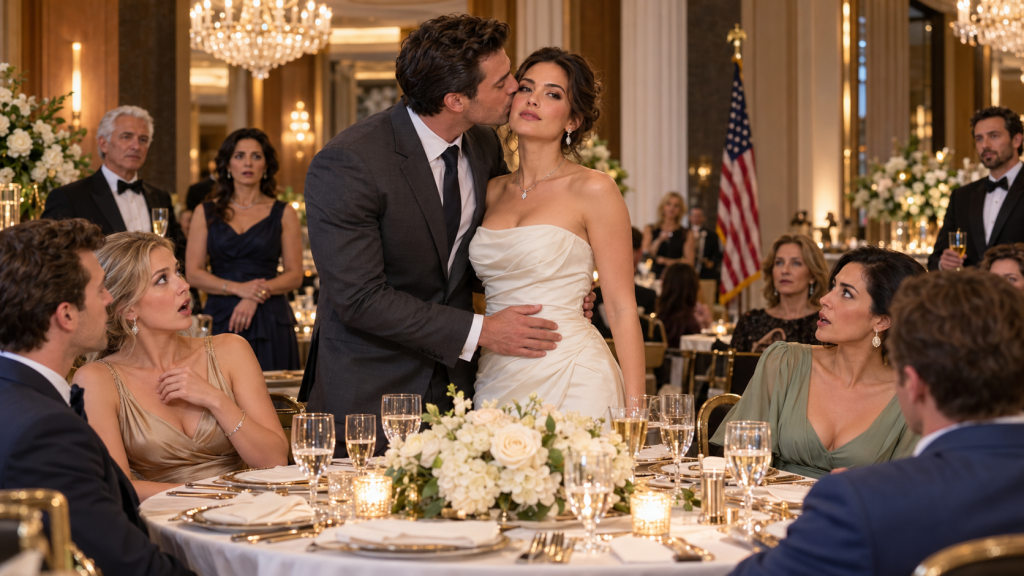
Marcus was standing beside our table.
He wore a beautifully tailored black suit, his dark hair neatly combed, and the warm smile that still made my stomach flutter after years together.
He bent down and kissed my cheek.
“Happy Valentine’s Day, sweetheart.”
I smiled.
“Happy Valentine’s Day.”
He placed a small velvet jewelry box beside my plate.
“Sorry I’m a little late. The meeting with our Tokyo partners ran longer than expected.”
Then he took my hand.
“The jet is ready for Paris. We have a flight in two hours.”
For several seconds, nobody moved.
Vanessa stared at our intertwined fingers.
My mother’s mouth opened.
My father slowly set down his fork.
Finally, Vanessa managed to speak.
“Excuse me. Who exactly are you?”
Marcus turned toward her.
“Marcus Giovanni.”
Her expression changed instantly.
She recognized the name.
Anyone who followed international business news would have.
“The Marcus Giovanni?” Graham asked.
Marcus nodded politely.
My sister looked between us.
“Why are you holding Amelia’s hand?”
Marcus smiled.
“Because she’s my wife.”
My mother’s wineglass slipped against her plate.
The sharp clinking sound seemed extraordinarily loud.
“Your what?”
“My wife,” Marcus repeated calmly. “We’ve been married for almost three years.”
Vanessa shook her head.
“No. That’s impossible.”
Marcus looked genuinely puzzled.
“Why?”
“Because Amelia isn’t married!”
I leaned back.
“Apparently, I am.”
My mother stared at me with an expression I had never seen before.
For once, she had no insult prepared.
Marcus pulled out the chair beside mine.
“And since we’re introducing ourselves properly, I should mention that I own this restaurant, along with forty-seven others around the world.”
My father blinked.
“This restaurant?”
“Yes.”
“Saint Aurelia?”
“That’s correct.”
Graham leaned forward.
“The Giovanni Hospitality Group?”
Marcus nodded.
“Amelia and I built it together.”
My mother gave a strained little laugh.
“Surely you don’t mean Amelia actually helped build your company.”
Marcus’s smile disappeared.
“Actually, Evelyn, your daughter is the reason there is a company.”
He looked around the table.
“Seven years ago, I had one failing restaurant, enormous debts, and almost no hope. Amelia invested her savings, rebuilt my financial structure, and believed in me when nobody else did.”
He placed his hand over mine.
“She’s our chief financial strategist, an equity partner, and the smartest person I’ve ever worked with.”
My mother looked as though someone had taken the floor from beneath her chair.
Vanessa whispered, “That can’t be true.”
Marcus turned toward her.
“Why not?”
She had no answer.
At that moment, our waiter approached with a leather folder.
“Mr. Giovanni, forgive the interruption. The table requested the final bill.”
Marcus accepted it automatically.
He glanced at the total.
Then he raised his eyebrows.
“Eight thousand five hundred dollars?”
My mother gave a nervous laugh.
“Well, it is Valentine’s Day.”
Marcus checked the itemized charges.
Two bottles of rare vintage champagne.
Imported caviar.
The chef’s premium tasting menu for four people.
An additional bottle of wine that cost more than many families spent on groceries in a month.
I had ordered a simple vegetable dish and sparkling water.
Marcus looked at me.
I smiled.
He understood immediately.
My mother had invited me to dinner, spent extravagantly, and expected someone else to pay.
He closed the folder.
“Whose reservation is this?”
The waiter glanced at his tablet.
“Mrs. Evelyn Hart, sir.”
Marcus nodded.
“Then the bill belongs to Mrs. Hart.”
My mother’s expression hardened.
“You own the restaurant. Surely you’re not going to charge family.”
Marcus’s reply was quiet.
“Family?”
He glanced toward me.
“That’s an interesting word to use tonight.”
Vanessa pushed back her chair.
“This is humiliating!”
I looked directly at her.
“Really? I thought you considered humiliation an acceptable family tradition.”
My father’s face flushed.
“Amelia, there’s no need to be disrespectful.”
I slowly turned toward him.
“Dad, you’ve listened to Mom insult me for almost two hours. You didn’t say a single word.”
“Your mother speaks her mind.”
“So do I.”
Marcus squeezed my hand.
And for the first time that evening, I didn’t feel like the little girl who used to cry herself to sleep after family dinners.
I felt like myself.
Then Marcus said something that made my sister’s expression change from embarrassment to genuine fear.
“Actually, Amelia, there’s another matter we should discuss before we leave.”
I looked at him.
“Marcus?”
He hesitated.
“I received a call from our attorneys this afternoon. It concerns the acquisition we finalized six months ago.”
Graham suddenly went very still.
Vanessa looked at her husband.
“What acquisition?”
Marcus reached inside his jacket and withdrew a sealed envelope.
He placed it on the table.
“Six months ago, Amelia’s investment company acquired a controlling interest in the financial group that has been keeping Graham’s construction business operating.”
My father stared at him.
“What are you talking about?”
Marcus continued.
“That financial group also became the majority voting shareholder of Whitlock Construction after its restructuring.”
Graham’s face turned gray.
Vanessa shot to her feet.
“That’s impossible!”
I felt the tension rising around the table.
I had known about our investment in Meridian Bridge Capital.
Of course I had.
I’d negotiated much of the transaction myself.
But Marcus had just received the latest independent audit report, and I hadn’t yet reviewed its findings.
He touched the envelope.
“The board meets tomorrow. The first page identifies the person who will be presenting critical evidence.”
Vanessa snatched it from the table.
She tore it open and pulled out the documents.
Her eyes dropped to the first page.
Then she made a sound I had not heard from her in nearly ten years.
A terrified, strangled gasp.
“No.”
Her fingers tightened around the paper.
“No, no, no. This cannot be happening.”
Graham leaned toward her.
“What is it?”
Vanessa looked up at me.
Her face had lost every trace of color.
“Amelia,” she whispered. “Why is her name here?”
I already knew.
Because I recognized the name printed across the page.
Elena Marquez.
The woman my sister had destroyed nine years earlier.
The woman my father had blamed for a crime she never committed.
And the woman I had promised, long ago, that one day the truth would finally come out.
For a few seconds, I couldn’t hear anything except the faint sound of music drifting from the restaurant’s grand piano.
Elena Marquez.
I hadn’t spoken her name aloud in years.
But I had never forgotten her.
And judging by my sister’s expression, neither had she.
My mother snatched the papers from Vanessa’s trembling hands.
“Who is Elena Marquez?” she demanded.
Then she saw the name.
Her expression changed.
My father leaned back in his chair.
“That woman?” he muttered.
Marcus turned toward him.
“You know her?”
My father’s jaw tightened.
“She used to work for my company. She was dismissed for financial misconduct.”
I felt something inside me harden.
“No, Dad. She was dismissed because Vanessa accused her of something she didn’t do.”
Vanessa slammed her palm against the table.
“That’s a lie!”
Several nearby diners turned toward us.
Marcus remained perfectly calm.
“Vanessa, I suggest you lower your voice.”
“Don’t tell me what to do!”
“Then I suggest you stop making a scene in a restaurant where people are trying to enjoy their evening.”
My mother looked at me with sudden suspicion.
“What have you done, Amelia?”
I stared at her.
It was astonishing.
After everything Marcus had revealed, after discovering that I was married, successful, and financially independent, her first instinct was still to blame me.
“I haven’t done anything to you, Mom.”
“Then why is that woman’s name on documents involving Graham’s company?”
I reached for the envelope.
“Because Elena Marquez is the founder of Meridian Bridge Capital. She’s also the person who helped us complete the acquisition.”
My father’s breathing grew shallow.
Vanessa slowly lowered herself into her chair.
And suddenly, I was twenty-seven again.
Standing in my father’s office.
Watching an innocent woman beg for someone to believe her.
Nine years earlier, Hartwell Development had been one of the most respected family-owned real estate companies in the state.
My grandfather had founded it with a single construction truck and enough savings to purchase a small warehouse.
By the time my father inherited the company, it managed commercial properties, residential developments, and several charitable construction projects.
One of those projects involved renovating a neglected community center in a struggling neighborhood.
The center provided after-school programs, affordable meals, and educational support for hundreds of children.
A group of donors had contributed nearly three hundred thousand dollars toward the renovation.
Elena Marquez was the project’s financial controller.
She was thirty-two, recently widowed, and raising a little girl named Sofia.
Elena worked harder than almost anyone I knew.
She arrived before sunrise, stayed late during reporting periods, and kept meticulous records.
I admired her.
At the time, I worked in our company’s financial analysis department.
Vanessa worked in public relations and community partnerships.
She had a talent for charming wealthy donors.
She loved expensive clothes, exclusive parties, and being photographed beside important people.
My parents considered her the perfect representative of the family.
I was considered too serious.
Too independent.
Too interested in numbers.
Then, one Monday morning, the renovation account was discovered to be missing two hundred and eighty thousand dollars.
My father ordered an investigation.
Within forty-eight hours, Vanessa announced that Elena had authorized the suspicious transfers.
She produced documents containing Elena’s electronic approval credentials.
Elena denied everything.
She cried in my father’s office.
She begged him to examine the original transaction records.
She offered access to her personal bank accounts.
She insisted someone had used her credentials without permission.
But Vanessa had already convinced our parents.
“She’s desperate,” Vanessa said. “Her husband left debts behind. Of course she’d steal.”
That statement was cruel.
Elena’s husband had died after a long illness.
His medical expenses had nearly destroyed their savings.
But financial hardship was not proof of theft.
I noticed inconsistencies in the accounting records.
One transfer had been approved while Elena was attending an out-of-state training conference.
Another payment went to a consulting company that had performed no documented work.
The company was called Blue Ash Consulting.
I asked Vanessa about it.
She told me to mind my own business.
I took my concerns to my father.
He didn’t even look at the records.
“Your sister understands the situation.”
“But Dad, the timestamps don’t make sense.”
“Amelia, enough.”
“Elena could lose everything.”
He looked at me coldly.
“Then she should have thought about that before stealing.”
Elena was fired.
Her professional reputation collapsed.
Several local employers rejected her applications.
The community center project was delayed for months.
And the story spread through our business community that she’d stolen charitable funds intended for disadvantaged children.
I will never forget the afternoon she came to collect her belongings.
Her daughter stood beside her holding a stuffed rabbit.
Elena looked at me with swollen eyes.
“I didn’t take that money, Amelia.”
“I know.”
She pressed her lips together.
“You’re the only person here who’s said that.”
I handed her copies of the financial discrepancies I’d found.
“They aren’t enough to prove everything. But keep them. Someday they might help.”
Elena hugged me.
Then she whispered, “Don’t let them turn you into someone like them.”
A week later, my father discovered I’d copied the records.
He accused me of betraying the family.
Vanessa called me jealous.
My mother said I cared more about strangers than my own blood.
When I refused to apologize, my father told me I was no longer welcome at Hartwell Development.
I packed my office that afternoon.
I remember carrying one cardboard box to my car while my sister watched from an upstairs window.
She smiled.
I never returned.
For years, I wondered what had happened to Elena.
Then, two years before the Valentine’s dinner, she contacted me.
She’d rebuilt her life.
After taking temporary bookkeeping jobs and eventually joining a small private lending firm, Elena had developed a remarkable understanding of distressed business financing.
She’d founded Meridian Bridge Capital with two partners.
The company specialized in helping struggling businesses restructure debts, preserve jobs, and avoid unnecessary closures.
When we met for coffee, she looked older.
There were lines around her eyes that hadn’t been there before.
But she was smiling.
“Your father almost destroyed my career,” she told me. “For a long time, I thought he had.”
I reached across the table.
“I’m sorry I couldn’t do more.”
She shook her head.
“You were twenty-seven. You risked your job for me. That’s more than anyone else did.”
We remained in contact.
When Meridian began seeking a strategic investor, I studied the opportunity.
Its portfolio contained several valuable businesses with serious management problems.
I believed the company could grow substantially with better financing and stronger oversight.
Through my private investment holding company, I purchased a controlling stake in Meridian.
Elena remained a major shareholder and senior executive.
The acquisition was legitimate, negotiated over several months, and reviewed by independent attorneys.
During due diligence, I discovered Meridian had become the principal lender to Graham’s construction company.
Whitlock Construction had expanded too quickly.
It had accumulated debts, delayed payments to subcontractors, and repeatedly breached its loan agreements.
To prevent insolvency, Graham had accepted a restructuring agreement that converted part of the outstanding debt into voting equity.
Meridian ultimately became the company’s majority shareholder.
I knew that connection existed.
I also knew Vanessa worked there as head of procurement.
But I had insisted that our investment team evaluate the business independently.
I refused to make hundreds of employees suffer because of my family’s behavior.
What I hadn’t known until that evening was that the latest audit had uncovered something much darker.
Marcus looked at Vanessa.
“The review identified a series of questionable payments made through your procurement department.”
Vanessa stared at him.
“That’s confidential information.”
“You’re correct,” Marcus replied. “Which is why the full report will be presented through the proper process tomorrow.”
He paused.
“But you were already notified of the review, Vanessa. You know exactly which transactions are being examined.”
Graham slowly turned toward his wife.
“Vanessa?”
She ignored him.
My mother grabbed my arm.
“Amelia, whatever you’re doing, you need to stop it immediately.”
I gently removed her hand.
“I’m not conducting the investigation.”
“Then tell your husband to cancel it!”
Marcus spoke before I could answer.
“That isn’t how corporate governance works, Evelyn.”
My father leaned forward.
“We can settle this privately.”
The words made my stomach tighten.
I’d heard them before.
Nine years earlier, he’d said the same thing when I questioned Elena’s dismissal.
Keep things private.
Protect the family.
Don’t embarrass your sister.
Never ask questions that might threaten the reputation of people with money.
I looked directly at him.
“That’s what you said about Elena.”
He flinched.
“This is different.”
“Why? Because this time there’s a possibility Vanessa might be held accountable?”
My mother made an angry noise.
“Your sister has children!”
“And Elena had a child when you destroyed her reputation.”
Silence.
It was the first time anyone had said those words at a family table without being immediately shouted down.
Vanessa suddenly began crying.
Not quietly.
She covered her face and sobbed dramatically.
“You’re ruining my life!”
I watched her for a moment.
There had been a time when those tears would have frightened me.
My parents always believed Vanessa.
If she cried, someone had wronged her.
If I cried, I was being dramatic.
If she made a mistake, she needed understanding.
If I made a mistake, it proved I was a failure.
But tonight, something had changed.
I no longer needed their permission to recognize the truth.
“Vanessa,” I said gently, “if you’ve done nothing wrong, the investigation will establish that.”
She looked up.
Her eyes weren’t sad anymore.
They were furious.
“You planned this.”
“No.”
“You married a billionaire and hid it so you could make us look stupid!”
I almost laughed.
“Vanessa, I didn’t marry Marcus to embarrass you. I married him because I love him.”
“Then why didn’t you tell us?”
I looked around the table.
“Because the last time I tried to tell you something important about my life, you made it into a weapon.”
My mother’s face reddened.
“We are your family!”
“And you’ve spent this entire evening reminding me how little that means to you.”
Graham suddenly stood.
“I need to make a call.”
Marcus looked at him.
“If you’re calling your legal counsel, that’s probably wise.”
Graham froze.
“Is that a threat?”
“No. It’s practical advice.”
Graham left the table with his phone pressed to his ear.
My father rubbed his forehead.
For the first time, he looked older than his sixty-four years.
“Amelia,” he said quietly, “what exactly do you want from us?”
I considered the question.
For years, I would have answered without hesitation.
An apology.
A little respect.
One genuine compliment.
A birthday remembered.
A conversation that didn’t become a criticism.
But sitting there, beside the man who loved me without conditions, I realized I no longer needed my parents to give me a sense of worth.
“I wanted to have dinner with my family,” I said.
My voice trembled despite my efforts to remain calm.
“I came because Mom said she wanted to start again. I actually believed we might.”
I looked at my mother.
“I spent an hour choosing this dress because I wanted to look nice for you.”
Her expression flickered.
“I bought you flowers. They’re still in the gift bag beside your chair.”
She looked down.
A bouquet of pale pink roses rested against the table leg.
I’d chosen them because they were her favorites.
“I came prepared to tell you about my marriage. About my work. About the life I’ve built.”
My throat tightened.
“But you didn’t ask me one meaningful question. Not one.”
I swallowed.
“You wanted to know what my handbag cost. Whether I had a boyfriend. Whether I was embarrassed about not having children.”
Marcus’s hand tightened around mine.
“You never asked whether I was happy.”
My mother looked away.
Then, almost inaudibly, she muttered, “You always were too sensitive.”
There it was.
The familiar refusal.
Even now.
Even with everything exposed.
She couldn’t admit she’d hurt me.
I stood.
“Marcus, I’m ready to go.”
He rose immediately.
“Of course, sweetheart.”
My mother looked startled.
“You’re just leaving?”
“Yes.”
“But the bill!”
I glanced at the folder.
“You ordered dinner, Mom. You can pay for it.”
Vanessa stared at me.
“You can’t seriously expect us to pay eight thousand five hundred dollars!”
I looked at the expensive champagne bottles.
“Then perhaps you shouldn’t have ordered them.”
Marcus quietly asked the waiter to assist with the payment.
He also made sure the service staff would not be penalized for the uncomfortable situation.
Then he placed his hand gently at the small of my back.
“Shall we?”
I took one last look at my parents.
My father sat motionless.
Vanessa was whispering furiously into her phone.
My mother stared at the roses beside her chair.
“Goodbye,” I said.
And I walked away.
Outside, Manhattan glittered beneath the February night.
A cold wind swept between the buildings.
I stood on the sidewalk while Marcus spoke briefly with our driver.
Then he returned and wrapped his coat around my shoulders.
“You okay?”
For a moment, I couldn’t speak.
Then I shook my head.
“No.”
His expression softened.
“Come here.”
I stepped into his arms.
And suddenly, after hours of holding everything inside, I began to cry.
Not because I was ashamed.
Not because I regretted defending myself.
But because some small part of me had still hoped my mother would look at me and say she was proud.
Marcus held me without speaking.
When my breathing finally steadied, he brushed a tear from my cheek.
“You know what I remember about the night we met?”
I sniffed.
“My brilliant financial advice?”
He smiled.
“That too.”
“What else?”
“You were the first person who looked at my failing restaurant and saw something worth saving.”
I looked up at him.
“And?”
“And I remember thinking that anyone who couldn’t recognize your value must be looking with their eyes closed.”
I laughed through my tears.
“That’s terribly romantic for a man who nearly bankrupted himself selling risotto.”
He grinned.
“Excellent risotto.”
“Very expensive risotto.”
“Still excellent.”
I leaned against his chest.
For the first time that evening, I felt warm.
Our driver opened the car door.
Marcus glanced at his watch.
“We can still make Paris.”
I hesitated.
“What about tomorrow’s meeting?”
“We can join remotely. Our attorneys and the independent directors are handling the review.”
He studied my face.
“But if you want to stay, we’ll stay.”
I looked back toward the restaurant.
Through the windows, I could see couples enjoying their evening.
Somewhere inside, my family was probably still arguing.
For once, I didn’t want to know what they were saying.
“Take me to Paris,” I whispered.
Marcus smiled.
“With pleasure, Mrs. Giovanni.”
The flight across the Atlantic was quiet.
I changed into comfortable clothes, curled up beneath a blanket, and tried to sleep.
But my mind kept returning to Elena.
At approximately three in the morning, I opened my laptop and reviewed the documents Marcus’s legal team had prepared for me.
The material was carefully organized.
Financial summaries.
Board notices.
Audit findings.
And a preliminary report examining suspicious procurement transactions at Whitlock Construction.
As I read, a cold feeling settled in my stomach.
Over three years, the company had paid more than one million dollars to several consulting entities for services that appeared unsupported by genuine contracts.
One of those entities had a familiar name.
Blue Ash Consulting.
I stared at the screen.
The same company.
The same name that had appeared in the missing community center funds nine years earlier.
I opened the historical records I’d preserved in my personal archives.
There it was.
A payment authorization from Hartwell Development.
Two hundred and eighty thousand dollars.
Blue Ash Consulting.
My hands began to shake.
Marcus noticed immediately.
“Amelia?”
I turned the laptop toward him.
“Look at this.”
He studied the documents.
His expression hardened.
“That’s a significant connection.”
“It was Vanessa.”
“We don’t know everything yet.”
I shook my head.
“I’ve suspected it for nine years.”
Marcus moved closer.
“Suspicion isn’t proof, sweetheart.”
“I know.”
“And that’s why we let the independent investigators finish their work.”
I looked at the old scanned documents.
“Elena lost years of her life because nobody wanted to investigate.”
Marcus gently closed his hand over mine.
“Then this time, we make sure the investigation is fair.”
I nodded.
That was the difference between revenge and accountability.
Revenge would have meant using our money to destroy Vanessa without caring about the consequences.
Accountability meant allowing evidence to speak, even if the truth was complicated, uncomfortable, or personally painful.
I didn’t want to become the kind of person my family had been.
But I was no longer willing to protect them from the consequences of their choices.
We landed in Paris late the following morning.
The city was beautiful beneath a pale winter sky.
Our car crossed the Seine while I watched pedestrians hurry past cafés and flower shops.
Normally, arriving in Paris with Marcus felt like entering a dream.
We had celebrated our second wedding anniversary there.
We had walked through the Luxembourg Gardens, eaten pastries at tiny bakeries, and spent hours discussing everything except business.
This time, I barely noticed the scenery.
At the hotel, Marcus ordered breakfast while I called Elena.
She answered on the second ring.
“Amelia.”
Her voice was warm, but serious.
“I heard about last night.”
I closed my eyes.
“I’m sorry.”
“For what?”
“For the way Marcus’s announcement brought everything back.”
Elena was quiet.
Then she sighed.
“Amelia, the past never really went away. We just learned how to live around it.”
I sat beside the window.
“Did you know about the connection to Whitlock Construction when we bought Meridian?”
“I knew the company was in trouble. I knew your brother-in-law was involved. I didn’t know the suspicious payments would lead back to Blue Ash until the auditors started tracing them.”
I looked down at my hands.
“Why didn’t you tell me when the first irregularities appeared?”
“Because I knew how painful this would be for you. And because I didn’t want anyone accusing us of conducting a personal vendetta.”
I understood.
Elena had spent years rebuilding her reputation.
She wasn’t going to risk losing it again through an investigation that could be dismissed as revenge.
“There’s something else,” she said.
My stomach tightened.
“What?”
“The auditors located archived correspondence from Hartwell Development.”
“From nine years ago?”
“Yes.”
I sat straighter.
“What correspondence?”
“Emails involving your father.”
My mouth went dry.
Elena continued carefully.
“Amelia, I think your father knew more about the missing money than he admitted.”
I stared out at the Seine.
For years, I’d believed my father had been arrogant and careless.
I’d thought he’d trusted Vanessa too completely.
I’d assumed his treatment of Elena came from pride and a refusal to admit mistakes.
But deliberately concealing evidence?
That was something else.
“What did they find?”
“I’d rather the attorneys explain everything during the meeting. The documents need to be authenticated, and I don’t want to mislead you.”
I swallowed.
“Okay.”
Then Elena’s voice softened.
“Whatever happens, please remember one thing. You didn’t cause this.”
I looked down.
“I know.”
“No, Amelia. Listen to me. You didn’t cause your sister’s choices. You didn’t cause your father’s choices. And you aren’t responsible for protecting them from the truth.”
Tears filled my eyes.
“Thank you.”
“Do you remember what you said when I lost my job?”
I shook my head.
“You told me that one day I’d find people who valued honesty more than appearances.”
I smiled sadly.
“I remember.”
“Well,” Elena said, “I did. And one of those people was you.”
We ended the call.
For several minutes, I sat silently.
Then Marcus entered carrying two cups of coffee.
He looked at my face and set them down.
“Bad news?”
“Maybe.”
I told him what Elena had said.
He listened without interrupting.
When I finished, he pulled a chair beside mine.
“Sweetheart, there’s something I want you to understand.”
I looked at him.
“You can love your father and still acknowledge that he’s done something wrong.”
I lowered my eyes.
“And you can be angry with him without becoming cruel.”
I reached for his hand.
“I don’t know how to forgive something like this.”
“Then don’t force yourself to decide today.”
He kissed my forehead.
“You’ve spent enough years being told what you owe your family. Maybe it’s time to ask what you owe yourself.”
That evening, we joined the Whitlock Construction board meeting through a secure video connection.
It was late in Paris.
The city lights shimmered beyond our hotel windows.
Marcus sat beside me, although he was attending primarily as an observer.
As a major investor through my holding company, I had the right to participate in certain discussions.
But because my sister was personally involved, I’d voluntarily stepped aside from decisions concerning the investigation.
I wanted no one to claim the outcome had been manipulated by family hostility.
The meeting was led by an independent attorney named Rebecca Sloan.
Several directors appeared on screen.
Elena joined from Meridian’s offices.
Graham was present with his lawyer.
Vanessa sat beside him, her arms crossed tightly.
She refused to look at the camera.
Rebecca began by explaining that the audit had uncovered significant irregularities in procurement payments.
The investigators had examined invoices, banking records, vendor registrations, internal correspondence, and transaction approvals.
Some documents were recent.
Others dated back nearly a decade.
Then she displayed a timeline.
At the top was a date from nine years earlier.
The day Hartwell Development transferred the missing community center funds.
Below it was the name Blue Ash Consulting.
Rebecca explained that the company had repeatedly received payments for services that could not be independently verified.
Its ownership records had been obscured through several business entities.
But bank records, tax filings, and recovered correspondence had identified who controlled the money.
Vanessa shifted in her chair.
Rebecca continued.
“The evidence indicates that Blue Ash Consulting was controlled by a business entity whose beneficial owner was Vanessa Hart, now Vanessa Whitlock.”
My sister stood abruptly.
“That’s ridiculous!”
Rebecca remained calm.
“Mrs. Whitlock, you’ll have an opportunity to respond through counsel.”
“You have no idea what you’re talking about!”
Graham looked at her.
“Vanessa, sit down.”
She turned on him.
“Don’t you dare!”
Rebecca displayed another document.
It was an email.
Nine years old.
Sent from Vanessa’s company account to a private address linked to the consulting business.
The message referenced the transfer of project funds.
It also contained a sentence that made my blood run cold.
Make sure Elena’s approval is attached before Finance notices the discrepancy.
I covered my mouth.
Vanessa’s lawyer immediately objected to any conclusion being drawn before the email’s authentication was complete.
Rebecca acknowledged the objection.
But she explained that the investigators had obtained corroborating server records and intended to submit the material for formal review.
Then came the second revelation.
Another email appeared.
This one was from my father.
It had been sent several days after Elena’s dismissal.
The message was addressed to Vanessa.
I read it once.
Then again.
I know Elena was not in the office when the approvals were entered. I’ve handled the internal report. We cannot allow this to become a public scandal. Make sure the remaining records stay out of circulation.
For a moment, I couldn’t breathe.
My father had known.
He had known the evidence against Elena was questionable.
He had known an innocent woman might be blamed.
And instead of investigating, he’d protected Vanessa.
My hands trembled so badly I had to place them beneath the desk.
Marcus leaned toward me.
“Amelia?”
I shook my head.
I couldn’t speak.
On the screen, Elena remained perfectly still.
But I could see tears shining in her eyes.
Rebecca continued.
“The evidence also raises concerns about more recent payments made by Whitlock Construction through the same network of entities. Those transactions require further examination.”
Graham looked devastated.
He admitted approving several large consulting payments after Vanessa assured him they related to legitimate subcontractor coordination.
He said he had failed to verify the work.
His lawyer acknowledged that serious management failures had occurred.
Vanessa insisted everything had been authorized.
Then, unexpectedly, she turned toward the camera.
“This is Amelia’s fault!”
Everyone went silent.
She pointed directly at the screen.
“She’s been jealous of me her entire life! She’s using her rich husband to destroy our family!”
Rebecca interrupted.
“Mrs. Whitlock, personal accusations are not relevant to the financial findings.”
But Vanessa continued.
“She always hated that I was prettier! That Mom loved me more! That Dad trusted me!”
I stared at her.
For a strange moment, I saw us as children again.
Vanessa, wearing a beautiful new birthday dress.
Me, standing beside her in the hand-me-down version.
Vanessa, receiving applause for singing at a family gathering.
Me, being told to stop showing off when I received an academic award.
We had grown older.
But she was still fighting a competition I had stopped entering years ago.
I leaned toward my microphone.
“Vanessa.”
She stopped.
“I never wanted your life.”
Her expression twisted.
“I wanted my own. I wanted a relationship with you that wasn’t built on comparison.”
She laughed bitterly.
“Spare me.”
I continued quietly.
“Elena lost her livelihood because someone diverted charitable funds and blamed her. The company is now facing similar concerns. Those facts deserve an honest investigation, no matter whose name is attached.”
Vanessa stared at me.
Then she looked away.
Rebecca resumed the meeting.
The board voted to suspend Vanessa from her procurement responsibilities pending the outcome of the investigation.
Graham agreed to step aside temporarily from certain financial approval powers.
Independent managers were appointed to protect company operations, preserve records, and ensure employees and subcontractors continued receiving payments.
The evidence would be referred to the appropriate legal authorities for review.
There was no dramatic arrest.
No police officer bursting through the door.
No judge immediately announcing a sentence.
Just documents, decisions, and the slow, serious beginning of accountability.
When the meeting ended, I sat in silence.
Marcus closed the laptop.
“How do you feel?”
I stared at the blank screen.
“I don’t know.”
And that was the truth.
I’d spent years imagining what it would feel like if my family finally faced the truth.
I thought I might feel victorious.
Vindicated.
Free.
Instead, I felt grief.
Grief for Elena.
For the community center that had waited so long for its renovation.
For the little girl who had watched her mother lose her career.
And for the family I’d wanted but never really had.
Marcus gently took my hand.
“Come outside with me.”
We walked onto the balcony.
Paris stretched beneath us, golden and beautiful.
Church bells rang somewhere in the distance.
For a long time, neither of us spoke.
Then I whispered, “My father knew.”
Marcus nodded.
“He did.”
“All those years, he knew.”
I leaned against the railing.
“He let me think I was unreasonable for questioning him.”
Marcus put his arms around me.
“And now you know the truth.”
I began to cry again.
But this time, the tears felt different.
They weren’t the desperate tears of someone begging to be believed.
They were the tears of someone finally letting go of a burden she’d carried too long.
The following weeks were difficult.
My phone rang constantly.
Relatives I’d barely spoken to in years suddenly wanted explanations.
Some called to congratulate me on my marriage.
Others wanted to know whether Marcus could arrange restaurant reservations, employment opportunities, or business introductions.
Several people who had ignored me for years sent affectionate messages.
One cousin wrote, We always knew you’d do something amazing.
I almost laughed.
Apparently, success had an extraordinary effect on people’s memories.
Vanessa sent furious messages.
She accused me of destroying her marriage.
She claimed I was trying to take away her children’s inheritance.
She threatened to tell newspapers that I’d engineered a hostile takeover to punish her.
Our legal team advised me to preserve the messages.
I did.
But I didn’t answer them.
I had spent too many years defending myself against accusations that weren’t true.
I wasn’t going to spend the rest of my life doing it.
Two weeks after the board meeting, my father called.
I almost ignored him.
Then I answered.
“Hello, Dad.”
His voice sounded strange.
“Amelia.”
For a few seconds, neither of us spoke.
Finally, he said, “I’ve been speaking with my attorney.”
I waited.
“I need to correct some things.”
“About Elena?”
“Yes.”
His breathing was uneven.
“I convinced myself I was protecting our family.”
I stared at the wall.
“By sacrificing an innocent woman?”
He didn’t answer immediately.
Then he whispered, “Yes.”
The admission hurt more than I expected.
For years, he’d denied everything.
Now, when the evidence was impossible to ignore, he finally acknowledged what he’d done.
“I thought if the scandal became public, we’d lose the business,” he continued. “Our reputation. Everything your grandfather built.”
“And Elena?”
His voice cracked.
“I told myself she’d find another job.”
I closed my eyes.
“She struggled to feed her daughter, Dad.”
“I know.”
“Her daughter had to change schools. Elena lost her home. Her professional reputation was ruined.”
“I know.”
“No, Dad. You didn’t know. Because you never cared enough to find out.”
He began crying.
I’d never heard my father cry before.
He had always been the strongest person in the room.
The man whose decisions couldn’t be questioned.
The man whose approval I had spent my childhood chasing.
Now he sounded small.
“I’m sorry, Amelia.”
I pressed my fingers against my eyes.
“I wanted you to say that for so long.”
“Can you forgive me?”
I looked out at the Paris skyline.
“I don’t know.”
He was silent.
“But if you’re genuinely sorry, you can start by telling the complete truth.”
He promised he would.
To his credit, he eventually did.
He provided a formal statement to investigators.
He acknowledged that he’d suppressed evidence that should have been examined during Elena’s dismissal.
He also issued a written correction concerning the accusations against her and cooperated with the civil claims that followed.
It didn’t erase what he’d done.
But it was the first meaningful act of accountability I’d ever seen from him.
My mother reacted differently.
She called me the next morning.
“Are you satisfied now?”
I sighed.
“Good morning, Mom.”
“Your father is miserable. Vanessa is losing everything. Graham barely speaks to her. Is this what you wanted?”
“No.”
“Then why won’t you stop it?”
“Because I can’t make the evidence disappear, and I wouldn’t if I could.”
She let out an angry breath.
“You care more about that woman than your own sister.”
I stared at the ceiling.
“Mom, why does loving Vanessa require pretending she can never do anything wrong?”
“She’s your sister!”
“And I’m your daughter.”
Silence.
I continued.
“Do you remember what you said to me at Valentine’s dinner?”
My mother scoffed.
“I said a lot of things.”
“You said no man would ever want me because I was too difficult to love.”
“Amelia, don’t be dramatic.”
“You said it in front of everyone.”
“I was trying to help you.”
“No. You were trying to hurt me.”
Her breathing sharpened.
“How dare you speak to me that way?”
I closed my eyes.
For years, those words had terrified me.
But not anymore.
“I’m not shouting. I’m not insulting you. I’m simply telling you the truth.”
She said nothing.
“Marcus loves me. He’s loved me through failures, losses, stressful decisions, and terrible days. And not once has he made me feel like affection was something I had to earn.”
My voice softened.
“You taught me that love meant being agreeable, obedient, and grateful for whatever attention someone offered.”
I paused.
“Marcus taught me that real love doesn’t require you to disappear.”
My mother started crying.
But I didn’t rush to comfort her.
Not because I wanted to punish her.
Because, for the first time, I understood that her emotions were not automatically my responsibility.
“I’m going to end this call now,” I said.
“Amelia, wait.”
I hesitated.
Her voice sounded smaller.
“Why didn’t you tell me you got married?”
The question struck something tender inside me.
I thought of my wedding day.
The flowers.
The sunlight.
Marcus standing beside the river with tears in his eyes.
I thought of how much I’d wanted my mother there.
How I’d imagined her helping me choose a dress or fixing my hair before the ceremony.
How I’d wished, just once, to hear her call me beautiful.
“Because, Mom,” I whispered, “you never made my happiness feel safe with you.”
She didn’t answer.
I ended the call.
Then I sat quietly for several minutes.
It wasn’t a perfect resolution.
There was no sudden transformation.
No magical apology that erased thirty-six years of hurt.
But there was something better.
A boundary.
And for the first time, I intended to keep it.
The investigation continued for several months.
Financial specialists traced the questionable transfers, interviewed former employees, and reviewed records from both companies.
Vanessa eventually admitted responsibility for portions of the old transactions as part of a negotiated legal resolution.
The consequences were serious.
She lost her position.
She was required to make financial restitution.
And the formal proceedings damaged the reputation she’d spent years polishing.
Graham separated from her temporarily.
Their marriage had already been strained by financial problems, and the investigation exposed how many important decisions had been hidden from him.
He wasn’t entirely innocent.
He had signed documents without performing the checks his responsibilities required.
But he cooperated with the review and accepted restrictions on his executive authority.
Whitlock Construction survived.
That mattered to me.
Hundreds of workers depended on the business.
They had mortgages, children, medical bills, and families who needed them.
I refused to allow innocent employees to lose their livelihoods merely because the people at the top had behaved recklessly.
Under new management, the company renegotiated contracts, improved controls, and gradually stabilized.
Some projects were sold.
Others were completed.
Workers received outstanding wages.
And the business began rebuilding its credibility.
Meanwhile, Elena finally received the public acknowledgment she’d deserved.
The allegations against her were formally withdrawn.
Hartwell Development corrected its records.
A negotiated settlement addressed the professional and financial damage caused by her wrongful dismissal.
But the moment that meant the most came at the reopening of the community center.
The renovation had eventually been completed through other funding years earlier, but the building had continued struggling with outdated facilities.
Elena and I worked with several donors to finance a new technology room, tutoring program, and expanded kitchen.
We didn’t name the building after ourselves.
We named the renovated learning space after Elena’s late husband, Daniel Marquez, who had volunteered there before his illness.
On opening day, children filled the hallways with laughter.
Colorful drawings covered the walls.
Volunteers carried boxes of books into bright new classrooms.
Elena stood beside me watching her daughter, now a young adult, help a group of children learn to use the computers.
“She’s studying education,” Elena said proudly.
I smiled.
“She’s wonderful.”
Elena’s eyes filled with tears.
“For years, Sofia heard people whisper that her mother was a thief.”
I turned toward her.
“Elena…”
She shook her head.
“Today, she got to stand in front of this community and hear people thank me.”
Her voice broke.
“I don’t think you understand what that means.”
I hugged her.
“I think I do.”
She held me tightly.
Then she whispered, “You kept your promise.”
I pulled back.
“What promise?”
“That someday the truth would come out.”
I felt tears rising again.
“I wish it hadn’t taken so long.”
Elena smiled.
“So do I. But I’m not going to let the years I lost steal the years I still have.”
Those words stayed with me.
That afternoon, as Marcus and I walked through the community center, I realized how different our lives had become.
Seven years earlier, we’d been two people sitting in a nearly empty restaurant, trying to figure out how to survive.
Now, we had resources to create opportunities for others.
Not because we were better than anyone else.
But because someone had believed in us when our futures were uncertain.
I squeezed Marcus’s hand.
“Do you ever wonder what would’ve happened if I hadn’t walked into your restaurant that night?”
He smiled.
“Frequently.”
“And?”
“I’d probably still be arguing with suppliers and serving excellent risotto to four customers.”
I laughed.
“Five customers. I would’ve come back.”
He stopped walking.
Then he pulled me close.
“Do you know why I love you?”
“Because I saved your business?”
“No.”
“Because I’m brilliant with spreadsheets?”
“That certainly helps.”
I grinned.
“Then why?”
He looked into my eyes.
“Because when you believe someone deserves a chance, you do something about it.”
My smile faded into something softer.
“And because,” he continued, “you have every reason to be bitter, but you keep choosing to build things instead of destroying them.”
I rested my forehead against his.
“You’re going to make me cry in front of all these people.”
“Wouldn’t be the first time.”
We laughed.
And for the first time in months, I felt something settle peacefully inside me.
Almost a year passed before I saw my mother again.
We met at a quiet botanical garden.
Not at her house.
Not at a family celebration.
Somewhere neutral.
Somewhere I could leave whenever I wanted.
She looked older.
Her hair had grown grayer around her temples.
She wore a simple beige coat instead of the expensive designer outfits she usually preferred.
For a few moments, we walked without speaking.
Then she said, “Your father tells me you’re opening another restaurant.”
“Two, actually.”
“That’s impressive.”
I glanced at her.
The words sounded unfamiliar.
She noticed my surprise.
“I know I haven’t always been generous with compliments.”
I almost smiled.
“That’s one way of putting it.”
She looked down.
“I thought I was preparing you for the world.”
I remained silent.
“My own mother was very hard on me,” she continued. “She believed women had to marry well, look beautiful, and never let anyone see weakness.”
I watched a bird settle on a nearby branch.
“That must have been difficult.”
“It was.”
She swallowed.
“And I suppose I repeated more of it than I realized.”
For a moment, I felt the old temptation to comfort her.
To tell her everything was fine.
To make the conversation easier.
But I stopped myself.
“Mom, what happened to you explains some things. It doesn’t excuse how you treated me.”
She nodded slowly.
“I know.”
We continued walking.
Then she stopped beside a fountain.
“That night at the restaurant…”
I looked at her.
“I was jealous.”
The confession startled me.
“Of what?”
She gave a sad little laugh.
“Your freedom.”
I frowned.
She continued.
“You never needed people to approve of you the way I did. Even when you were young, you questioned things. You wanted a different life. I thought if I could make you settle down and behave like Vanessa, everything would be easier.”
I said nothing.
“But then you succeeded without us.”
Her eyes filled.
“And I didn’t know what to do with that.”
I looked at her carefully.
“Mom, I didn’t succeed to prove you wrong.”
“I know.”
“I wasn’t trying to win.”
She began to cry.
“I know that now.”
We sat on a bench.
For several minutes, we watched visitors pass.
Finally, she reached toward my hand, then hesitated.
“Could we try again?”
I thought about it.
There was a time when I would have agreed immediately.
I would have accepted any promise, any apology, any small sign that my mother wanted me.
But I had learned that reconciliation required more than emotional words.
It required consistent behavior.
“We can try,” I answered.
Her face brightened.
“But slowly.”
She nodded.
“And there are conditions.”
“All right.”
“No insults about my life. No comparisons with Vanessa. No asking me to rescue anyone financially. And no pretending the past never happened.”
My mother looked down.
Then she said, “That’s fair.”
I studied her face.
For once, I believed she meant it.
Not because she’d suddenly become a different person.
But because she finally seemed willing to acknowledge that loving someone meant respecting their boundaries.
It wasn’t the reunion I’d dreamed of as a little girl.
But perhaps it was the beginning of something healthier.
My relationship with Vanessa remained complicated.
She wrote several letters during the months after the investigation.
The first ones were angry.
She blamed me for everything.
The later ones were quieter.
In one, she admitted she’d resented me since childhood.
She wrote that she’d always believed our parents loved her because she was the successful daughter.
When my career took a different direction, she’d assumed I’d failed.
And when she discovered the truth about my marriage and business, she’d felt as though the foundation of her identity had collapsed.
I know that doesn’t excuse what I did, she wrote. But I don’t know who I am if I’m not the daughter everyone admires.
I read that sentence several times.
Then I wrote back.
I told her that I hoped she’d discover a version of herself that didn’t require someone else to feel inferior.
I told her I loved Olivia and Miles.
I told her I would always be willing to maintain a healthy relationship with the children.
But I also told her that trust would have to be rebuilt through actions, not promises.
She didn’t respond for several weeks.
Then a small envelope arrived.
Inside was a photograph.
Olivia and Miles stood beside a birthday cake.
On the back, Vanessa had written:
They miss you. Thank you for not blaming them.
I placed the photograph on my desk.
It was the first message from my sister in years that didn’t ask me for anything.
Maybe someday we’d have a real relationship.
Maybe not.
I was learning to accept that some stories don’t end with everyone becoming close again.
Sometimes the happiest ending is simply that nobody gets to hurt you without consequences anymore.
The following Valentine’s Day, Marcus planned a surprise.
He told me to dress warmly.
I assumed we were going somewhere extravagant.
Perhaps a private dinner overlooking the city.
Perhaps another trip to Paris.
Instead, our driver stopped outside the original restaurant in Brooklyn.
The little place where we’d met.
I stared through the window.
The restaurant had changed over the years, but we’d preserved the original brick walls and wooden tables.
Warm light glowed inside.
A familiar handwritten sign hung near the entrance.
Good food. Good company. Everyone welcome.
Marcus opened my door.
“Come on, sweetheart.”
I smiled.
“What are you doing?”
“You’ll see.”
Inside, the restaurant was empty except for one beautifully set table.
Soft jazz played from the old speakers.
A candle flickered beside a small vase of flowers.
I looked around.
“Marcus…”
He smiled.
“Seven years ago, a woman walked into this restaurant and told me my business model was terrible.”
I laughed.
“It was.”
“Completely terrible.”
He pulled out my chair.
“Then she invested her savings, worked harder than anyone I’d ever met, and somehow decided I was worth marrying.”
I sat down.
Marcus disappeared into the kitchen.
A few minutes later, he returned wearing a white chef’s jacket.
He carried two plates.
Mushroom risotto.
Exactly like the dish I’d ordered on the night we met.
I covered my mouth.
“You’re kidding.”
“Nope.”
He placed a plate in front of me.
“Same recipe. Slightly better cost controls.”
I burst out laughing.
We ate slowly.
We talked about everything that had happened.
The business.
Elena.
My parents.
The people we’d helped.
The mistakes we’d made.
And the future we still wanted to build.
At one point, Marcus reached across the table and took my hand.
“Can I ask you something?”
“Of course.”
“Are you happy?”
I looked around the restaurant.
At the walls that held so many memories.
At the man who had loved me before we were wealthy.
At the simple meal that had changed both our lives.
And I realized that the answer was easier than it had ever been.
“Yes.”
He smiled.
“Good.”
I squeezed his hand.
“Are you?”
“More than I ever imagined.”
We sat quietly for a moment.
Then my phone vibrated.
A message from my mother.
Happy Valentine’s Day, Amelia. I hope you and Marcus have a beautiful evening. I’m proud of the woman you’ve become.
I stared at the words.
My eyes filled with tears.
Marcus noticed.
“Everything okay?”
I handed him the phone.
He read the message.
Then he looked at me.
“How do you feel?”
I thought carefully before answering.
“Hopeful.”
He nodded.
“That’s good.”
I typed a short reply.
Thank you, Mom. Happy Valentine’s Day.
I didn’t promise more than I was ready to give.
I didn’t pretend everything was repaired.
But I allowed myself to appreciate a kind message without questioning whether I deserved it.
Then I put the phone away.
Marcus lifted his glass.
“To us?”
I smiled.
“To us.”
Our glasses touched gently.
Outside, snow began to fall over Brooklyn.
Inside, the restaurant was warm.
And as I looked at the man sitting across from me, I thought about the terrible words my mother had spoken one year earlier.
No man will ever want you. You’re too difficult to love.
For most of my life, I’d believed that being difficult meant something was wrong with me.
I was difficult because I asked questions.
Difficult because I refused to overlook dishonesty.
Difficult because I wouldn’t accept unfair treatment just to keep the peace.
Difficult because I believed love should never require surrendering my dignity.
But I understood something now that I hadn’t understood as a little girl.
The right person won’t demand that you become smaller so they can feel important.
The right person won’t be threatened by your strength.
The right person won’t call your independence a flaw.
And the people who truly love you won’t require you to prove your worth through silence, obedience, or sacrifice.
Marcus didn’t fall in love with me despite my determination.
He loved me partly because of it.
And I’d loved him long before the private jets, luxury restaurants, and beautiful houses.
I’d loved a struggling chef who admitted his mistakes, cared about his employees, and had the courage to believe in a dream that seemed impossible.
Together, we’d built something neither of us could have created alone.
But the greatest thing we built wasn’t an international restaurant company.
It was a home where kindness mattered more than appearances.
Where honesty mattered more than reputation.
And where neither of us had to earn the right to be loved.
As the evening drew to a close, Marcus stood and offered me his hand.
“One last surprise.”
I laughed.
“Another one?”
“Just a small one.”
He led me toward the wall near the restaurant’s entrance.
There, beneath a warm spotlight, hung a framed photograph.
I recognized it immediately.
It showed Marcus and me standing in the original kitchen seven years earlier.
He wore his old chef’s jacket.
I wore a simple gray sweater.
We looked exhausted.
The counters were cluttered.
There were invoices scattered everywhere.
But we were smiling.
Beneath the photograph was a small brass plaque.
I stepped closer and read the inscription.
In honor of the woman who believed in this restaurant before the world did.
Amelia Hart-Giovanni.
Co-founder. Partner. Wife. My greatest blessing.
I turned toward Marcus.
Tears streamed down my cheeks.
“You did this?”
He nodded.
“I wanted everyone who walks through these doors to know that the Giovanni story was never just mine.”
I shook my head, overwhelmed.
“Marcus…”
He gently touched my face.
“Your family spent years making you feel invisible. I wanted you to see what I see every single day.”
I wrapped my arms around him.
For a long time, we stood there holding each other.
And in that moment, I knew something with absolute certainty.
My mother had been wrong.
I wasn’t too difficult to love.
I’d simply spent too many years asking for love from people who preferred control.
I didn’t need revenge to prove my worth.
I didn’t need my sister’s downfall to feel successful.
I didn’t need my parents’ approval to believe I deserved happiness.
I only needed to stop allowing other people to write the story of my life.
And perhaps that was the greatest victory of all.
Because one year earlier, I’d sat at a Valentine’s dinner table while my mother told me no man would ever want me.
That night, my husband had walked through the door and revealed a truth nobody in my family expected.
But the greatest revelation wasn’t that Marcus was wealthy.
It wasn’t that I owned shares in an international restaurant group.
It wasn’t that my sister’s secrets were finally exposed.
It was something much simpler.
I had already built a beautiful life.
And for the first time, I no longer felt the need to defend it.
As Marcus and I walked out into the softly falling snow, he slipped his hand into mine.
“Ready to go home, sweetheart?”
I looked at him and smiled.
“More than ever.”
And together, we walked toward the life we’d chosen.
Not the life my family expected.
Not the life anyone else demanded.
Our life.
One built on trust, courage, honesty, and the extraordinary power of believing in each other.
Because sometimes the best answer to someone who says you’ll never be loved is not an argument.
It’s living a life so full of love that their words no longer have the power to hurt you.
And that, finally, was my happy ending.
💬THE END! THANK YOU FOR READING!