

My 73-year-old mother babysat our neighbor’s child for four weeks and never got paid a single dollar. Every morning, Mom showed up early. She brought snacks from her own kitchen. She cleaned the house. She cared for that little girl like family.
The agreement was simple. Eighty dollars a day. But week after week, our neighbor Claire kept saying the same thing. “Next week. My paycheck is late.” My mother believed her. Because Mom still came from a generation where a person’s word meant something.
Then finally, when my mom politely asked again, Claire smiled and said, “At your age, you really shouldn’t take jobs without contracts.”
And then came the part that made my blood boil.
“Besides,” Claire added, “it’s not like you had anything better to do anyway.”
My mother came home quietly that afternoon.
She did not slam the door.
She did not complain.
She did not even cry.
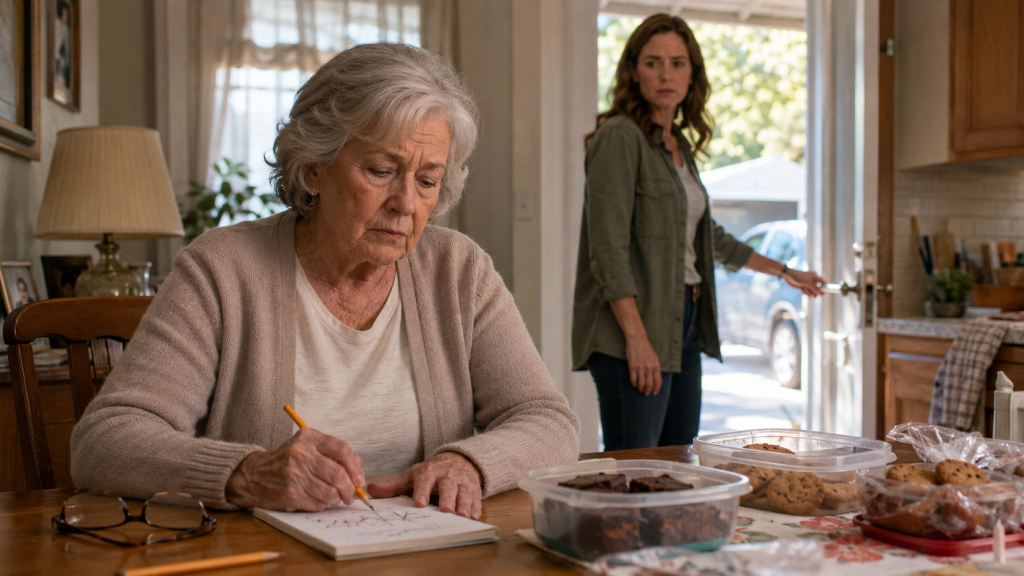
She just sat at our kitchen table, opened her little notebook, and crossed out four weeks of unpaid wages with a pencil.
Line by line.
Day by day.
Eighty dollars.
Eighty dollars.
Eighty dollars.
Twenty days of work.
One thousand six hundred dollars.
I stood in the doorway and watched her erase herself.
That was what it felt like.
Not just money.
Not just babysitting.
Claire had taken my mother’s time, energy, kindness, patience, and dignity, then laughed as if all of it had been worthless.
My mother’s hand trembled as she closed the notebook.
“Maybe I was foolish,” she whispered.
Something inside me snapped.
Because Claire thought kindness meant weakness.
And the first thing I did that night was walk straight into our garage.
My name is Rachel Monroe.
I am forty-six years old, divorced, childless by choice, and not easily intimidated.
But my mother, Helen Monroe, is the softest woman God ever made.
She is the kind of woman who still writes birthday cards by hand.
The kind who saves grocery coupons for neighbors.
The kind who gives the bigger piece of cake to someone else and pretends she wanted the smaller one.
At seventy-three, she still wakes before sunrise.
She still makes tea in the old blue kettle my father bought her thirty years ago.
She still folds dish towels like guests might arrive at any moment.
And after Dad died, she became lonely in a quiet way.
Not dramatic.
Not helpless.
Just quieter.
So when our neighbor Claire asked if Mom could watch her six-year-old daughter, Sophie, for a few weeks, Mom was actually happy.
Claire lived three houses down from us in a bright yellow home with white shutters and a perfect front garden.
She was thirty-two, always rushing, always wearing gym clothes and sunglasses on top of her head.
Her daughter Sophie was sweet.
Curly hair.
Big brown eyes.
Always carrying a stuffed rabbit with one floppy ear.
Claire told us she had just started a new job and needed temporary help until her after-school program opened.
“I can pay eighty dollars a day,” Claire said at our kitchen table, stirring sugar into coffee she never finished. “Monday through Friday. Just four weeks.”
Mom smiled immediately.
“That’s too much.”
“No, no,” Claire said quickly. “You’ll be helping me so much. I insist.”
I remember looking at Claire across the table.
Something about how fast she insisted bothered me.
But Mom looked so pleased.
She had been missing a sense of purpose.
And I thought, maybe this would be good for her.
I was wrong.
The first week, Mom arrived at Claire’s house at 6:45 every morning.
She made Sophie breakfast.
Packed her lunch.
Walked her to kindergarten.
Picked her up.
Helped with homework.
Made little crafts with paper plates and buttons.
Sometimes Claire came home late, so Mom stayed late.
Sometimes the sink was full, so Mom washed dishes.
Sometimes Sophie’s laundry was piled on the couch, so Mom folded it.
When I asked why she was doing housework too, Mom waved me off.
“It’s nothing. Claire is overwhelmed.”
At the end of the first week, I asked, “Did she pay you?”
Mom smiled gently.
“Her paycheck is late. She said next week.”
I frowned.
“Mom.”
“It’s only one week.”
The second week passed.
No payment.
The third week.
Still nothing.
By then, Mom had spent her own money on snacks because Sophie did not like Claire’s cereal.
She bought strawberries.
Yogurt tubes.
Animal crackers.
Sticker books.
A new box of crayons because Sophie’s old ones were broken.
“Mom, she owes you over a thousand dollars,” I said.
“I know.”
“You need to stop going until she pays you.”
Mom looked down.
“But Sophie will be alone.”
And that was how Claire trapped her.
Not with force.
With guilt.
She knew my mother would not abandon a child.
She knew Mom would keep showing up because Sophie needed breakfast and a safe walk to school.
She used my mother’s heart like a leash.
On the last Friday, Mom came home earlier than usual.
She walked into the kitchen, removed her shoes, and set her purse on the chair.
Something about her face made me put down my coffee.
“What happened?”
She opened her notebook.
Her little babysitting notebook.
Every date was written carefully.
Time arrived.
Time left.
Meals.
Activities.
Claire paid?
Blank.
All blank.
Mom held the pencil and drew a line through the first unpaid week.
Then the second.
Then the third.
Then the fourth.
“Mom,” I said softly.
“She said I should have had a contract,” Mom whispered.
My chest tightened.
“What?”
“She said at my age, I should know better.”
My fingers curled around the edge of the counter.
“What else did she say?”
Mom hesitated.
That hesitation told me there was more.
“She said it wasn’t like I had anything better to do.”
I felt heat rise behind my eyes.
My mother gave a sad little smile.
“I suppose she’s right. I don’t work anymore.”
“No,” I said.
My voice came out sharper than I meant.
Mom flinched.
I softened immediately.
“No, Mom. She is not right. She is cruel.”
“She’s young. Maybe she’s stressed.”
“Do not make excuses for someone who humiliated you.”
Mom looked at her notebook.
“I should have asked for something in writing.”
I stared at those crossed-out lines.
Every single one felt like a slap.
Then I turned and walked toward the garage.
“Rachel?” Mom called.
“I’ll be back.”
Our garage was half storage, half graveyard of things my father refused to throw away.
Old paint cans.
Fishing rods.
Christmas lights.
Boxes of tools.
And one small cardboard box labeled SECURITY CAMERAS.
Two years earlier, after someone stole packages from our porch, I had installed cameras around the house.
I bought extras but never used them.
Now I pulled the box off the shelf and wiped dust from the top.
Inside were two battery-powered cameras, a doorbell recorder, memory cards, and a small microphone attachment from a home office setup.
I stood there in the smell of cardboard, oil, and old wood, smiling for the first time that day.
Claire wanted a contract.
Fine.
I would give her documentation.
That night, I sat at the dining table with Mom’s notebook, my laptop, and every message Claire had sent.
There were plenty.
Claire: Can your mom come early tomorrow? Big meeting.
Claire: Sorry, running late again. Tell Helen thank you.
Claire: Sophie loved the muffins!
Claire: I’ll pay Friday, promise.
Claire: Paycheck delay. Monday for sure.
Claire: You’re both lifesavers.
Every message proved Claire knew this was work.
Every late pickup proved extra hours.
Every promise to pay was its own little confession.
I printed them all.
Then I photographed Mom’s notebook.
Then I checked Claire’s public social media.
That was where the story became uglier.
During the same four weeks she claimed her paycheck was late, Claire had posted:
New nails.
New salon.
Bottomless brunch.
A weekend spa day.
A designer purse with the caption, “Sometimes you have to treat yourself.”
I stared at the screen until my jaw ached.
She had money.
She just did not think my mother deserved any of it.
The next morning, I made copies of everything and placed them in a folder.
Mom watched me from the kitchen table, worried.
“Rachel, don’t make trouble.”
“She made trouble when she stole from you.”
“She didn’t steal.”
“Yes, she did. She stole labor.”
Mom folded her hands.
“I don’t want a fight.”
“I know.”
“Then what are you doing?”
I slid the folder into my bag.
“I’m giving her the contract she wanted.”
Claire answered her door at 9:00 a.m. wearing a white robe and holding a coffee mug.
She smiled when she saw me.
Not warmly.
Amused.
“Rachel. Is your mom okay?”
“She’s fine.”
“Good. Because Sophie was asking about her. Honestly, your mother is so attached to that child.”
I stepped onto the porch.
“Claire, you owe my mother one thousand six hundred dollars.”
Her smile thinned.
“I already explained that to Helen.”
“You explained nothing. You mocked her.”
Claire sighed dramatically.
“Look, I’m sorry if she misunderstood. But there was no formal contract. She was helping out.”
I opened the folder.
“Then why did you text me that you would pay Friday?”
Her face changed slightly.
I showed her the first printout.
Then the second.
Then the third.
“Why did you say ‘paycheck delay’ if there was no payment agreement?”
Claire’s eyes flicked toward the street.
“Lower your voice.”
“I’m speaking normally.”
“I don’t appreciate being ambushed at my home.”
“My mother did not appreciate being used for four weeks.”
Claire’s jaw tightened.
“She should have known better.”
That sentence did it.
I took one step closer, close enough that she could see I was not there to negotiate.
“No. You should have known better.”
Claire laughed.
“What are you going to do? Sue me over babysitting?”
“Yes.”
The laugh died.
“And file a wage complaint. And send your messages to the neighborhood association since you recruited my mother through the community board. And notify every parent in the local babysitting group that you refuse to pay caregivers unless they have legal paperwork.”
Claire’s face went pale.
“You wouldn’t.”
“Try me.”
She gripped her coffee mug.
“This is harassment.”
“No. This is a bill.”
I handed her an invoice.
Helen Monroe Babysitting Services.
Twenty days.
Eighty dollars per day.
Total: $1,600.
Due immediately.
Claire stared at it like I had handed her a snake.
“You made an invoice?”
“You said she should have had paperwork. Now she does.”
Her mouth opened.
Then a little voice came from behind her.
“Miss Helen isn’t coming back?”
Sophie stood in the hallway, holding her stuffed rabbit.
Her eyes were sad.
Claire turned sharply.
“Go to your room.”
Sophie flinched.
I saw it.
Small.
Fast.
Familiar.
Not fear like abuse.
But the kind of fear a child learns when adults turn cruel quickly.
My anger shifted shape.
Claire had used my mother, but Sophie was not part of it.
I crouched slightly.
“Hi, Sophie.”
She looked at me.
“Is Miss Helen mad at me?”
My heart hurt.
“No, sweetheart. She loves you very much. This is grown-up business.”
Claire snapped, “That’s enough.”
I stood.
“Pay my mother by 5 p.m., Claire.”
“Or what?”
“Or tomorrow morning, the entire neighborhood will know exactly how you treat elderly caregivers.”
She slammed the door.
I went home.
Mom was waiting near the window.
“How did it go?”
“She has until five.”
Mom’s face crumpled with worry.
“Oh, Rachel.”
“Mom, she owes you.”
“But Sophie—”
“Sophie is not the debt.”
Mom sat down slowly.
“I don’t want that little girl to think I abandoned her.”
I softened.
“She won’t. I told her you love her.”
Mom looked away.
A tear finally slipped down her cheek.
“She was hungry some mornings,” she whispered.
“What?”
“Sophie. Sometimes there wasn’t much food ready. That’s why I brought breakfast.”
My stomach dropped.
“What else?”
Mom hesitated.
“She asked me once if she could come live here.”
The room went quiet.
Suddenly, the unpaid wages were not the only problem.
At 4:58 p.m., my phone rang.
Claire.
I put it on speaker so Mom could hear.
“You people are insane,” Claire said.
“Good evening, Claire.”
“I can pay half.”
“You owe all of it.”
“I don’t have it right now.”
“That did not stop you from getting your nails done last week.”
Silence.
Then she said, “You stalked my page?”
“You posted publicly.”
Claire hissed, “Fine. I’ll send it.”
At 5:06, Mom’s phone chimed.
A payment notification.
$1,600.
Mom stared at it like she did not understand.
“She paid,” she whispered.
“Yes.”
“She really paid.”
I nodded.
But then another message came through.
From Claire.
There. Happy? Tell your mother never to come near my child again.
Mom’s face fell.
I took her phone gently.
“Do not answer.”
But Mom covered her mouth.
“That poor child.”
For two days, things were quiet.
Too quiet.
Then on Monday morning, Sophie appeared at our front door alone.
Barefoot.
In pajamas.
Holding her rabbit.
My mother found her first.
“Sophie?”
The little girl burst into tears.
“Mommy said I ruined everything. She said Miss Helen doesn’t love me because I cost too much.”
Mom pulled Sophie inside immediately.
I called Claire.
No answer.
Then I called the non-emergency police line and requested assistance.
Not because I wanted to punish Claire for being overwhelmed.
Because a six-year-old had crossed three lawns barefoot before breakfast.
An officer arrived within twenty minutes.
Claire arrived ten minutes later, furious, hair wet, robe tied badly.
“How dare you call the police?”
I stood on the porch.
“Your six-year-old daughter came here alone.”
“I was in the shower!”
“Then why was your front door unlocked?”
Claire glared at Sophie, who hid behind my mother.
“This is what happens when people put ideas in children’s heads.”
The officer stepped in.
“Ma’am, please calm down.”
Claire pointed at my mother.
“That old woman is obsessed with my daughter!”
My mother went white.
I stepped forward.
“Choose your next words very carefully.”
Claire sneered.
“What, Judge Rachel? Lawyer Rachel? You think because you made a little invoice, you’re important?”
“No,” I said. “But the officer’s body camera is recording you calling the woman who fed your child for four weeks obsessive.”
Claire’s mouth closed.
The officer looked toward Sophie.
“Has this happened before?”
Sophie whispered, “Sometimes Mommy sleeps and I make cereal.”
Claire snapped, “She is exaggerating.”
But the officer wrote it down.
Child protective services became involved after that.
Not because of me.
Because of Sophie’s statements.
Because of the unpaid childcare arrangement.
Because of the messages.
Because of the fact that a young child had wandered to our house alone.
Claire tried to tell everyone my mother was confused due to age.
That was her biggest mistake.
At the community meeting two weeks later, Claire stood up and said, “Helen is a sweet woman, but elderly people sometimes misunderstand arrangements.”
My mother lowered her eyes.
I stood.
“Actually, I have the arrangement in writing.”
I placed the printed messages on the table.
Then the invoice.
Then the payment receipt.
Then screenshots of Claire admitting she owed the money.
The room went silent.
Claire’s cheeks burned red.
I did not stop.
“My mother is not confused. She documented every day, every hour, every meal, and every late pickup. She cared for a child who was often hungry, often lonely, and afraid she was unloved.”
A woman near the back gasped.
Claire stood so quickly her chair scraped the floor.
“You’re trying to ruin me.”
“No,” I said. “You tried to ruin my mother because you thought age made her powerless.”
I looked around the room.
“She is seventy-three. She has arthritis in both hands. She lives on a fixed income. And still, she brought food from her own kitchen to care for a child whose mother promised payment and then mocked her for asking.”
Mom whispered, “Rachel, enough.”
But I shook my head.
“No, Mom. Not enough. Not this time.”
Claire was removed from the neighborhood childcare board.
The local babysitting group banned her from hiring through their page.
CPS required her to complete parenting support classes after their investigation found neglect concerns, though Sophie remained with her under supervision and follow-up visits.
And my mother?
My mother became famous in the neighborhood.
Not in a loud way.
In a beautiful way.
Parents started bringing flowers.
A retired teacher invited her to volunteer at the library reading hour.
One mother apologized because she had once laughed at Claire’s joke about “free grandma labor.”
Mom accepted every apology with grace.
Too much grace, in my opinion.
But that was who she was.
A month later, we saw Sophie at the library.
She ran to my mother and threw her arms around her waist.
“Miss Helen!”
Claire stood near the doorway, looking embarrassed.
She had changed.
Not transformed into a saint.
Real life is not that simple.
But quieter.
Less sharp.
She walked over and said, “Sophie wanted to see you.”
Mom looked at her carefully.
Claire swallowed.
“I shouldn’t have said what I said.”
“No,” Mom replied. “You should not have.”
Claire’s eyes filled.
“I was ashamed. I couldn’t keep up. Then I made it your fault.”
Mom was silent for a long time.
Then she said, “You hurt me. But worse, you hurt Sophie by making love sound like a transaction.”
Claire nodded, crying now.
“I know.”
Mom took Sophie’s hand.
“Then be better for her.”
That was all.
No dramatic forgiveness.
No hug.
No clean ending tied with ribbon.
Just the truth.
Later that night, Mom opened her little notebook again.
I watched from the doorway, worried she was looking at those crossed-out pages.
Instead, she turned to a new page and wrote:
Library reading hour.
Wednesday.
No charge.
Then she paused, smiled slightly, and added:
Because I chose it.
That was the difference.
Kindness freely given is beautiful.
Kindness demanded, manipulated, and unpaid is exploitation.
My mother had always known how to give.
She just had to remember she was allowed to stop.
The money stayed in her account for a while.
She did not spend it immediately.
Then one Saturday, she asked me to drive her to the garden center.
She bought roses.
Not cheap ones.
Beautiful pale pink roses for the front yard.
When I teased her about spending Claire’s money on flowers, she smiled.
“No,” she said. “I’m spending my money on something that will bloom.”
We planted them together near the porch.
Her hands were slow, but steady.
As she patted soil around the roots, she looked peaceful in a way I had not seen since before Dad died.
“Rachel,” she said softly.
“Yes?”
“Thank you for fighting for me.”
I swallowed hard.
“You fought for everyone else your whole life. It was my turn.”
She reached over and squeezed my hand.
A few weeks later, the roses opened.
Soft pink.
Bright.
Stubborn.
Every time Claire passed our house after that, she saw them.
So did the rest of the neighborhood.
And maybe they only looked like flowers to everyone else.
But to me, they were a sign.
My mother’s kindness was not weakness.
Her age was not emptiness.
Her time was not worthless.
And any person foolish enough to mistake her gentle heart for an unpaid service would have to get through me first.
Because that night in the garage, when I opened that old security camera box, I thought I was going to get revenge.
But what I really found was proof.
Proof that my mother had worked.
Proof that Claire had lied.
Proof that dignity can be defended.
And proof that sometimes the quietest woman in the room is not helpless.
She is simply waiting for someone to say what she has been too kind to say for herself.
THE END! THANKS FOR READING!