

My name is Amber Mitchell. I was sixty-seven years old when I finally learned that some people only call your presence “too much” until your help disappears with it.
The message came at 9:45 on a rainy Tuesday night.
I was standing at my kitchen counter waiting for chamomile tea to steep when my phone buzzed beside the sugar bowl.
I expected a picture of my grandson Leo.
Instead, I saw Sarah’s name.
Mom, David and I have decided we need real distance from you. Your negativity and constant involvement have become too much. Please respect our decision and don’t contact us anymore.
I read it twice.
The language sounded more like my son-in-law David than my daughter. He loved phrases like “healthy boundaries” and “emotional space” whenever he wanted to end a conversation he didn’t like.
But the message came from Sarah’s phone.
She had sent it.
That mattered.
For years, I had swallowed little moments because I wanted peace.
The rolled eyes when I stayed too long.
The irritated tone if I asked when I could see Leo.
The calls that usually began with, “Mom, we have a problem.”
I kept telling myself they were busy.
Young families were stressed.
David was trying to build a business.
Sarah was working part-time.
A mother helps.
So I did.
Every month, $1,200 automatically left my account to help with their mortgage.
Another $450 went toward the SUV.
I was also paying most of the family phone plan.
I didn’t live extravagantly.
My pension was modest. I stretched groceries, delayed repairs, and wore the same winter coat until the lining had been stitched twice.
But Sarah was my only daughter.
Leo was my grandson.
I thought helping them meant helping my family.
That night, though, I stared at the words:
Please don’t contact us anymore.
Then I opened my banking app.
Mortgage assistance: $1,200.
Vehicle payment: $450.
I deleted the first recurring transfer.
Then the second.
I logged into the family phone account and scheduled Sarah and David’s lines to separate from mine at the end of the billing cycle.
I left Leo’s little smartwatch connected.
He was nine.
None of this was his decision.
My reply to Sarah was simple.
“No problem. I’ll respect your request. I’ll also stop the automatic payments I’ve been covering for your house and car.”
I pressed send.
The first call came less than three minutes later.
Sarah.
I watched her name flash across the screen.
I did not answer.
Thirty seconds later, David called.
Then Sarah again.
Then David.
By the fifth call, I turned the phone face down and carried my tea into the living room.
At 10:07, another message arrived.
Mom, this isn’t what we meant. Please answer.
I stared at it.
Apparently their boundary had an emergency clause.
Another message came almost immediately.
The mortgage is due Friday. We already budgeted around your transfer.
I sat back against the sofa.
There it was.
Not, I’m sorry.
Not, Maybe we were too harsh.
Not even, Can we talk?
The mortgage is due Friday.
Something inside me became very still.
They had not expected me to respect their request.
They had expected me to disappear emotionally while remaining financially useful.
At 10:15, David sent me a long message.
He accused me of being manipulative.
Vindictive.
Financially abusive.
He said I was proving exactly why they needed boundaries.
That one almost made me laugh.
For seven years, I had never once demanded anything in return for those payments.
I had never required Sunday dinners.
Never demanded holidays.
Never threatened to withdraw help if they disagreed with me.
I had simply paid because Sarah once cried at my kitchen table and said she was afraid they would lose their house.
So I helped.
And then I kept helping long after the emergency ended.
My phone rang again.
This time, the number was unfamiliar.
I nearly ignored it.
Something made me answer.
“Hello?”
“Mrs. Mitchell?”
“Yes.”
“My name is Karen Dobbs. I’m calling from Franklin County Title Services. I apologize for the late call. I’m working an extended fraud-verification shift. I’m trying to confirm a transfer request involving a 2023 Lexus RX registered with you as a lienholder.”
I straightened.
“I’m sorry. What transfer request?”
There was a pause.
“A request was submitted this afternoon to release your secured interest in the vehicle and issue a clean title to David Coleman.”
My hand tightened around the phone.
“I did not submit anything.”
Karen’s voice changed immediately.
“Then I’m very glad I reached you.”
Two years earlier, David’s credit had been too poor to qualify for the SUV he wanted.
Sarah had called me in tears because their old car had broken down.
I had loaned them the down payment through a written family loan agreement prepared by my attorney, Marjorie Bell.
Marjorie had insisted on recording my interest properly.
At the time, David had complained.
“It’s family, Amber. Do we really need paperwork?”
Marjorie had looked him directly in the eye.
“Paperwork is especially useful with family.”
I had forgotten about the lien.
David apparently had not.
Karen explained that someone had submitted a notarized release bearing my name.
The signature looked close enough to trigger processing, but an employee had noticed that the identification number attached to the notarization did not match the one in the county’s earlier records.
They had flagged it.
“Do you recognize the notary listed as Marcus Allen Price?” Karen asked.
“No.”
“Do not confirm anything by email tonight,” she said. “I’m placing a fraud hold on the request. Tomorrow morning, you should contact your attorney.”
My tea sat untouched on the coffee table.
“Can you send copies of the submitted documents to my attorney?”
“With your written authorization, yes.”
“I’ll provide it first thing.”
When the call ended, I remained seated in silence.
The rain tapped against my windows.
My daughter had told me I was too involved in her life.
Meanwhile, her husband had apparently tried to remove my legal interest from a vehicle without telling me.
At 10:31, David called again.
This time I answered.
“Amber,” he said quickly, “finally. We need to clear this up.”
I said nothing.
“I don’t know why you’re acting like this,” he continued. “Sarah is devastated.”
“That’s unfortunate.”
He hesitated.
He was used to me softening.
“Look, nobody said we don’t appreciate what you do.”
“Your wife told me not to contact you.”
“She meant emotionally.”
I actually pulled the phone away from my ear for a second.
“Emotionally?”
“You know what I mean. We need breathing room. You call too often. You ask too many questions. You show up with groceries without checking first.”
“I brought groceries because Sarah asked me to.”
“That’s not the point.”
“What is the point, David?”
“The point is that you shouldn’t punish Leo because you’re offended.”
“I haven’t involved Leo.”
“You’re stopping payments that keep a roof over his head.”
I looked toward the framed photograph on my bookshelf.
Leo was seven in it, missing two front teeth, holding a blue ribbon from his school science fair.
“I’m not taking anything from Leo,” I said. “I’m stopping gifts to two adults who told me not to contact them.”
“It’s not a gift if we depend on it.”
That sentence told me more than David intended.
I lowered my voice.
“Did you submit paperwork today to remove my lien from the Lexus?”
Silence.
Not confusion.
Not surprise.
Silence.
Then he said, “I don’t know what you’re talking about.”
“Yes, you do.”
“That’s ridiculous.”
“Franklin County Title Services called me.”
Another silence.
Longer this time.
Then his tone changed.
“You’re making a huge deal out of an administrative mistake.”
“Whose mistake?”
“Our finance guy was cleaning up some paperwork.”
“Your finance guy forged my signature?”
“No one forged anything.”
“I’m calling my attorney tomorrow.”
“Amber, don’t be dramatic.”
I hung up.
For the first time in years, I slept with my phone on silent.
The next morning, I was sitting outside Marjorie Bell’s office ten minutes before she opened.
Marjorie was seventy-one, silver-haired, sharp-eyed, and incapable of pretending nonsense was complicated.
She had handled my husband Robert’s estate after his death twelve years earlier.
She had also drawn up every financial agreement involving Sarah and David.
When I showed her the messages, she read them without comment.
Then she looked through the title documents Karen had emailed.
Her expression hardened.
“Amber, this isn’t an administrative error.”
“I know.”
“This appears to be a forged lien release.”
“I know.”
“And the notary seal may also be fraudulent.”
I swallowed.
“Why would David do that?”
Marjorie continued reading.
“Most likely because he wants to sell or refinance the vehicle without paying what is secured against it.”
“He still owes me almost twenty-one thousand dollars.”
“Exactly.”
She opened another file.
“Before we discuss the car, there is something else you need to remember.”
She placed a document in front of me.
It was the agreement we had signed when Sarah and David bought their house.
I remembered the eighty-thousand-dollar down payment.
I remembered David saying they would never qualify without it.
I remembered Sarah crying when I told her I would help.
What I had forgotten was how Marjorie structured the money.
Forty thousand dollars had been a gift to Sarah.
The remaining forty thousand was a recorded private loan, payable upon sale, refinance, or transfer of the property.
I stared at the paper.
“David hated this.”
“Yes,” Marjorie said.
“He said I didn’t trust him.”
Marjorie gave me a dry look.
“He is currently accused of forging a lien release.”
That afternoon, she contacted the county, the vehicle lender, and the title office.
Then she sent Sarah and David formal written notice that I would no longer provide voluntary monthly support.
She also reminded them that the existing agreements on the car and house remained legally enforceable.
At 4:12, Sarah called.
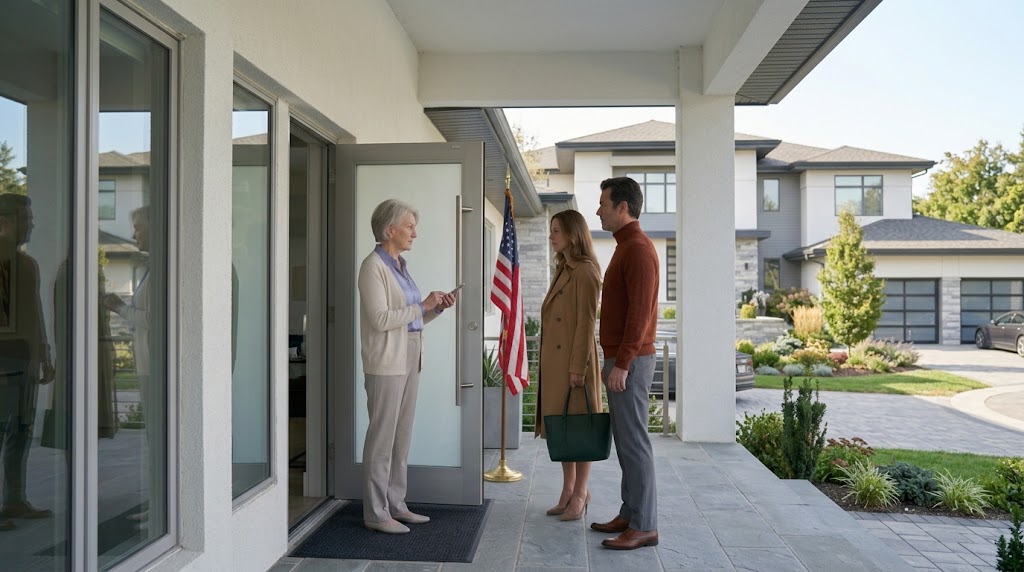
I watched it ring.
Then I remembered her request.
Please don’t contact us anymore.
I let voicemail answer.
Five minutes later, I received a message.
Mom, please stop hiding behind lawyers.
I stared at those words.
For years, when David wanted formal documents, contracts, invoices, or business arrangements, he called it “being responsible.”
When I wanted the same protection, I was hiding behind lawyers.
I didn’t respond.
Friday came.
For the first time in almost six years, $1,200 remained in my checking account instead of disappearing toward Sarah’s mortgage.
I looked at the balance three times.
It was strange how guilty I felt seeing my own money still there.
That weekend, I replaced the broken seal around my back door.
The repairman charged $240.
I had postponed that repair for fourteen months.
The following week, I bought new tires.
Not luxury tires.
Just safe ones.
I had been driving on nearly bald tread because I kept telling myself I could make them last one more season.
After the mechanic handed me my keys, I sat behind the steering wheel and cried.
Not because of Sarah.
Because I suddenly understood how long I had been treating my own needs as optional.
Robert would have hated that.
My husband had worked forty-three years as an electrician.
He had been careful with money, but he had never believed sacrifice should become a personality.
When he was dying, he made me promise something.
“Help Sarah when she needs you,” he had said. “But don’t disappear inside her life.”
For years, I remembered the first half and forgot the second.
Ten days after Sarah’s message, someone knocked hard on my front door at 7:30 in the morning.
I looked through the window.
David.
He was wearing a navy suit with no tie and pacing on my porch.
I did not open the door.
He knocked again.
“Amber! I know you’re home.”
I called through the closed door.
“You asked for distance.”
“Open the door. This is ridiculous.”
“No.”
“We need to discuss the Lexus.”
“My attorney is handling it.”
“That’s exactly the problem!”
His voice rose.
A neighbor across the street opened her curtain.
David lowered his volume.
“You’re embarrassing Sarah.”
“I’m standing inside my own house.”
“Then open the door.”
“No.”
He slapped his palm against the frame.
“We have a buyer for the Lexus. We need the title cleared.”
“So you did know about the transfer.”
He froze.
Even through the glass, I saw the realization hit him.
“I mean—we were considering selling it.”
“With a forged release?”
“It wasn’t forged.”
“Then why did the county flag my signature?”
His jaw tightened.
“Sarah signed for you because she knew you would approve.”
My breath caught.
Sarah.
“Sarah signed my name?”
David looked away.
That was enough.
I did not argue.
I simply stepped back and called Marjorie.
By lunchtime, she had reported the admission to the appropriate investigator handling the title complaint.
Sarah called seventeen times that day.
I answered none of them.
Two evenings later, someone knocked again.
This time it was Sarah.
She was alone.
Her hair was pulled into a messy knot.
Her eyes were red.
I opened the door but did not invite her inside.
“You wanted no contact,” I said.
Her face crumpled.
“Mom, please.”
“Is Leo okay?”
“Yes.”
“Then what do you need?”
The question startled her.
Not, What’s wrong?
Not, Come inside.
What do you need?
She looked toward the driveway.
“We’re in trouble.”
“What kind?”
“Financial.”
I waited.
“David’s business lost two contracts,” she said. “Three months ago.”
That was news to me.
“He told me things would recover. Then payroll got tight. Then he started putting expenses on cards.”
“How much?”
“I don’t know exactly.”
“Sarah.”
“Maybe ninety thousand.”
I closed my eyes briefly.
“And the Lexus?”
“He wanted to sell it to cover business expenses.”
“So you signed my name.”
Tears filled her eyes.
“He told me it was just paperwork.”
“You are thirty-nine years old.”
“I know.”
“No, I don’t think you do.”
She flinched.
I had almost never spoken to her that way.
“Mom, I was scared.”
“So you forged my signature?”
“He said because you were family, you wouldn’t care.”
“I care.”
“I know that now.”
“And the message telling me not to contact you?”
Her eyes dropped.
“David wrote most of it.”
“But you sent it.”
She nodded.
“Why?”
Her answer took a long time.
“Because he said you were the reason I was unhappy.”
I almost laughed, but there was nothing funny about it.
“What did I do?”
“He said I always asked your opinion before making decisions. That you made him feel like he wasn’t the head of his own household. He said every time you helped financially, it gave you power over us.”
“Did I ever threaten you with money?”
“No.”
“Did I ever tell you what house to buy?”
“No.”
“What car to drive?”
“No.”
“Where Leo should go to school?”
“No.”
“Whether you should work?”
“No.”
She began crying harder.
“Then what power did I use?”
Sarah wiped her cheeks.
“I don’t know.”
I looked at my daughter and felt two things at once.
Love.
And exhaustion.
They can exist together.
“I’ll always love you,” I said. “But I will not rescue you from consequences you created while pushing me out of your life.”
“We could lose the house.”
“Then you may need to sell it.”
Her face went white.
“Sell our home?”
“If you can’t afford it.”
“Leo loves that house.”
“Leo needs stable parents more than he needs a four-bedroom house.”
She stared at me.
Then she whispered, “You’ve changed.”
“No.”
I shook my head.
“I finally stopped confusing love with payment.”
Sarah left fifteen minutes later.
I cried after she drove away.
Of course I did.
There is a version of motherhood people don’t talk about enough.
The part where your grown child is hurting and you know you could temporarily soften the pain by hurting yourself instead.
The instinct never completely leaves.
But neither does arithmetic.
Their mortgage was $3,600 a month.
Their SUV cost nearly $900.
They had private-school tuition, club memberships, restaurant bills, subscriptions, vacations, and a lifestyle built on the assumption that someone else would always absorb the difference.
For years, that someone had been me.
Three days later, Marjorie called.
“Are you sitting down?”
I was.
“David attempted to refinance the house two months ago.”
My stomach dropped.
“Without telling me?”
“The lender discovered your recorded interest. He apparently claimed it had been satisfied.”
“It hasn’t.”
“I know.”
“Did he forge that too?”
“Not exactly. He submitted a letter stating you had agreed verbally to forgive the balance.”
“I never did.”
“There’s more.”
Of course there was.
Marjorie told me David’s business had been sued by a former partner.
Several vendors had filed collection actions.
A bank had already closed one of his credit lines.
The picture was becoming clear.
David had not wanted distance because I was too involved.
He wanted distance because questions were dangerous.
I had started asking why he needed money.
Why his business was suddenly “between contracts.”
Why Sarah had borrowed $5,000 from me for a roof repair, then posted photographs from a resort two weeks later.
Why the SUV always seemed to need another payment extension.
David had called those questions negativity.
Now I understood why.
The title investigation moved slowly but steadily.
Sarah eventually admitted in writing that she had signed my name at David’s direction.
Because I did not want my daughter prosecuted if it could be avoided, Marjorie worked with the investigators and the title office to correct the record without me pushing for the harshest possible outcome.
But I refused to lie.
I refused to say I had authorized the signature.
For the first time, Sarah had to stand inside a problem without me stepping between her and the consequences.
A month passed.
Then another.
The calls became less frequent.
The angry messages stopped.
I heard through a mutual friend that David had moved out.
I did not contact Sarah.
She had asked for distance.
I respected it.
Then, one Sunday afternoon in November, my doorbell rang.
Leo stood on my porch.
Sarah was beside him.
My grandson looked taller than he had two months earlier.
“Grandma!”
He threw himself into my arms.
I held him so tightly he laughed.
That laugh nearly broke me.
“I missed you,” he said.
“I missed you too.”
Sarah stood a few feet away, crying quietly.
“I should have brought him sooner,” she said.
I looked at Leo.
“Why don’t you go see whether the cookies I made are still in the kitchen?”
He ran inside.
Sarah and I remained on the porch.
“David and I are separating,” she said.
I nodded.
“He blamed me for the title problem.”
“You signed it.”
“I know.”
“He said if I had just convinced you to keep paying, none of this would have happened.”
I stared at her.
“Sarah, the problem was not that I stopped paying. The problem was that you had built a life you couldn’t afford without my money.”
“I know that now.”
“Do you?”
She took a breath.
“We listed the house.”
That surprised me.
“How do you feel about that?”
“Terrified.”
Then she gave a tiny, embarrassed laugh.
“And relieved.”
She explained that she had met with a financial counselor.
The house had enough equity to pay off the mortgage, repay my recorded loan, and leave Sarah with enough for a deposit on a smaller townhouse.
She had found full-time work at a medical office.
She was selling furniture.
The private school was gone.
So were the country club and expensive vacations.
“The Lexus is being sold properly,” she added.
“Good.”
“Your loan will be repaid from the sale.”
“Good.”
She hesitated.
“I’m not asking you to start giving me money again.”
I looked at her carefully.
“That’s the first thing you’ve said today that makes me believe things might actually be different.”
She nodded.
“I came to apologize.”
I waited.
Not because I wanted her to suffer.
Because I wanted to hear whether she understood what she was apologizing for.
“I’m sorry I sent that message,” she said. “I’m sorry I let David convince me that your concern was control. I’m sorry I took your help for granted. I’m sorry I signed your name. And I’m sorry I treated you like an inconvenience right up until I realized how much you were paying for.”
My eyes burned.
Sarah continued.
“You didn’t deserve that.”
“No.”
She looked startled.
In the past, I would have said, It’s okay.
It wasn’t okay.
So I didn’t erase her apology by pretending it was.
“No,” I repeated softly. “I didn’t.”
She cried.
I hugged her.
Forgiveness did not happen in that hug.
Not completely.
But something opened.
A door, perhaps.
Not the old door where she walked in carrying bills and I opened my checkbook.
A different one.
Over the next several months, Sarah rebuilt her life.
Not quickly.
Not gracefully.
Real change rarely looks graceful.
She moved into a two-bedroom townhouse ten minutes from Leo’s school.
She drove a used Honda that cost less than one quarter of what the Lexus had.
She worked forty hours a week.
She cooked more.
She canceled things.
She learned to say, “I can’t afford that,” without acting as if the sentence were a public humiliation.
David did not adapt as well.
His business eventually closed.
During divorce proceedings, Sarah learned that his debts were worse than she knew.
He had opened multiple credit cards.
He had borrowed against business equipment.
He had even taken a personal loan from his brother.
For months, he had been moving money between accounts to create the appearance of stability.
When things started collapsing, he looked for assets he could convert quickly.
The SUV was one.
The house was another.
My monthly support had not caused their lifestyle.
But it had hidden how unsustainable it was.
That realization hurt.
I had believed I was helping them stay afloat.
In reality, I had helped delay the moment they had to learn how to swim.
The house sold in February.
My private loan was repaid in full.
When the check arrived, I sat at my kitchen table staring at it.
Forty thousand dollars.
Money I had mentally written off years ago.
For a moment, I thought about putting some of it back into Sarah’s hands.
Then I heard Marjorie’s voice in my head.
Do not convert consequences into rewards.
So I deposited it.
I replaced my furnace.
I repaired the bathroom floor.
I bought a new winter coat.
A good one.
For my sixty-eighth birthday, I did something I had talked about doing with Robert but never had.
I booked a train trip through the Canadian Rockies.
When I told Sarah, she smiled.
“Dad would love that.”
“He would.”
“You’re really going alone?”
“Yes.”
She laughed.
“Look at you.”
There was affection in it.
No judgment.
While I was away, Sarah sent me photographs of Leo’s baseball games.
She did not ask for money.
She did not complain when I missed one.
She simply wrote, He got two hits today. He says Grandma brings him luck.
When I returned, Leo spent the weekend with me.
Saturday morning, he sat at the kitchen table eating pancakes while I tried to repair the buckle on his backpack.
“Grandma?”
“Yes?”
“Why didn’t we see you for a while?”
I stopped.
Children always ask the questions adults hope they forget.
“Your mom and I had a disagreement.”
“Was it about money?”
I looked at him.
“Why do you ask?”
“Dad said you took our money away.”
I put the backpack down.
“Leo, I never took your money.”
“He said we had to move because of you.”
My heart tightened.
I chose my words carefully.
“Your old house cost more money than your mom and dad could comfortably afford. I helped for a while, but eventually I stopped. Adults are responsible for paying for the lives they choose.”
He thought about that.
“Mom says the townhouse is better because she doesn’t cry in the laundry room anymore.”
I swallowed.
“I think that matters more than having a big house.”
He nodded.
Then he covered his pancakes in an unreasonable amount of syrup.
Children, fortunately, know when to move on.
The title investigation concluded later that spring.
Because the fraudulent transfer had been stopped before the vehicle changed hands, and because Sarah cooperated fully, the matter was resolved without the criminal disaster I had feared.
David received far less grace.
Investigators uncovered evidence that he had used similar false documents in connection with his business financing.
Those matters had nothing to do with me.
For once, I did not ask for details.
His choices belonged to him.
So did their consequences.
A year after Sarah’s original message, she invited me to dinner.
Not because she needed anything.
Just dinner.
Her townhouse smelled like roasted chicken and garlic.
Leo had set the table.
There were only three plates.
After dessert, Sarah brought out her phone.
“I found something,” she said.
She showed me a screenshot.
The message.
Mom, David and I have decided we need real distance from you…
I felt my stomach knot even after all that time.
“I almost deleted it,” she said.
“Why didn’t you?”
“Because I need to remember who I was when I sent it.”
“You don’t have to punish yourself forever.”
“I’m not.”
She looked at me.
“I just don’t want to rewrite history because things are better now.”
That was one of the most mature things I had ever heard her say.
She continued.
“I blamed David for writing most of it. And he did. But I pressed send. I wanted the comfortable parts of having you as my mother without the responsibility of treating you like a person.”
I blinked back tears.
“I wanted your money, your babysitting, your groceries, your emergency help. But I didn’t want questions. I didn’t want advice. I didn’t want you noticing things I was trying not to notice.”
I reached across the table.
She took my hand.
“I’m sorry,” she whispered.
“I know.”
This time, I could say something I had not been ready to say months earlier.
“I forgive you.”
Her eyes filled.
“But,” I added, “forgiveness doesn’t mean we go back.”
She smiled through her tears.
“I don’t want to go back.”
Neither did I.
Going back would have meant becoming the old Amber again.
The woman who postponed dental work because her daughter wanted landscaping.
The woman who drove on dangerous tires while helping pay for a luxury SUV.
The woman who accepted disrespect because she feared losing access to her grandson.
The woman who mistook being needed for being loved.
I did not want to be her anymore.
The strangest thing was that once I stopped financing Sarah’s life, our relationship became more equal.
When she asked my opinion, I knew she genuinely wanted it.
When she invited me over, I knew it wasn’t because a bill was sitting on the counter.
When she called, sometimes she asked how I was before telling me about herself.
That sounds like such a small thing.
It wasn’t.
One evening, nearly eighteen months after everything began, Sarah called while I was planting herbs on my back patio.
“Mom?”
“Yes?”
“Can I ask you something?”
I smiled.
“Depends.”
She laughed.
“I got a small raise.”
“That’s wonderful.”
“I want to start an emergency fund. How much should I save?”
I sat back in my chair.
For most of her adult life, Sarah had asked me to solve emergencies.
Now she wanted to prepare for them herself.
“Start with one month of expenses,” I said. “Then work toward three.”
“Even if it takes a long time?”
“Especially if it takes a long time.”
She was quiet.
“Dad would be proud of me, wouldn’t he?”
I looked toward the rosebush Robert had planted beside the fence.
“Yes,” I said. “He would.”
Then Sarah surprised me.
“Are you proud of me?”
The old version of me would have rushed to reassure her.
Instead, I answered truthfully.
“I’m proud of what you’re doing now.”
She understood the difference.
“Fair enough.”
That summer, she saved her first thousand dollars.
She sent me a screenshot of the balance.
Not because she wanted praise.
Because she wanted to share the milestone.
I replied with three words.
Keep it growing.
She did.
As for David, I saw him only once after the divorce.
It happened outside Leo’s school.
He was leaning against an older sedan when I arrived for a spring concert.
He looked thinner.
Older.
When he saw me, his mouth tightened.
“Amber.”
“David.”
For a second, neither of us spoke.
Then he said, “You got what you wanted.”
I almost kept walking.
Instead, I stopped.
“What exactly do you think I wanted?”
He gave a bitter laugh.
“Sarah left me. The house is gone. My company is gone. I barely see my son.”
I looked at him.
“I wanted you to stop using my money while telling me I was unwelcome.”
“That’s not what happened.”
“It is exactly what happened.”
“You could have helped us.”
“I did. For years.”
“You know what I mean.”
Yes.
I did.
He meant I could have saved him from himself one more time.
I shook my head.
“No, David. I could have delayed this.”
Then I walked into the school.
Leo was standing onstage wearing a paper bow tie, looking terrified before his music performance.
When he spotted me beside Sarah, his face lit up.
That was the only thing that mattered.
Two years after the message that started everything, I sat on my porch drinking tea while Leo played basketball in the driveway.
Sarah arrived carrying takeout.
“Dinner,” she announced.
“I didn’t ask for dinner.”
“I know.”
She grinned.
“That’s how gifts work.”
I laughed.
She sat beside me.
For a while, we watched Leo miss shot after shot and insist each one was “almost in.”
Then Sarah became quiet.
“Do you ever wish you hadn’t stopped the payments?”
I thought carefully.
“No.”
“Not even because of everything that happened?”
“Everything was already happening. Stopping the payments just made it visible.”
She nodded slowly.
“I think about that a lot.”
“So do I.”
“I was so angry at you.”
“I know.”
“I thought you were trying to punish me.”
“I was respecting your request.”
She smiled faintly.
“That part was brutal.”
“It wasn’t intended to be.”
“I know that now.”
The sun slipped lower behind the houses.
Leo finally made a shot and shouted as if he had just won an NBA championship.
Sarah laughed.
Then she reached into her purse.
“I have something for you.”
She handed me an envelope.
Inside was a check for $2,400.
I stared at it.
“What is this?”
“The last of what I calculated you covered for me after I went back to part-time work but before everything fell apart.”
I pushed it toward her.
“Sarah, you don’t owe me for every gift I ever gave you.”
“I know.”
“Then keep it.”
“No.”
She put the envelope back in my hand.
“This isn’t because you demanded repayment.”
“I never did.”
“That’s why I want to do it.”
I looked at the check again.
“You have your emergency fund?”
“Six months.”
“Retirement contribution?”
“Automatic.”
“Credit card?”
“Paid off.”
I raised an eyebrow.
She laughed.
“Yes, Mom. I did my homework.”
I accepted the check.
Not because I needed it.
Because refusing would have taken something away from her.
Responsibility.
Pride.
The chance to give instead of receive.
“Thank you,” I said.
Her eyes filled slightly.
“You’re welcome.”
A week later, I used part of that money to take Leo and Sarah to a little lakeside cabin for three days.
Not because they needed rescuing.
Not because I felt guilty.
Not because anyone expected it.
Because I wanted to.
That difference changed everything.
There were no luxury restaurants.
No expensive excursions.
We grilled hamburgers.
Leo caught a fish so small he named it before throwing it back.
Sarah and I drank coffee on the dock before sunrise.
On our last morning, she rested her head against my shoulder.
“I’m glad you didn’t beg me to change my mind that night,” she said.
I looked at her.
“Really?”
“If you had, I probably would have felt powerful. I would have thought I was right.”
“And when I stopped the payments?”
“I thought you were cruel.”
She smiled sadly.
“Then I realized I had told my mother to disappear while expecting her bank account to stay.”
I squeezed her hand.
“That was a difficult realization.”
“It was necessary.”
For most of my life, I believed keeping a family together meant absorbing whatever might tear it apart.
Harsh words.
Unfair expectations.
Disrespect.
Money problems.
Other people’s mistakes.
I thought if I could carry enough weight, everyone else could remain comfortable.
But comfort is not the same thing as love.
Sometimes helping people avoid every consequence does not protect a relationship.
Sometimes it slowly poisons it.
Sarah had begun seeing me as a resource instead of a person.
I had begun measuring my value by how useful I could be.
David exploited both weaknesses.
Stopping those two automatic transfers did not destroy our family.
It exposed what our family had become.
And once it was exposed, we finally had a chance to build something healthier.
Today, Sarah still calls me several times a week.
Sometimes she asks for advice.
Sometimes she complains about work.
Sometimes she says nothing important at all.
Those are my favorite calls.
Leo is eleven now.
He still raids my refrigerator as if food tastes different at Grandma’s house.
I still spoil him sometimes.
But I no longer use gifts to buy closeness.
And Sarah no longer treats my help as part of her monthly budget.
My bank account is healthier.
My house is repaired.
I travel once a year.
I have a ridiculous red coat Sarah says makes me look ten years younger.
Maybe it does.
Maybe I simply stand differently now.
I used to believe saying no would make me selfish.
Instead, it taught the people around me that my love was not an unlimited financial contract.
More importantly, it taught me the same thing.
I still have Sarah’s original message.
Not because I’m angry.
Not because I want to hold it over her.
I keep it because every once in a while, I need to remember the woman who sat alone on a rainy Tuesday night, reading the words Please don’t contact us anymore and wondering whether respecting herself would cost her family.
It didn’t.
It cost me a role I should never have accepted.
The silent payer.
The convenient grandmother.
The mother who was welcome when a bill arrived and intrusive when she asked a question.
Losing that role was painful.
But underneath it, I found something better.
A daughter who had finally learned to stand on her own.
A grandson who knew I loved him whether or not money changed hands.
And a version of myself I should have protected a long time ago.
The night everything changed, I thought I was merely canceling two automatic payments.
I didn’t realize I was ending an entire pattern.
Sarah had told me she wanted distance.
So I gave it to her.
And when the money disappeared along with me, the phone started ringing.
But for once, I did not rush to answer.
I let the silence do what my explanations never could.
It showed them exactly what I had been carrying.
And it finally showed me that I was allowed to put it down.
💬THE END! THANK YOU FOR READING!