

My daughter-in-law told me I had two choices: hand over my life savings or leave her house.
My son stood only a few feet away.
He said nothing.
They believed I was a sixty-seven-year-old widow with nowhere else to go.
What neither of them knew was that two days earlier, I had already signed paperwork that made their threat completely powerless.
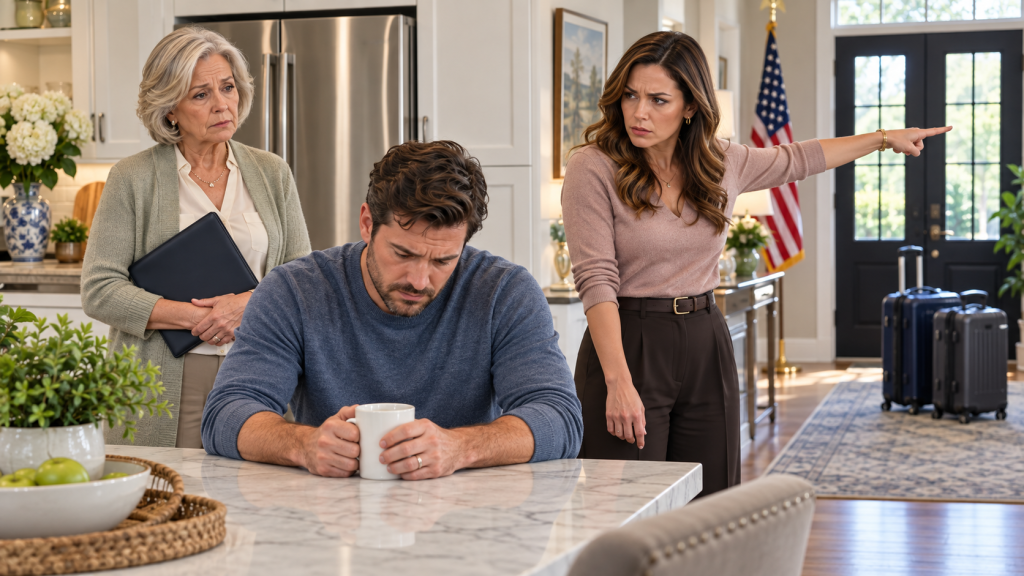
Lauren stood across from me in the kitchen with her arms folded tightly.
“You’ve been staying here without paying rent,” she said. “So either contribute your savings or start finding another place to live.”
Marcus stared into his coffee.
I waited for my son to speak.
To defend me.
To say anything at all.
He didn’t.
I bought most of the groceries.
Whenever the summer electric bill became expensive, I helped cover it.
I cooked dinner more often than anyone else.
I watched their dogs whenever they traveled.
And just a few months earlier, when Marcus couldn’t afford the insurance on his pickup, I quietly paid it for him.
Apparently, none of that counted.
Lauren stepped closer.
“We know you still have the money from selling your townhouse. We’re behind on the mortgage, the bank keeps calling, and it’s time you helped your family.”
I looked directly at Marcus.
“Is this what you want too?”
His jaw tightened.
“Mom, we’re just asking you to help.”
Lauren interrupted immediately.
“No. We’re asking her to be fair. She’s been living under our roof.”
Our roof.
Those two words told me everything I needed to know.
After my husband died, Marcus had practically begged me to sell our townhouse and come stay with them.
“You shouldn’t be alone right now,” he had said.
I believed him.
So I moved in carrying two suitcases, a box of old photographs, and enough grief to make every room feel colder than it actually was.
My savings were never supposed to be extra money.
They represented forty-two years of early mornings, careful budgeting, canceled vacations, packed lunches, used cars, repaired appliances, and one promise my husband Thomas and I had made long ago.
Whichever one of us lived longer would never have to beg anyone for financial security.
Lauren wanted me to pour that promise into her mortgage.
I looked at her.
“No.”
The entire kitchen went quiet.
Then she smiled.
It wasn’t a friendly smile.
“Fine. Then pack your things.”
Marcus finally looked up.
But even then, he didn’t stop her.
I nodded once.
“All right.”
Lauren’s smile grew wider.
She thought she had won.
She thought I was trapped.
What she didn’t know was that inside the locked trunk of my car sat a folder containing a signed purchase agreement.
A house across town.
Two bedrooms.
A small garden.
A bright kitchen.
And just enough room beside one window for Thomas’s favorite reading chair.
I had found the place weeks earlier.
The only reason I hadn’t moved sooner was because Marcus kept telling me I was safer living with family.
Two days before Lauren gave me her ultimatum, I finally signed the contract.
After that conversation, I had no reason left to hesitate.
Friday afternoon, I closed on the house.
Cash.
Saturday morning, a moving truck pulled into their driveway.
That was when Lauren’s confidence started to disappear.
She walked into the hallway just as two movers were carrying my dresser toward the front door.
“What’s happening?”
“I’m moving.”
Her eyes widened.
“You hired movers?”
“Yes.”
Marcus came rushing outside behind her.
“Mom, where are you going?”
I turned toward him.
“Home.”
He stared at me.
“You bought a house?”
“Yes.”
Lauren stepped into the doorway behind him.
For the first time since telling me to leave, she had absolutely nothing to say.
I looked at Marcus.
“Your wife made one thing very clear. This was never my home.”
Then I got into my car and drove away.
I didn’t cry until I reached my own driveway.
Not because I regretted leaving.
I cried because, for the first time since Thomas died, I was sliding a key into a front door that belonged entirely to me.
No one could threaten to take that away.
The house was modest.
It sat at the end of a quiet street lined with maple trees and older homes.
The kitchen cabinets were dated.
The upstairs carpet needed replacing.
There was a crack in one bathroom tile, and the garden had clearly been neglected for several seasons.
But there was sunlight everywhere.
Thomas loved sunlight.
He used to complain that every apartment we had rented in our twenties felt like a basement.
“If I ever get rich,” he once told me, “I’m buying windows.”
We never got rich.
But we learned how to save.
And I had bought myself windows.
That first evening, I carried Thomas’s framed photograph into the living room and placed it beside his old reading chair.
The chair had followed us through three houses, one apartment, and four decades of marriage.
The fabric was faded on one arm where he always rested his elbow.
For years I had suggested replacing it.
He refused.
“That chair knows things,” he would say.
Standing in my new living room, I ran my hand along the worn arm and whispered, “Well, now it has another house to learn.”
I slept on a mattress on the floor that night because the bedframe hadn’t been assembled yet.
I slept better than I had in months.
No footsteps outside my door.
No fear that Lauren was counting how many times I used the washing machine.
No feeling that I needed to justify occupying space.
The next morning I made coffee, sat on the back steps, and watched two squirrels fight over something in the grass.
It was the most peaceful argument I had witnessed in a long time.
Over the next several days, I unpacked slowly.
I put Thomas’s books on a shelf.
I hung our wedding picture in the hallway.
I placed a ceramic bowl my mother had given me on the kitchen counter.
At Marcus and Lauren’s house, I had kept most of my belongings boxed.
Lauren said their décor was “minimal.”
Apparently, family photographs and handmade pottery disrupted the aesthetic.
In my own house, I could be as aesthetically disruptive as I pleased.
I put photographs everywhere.
Thomas holding newborn Marcus.
Marcus at thirteen with braces.
Our first camping trip.
My parents on their fortieth anniversary.
I even displayed the ridiculous wooden duck Thomas carved during a retirement workshop.
Its head leaned sideways because he had misjudged the neck.
Thomas had proudly called it abstract.
Three weeks passed.
The quiet became something I looked forward to rather than feared.
Then my phone began ringing.
Marcus.
Lauren.
Marcus again.
I ignored the calls.
Part of me felt guilty.
Mothers are trained for guilt.
Children scrape their knees and somehow we wonder whether we should have chosen softer pavement.
But another part of me knew exactly what those calls meant.
They weren’t checking whether I had settled in.
They needed something.
Eventually Marcus left a voicemail.
His voice sounded strained.
“Mom… the mortgage payment bounced. The bank is threatening more action. We’ve got utility notices too. Lauren and I don’t know what to do. Please call me.”
He paused.
Then came the words that made me stare at my phone.
“We need you to come home.”
Home.
Three weeks earlier, Lauren had explained very clearly whose home it was.
I didn’t call back.
The following evening, headlights swept across my living-room wall.
A car stopped outside.
Marcus got out first.
Lauren followed.
She was holding a thick envelope.
Marcus knocked.
When I opened the door, neither looked comfortable.
Lauren’s voice was softer than usual.
“Please. We made a mistake.”
I looked at the envelope in her hands.
A bank logo was visible in the corner.
Then I looked at Marcus.
“No,” I said. “You made a decision.”
I reached toward the small table by the entrance and lifted a folder of my own.
Marcus saw the documents clipped inside.
His expression changed.
Because the first page proved something neither of them expected me to know.
Their mortgage crisis had started long before Lauren ever demanded my savings.
I didn’t invite them inside.
Marcus glanced at the papers.
“What is that?”
“A notice connected to your mortgage.”
His face went blank.
Lauren immediately spoke.
“How did you get that?”
“Public records. And documents Marcus left out months ago.”
Marcus frowned.
“Mom—”
I held up the first page.
“This problem started almost a year before I moved in.”
Neither answered.
“There were late payments before your father died.”
Marcus looked down.
Lauren’s shoulders stiffened.
I continued.
“You refinanced. Then you took another loan against the house.”
Lauren interrupted.
“We had expenses.”
“So does everyone.”
“You don’t understand.”
“I understand enough.”
I flipped to the next document.
“And I understand that Noah’s name appears in several related business filings.”
Lauren went completely still.
Marcus closed his eyes.
Noah was Lauren’s younger brother.
For years, Noah had been one good month away from success.
A food truck.
A landscaping service.
A sports-bar partnership.
Then custom furniture.
Then a home-remodeling business.
Every Thanksgiving, Noah had a new plan.
Every Christmas, someone else had apparently ruined the previous one.
Lauren always defended him.
“He’s creative.”
“He thinks differently.”
“He just needs support.”
What Noah needed, I eventually learned, was a family incapable of saying no.
I looked at Marcus.
“How much?”
“Mom…”
“How much money did you give him?”
Marcus rubbed the back of his neck.
Lauren answered first.
“It wasn’t a gift.”
“That wasn’t my question.”
She looked away.
Marcus finally said, “Around eighty thousand.”
I stared at him.
“Eighty thousand dollars?”
“It happened gradually.”
I almost laughed.
“Is that supposed to make it better?”
“The first amount was thirty thousand,” he explained. “Then equipment costs came up. Then permits. Then the landlord for his workshop wanted additional deposits.”
“And when did you realize he wasn’t paying you back?”
Marcus hesitated.
“Probably after the second loan.”
Lauren snapped, “He was going to pay us back.”
I looked at her.
“He didn’t.”
“No.”
“And you kept giving him money.”
“We had already invested so much.”
“That’s not investing. That’s chasing money you’ve already lost.”
Lauren’s mouth tightened.
I looked at Marcus again.
“Did you use the house as collateral?”
He nodded.
My stomach sank even though I already knew.
Thomas would have been furious.
He spent our whole marriage terrified of losing a home.
His father had lost their family farm when Thomas was a teenager.
Because of that, Thomas treated mortgage payments as sacred.
We skipped vacations.
We drove old cars.
We ate spaghetti three nights in a row when necessary.
But the mortgage was always paid.
I imagined what he would say if he saw Marcus risking his house for Noah’s latest idea.
Probably very little.
Thomas became dangerously quiet when angry.
“How far behind are you?” I asked.
Marcus whispered, “Four months.”
Lauren corrected him.
“Technically three full payments and part of another.”
I stared at her.
“That distinction matters to you?”
“It matters to the bank.”
“Apparently not enough.”
Marcus flinched.
I softened my voice slightly.
“Why didn’t you tell me?”
He looked embarrassed.
“I didn’t want you worrying.”
I almost couldn’t believe it.
“So instead you let your wife accuse me of causing your financial problems.”
“I didn’t say you caused them.”
“You stood there while she demanded my savings.”
His face reddened.
“I know.”
“No, Marcus. You don’t get to hide inside that sentence. You stood three feet away while your wife told your recently widowed mother that she could surrender her retirement money or become homeless.”
Lauren shifted impatiently.
“She wasn’t homeless.”
“That was the threat.”
“You had money.”
I turned toward her.
“And because I had money, you believed you were entitled to it.”
“I believed family should help family.”
I nodded.
“Interesting.”
She folded her arms.
“What’s that supposed to mean?”
“It means when you gave eighty thousand dollars to your brother, that was family helping family.”
“Yes.”
“When I bought groceries, paid utilities, cooked meals, watched your dogs, and paid Marcus’s vehicle insurance, I was apparently a freeloader.”
Lauren opened her mouth.
I didn’t let her interrupt.
“And when I refused to sacrifice the savings my husband and I spent forty-two years building, suddenly I wasn’t family at all.”
“That’s not what I said.”
“You told me to leave.”
“Because you refused to help.”
“I had been helping.”
“Not enough.”
There it was.
Marcus’s head snapped up.
“Lauren.”
She turned toward him.
“What?”
“Stop.”
“No. I’m tired of everyone pretending Evelyn is some helpless victim.”
I stared at her.
“I have never described myself as helpless.”
“No, because you bought a house behind our backs.”
I actually laughed.
The sound surprised all three of us.
“Behind your backs?”
“Yes.”
“I am sixty-seven years old.”
Lauren said nothing.
“I used my own money to buy my own house. I did not require your permission.”
“That isn’t what I meant.”
“I think it is.”
Marcus stepped between us slightly.
“Can we please stop fighting?”
I looked at him.
“Why are you here?”
The question changed the air.
He glanced at Lauren.
She gripped the bank envelope.
Finally, Marcus answered.
“We need forty-five thousand dollars to bring everything current and deal with some of the immediate debt.”
I nodded slowly.
There it was.
Not an apology.
Not concern.
An amount.
Lauren quickly added, “It wouldn’t necessarily be permanent. We could repay you.”
“With what?”
“We’d work something out.”
“With what?”
She hesitated.
Marcus looked ashamed.
I said, “You couldn’t repay Noah’s failed business loan, your second mortgage, the first mortgage, your credit cards, and the utility bills. But somehow you’ll repay me?”
Lauren’s face hardened.
“You don’t have to be cruel.”
“I’m not being cruel. I’m asking whether there is an actual plan.”
Marcus shook his head.
“No.”
Lauren glared at him.
“Marcus.”
“No, she’s right. We don’t have one.”
That was the first useful thing my son had said since arriving.
I looked at him.
“What happens if I give you forty-five thousand dollars?”
“We bring the mortgage current.”
“And next month?”
He looked down.
I already knew.
Their monthly expenses exceeded their income.
Paying the arrears would only reset the clock.
“You need to sell the house.”
Lauren reacted instantly.
“No.”
I looked at her.
“Then you need more income.”
“We’re working on that.”
“You’ve been working on that while missing four mortgage payments.”
“It’s our house.”
“Yes.”
“And you don’t get to tell us to sell it.”
“You’re right.”
She seemed surprised.
I continued.
“But you don’t get to tell me to finance keeping it.”
For a moment, nobody spoke.
Then I asked another question.
“How much credit-card debt?”
Marcus looked miserable.
Lauren stared at him.
He said, “Thirty-one thousand.”
My eyebrows rose.
“Thirty-one?”
“Some of it was used for Noah’s business.”
“How much of it?”
“A little over eight.”
I looked at Lauren.
“And the rest?”
Her lips tightened.
“Household expenses.”
Marcus muttered, “Trips too.”
She spun toward him.
“Those were family trips.”
“And the furniture.”
“You agreed to that furniture.”
“Not at those prices.”
Within seconds they were arguing.
I watched quietly.
A weekend at a resort.
A new dining set.
Clothes.
Concert tickets.
A sofa purchased because the previous sofa was apparently “dated.”
Each accusation revealed another hole in their finances.
I finally understood something.
Their mortgage crisis wasn’t one bad decision.
It was years of refusing to admit that wanting something and affording something were not the same thing.
Thomas and I had once spent six weeks debating whether to replace a refrigerator before it completely died.
Marcus and Lauren had apparently replaced a functional dining table because the finish was no longer fashionable.
When they finally stopped arguing, both looked exhausted.
I held the folder against my chest.
“No.”
Lauren stared at me.
“No what?”
“No forty-five thousand dollars.”
Her expression hardened.
“Evelyn—”
“No.”
“You would let your own son lose his house?”
“I would let my adult son experience the consequences of decisions he made.”
“That is unbelievable.”
“What would be unbelievable is me giving you enough money to postpone the exact same crisis for six months.”
Marcus looked at me quietly.
I continued.
“If you want help, I’ll help you make a list of debts. I’ll sit with you while you call the bank. I’ll help you find a financial counselor. I’ll make dinner while you sort documents. But I will not give you my retirement savings.”
Lauren laughed bitterly.
“So you’ll make dinner.”
“Yes.”
“That’s your help?”
“It is help.”
“You have no idea what we’re facing.”
“I know exactly what you’re facing.”
I pointed to the bank envelope.
“You’re facing the result of not dealing with this two years ago.”
Her eyes narrowed.
Then Marcus said, almost too quietly to hear, “She’s right.”
Lauren stared at him.
“You’re taking her side?”
“I’m taking reality’s side.”
That sentence ended the conversation.
Lauren walked back toward the car without another word.
Marcus lingered.
“Mom.”
“Yes?”
“I really am sorry.”
I looked at him.
“Then do something different.”
He nodded.
That night I sat in Thomas’s chair for nearly two hours.
I had expected to feel victorious.
Instead, I felt tired.
Setting a boundary isn’t satisfying when the people on the other side are people you love.
It simply becomes necessary.
The next morning Marcus called.
“I spoke to the bank.”
I sat down at the kitchen table.
“And?”
“They’ll review us for a modification, but they want financial disclosures, bank statements, everything.”
“Good.”
He laughed weakly.
“It doesn’t feel good.”
“It’s movement.”
“They also said we should consider selling while we still control the process.”
I waited.
“Lauren doesn’t want to.”
“Why?”
“She says losing the house would be humiliating.”
I looked around my little kitchen.
“Debt is expensive enough without paying extra to protect pride.”
Marcus sighed.
“That sounds like something Dad would say.”
“Your father once drove a car with a rusted passenger door for two years because he refused to finance another one.”
“I remember.”
“He wasn’t embarrassed.”
“He should have been. That car looked terrible.”
I laughed.
For the first time in months, Marcus laughed too.
A week later, he came over alone.
I made soup.
He sat at my kitchen table looking smaller than usual.
“Did you and Dad ever get into debt?”
“Yes.”
That surprised him.
“You did?”
“Of course.”
“I thought you guys always had everything figured out.”
“No one has everything figured out.”
I told him about the year he was six when Thomas lost overtime at the factory.
We had two thousand dollars of credit-card debt and almost no emergency fund.
Two thousand sounded small now, but at the time it felt enormous.
We canceled cable.
Stopped eating out.
I worked weekend shifts at a pharmacy.
Thomas repaired lawnmowers for neighbors.
It took nearly a year to recover.
Marcus stared at me.
“I don’t remember any of that.”
“You were six.”
“You never told me.”
“Children don’t need to carry adult financial panic.”
He nodded slowly.
“So how did you know what to do?”
“We didn’t.”
“What?”
“We made a plan, then adjusted it every month.”
He looked down.
“I think that’s the problem. Lauren and I kept waiting for something big to save us.”
“Noah’s business?”
“Yes.”
“Then my townhouse money.”
He looked ashamed.
“Yes.”
I sat across from him.
“That is not a plan.”
“I know.”
“No one rescue is going to fix habits.”
He looked at me.
“Mom… when you moved in, I did want you there.”
I said nothing.
“But Lauren and I also talked about your savings.”
My stomach tightened even though I had suspected it.
“She said if you stayed long enough, maybe you’d offer to help with the mortgage.”
“Did you agree?”
“At first I said no.”
“And later?”
He rubbed his eyes.
“Later I started thinking maybe it made sense.”
I stared at him.
“So when you told me I was safer with family…”
“I meant it.”
“But there was another reason.”
“Yes.”
The truth hurt more than the suspicion.
I stood and walked to the window.
Outside, wind moved through the branches of the maple tree.
“Your father had been dead four months.”
“I know.”
“I could barely sleep.”
“I know.”
“You watched me sell the home where I had lived with him.”
“I know.”
“And part of you was calculating what might happen to the proceeds.”
Marcus’s voice broke.
“Yes.”
I closed my eyes.
For a long time I didn’t turn around.
Eventually, he said, “I don’t know how to apologize for that.”
“You can’t apologize your way backward.”
“I know.”
“You can only behave differently forward.”
When I turned, he was crying.
My first instinct was to comfort him.
That instinct had carried me through his childhood.
But he wasn’t a child.
So instead of rescuing him from his feelings, I let him have them.
Eventually, I sat down.
“I love you.”
He nodded.
“I love you too.”
“That doesn’t mean I trust you financially.”
“I understand.”
“That may take years.”
“I understand.”
“And you will never again discuss my savings with Lauren, Noah, or anyone else.”
“I won’t.”
“If you ever ask me for money again, you will tell me exactly what it is for.”
“I will.”
“Then we start there.”
Three weeks later, Marcus and Lauren listed the house.
Lauren didn’t call me.
Marcus told me she was furious.
The first offer came in below asking price.
Lauren rejected it.
The second offer was slightly better.
The bank deadline was approaching.
Marcus accepted.
That decision nearly ended their marriage.
Lauren moved in with her mother.
Marcus moved into a one-bedroom apartment after the sale closed.
The numbers were painful.
After the mortgages, penalties, taxes, commissions, and fees, they walked away with less than ten thousand dollars.
A house that had once represented years of equity had been turned into nearly nothing.
Marcus told me the final figure while sitting on my porch.
“I feel sick.”
“I’m sure.”
“We had almost one hundred and twenty thousand dollars of equity three years ago.”
“I know.”
“It’s gone.”
“Yes.”
He looked at me as if expecting comfort.
I gave him truth instead.
“Then remember what losing it felt like.”
He nodded.
“I will.”
“Don’t spend the next ten years punishing yourself.”
“I don’t know how not to.”
“By making the loss useful.”
He looked confused.
“Learn from it.”
That winter, Marcus changed.
Not dramatically.
Gradually.
He sold the pickup.
That may have hurt him more than selling the house.
He replaced it with an eight-year-old sedan.
The first time he arrived in it, he looked embarrassed.
I walked around it.
“What?”
“Nothing.”
“You hate it.”
“I think it has four tires.”
“It does.”
“Does it start?”
“Yes.”
“Then your father would approve.”
Marcus laughed.
He began tracking every expense.
He cooked more.
He stopped eating lunch out every day.
He picked up occasional weekend work.
For the first time, he knew exactly how much money remained in his account before payday.
Lauren changed more slowly.
For almost two months, I heard nothing from her.
Then one afternoon she called.
“Can I come over?”
I hesitated.
“Why?”
“I owe you an apology.”
“That’s not the same as asking to borrow money?”
“No.”
“All right.”
She arrived carrying nothing.
No flowers.
No peace offering.
I appreciated that.
She sat at my kitchen table.
For a minute, she stared at her hands.
Then she said, “I hated you.”
I raised an eyebrow.
“That’s an ambitious opening.”
She gave a small, embarrassed laugh.
“I don’t mean personally. Not exactly.”
“That clears things up.”
She almost smiled.
Then she became serious.
“I hated what you represented.”
“And what was that?”
“Security.”
The answer surprised me.
She looked around my kitchen.
“You had money saved. You didn’t panic about bills. You could buy a house with cash. I looked at you and felt angry because Marcus and I were drowning.”
“So you blamed me.”
“Yes.”
“That makes very little sense.”
“I know.”
She swallowed.
“I convinced myself that if you cared about us, you would give us the money.”
“I did care.”
“I know that now.”
“You knew it then.”
She looked at me.
“Yes.”
That answer mattered.
“Then why did you call me a freeloader?”
“Because I needed you to feel guilty.”
There it was.
No excuse.
No softening.
Just the truth.
“I thought if I made you feel like a burden, you’d prove you weren’t one by giving us money.”
I stared at her.
“That is a terrible thing to admit.”
“I know.”
“And a terrible thing to do.”
“I know.”
She wiped beneath one eye.
“I grew up watching my mother rescue Noah. Whenever he was in trouble, she fixed it. Paid his rent. Covered his car payments. Helped him start businesses. I thought that was family.”
“And what happened when nobody rescued him?”
“He got angry.”
“That’s not what I asked.”
Lauren sighed.
“He finally had to close the business.”
“And?”
“He got a regular job.”
I raised my eyebrows.
She gave a sad smile.
“Yes. I see the irony.”
We sat quietly.
Then she said, “Marcus and I are in counseling.”
“I know.”
“He said he won’t move back in with me unless we agree to complete financial transparency.”
“That sounds reasonable.”
“I hated it when he first said it.”
“And now?”
“Now I think he should have demanded it years ago.”
I nodded.
Lauren took a breath.
“I’m sorry for telling you to leave.”
I said nothing.
“I’m sorry I treated your savings like they belonged to us.”
Silence.
“I’m sorry I pressured Marcus not to defend you.”
That made me look up.
“You did?”
She nodded.
“We argued before that kitchen conversation. He told me not to bring up your money.”
“And you did anyway.”
“Yes.”
“What did you say to him?”
Her face tightened with embarrassment.
“I told him if he sided with you, he could move out with you.”
That explained the coffee.
The silence.
The cowardice.
It did not excuse it.
But it explained it.
“He should have spoken anyway,” I said.
“I know.”
“So should you.”
“I know.”
She looked directly at me.
“I don’t expect us to be close.”
“That may be wise.”
“I’m not asking you to forget.”
“I won’t.”
“But I wanted you to know I’m ashamed.”
I believed her.
Not completely.
Trust is not rebuilt in one kitchen conversation.
But I believed she was ashamed.
“That’s a beginning,” I said.
She nodded.
Before leaving, Lauren stopped at the front door.
“This house suits you.”
I smiled.
“It does.”
“I thought you bought it to prove something.”
“No.”
“What did you buy it for?”
I looked toward Thomas’s chair.
“So I could breathe.”
She followed my eyes.
Then nodded.
“I understand.”
Spring arrived.
I planted tomatoes, basil, rosemary, and red petunias because Thomas always planted red petunias.
My neighbor Clara helped me repair the fence.
Clara was seventy-one, widowed twice, and incapable of whispering.
Within a month she knew enough about Marcus and Lauren to have opinions she had absolutely not been invited to form.
“One thing I learned after two husbands,” she announced while digging around a rosebush, “is that people reveal themselves when they believe you have nowhere else to go.”
I looked at her.
“That sounds oddly specific.”
“My second husband’s sister tried to move into my house.”
“What happened?”
“She moved back out.”
I laughed.
Clara pointed her garden tool at me.
“That’s why women our age need keys.”
“Keys?”
“House keys. Car keys. Bank passwords. Options.”
I thought about that sentence for days.
Options.
Thomas and I had not spent decades saving because money itself mattered.
We saved because money created options.
The option to retire.
The option to repair a roof.
The option to handle illness.
The option to leave a bad situation.
Lauren thought my savings were sitting idle.
I knew they were doing exactly what Thomas and I intended.
They were protecting my choices.
That summer, Marcus began coming for Sunday dinner again.
At first he came alone.
Later, Lauren joined occasionally.
The first few dinners were awkward.
Lauren asked permission before opening the refrigerator.
Marcus overcompensated by washing every dish.
I finally told them both to behave normally.
“We don’t know what normal is anymore,” Marcus admitted.
“That may be a good thing.”
Lauren looked at me.
“What does that mean?”
“Your old normal wasn’t working.”
She laughed.
“Fair.”
One Sunday, Marcus handed me an envelope.
“What’s this?”
“Open it.”
Inside was a check for three thousand dollars.
I looked at him.
“No.”
“Mom.”
“I don’t need this.”
“I know.”
“Then keep it.”
He pushed the envelope back toward me.
“I paid you back for the truck insurance, the electric bills you covered, and some of the groceries.”
“You don’t owe me for every meal.”
“I’m not trying to calculate every meal.”
“Then why do this?”
He looked at me carefully.
“Because I spent too long treating anything you gave me as something I was entitled to.”
I stopped pushing the envelope away.
He continued.
“I need to know I corrected at least part of that.”
I looked at Lauren.
She nodded.
“We planned for it.”
“Planned?”
“Yes.”
“Budgeted?”
Marcus smiled.
“Budgeted.”
Thomas would have loved that word.
I accepted the check.
“Thank you.”
Marcus visibly relaxed.
“Now,” I said, “you’re paying for dessert.”
He laughed.
“Fine.”
A year after I moved out of their house, Lauren brought red petunias for my garden.
“You remembered.”
“You told me Thomas planted them every year.”
She helped me place them along the fence.
Our relationship never became the mother-daughter bond people talk about in greeting cards.
It became something more realistic.
Respectful.
Careful.
Honest.
There were subjects we avoided.
My finances were one of them.
Noah was another.
Lauren never asked me for money again.
Marcus didn’t either.
When his car needed a transmission repair, he told me about it over dinner.
For half a second, I expected the familiar question.
Could you help?
Instead he sighed and said, “Looks like I’m using the bus for a month.”
I smiled.
“What?”
“Nothing.”
“You look proud.”
“I am.”
“Because I’m taking the bus?”
“Because you didn’t ask me to buy you a transmission.”
He laughed.
“I thought about it.”
“Marcus.”
“Kidding.”
I pointed my fork at him.
“You’re not funny enough for jokes like that yet.”
He laughed harder.
The second anniversary of Thomas’s death arrived quietly.
I woke early.
For years, anniversaries had felt like storms approaching.
That morning felt different.
Sad.
But not unbearable.
I made coffee and carried it onto the porch.
Around ten, Marcus arrived holding a wooden box.
“Found this in storage.”
Inside was Thomas’s old key ring.
One key belonged to our first house.
Another was from a toolbox he hadn’t owned in twenty years.
There was also a folded note.
I recognized Thomas’s handwriting immediately.
Evelyn,
Found the spare key you said I lost.
For the record, I did not lose it.
I put it somewhere safe and forgot where safe was.
You may laugh now.
Love,
Thomas.
I laughed until I cried.
Marcus sat beside me.
“He was ridiculous.”
“He was.”
“I miss him.”
“So do I.”
For a while, we sat quietly.
Then Marcus asked, “Do you forgive me?”
I looked at him.
He had gray at his temples now.
The little boy I raised was gone.
In his place was a grown man who had hurt me badly, faced consequences, and spent a year trying to change.
“Yes.”
His eyes filled.
“But forgiveness doesn’t mean pretending it didn’t happen.”
“I know.”
“It means I no longer need to carry anger everywhere.”
He nodded.
“I’m still sorry.”
“You should be.”
He laughed through his tears.
“That sounds like Dad too.”
“Your father would have made you repaint my entire house as penance.”
“He probably would.”
“I considered it.”
Marcus smiled.
Then he looked around.
“Do you ever wish you had stayed?”
“No.”
The answer came instantly.
He nodded.
“I figured.”
“I wish things had happened differently.”
“That’s not the same.”
“No.”
I looked through the open door toward the living room.
“I needed this place.”
“I understand now.”
“I needed to learn that living alone wasn’t the worst thing that could happen.”
He looked at me.
“What was?”
“Living somewhere I had to earn the right to stay.”
He lowered his eyes.
“I’m sorry.”
“I know.”
Months later, Marcus and Lauren moved into a modest two-bedroom rental.
No granite counters.
No luxury appliances.
No giant yard.
When they invited me for dinner, Lauren opened the door and simply said, “Welcome.”
That word landed differently now.
During dinner, Marcus joked about their new budget.
Lauren rolled her eyes.
“We have a spreadsheet.”
“I love the spreadsheet,” Marcus said.
“You love telling people we have a spreadsheet.”
“It has categories.”
“So did our old bills.”
“Yes, but now the categories have limits.”
I smiled.
Watching them wasn’t like watching the couple they had been.
They were less polished.
Less impressive.
And far more honest.
After dinner, Marcus walked me to my car.
“Mom?”
“Yes?”
“Do you ever think about what would’ve happened if you gave us the forty-five thousand?”
“Sometimes.”
“What do you think?”
“I think you would have lost forty-five thousand dollars more slowly.”
He nodded.
“That’s what I think too.”
He leaned against my car.
“We would’ve paid the mortgage current. Lauren would’ve kept helping Noah. I would’ve pretended things were okay.”
“And eventually?”
“We would’ve been right back there.”
“Yes.”
“Except you wouldn’t have bought your house.”
“Possibly.”
He looked toward the porch where Lauren stood waiting.
“I’m glad you said no.”
That sentence meant more than any apology.
It meant he finally understood that saving him from consequences would not have been kindness.
By the time I turned sixty-nine, my house no longer felt new.
The floor near the kitchen table had a small scratch from moving furniture.
There were fingerprints on the hallway wall after Clara’s grandchildren visited.
The garden had become almost unruly.
My bookshelf was overflowing.
Thomas’s chair still sat beside the front window.
But I no longer looked at the deed every few weeks.
During my first months there, I used to pull it from the desk drawer just to see my name.
Proof.
Evelyn Carter.
Owner.
Paid in full.
Eventually, I stopped needing paper to tell me I belonged.
One morning, Clara and I were drinking coffee on my porch when she asked whether I regretted not buying a condominium instead.
“Less yardwork.”
“I like the yard.”
“Your tomatoes are attacking the fence.”
“They’re enthusiastic.”
“They’re trespassing.”
I laughed.
She pointed toward the garden gate.
“You still haven’t fixed that latch.”
“I know.”
“Someone could walk right in.”
“I’ll fix it.”
A week later, I hired a carpenter.
When he finished repairing the fence, he asked whether I wanted a lock on the gate.
“Yes.”
“What kind?”
I thought about it.
“One that opens from both sides.”
He looked confused.
I didn’t explain.
I wanted boundaries.
Not walls.
There is a difference.
A boundary says you may enter when invited.
A wall says no one enters at all.
I didn’t want to shut my family out.
I wanted them to understand that access to me was not ownership of me.
That Sunday, Marcus noticed the new lock.
“Should I be worried?”
“Only if you plan to arrive with mortgage documents.”
He laughed.
Lauren did too.
That was another sign of healing.
We could finally joke about something that once felt impossible to mention.
After they left that evening, I sat in Thomas’s chair.
The house was quiet.
For the first time, the quiet didn’t remind me he was gone.
It reminded me I was still here.
That distinction mattered.
When Thomas died, I had believed my life divided neatly into before and after.
Before: wife.
After: widow.
Before: protected.
After: alone.
Before: home.
After: temporary.
I had been wrong.
Being widowed changed me.
It did not erase me.
My marriage had been a beautiful part of my life.
It was not the only thing that made my life valid.
Thomas never would have wanted me to spend whatever years remained trying to disappear into Marcus’s household.
He would have hated that.
He would have told me to buy the house.
Probably the first time I mentioned it.
He would have inspected the roof.
Complained about the furnace.
Negotiated over the price.
Then bought a ridiculous welcome mat.
I smiled at the thought.
One evening, Lauren called.
“Evelyn?”
“Yes?”
“My mother wants to sell her house.”
“That’s a big decision.”
“She’s talking about moving in with us.”
I nearly choked on my tea.
Lauren laughed nervously.
“I know.”
“What did you say?”
“I told her we would help her look at options.”
“And?”
“I told her living together permanently probably wasn’t good for any of us.”
I was quiet.
Lauren continued.
“She said families should want to live together.”
“What did you say?”
“I told her family relationships are better when everyone still has choices.”
I smiled.
“Well.”
“What?”
“Nothing.”
“You sound smug.”
“I am allowed small amounts of smugness.”
She laughed.
“Fair.”
Then her voice became serious.
“I understand you more now.”
“That’s usually what age does.”
“I’m not that old.”
“Give it time.”
After we hung up, I thought about how strange life could be.
The woman who once demanded my money or my departure was now protecting her own mother from becoming financially dependent on her.
People can change.
Not always.
Not completely.
But sometimes enough.
And sometimes the consequence you refuse to prevent becomes the lesson another person finally hears.
I never gave Marcus forty-five thousand dollars.
I gave him dinner.
Honesty.
A boundary.
A second chance.
And eventually forgiveness.
Those things were worth more.
Most importantly, I gave myself something.
Permission to stop sacrificing my security simply because someone I loved was uncomfortable.
Women of my generation were taught to save everyone.
Save the marriage.
Save dinner.
Save money.
Save children from mistakes.
Save face.
Save leftovers.
Save everyone except ourselves.
But there comes a point when saving someone from every consequence only teaches them that your resources are more available than their responsibility.
I learned that late.
But I learned it.
Two years after leaving Marcus and Lauren’s house, I hosted Thanksgiving.
My table wasn’t large.
Marcus and Lauren came.
Clara came.
Her daughter and grandson came.
Lauren’s mother came too.
There were too many dishes and not enough counter space.
At one point, Marcus dropped a spoon into the gravy.
Clara announced that this was evidence men should not be trusted around sauces.
Everyone laughed.
I stood in the kitchen doorway and looked at them.
Lauren was slicing pie.
Marcus was arguing with Clara.
Someone had left a jacket on Thomas’s chair, and for once I didn’t mind.
My house was full.
But I did not feel crowded.
Because every person inside had been invited.
There is enormous peace in that.
After dinner, Lauren helped wash dishes.
She looked around the kitchen.
“Do you remember the night we came here asking for money?”
“Yes.”
“I wish I could forget.”
“I don’t.”
She looked surprised.
“Why?”
“Because forgetting would waste the lesson.”
She nodded.
“I still hate who I was that night.”
“Then don’t be her again.”
She looked at me.
“Is it really that simple?”
“No.”
I smiled.
“But that’s the direction.”
Marcus walked in carrying plates.
“What are you two talking about?”
Lauren answered before I could.
“How terrible I used to be.”
Marcus nodded seriously.
“Oh, yes. Very terrible.”
She swatted him with a dish towel.
I laughed.
Later, after everyone left, I walked through the house turning off lights.
In the hallway, I stopped beside Thomas’s photograph.
“You would have liked tonight,” I whispered.
He smiled from the frame.
I imagined his voice.
Too much food.
He always said that.
I touched the edge of the picture.
“You always ate seconds.”
Also true.
I turned off the hall light.
Before bed, I checked the back door.
Locked.
Front door.
Locked.
Windows.
Secure.
Not because I was afraid.
Because this was mine to care for.
That small routine became one of my favorite parts of living alone.
I was not waiting for someone else to protect the house.
I was protecting it.
And myself.
Months later, I received a letter from my attorney confirming updates to my estate plan.
I had changed several things.
Not as punishment.
As clarity.
My house would eventually be sold, and the proceeds divided carefully.
Some would go to Marcus.
Some would fund scholarships at the community college where Thomas had taken night classes.
A small amount would go to the library.
I also included specific instructions that no beneficiary could alter my arrangements while I was alive without my independent legal consent.
When I told Marcus I had finalized my paperwork, he nodded.
“Good.”
He didn’t ask how much he would inherit.
He didn’t ask whether Lauren was included.
He didn’t ask about the house.
That moment told me more about his progress than anything else.
The old Marcus might have wondered.
The newer Marcus understood it wasn’t his business.
“Dad would be happy you handled it,” he said.
“I think so.”
“He always liked paperwork.”
“No one likes paperwork.”
“Dad did.”
“Your father liked knowing where paperwork was. That’s different.”
“He labeled folders.”
“He labeled the label maker.”
Marcus laughed.
Thomas really had done that.
On what would have been our forty-fifth wedding anniversary, Marcus took me to the lake where Thomas and I used to picnic.
He brought sandwiches.
Lauren brought flowers.
We sat near the water for two hours.
No one talked about money.
No one talked about debt.
We told Thomas stories.
The time he tried to repair the washing machine and flooded the laundry room.
The time he drove three hours in the wrong direction during a vacation but refused to admit we were lost.
The Christmas he wrapped Marcus’s bicycle without assembling it and claimed Santa believed in personal responsibility.
By the end, all three of us were laughing.
That was when I realized I no longer thought of Marcus only as the son who failed me in the kitchen.
He had become larger than his worst decision again.
And I no longer thought of Lauren only as the woman who told me to leave.
That didn’t erase what happened.
It placed it where it belonged.
In the past.
On the drive home, I passed the street where their old house stood.
I hadn’t been there since moving out.
For a moment, I considered turning.
Then I did.
The house looked different.
New shutters.
A child’s bicycle on the lawn.
Flowers beside the mailbox.
A family I didn’t know lived there now.
I parked across the street for less than a minute.
That house had once felt enormous.
A place where my son believed he had succeeded.
A place where Lauren measured herself against neighbors.
A place where I spent months trying to take up as little space as possible.
Now it was simply someone else’s home.
Brick.
Windows.
Roof.
Nothing more.
I drove away without sadness.
When I reached my own street, sunlight reflected off the windows.
Thomas would have approved.
So many windows.
I pulled into the driveway.
Unlocked the door.
Placed my keys in the bowl by the entrance.
My bowl.
My keys.
My house.
My choices.
That evening, Marcus texted.
Dinner Sunday?
I wrote back.
Bring dessert.
He replied.
Only if you make the chicken.
Deal.
I set the phone down and went into the garden.
The red petunias were blooming.
I watered them slowly.
Clara waved over the fence.
Somewhere down the street, a dog barked.
The air smelled like warm grass and tomato vines.
I thought about the woman I had been when Thomas died.
Frightened.
Grieving.
Convinced I needed to attach myself to someone else’s household to survive.
I wanted to reach backward in time and tell her something.
You are going to be all right.
But not because your son will rescue you.
Not because someone will give you a room.
Not because grief will suddenly become easy.
You will be all right because you still know how to make decisions.
You still know how to read contracts.
You still know how to save.
You still know when something feels wrong.
And one day, someone will believe you are too frightened to walk away.
You will surprise them.
You may even surprise yourself.
Lauren once thought giving me an ultimatum would force my hand.
Instead, it freed it.
She said I had two choices.
Give her my savings.
Or leave.
She never considered the possibility that leaving was exactly what I needed.
She believed the threat was homelessness.
But I already had a house waiting.
She believed my age made me dependent.
But my age meant I had spent decades learning how not to be.
She believed silence from my son would break me.
It hurt.
Deeply.
But it didn’t break me.
And Marcus believed avoiding conflict would protect his marriage.
Instead, it nearly destroyed his relationship with both of us.
He eventually learned that silence is still a choice.
Sometimes the most harmful one.
There are families where money is freely shared and everyone remains respectful.
There are families where several generations live under one roof happily.
There are families where parents help adult children recover from terrible circumstances.
There is nothing wrong with helping.
But help must remain voluntary.
Love cannot survive indefinitely when generosity is treated as debt.
No one is entitled to another person’s security simply because they share blood, history, or a last name.
Thomas taught me that without ever saying it directly.
Every paycheck we saved a little.
Sometimes ten dollars.
Sometimes fifty.
Eventually more.
“Why are we always saving?” I complained once when I was thirty-two.
Thomas smiled.
“So future us has choices.”
Future us.
For decades, I thought that meant both of us.
I finally understood he had also been saving for future me.
The woman sitting alone on a porch after he was gone.
The woman facing a daughter-in-law demanding money.
The woman signing paperwork for a small house.
The woman planting tomatoes.
The woman learning that widowhood did not mean helplessness.
Thomas had protected me.
Not by leaving instructions that someone else should take care of me.
By helping me build enough independence to take care of myself.
On the third anniversary of buying the house, Marcus arrived carrying a small potted tree.
“What is that?”
“A maple.”
“I can see that.”
“For the yard.”
“I already have trees.”
“This one is special.”
“Why?”
He looked slightly embarrassed.
“I thought we could plant it.”
I smiled.
“Where?”
We chose a spot near the back fence.
The soil was stubborn.
Marcus dug while I gave unnecessary instructions.
Lauren arrived halfway through and accused me of supervising rather than helping.
“I am sixty-nine.”
“You were lifting bags of mulch last week.”
“That was different.”
“How?”
“I wanted the mulch.”
Marcus laughed.
Eventually the tree stood upright.
Small.
Thin.
Nothing impressive.
Marcus pressed the soil around it.
Lauren watered it.
I stood back.
“It’ll take years to look like anything,” Marcus said.
“That’s how trees work.”
He looked at me.
“Relationships too, I guess.”
I glanced at him.
“That sounded suspiciously like something from counseling.”
“It was.”
Lauren smiled.
“He practices.”
“I do not.”
“You absolutely practice.”
I laughed.
We went inside for lemonade.
From the kitchen window, I could see the little maple.
I liked the idea of it growing there.
Not as a symbol of everything being fixed.
Some things do not become unfixed.
They become integrated.
Scars do not disappear.
They stop hurting every time the weather changes.
Trust returns differently from how it existed before.
Less innocent.
More deliberate.
That was fine with me.
I didn’t need innocent trust anymore.
I preferred informed trust.
The kind built from evidence.
The kind earned slowly.
Before they left, Marcus handed me a spare key.
“What’s this?”
“For our apartment.”
I looked at him.
“In case of emergencies.”
“Are you sure?”
“Yes.”
I smiled.
“Thank you.”
Then I reached into the kitchen drawer and took out a spare key to my house.
I placed it in his hand.
His eyes widened slightly.
“Really?”
“Yes.”
He closed his fingers around it.
“I won’t use it unless you ask.”
“I know.”
That was why I gave it to him.
Two years earlier, I would have handed him a key because he was my son.
Now I handed him one because he had earned back my trust.
There is a difference.
After they left, I stood at the door watching their car disappear.
Then I locked it.
Not because I feared them.
Because boundaries do not disappear when trust returns.
Healthy relationships can survive locked doors.
The people worth keeping in your life don’t demand that every door remain open to prove you love them.
That night I carried tea into the living room and sat in Thomas’s chair.
I looked at his photograph.
“I think we did okay with him,” I said.
Silence.
Then I smiled.
“Well, eventually.”
Outside, the porch light illuminated the garden.
My red petunias were fading for the season.
The maple Marcus planted stood in the darkness beyond them.
Small.
Rooted.
Beginning.
I thought about the folder that once sat locked in my car.
Purchase agreement.
Inspection report.
Closing documents.
At the time, that folder felt like a secret weapon.
Now it felt like something more ordinary.
A decision.
That was all.
The most important thing I had done wasn’t buying a house.
It was believing I was allowed to choose myself.
When Lauren told me, “Give us your savings or leave,” I could have panicked.
I could have handed over money to preserve peace.
I could have convinced myself that being mistreated was better than being alone.
I could have paid forty-five thousand dollars to remain welcome in a house where I was never truly secure.
Instead, I packed.
That choice changed everyone.
Lauren finally confronted the way her family enabled Noah.
Marcus confronted his fear of conflict.
Their marriage confronted years of hidden debt and resentment.
And I confronted the belief that a sixty-seven-year-old widow needed someone else’s roof to survive.
We all lost something.
They lost a house.
I lost my old version of trust.
Lauren lost the illusion that family must rescue family from every consequence.
Marcus lost the belief that silence keeps peace.
But we gained something too.
Truth.
And truth is rarely comfortable at first.
It can feel like destruction.
Sometimes it is renovation.
Sunday came.
Marcus arrived with cheesecake.
Lauren brought bread.
I roasted chicken.
Clara invited herself because Clara considered invitations unnecessarily formal.
We ate around my small dining table.
After dinner, Marcus carried dishes into the kitchen.
Lauren dried them.
Clara complained that young people didn’t know how to season cast iron.
I sat for a moment and watched them.
No one needed money.
No one was demanding anything.
No one was calculating what my house might someday be worth.
At least I hoped not.
I smiled.
Marcus noticed.
“What?”
“Nothing.”
“You’re staring.”
“I’m allowed. This is my house.”
Lauren laughed.
“Yes, Evelyn. We are all extremely aware.”
The joke could only exist because the wound had healed enough to touch.
I stood.
“Anyone want coffee?”
Marcus raised his hand.
Lauren did too.
Clara shouted, “Obviously,” though she was sitting four feet away.
I filled the kettle.
And in that ordinary moment, I understood something.
People imagine independence as dramatic.
A suitcase.
A slammed door.
A signed deed.
Sometimes it is.
But mostly independence becomes ordinary.
Buying groceries without explaining the receipt.
Choosing what time to go to bed.
Leaving a book on the table.
Inviting people over.
Locking the door.
Opening it again.
Saying yes because you mean yes.
Saying no without fear.
That was the life Thomas and I had saved for.
Not luxury.
Choice.
When everyone left, Marcus hugged me at the door.
“Love you, Mom.”
“I love you too.”
Lauren hugged me as well.
“Dinner was good.”
“You say that because you didn’t cook.”
“Correct.”
I watched them leave.
Then I walked through the house turning off lights.
At the living-room window, I paused beside Thomas’s chair.
Years earlier, I had measured that corner before buying the house because I needed to know whether the chair would fit.
It did.
Perfectly.
At the time, that seemed like a sign.
Maybe it was.
Or maybe I just wanted it to be.
Either way, I rested my hand on the worn wooden arm and whispered, “We made it.”
I wasn’t talking only about me.
I was talking about all the versions of us.
Thomas and Evelyn at twenty-five, broke and hopeful.
At thirty-five, raising Marcus.
At forty-five, paying off debt.
At fifty-five, finally traveling a little.
At sixty-five, believing we still had years.
Then me.
Alone.
Afraid.
Still moving.
Still capable.
Still here.
I turned off the lamp.
The house settled around me.
Safe.
Quiet.
Mine.
When Lauren tried to use that word against me—our roof—she thought ownership meant power over another person.
Now I understood ownership differently.
Owning my house meant responsibility.
Taxes.
Repairs.
Leaky faucets.
Insurance.
Weeds.
But it also meant no one could weaponize shelter against me.
That was worth every cracked tile.
Every aging cabinet.
Every stubborn tomato vine.
Before going upstairs, I checked the lock.
Then I looked at the spare key hanging on its hook.
Marcus had one now.
Not because he controlled my home.
Because he respected it.
And there, in the small distance between those two ideas, was everything we had learned.
I smiled.
Then I went to bed.
The following morning, sunlight filled the kitchen.
I made coffee.
Opened the back door.
Walked into my garden.
The little maple had survived its first cold night.
A few leaves trembled in the breeze.
I touched one gently.
“Keep going,” I whispered.
Maybe I was talking to the tree.
Maybe I wasn’t.
My phone buzzed.
A message from Marcus.
Made it to work. Thanks for dinner. Love you.
I typed back.
Love you too.
Then another message appeared.
Lauren says your cheesecake portions were unfair.
I laughed.
Tell Lauren life is unfair.
Three dots appeared.
She says that sounds like you.
I put the phone in my pocket.
The morning was cool.
The neighborhood was waking.
Somewhere, a garage door opened.
Clara’s radio was already playing across the fence.
I stood in the middle of my own backyard and looked at the house Thomas would never see.
For a moment, grief touched me again.
It always would.
But grief no longer felt like a command to stop living.
It simply reminded me that something valuable had existed.
I had lost Thomas.
I had not lost myself.
And when someone tried to convince me otherwise, I finally knew enough to choose the door.
Not because leaving family is always the answer.
Not because money matters more than love.
But because love that requires surrendering your safety is not love behaving well.
My savings stayed where Thomas and I intended.
My son learned to stand on his own.
Lauren learned that entitlement dressed as family obligation was still entitlement.
And I learned that sixty-seven was not the end of anything.
It was the age I bought myself a home.
The age I stopped apologizing for protecting what I had built.
The age I discovered I could miss my husband and still build a life he wasn’t physically part of.
The age I stopped asking whether people needed me and began asking whether they respected me.
That may have been the most valuable thing I ever bought.
And it didn’t cost a dollar.
Years earlier, Thomas had once told me, “The point of having a little money put away isn’t to feel rich. It’s so nobody can corner you.”
At the time, I thought he meant banks.
Unexpected medical bills.
Car repairs.
Life.
I know now he meant more than that.
Nobody.
Not strangers.
Not creditors.
Not even family.
No one should be able to corner you with fear if you have spent a lifetime building a way out.
Lauren tried.
She pointed toward the door.
I walked through it.
And on the other side, I found a life that belonged to me.
A bright kitchen.
A small garden.
A worn reading chair.
A son learning accountability.
A daughter-in-law learning humility.
A maple tree growing slowly beside the fence.
A key in my pocket.
And peace.
Real peace.
Not the kind that comes from everyone staying quiet.
The kind that comes when no one has to.
That evening, I sat on the porch as sunset turned the windows gold.
Thomas’s old key rested beside me on the small table.
My new key was in my pocket.
Past and present.
Two houses.
Two lives.
One woman.
I closed my eyes.
For the first time since Thomas died, I didn’t wish myself backward.
I didn’t wish for the townhouse.
I didn’t wish for Marcus to be ten years old again.
I didn’t wish for that terrible kitchen conversation never to have happened.
I simply sat there.
Because sometimes the worst thing someone does to you becomes the moment that forces you to remember what you can still do for yourself.
Lauren told me to give her my life savings or leave.
So I left.
And I kept the one thing no one should ever be asked to surrender just to remain welcome.
My future.
💬THE END! THANK YOU FOR READING!